A Feast For The Ears – An Evening With Omega Ensemble

Inner Landscapes

Inner Landscapes Rating

Click if you liked this article

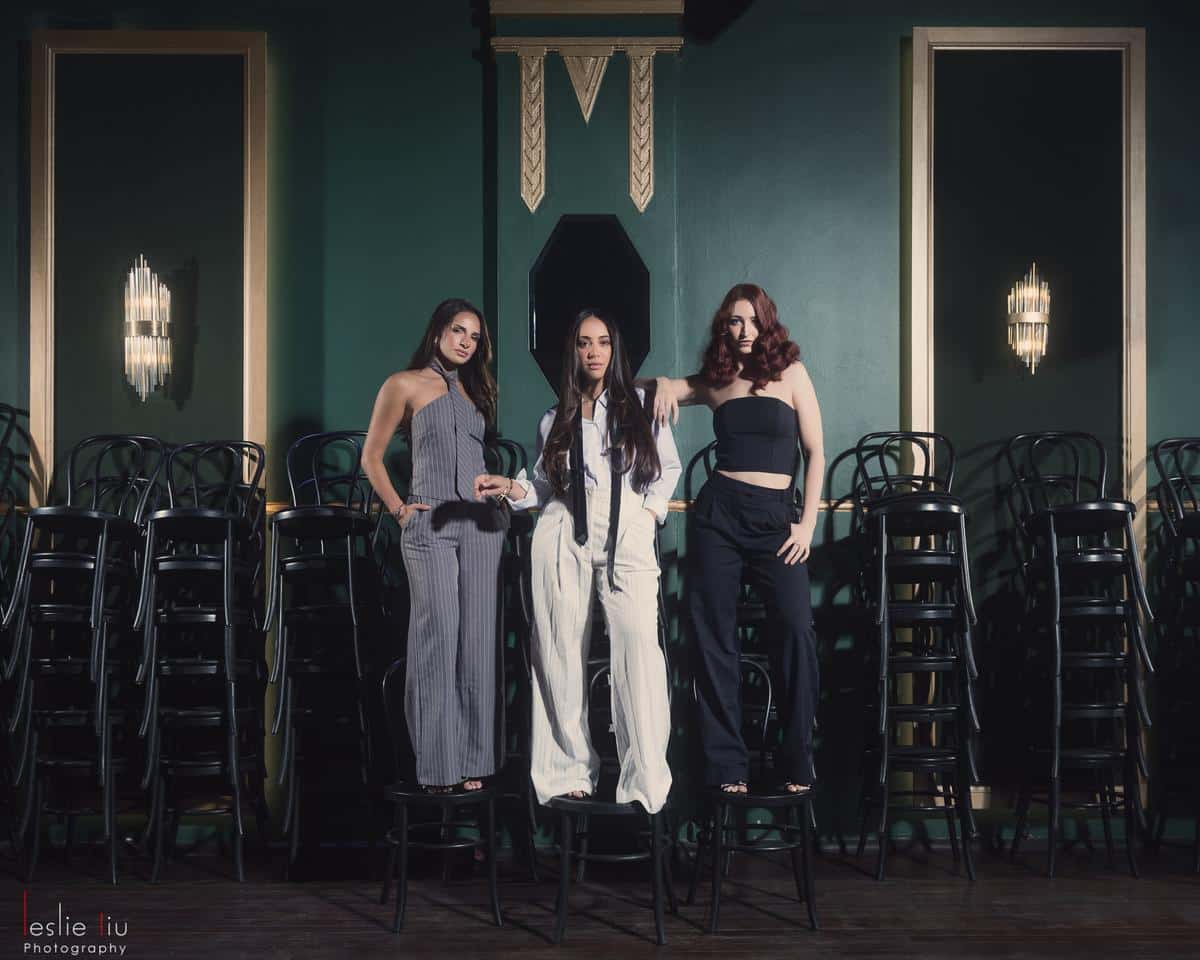
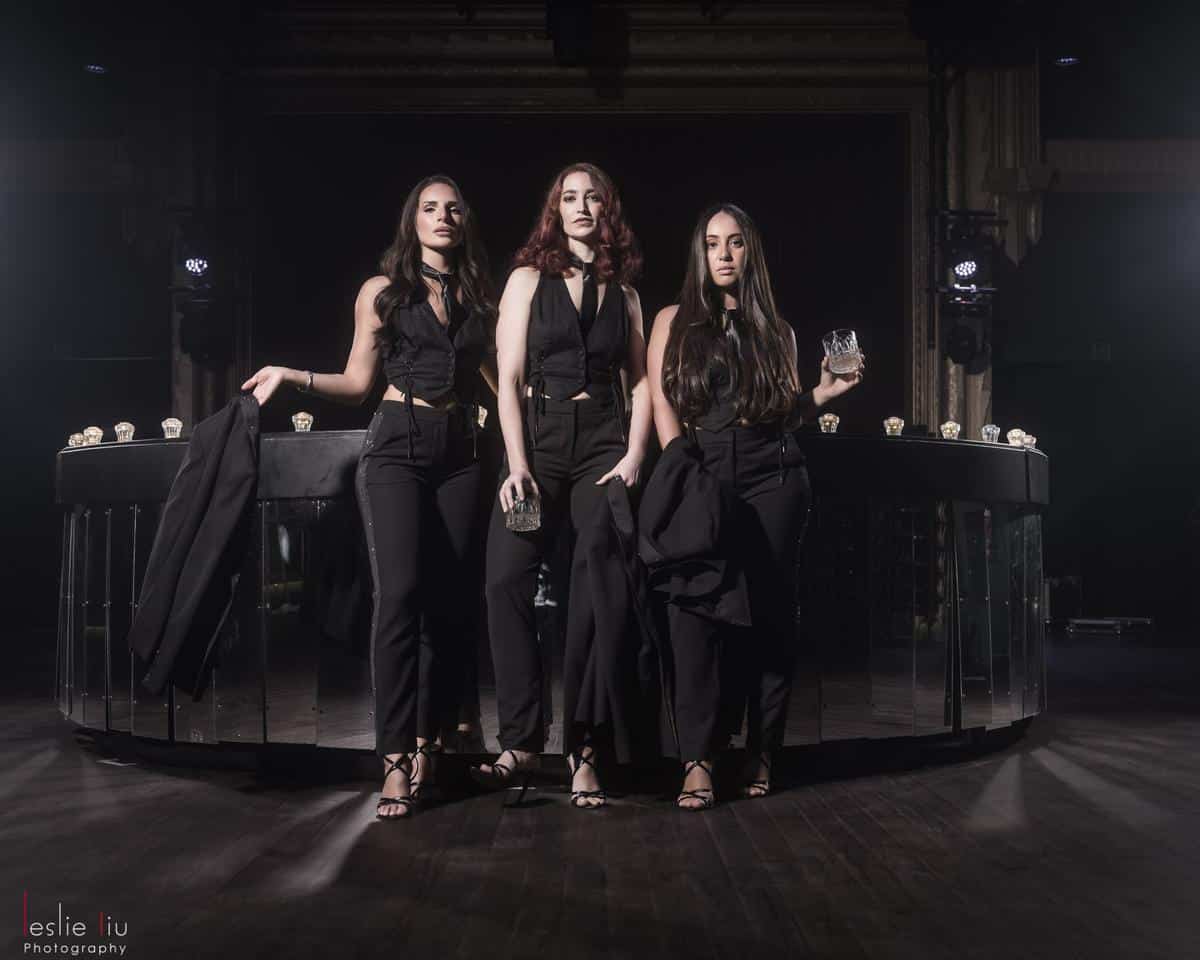
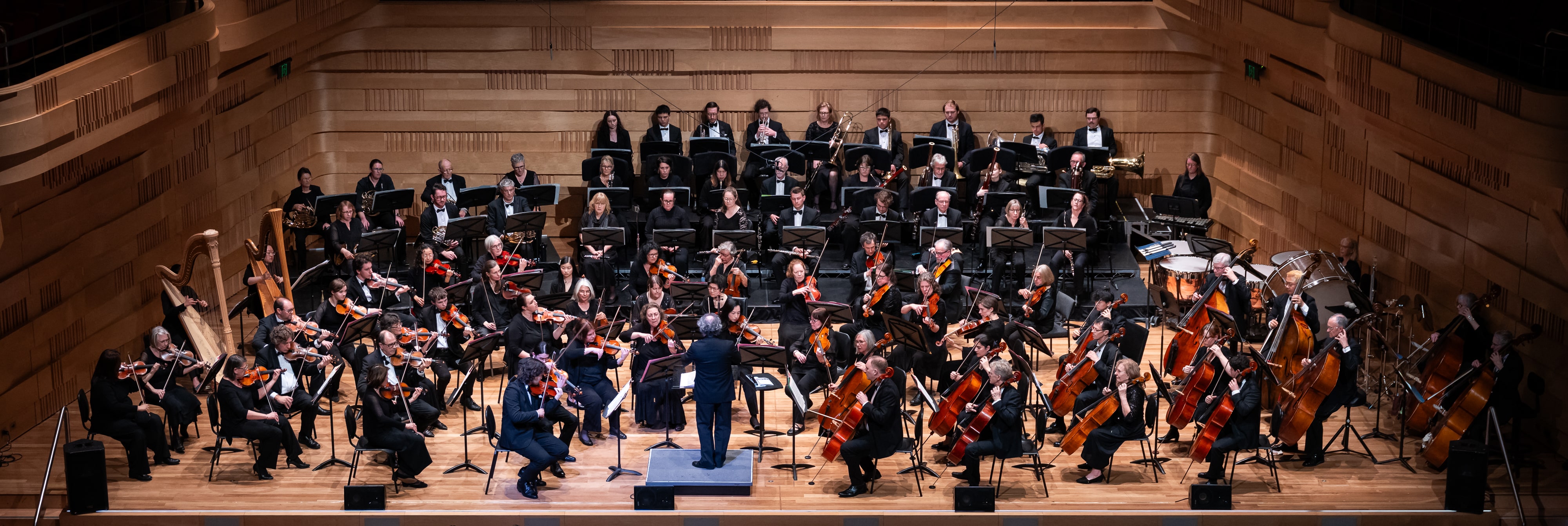
My husband and I had the pleasure of attending Omega Ensemble’s concert, Inner Landscapes, at the beautiful Melbourne Recital Centre. Neither of us had been to a live classical concert before, so we had no idea what to expect. What we got was an amazing aural sound-bath from the incredibly accomplished musicians who make up the ensemble. With the hall’s beautifully acoustic design holding, reflecting and reinforcing the music from every direction, this was a true feast for the ears, joyful, surprising and moving in turns.

The night opened with a powerful original score by the Pulitzer Prize winning composer, John Corigliano. ‘Soliloquy’, written in memory of his father, was a tender exploration of that loss. The interplay between the violins and the solo clarinet carried a poignant sense of the empty spaces left behind when someone we love leaves. Even with its mournful threads pulling at absence and longing, quietly unravelling the listener, it was not without drama. There was an almost Hitchcockian feel to the piece in places, a sense of tension surrounding the beauty of the violins, suggesting that even as normal life was being lived, something darker and more insidious tugged at the edges, threatening to overwhelm it. It was an incredible treat to hear it live and be invited into that deeply personal experience.

The second piece was delightfully familiar to me and will be to many of you too, I imagine. An expanded ensemble, now including cellos and double bass (I love these deep, earthy, mournful instruments the most), gave us a powerful performance of Franz Schubert’s String Quartet No. 14, Death and the Maiden. Performed in four movements, it rose and fell deftly. The first conjured rolling hills, bird murmurations, a feeling of youth and vitality, with an edge of unpredictability and sometimes danger created by the dancing, vigorous strings. My understanding is that this movement reflects the Maiden’s terror of Death. The second is slower, meant to convey a sense of safety despite Death’s presence. Here Death felt safe and generous rather than fearful, yet still carried the passionate, dramatic surges of feeling such a meeting would bring. It felt like being carried through the full emotional gamut of a life, seasons the Maiden will never live through rolled past as if in fast forward, a little like the idea that your life flashes before your eyes when you die. The third and fourth movements were sublime, returning to earlier themes with maturity and depth. The ensemble worked together impeccably. With no conductor, I watched with great interest the subtle interplay between the musicians, the tightly bound group led with breath and eye and the subtle hand of the principal viola and violinists. I was left thinking: if this is how incredible this ensemble is, can the Philharmonic really be any better?


The third piece was another original composition, ‘Rounds’ by Jessie Montgomery, a Grammy Award winning composer and violinist. Inspired by T.S. Eliot’s epic poem ‘Four Quartets’, it felt to me like sitting in the centre of a storm. With passionate, skilful playing from pianist, Vatche Jambazian, I felt immersed in water: storm clouds producing lightning and rain, surging seas, the threat of violence and danger interspersed with lighter, more playful refrains, violins and piano exploring light and dark together, discordant, harmonious, rising and falling in ever more powerful rounds. A unique and interesting piece, and one that left the listener feeling as though they’d resurfaced breathlessly from deep underwater.

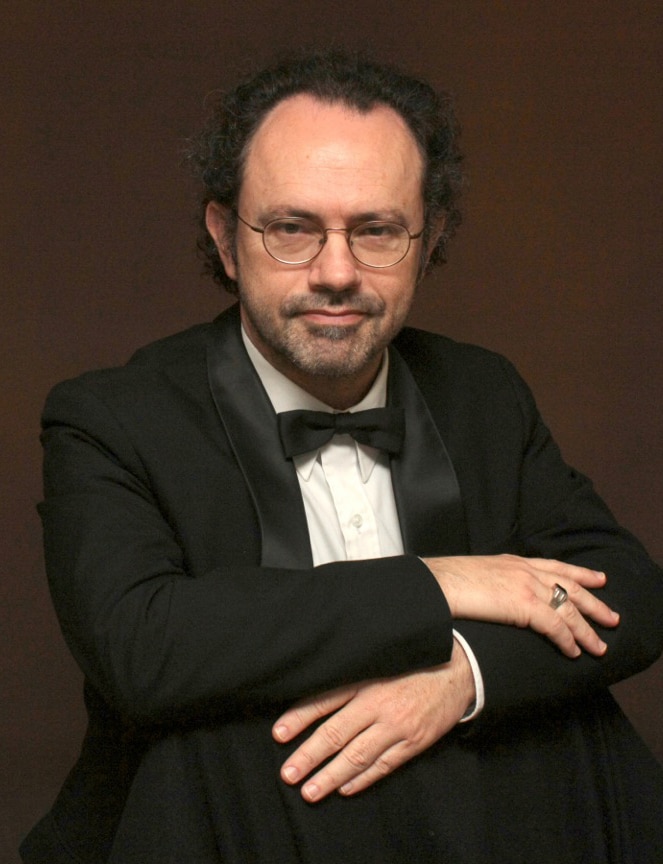
The final piece, a world premiere of ‘Paludarian Dreams’ by another award winning composer, Paul Stanhope, explored themes of nature found in a busy city. It was written for Omega Ensemble and it’s Artistic Director and solo clarinetist, David Rowden, whose deft fingers brought easily to mind the swift unpredictability of birds in flight.
Workshopped with the ensemble members, it felt beautifully collaborative and is, by their own admission, always evolving. It is joyful, sometimes whimsical and always surprising, delighting the audience with violin frogs that made us laugh out loud (not something you expect from classical music) as they called throatily to one another in the dark marshy waters of the piece. And the long cello solo was a genuine treat for me.

Honestly, this was one of the most enjoyable experiences I’ve had as a reviewer. Some of that can perhaps be put down to the delight of my first foray into live orchestral music, but most of it was down to the sheer talent of these highly accomplished musicians and the power of the compositions.

I highly recommend you go and see them as soon as you can, whichever city you happen to be in, because the only sad thing about the whole experience was that the auditorium wasn’t full to bursting. Omega ensemble truly deserves a full house.

To book tickets to Inner Landscapes, please visit https://www.melbournerecital.com.au/whats-on/current-productions/omega-ensemble-inner-landscapes.

Photographer: Laura Manariti

Spread the word on your favourite platform!

Haydn’s Creation

Haydn’s Creation

Haydn’s Creation Rating

Click if you liked this article

11

Haydn’s The Creation
Sydney Opera House – Concert Hall

For my first experience of a major classical performance, I could hardly have asked for a more fitting introduction than Joseph Haydn’s The Creation in the Sydney Opera House Concert Hall. Performed by the Sydney Philharmonia Choirs and Orchestra under the direction of Brett Weymark, this one-night concert presentation demonstrated that music alone can tell a story with extraordinary clarity, scale and emotional force.

For those unfamiliar with the form, an oratorio shares many features with opera, using soloists, chorus and orchestra to tell a dramatic story, but is presented as a concert rather than with scenery, costumes or theatrical staging. Oratorios are also usually sacred or liturgical in theme; Handel’s Messiah, which helped inspire Haydn’s The Creation, is perhaps the best-known example. Here, the programme’s inclusion of the libretto was especially useful. As Naomi Hnat noted in the pre-concert talk, The Creation was always intended to be performable for an English-speaking audience, and the edition used in this performance adopted the original English words as set by Haydn. That made the storytelling feel immediate rather than translated at a distance.

Before the performance, a free forty-five-minute talk in the Northern Foyer provided an excellent introduction to the work. Hosted by Tom Forrester-Paton, with Conducting Fellow Naomi Hnat and geobiologist Dr Maxwell Lechte, it proved especially valuable for those without a long background in classical music. Hnat demonstrated key passages at the piano, making Haydn’s musical language accessible without oversimplifying it. Her explanation of the opening “Chaos” was particularly illuminating, showing how Haydn deliberately avoids the musical resolutions audiences instinctively expect, leaving the music unsettled as it searches for order. She also explained the famous “and there was light” passage, where the word “light” marks the transition from C minor into a blazing C major — a moment she described as one of Haydn’s favourites, while Forrester-Paton noted it was also a favourite passage for the chorus to perform.

Brett Weymark conducted with remarkable vitality. At times he seemed almost to dance the music into being, but never in a way that distracted from the performance itself. Rather, he seemed to live inside Haydn’s score as it turned and changed, especially during the more dramatic passages. His evident affection for the work translated into a performance of momentum, warmth and conviction, drawing committed responses from both orchestra and choir.


The opening “Chaos” unfolded exactly as Hnat had described, resisting comfortable resolution and creating an unsettled musical landscape before the famous declaration, “Let there be light.” The command itself arrived softly but with quiet certainty. The true release came with “and there was light,” when orchestra, choir and the lighting above the stage opened together in what felt like a blazing sunrise of sound. After the uncertainty of the opening, the effect was overwhelming: not merely heard, but physically felt throughout the Concert Hall.

The orchestra served not simply as accompaniment but as the foundation on which the entire performance rested. Rather than drawing attention to individual sections, it supported the unfolding narrative and allowed Haydn’s vivid musical imagery to emerge naturally. Nathan Cox’s fortepiano became an elegant bridge between orchestra and voices, adding delicacy and clarity whenever the soloists emerged.

The principal soloists each brought a distinct vocal character to the performance. Celeste Lazarenko’s Gabriel had a quicksilver lightness, bright, agile and seemingly airborne. As Eve, that radiance remained but became more grounded, giving the final part a warmer and more human presence. The transformation was subtle rather than theatrical, allowing the audience to hear not merely another role but another way of encountering the newly created world.

Kyle Stegall’s Uriel brought his own brightness and flexibility to the tenor line, carrying the narrative with clarity and ease. His singing had an effortless quality that allowed the story to move naturally from one stage of creation to the next, without ever feeling merely functional.

Michael Lampard’s baritone offered an ideal counterweight, oak-like in its warmth and solidity. As Raphael, he anchored the great descriptive passages with steadiness and authority; as Adam, he revealed a gentler and more intimate character. His duets with Lazarenko were among the evening’s finest moments, their contrasting vocal colours creating both balance and intimacy.

The addition of mezzo-soprano Yvette Leonard in the closing section broadened the vocal palette of the solo ensemble. Rather than competing with the principal voices, her contribution enriched the finale, adding warmth and balance to the concluding pages and giving the ending a fuller sense of vocal breadth.

If the soloists carried the narrative, the Sydney Philharmonia Choir supplied the emotional and spiritual force of the evening. At its most powerful it became a wall of sound, filling the Concert Hall without losing clarity. Yet what impressed just as much was its subtlety. Softer passages revealed many colours, while from the stalls it was possible to see and hear the individual vocal lines ripple across the risers before gathering once more into a unified whole. The effect was almost orchestral in itself, different voices emerging and receding like changing colours through falling leaves. By the second half, I found myself anticipating each occasion the choir would rise again.

The renovated Concert Hall deserves mention as a participant in the performance rather than simply its setting. The acoustics combined warmth, clarity and power, allowing orchestra, soloists and choir to blend without sacrificing individual detail. Music in this space was not simply audible; it had a tangible physical presence that surrounded the audience and reinforced the grandeur of Haydn’s vision.

The audience responded warmly throughout the afternoon, with appreciative applause between the major sections and a generous ovation at the conclusion. It felt like an acknowledgement not only of technical accomplishment but of the care, preparation and affection that had gone into bringing Haydn’s masterpiece to life.

For a first encounter with large-scale classical performance, The Creation proved both welcoming and awe-inspiring. More than two centuries after Haydn composed it, its sense of wonder remains intact. Under Weymark’s energetic direction, supported by outstanding soloists, orchestra and choir, this one-night performance transformed the Concert Hall into a place where creation was not simply described — it was vividly experienced.

To book tickets to Haydn’s Creation, please visit https://www.sydneyphilharmonia.com.au/events/haydns-creation/.

Spread the word on your favourite platform!

Exquisite Harmonies – Marais Project’s New Album And Concert

Feature-Exquisite Harmonies

The Marais Project, acknowledged Australian masters of the baroque, launch their new album in July and will follow up with a spectacular concert in the Walsh Bay Arts Precinct, Saturday August 15 at 7.30pm.

The Exquisite Harmonies concert features ensemble leader and viola da gamba virtuoso Jennifer Eriksson, keyboard wizard Anthony Abouhamad and enchanting violinist/vocalist Susie Bishop, plus – on the album – maestro of the lute, Tommie Andersson.

Unlike the violin and brass families whose members evolved but remained in use across the 17th to 20th centuries, the viol and the harpsichord all but disappeared by the late 1700s. They returned to concert stages in the 1960s and 70s and have not left the podium since! Over the years they have built a fan base of dedicated admirers.

This was the experience of gambist and The Marais Project’s founder, Jenny Eriksson:
“As a young musician I had no idea about the viola da gamba and initially studied the cello at Sydney Conservatorium. The first time I heard the gamba ‘live’ I fell in love with it. I’ve been in love ever since!”

Anthony Abouhamad similarly commenced with the modern-day piano but became interested in the fortepiano and harpsichord at Sydney Conservatorium. At different times both Anthony and Jenny undertook post graduate studies in The Netherlands, returning to Sydney to make their respective careers here. Anthony recently completed a PhD and is now on the staff of his alma mater.

“In one sense, there was a period of my life when I grew up making music with Jenny,” Abouhamad commented, “And I’ve always enjoyed working with her.”
Having met as members of one of Eriksson’s Musica Viva Australia in Schools ensembles, they continued to perform together regularly. Most recently, Anthony appeared on The Marais Project’s ‘Australian Monody’ album. Appropriately, all ticket sales from the 15 August performance will go to the Musica Viva Australia in Schools Program – the musicians donating their time to this important cause.

The Exquisite Harmonies program includes suites and sonatas for viola da gamba by Telemann and Carl Friedrich Abel. In addition, Jenny assembled a ‘Grand Suite’ of several famous French baroque composers for the viol, men whose lives were closely linked. For example, Monsieur de Sainte-Colombe, who famously added the seventh string to the viola da gamba, taught the young Marin Marais. Antoine Forqueray’s fearsome virtuosity was said to have exceeded that of the celebrated Marais, whose career he overlapped with. Both men attracted the attention of the music and dance-loving monarch, Louis XIV. A contemporary commentator, Hubert Le Blanc, wrote that Marais played like an angel, and Forqueray like the devil! Anthony also presents music for solo harpsichord by Telemann and Couperin as well as improvising a Fantasia in the style of Telemann – a rare treat!

The Marais Project has always taken an innovative approach to music making. The final track on Exquisite Harmonies is The Acceptance by Biripi and Gamillaroi musician and composer, Troy Russell. Jenny asked Troy to write The Acceptance as a kind of musical acknowledgement of country. Tommie Andersson, gallichon, and Susie Bishop, voice and violin, join Jenny on this track. It gently reminds listeners that First Nations’ artists preceded European musicians on this continent by millennia.

Singles from the album will be released on 15 and 29 July with the full album available from 7 August.

The Marais Project: EXQUISITE HARMONIES – album available as CD and download from MOVE Records, Buywell Music, iTunes and streaming platforms including Apple Music (also mixed in Dolby Atmos), Spotify and as a high-resolution download

Exquisite Harmonies: Launch Concert 7.30 pm, Saturday 15 August 2026
Choir Rehearsal Room, Walsh Bay Arts Precinct – Wharf 4/5, 15 Hickson Road, Dawes Point

All album and ticket purchases at www.maraisproject.com.au


Spread the word on your favourite platform!

Perfect. A Triumph For Easter Weekend

St John Passion

St John Passion Rating

Click if you liked this article

8

75 years ago, the director and Chief Conductor of Sydney Symphony Orchestra was the renowned Eugene Goossens.

Goossens conducted concerts in the Sydney Town Hall, but he had a loftier goal: a grand concert hall at the heart of the city. Goossens lobbied relentlessly, campaigning for a world-class venue. It was his vision that led directly to the creation of the Sydney Opera House.

I imagined the ghost of Goossens, looking down from the gods, in the Sydney Opera House Concert Hall, as Brett Weymark conducted Sydney Philharmonia’s Symphony Chorus and Baroque Orchestra in Bach’s St John Passion.

Brett Weymark championed classical music in Australia long before he was appointed Artistic & Musical Director of Sydney Philharmonia Choirs. His devotion was honoured in 2021, when he was awarded the Medal of the Order of Australia for services to the performing arts through music.

You may have heard Weymark’s work but never known it. He was the conductor for the movie scores of ‘Happy Feet’ and ‘Mad Max: Fury Road.’

Eugene Goossens fled Australia, mired in a sex and occult scandal that ruined his reputation and destroyed is career. Thankfully, Brett Weymark’s reputation as one of Australia’s foremost conductors continues to grow from strength to strength. This year’s Bach’s St John Passion is his latest triumph.

One of the great joys of life is connecting with others through music. Singing in a choir, surrounded by other voices is a magnificent visceral experience.


Do you sing bass or tenor? Sydney Philharmonia Choirs are currently looking for more basses and tenors.

The Acknowledgement of Country was ‘Tarimi Nulay: Long Time Living Here’ by Yorta Yorta composer Deborah Cheetham Fraillon, translated into Gadigal by Matthew Doyle. This work is hauntingly beautiful.

Language is important, and fortunately for those who speak neither Gadigal nor German, programmes were available online and in hard copy. Following the dialogue is key to fully understanding St John Passion. It highlights the callousness of Jesus’s persecutors, and the genius of Bach, hearing the music bouncing with glee as the chorus humiliates Him on the journey to the crucifixion.

The soloists within this oratorio played their respective roles to perfection.

Timothy Reynolds tenor rang through the concert hall as he narrated the action as the Evangelist. Christopher Richardson took the baritone role of Jesus with reverence. Andrew O’Connor portrayed the stress of Pilate dealing with the enraged mob.

Penelope Mills (soprano), Ashlyn Tymms (mezzo-soprano) and Michael Petruccelli’s (tenor) arias shone.

Bach wove together passages from the Gospel of John, extracts from the Gospel of Matthew, Lutheran Chorales, and his own arias based on poetry from contemporary Passion librettos.

Hearing the Sydney Philharmonia’s Symphony Chorus sing Bach’s Passion is a wondrous experience. Every member of the choirs and each player in the Baroque Orchestra is to be commended and congratulated.

A public service announcement: addressed to the lady that stomped in late during Part 1, in what sounded like wooden clogs. She was roundly shushed and hissed for disturbing the audience as she clumped to Box C. If you are delayed and running late, the least you can do is take off your heels / tap shoes / boots and tiptoe quietly to your seat.

St John Passion was a beautiful, liminal performance, created by world-class artists.

To book tickets to St John Passion, please visit https://www.sydneyphilharmonia.com.au/events/bachs-st-john-passion/.

Photographer: Keith Saunders

Spread the word on your favourite platform!

Subscribe to What's The Show

Reviews, show news and what is on, straight to your inbox.