If These Walls Could Speak

Dixon And Daughters

Dixon And Daughters Rating

★★★★★

Click if you liked this article

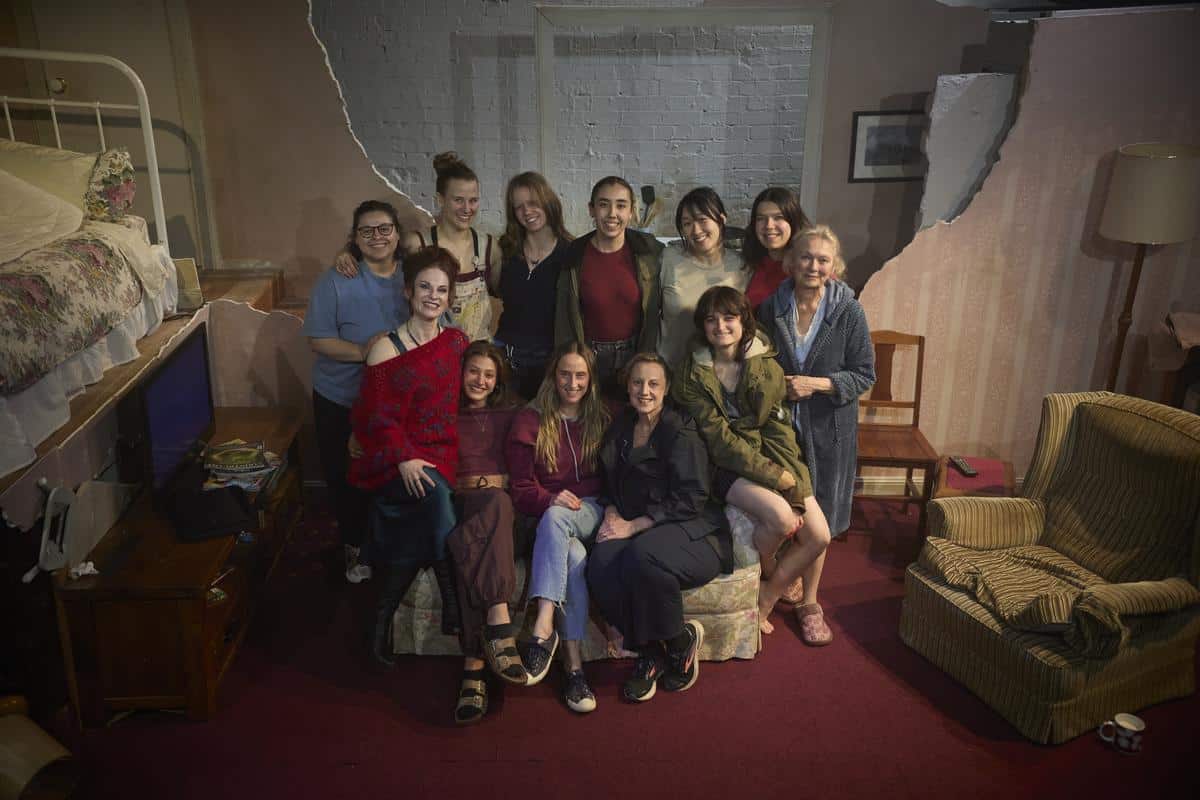
I will never cease to be amazed at what can be done with the right amount of creative genius, even in a small space, and I was particularly blown away as we entered the theatre at Old Fitz. Mia MacCormick's Dixon & Daughter’s set was immediately impressive with a two-storey set up with two upstairs bedrooms, one open to us with the double bed clearly belonging to someone who has lived there for many years and the familiar bedspread that told the same story. There’s a kitchen in the background, an old style living room (again, with the iconic upholstery of the era on the sofa). We see all the childhood remnants such as rocking horse in storage underneath. It’s a typical house that has seen generations. A house we might all remember but the shell of it is peeled away in parts, symbolic of the here and now and fuzzy, messy, reminiscing that we are about to be pulled into.

Topaz Marlay-Cole's lighting and Nicky Pardesi's sound design engage throughout. Darkness pools around the moments that need it most, and characters are isolated by a single source when they are at their most exposed and vulnerable. The transitional soundscapes hold us in the uncomfortable space between scenes, refusing to let us settle, while the pauses punctuated by light shifts carry their own quiet weight. Clever and intentional.

Mary, played by Vanessa Downing, has just returned home. Her granddaughter Ella and daughter Julie are ready to surprise her, while youngest daughter, Bernie quietly prepares them for the reality that Mary is "in a mood." In these early scenes, Deborah Bruce's script establishes the architecture of the family with deceptive lightness: Julie as the scapegoat fleeing a bad relationship and fighting an alcohol dependency; Ella as the playful peacemaker trying to offset the formidable dark cloud her grandmother carries into the room. Mary is no-nonsense, wanting nothing more than to get home and back to life. We soon discover she has served six months in prison for something connected to her deceased husband, and from that moment, the unravelling begins.
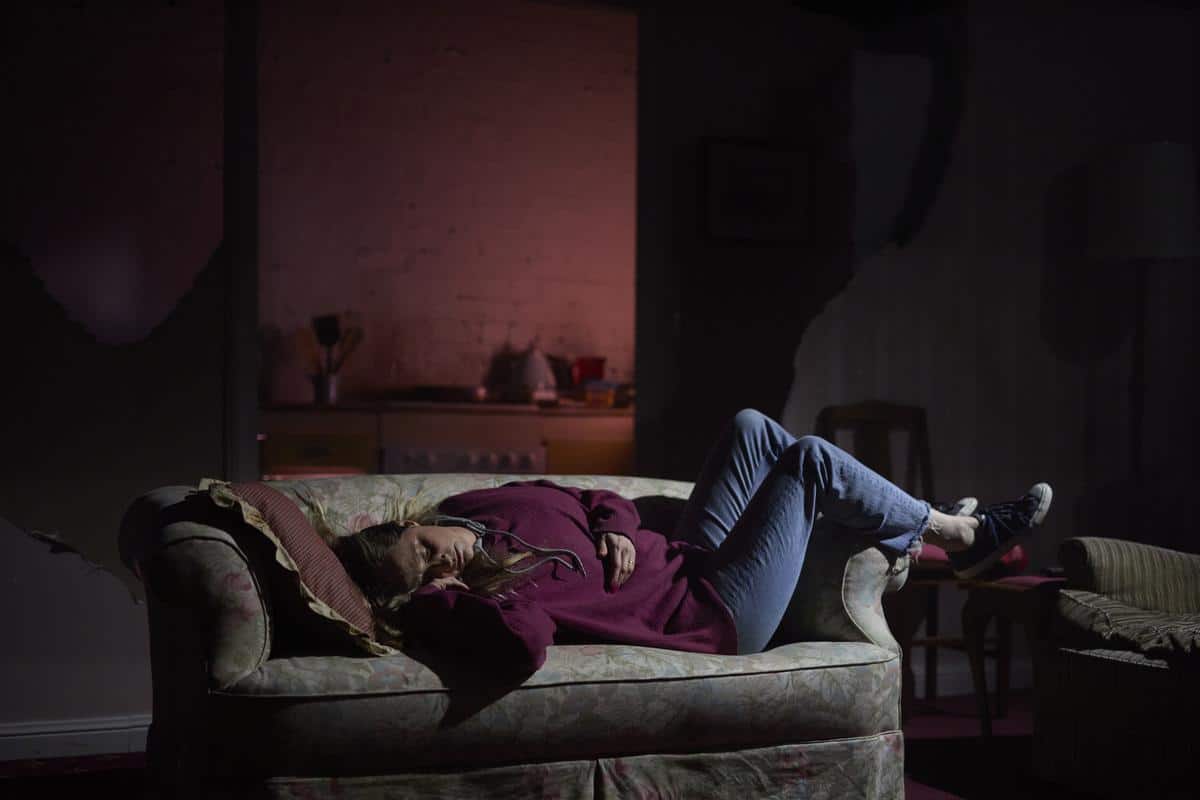
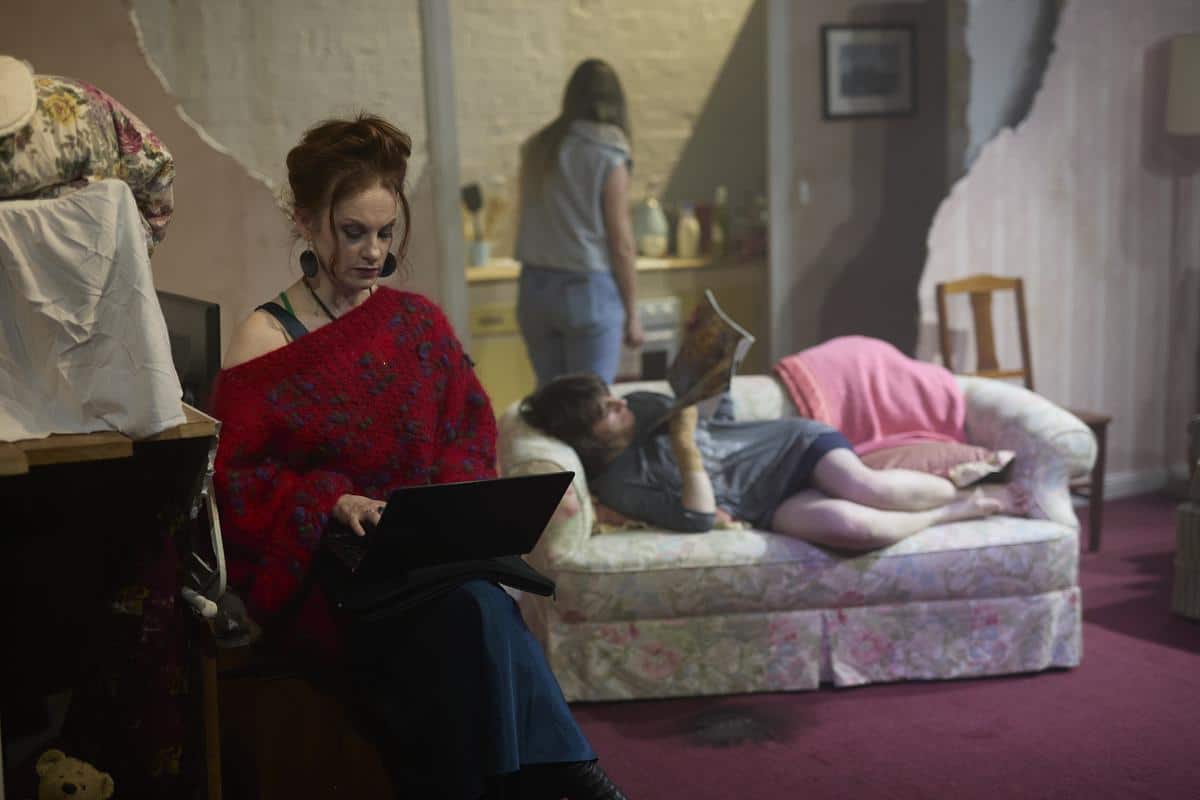
 

Downing's Mary is formidable. There is no softening of the character's abrasiveness, no easy bid for sympathy, just a woman carrying decades of damage and struggling to articulate the remorse beneath the bluntness.

Linda Nicholls-Gidley as Bernie embodies the daughter who must hold it together at all costs, and we see that fight written into every moment. Sarah Jane Starr arrives as the estranged stepdaughter Tina/Briana, larger than life and glamorous, having stepped into her power and intent on helping Julie do the same. Starr plays the light and shade with real skill, making Briana's complicated journey entirely her own. Romney Hamilton's Julie is the loveable screw-up, all flightiness and docility in the early scenes, and then, when the drama reaches its peak, Hamilton delivers a performance that takes your breath away. You genuinely do not see it coming.

Danette Potgieter's Ella makes her own quiet pivot, moving from the warmth and playfulness of the opening to something altogether more grounded and affecting when the moment demands it. Leigh is a character that Mary introduces into the mix, at first I wondered about this writing choice, I wasn’t sure we needed this character from the school of hard knocks who was providing a lot of comic relief (played joyfully by Rylea Ellis), but I realised that Mary had to bring this outsider in to disrupt the roles and stories running and Rylea plays this very well.

Director Kim Hardwick's work is full of specificity. Every exchange feels immediate, every relationship fully inhabited. But what struck me most was the blocking. Each character had their physical place within the history of this intergenerational story, allocated to a particular space unless the action required something different. They were connected but always isolated, until they weren't. It was a brilliant choreography of power and position, making visible what the dialogue could only gesture at.

An all-femme cast is its own kind of power, and this one is clearly working together and holding one another with real care. The dark themes are handled with tenderness and unflinching honesty in equal measure.

Dixon and Daughters is not an easy watch, but it is an important one. It will speak to anyone who has lived as a woman, and to anyone who has loved, nurtured or been shaped by one. This is a story that needs to be told, and the Tiny Dog Productions team has told it with exactly the courage and care it deserves.

To book tickets to Dixon And Daughters, please visit https://purchase.oldfitztheatre.com.au/EventAvailability?EventId=1201.

Photographer: Campbell Parsons

Spread the word on your favourite platform!

Still Sitting In The Afterglow

Afterglow

Afterglow Rating

★★★★★

Click if you liked this article

2

Belvoir was buzzing with an eclectic mix of people heading towards two different shows. It was difficult to discern who was headed where, but it was a delightful mix from varied walks of life, all excited for a night of theatre.

Afterglow was in the downstairs theatre, one I hadn't yet visited, and I was immediately put at ease by the intimacy of the space. I love intimate theatre.

I had seen two songs from this show at Homo Grown, and I am also a massive fan of Cassie Hamilton. I had been wilfully declining theatre trips due to my own rehearsals making this an incredibly busy time for me, but I was already getting FOMO seeing it advertised when the review request came in, and my arm was officially twisted. Let's just say, thank God for that.

The space is black box style and the set is a lounge bar we come to know as Afterglow. This theatre is warm and welcoming, but it has some limitations. As a singer, I was initially concerned for the performers singing without microphones, but they were so exceptional at their craft that you quickly forgot it. I imagine they are being given some great coaching to help with this challenge. However, there is a unique privilege in seeing a show like this in such an intimate setting while knowing, without doubt, that future runs will be on a much bigger scale.

Afterglow is a world premiere by Purple Tape Productions, presented as part of Griffin Theatre Company's Lookout program. Written by playwrights Sheanna Parker Russon and Dr Lillian M. Hearne, and co-directed by Cassie Hamilton and Lily Hayman, it is a barbershop rom-com following Michael through a coming-of-age, and the unlikely community of people that play a part in it.

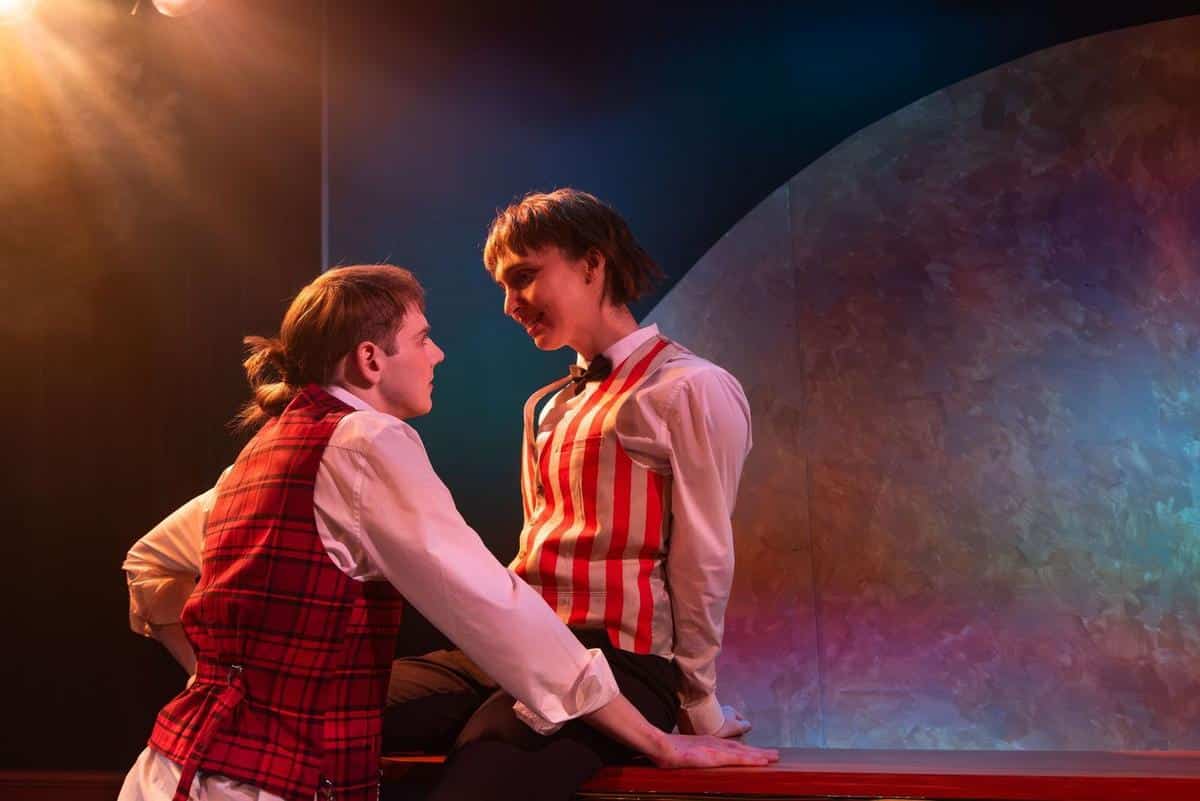
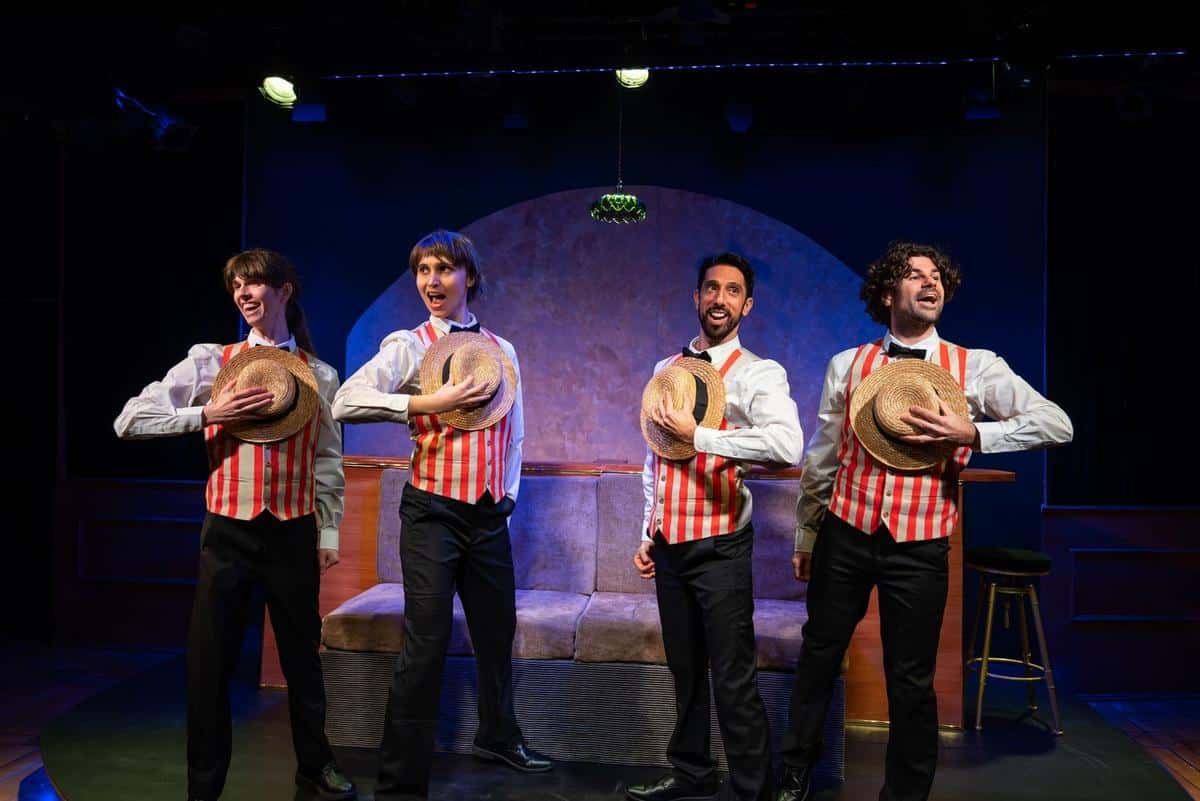
We begin with the barbershop quartet singing about manliness and the importance of keeping barbershop purely for the boys. We note Michael, played by Cassie, is uncomfortable, making small mistakes then berating himself through a song about the desire to be normal. It's 2012, he's 21, and this is his only aspiration.


Nat Jobe leads the quartet as the old-skool male who is a feminist purely by virtue of having married a woman, yet believes fiercely in upholding traditional male spaces. The character becomes the vehicle for exploring what it means to be a man and the awkwardness of trying to connect when social norms keep restricting you. Jobe plays it with tremendous warmth and comic precision.

There is beautiful a-cappella accompaniment scattered throughout in the barbershop style, with Dr Hearne playing Trevor and taking to the keys at poignant moments. The harmonies are infectious.

Nic Prior's character T gets a stunning solo that takes us into the depths of an interior world that is tender and enormous. The voice is breathtaking; there is a fragility to the emotional delivery that sits in complete contrast to its power. When Michael and T reconnect two years later, the connection deepens, and Cassie delights with a goofy, gorgeous spiral as Michael tries to navigate T's vulnerability while still performing what it means to be "one of the boys."

The lighting design by Tyler Fitzpatrick feels deceptively simple, but the choices are anything but. Moving from the full wash which made us all visible to one another (leaning into the metaphor of trying to blend in), to a single spotlight when characters turned inward was quietly brilliant. Clare Hennessey's sound design holds the space with equal care.

I've said it before and I'll say it again: Cassie Hamilton is a powerhouse, and her character’s big solo moment is elevated by the voice belting behind it, leaving me teary. The first of many times.

By 2016 things have gotten messy, and the boys are doing their best to show up for their friend while not quite knowing how to communicate outside of messy metaphors. The important thing is that they are trying, and learning that vulnerability might actually make them better.

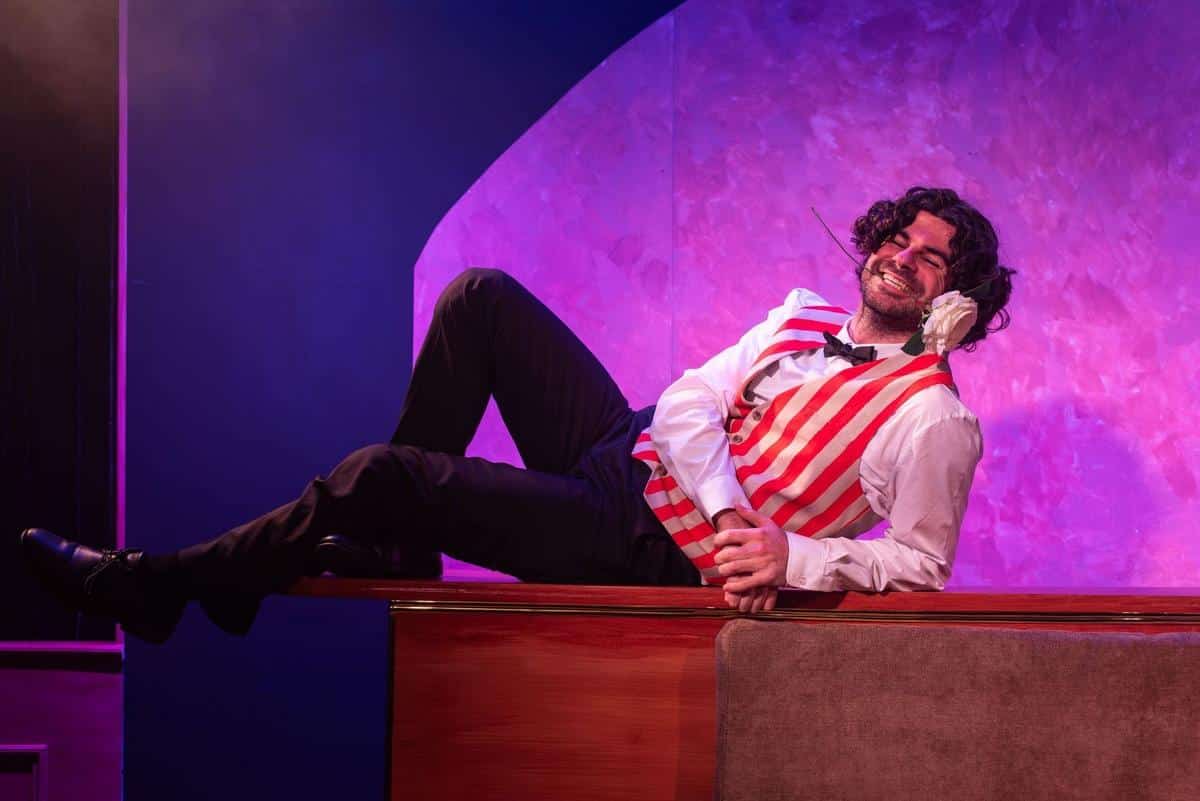
Lincoln Elliott as Matt is great fun, and I genuinely do not know how Elliott manages to be in so many wonderful things at once. The whole ensemble moves together with a generosity that speaks to the room Cassie Hamilton and Lily Hayman have created.
Afterglow is a bittersweet, joyful, poignant romp; full of heartache and, most importantly, trans joy. Sheanna and Lillian's joint journey and shared heart make this a uniquely beautiful story.

I was in tears at the end. Tears of sadness, hope, joy, and just the deep appreciation of a wonderful shared experience.
Go share in it. You will sit in the afterglow for days.

To book tickets to Afterglow, please visit https://griffintheatre.com.au/whats-on/afterglow/.

Photographer: Lucy Parakhina

Spread the word on your favourite platform!

Subscribe to What's The Show

Reviews, show news and what is on, straight to your inbox.