A Whipple-Scrumptious Night of Pure Imagination

Charlie And The Chocolate Factory

Charlie And The Chocolate Factory Rating

Click if you liked this article

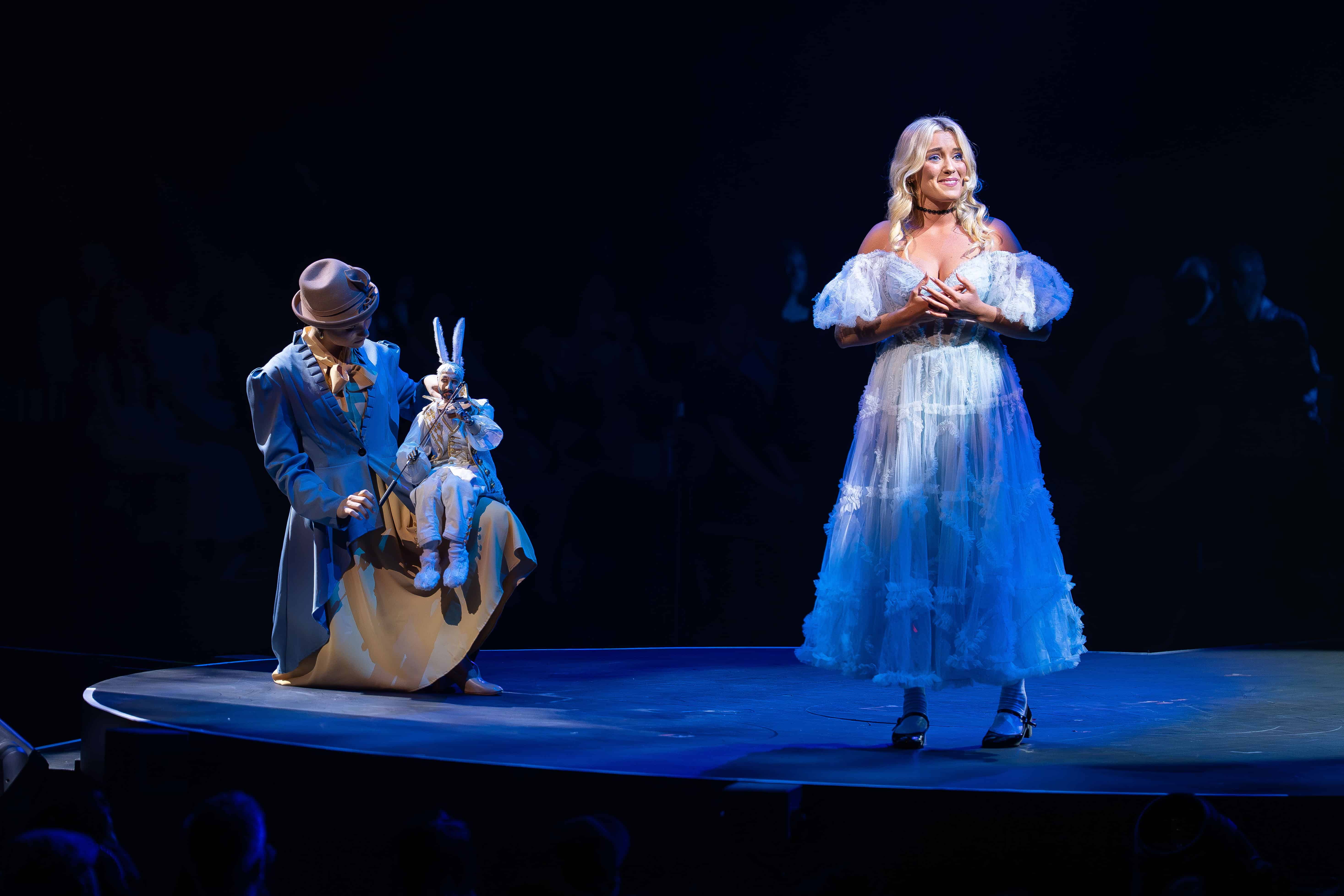
Oxford Falls Grammar’s Charlie and the Chocolate Factory was a grand glossy, decadently drizzled, deliciously complex and rich in flavour musical… oh yes, it was a sensational WhippleScrumptious Fudgemallow Delight of a production!

Based on the novel by Roald Dahl, the story of Charlie and the Chocolate Factory has delighted children and adults alike for 62 years, since its publication in 1964. It’s no wonder that the eccentric (some may call him ‘crazy’) purple coated, top hat signature style, whimsical Willy Wonka found himself and his fellow characters in a musical, featuring an original score by Marc Shaiman, lyrics by Marc Shaiman and Scott Wittman and a book by David Greig. The musical also featured songs from the movie by Leslie Bricusse and Anthony Newley.

This was a huge cast, with 21 main characters, 20 dancers and an immense 31 person ensemble sometimes having to be onstage all at the same time, notably for when the spoilt children meet their fates and the little Oompa Loompas appear to “help clear out” (I don’t think this review would contain any spoilers but if you have not read this novel or seen the musical, you wouldn’t know what an Oompa Loompa is, right?) Artistic Director Odessa R and Assistant Artistic Director & Stage Manager Megan G were tremendously talented in managing the large scope in putting this production on the stage.

The musical kicked off with the upbeat song, The Candy Man, as we are introduced to Willy Wonka played by Toby. After I had seen Toby perform this first song, I knew that the audience was in for a treat because of the way he introduced his character with quiet confidence and a little zany charm!

Charlie Bucket, played with pure sunshine-hearted goodness perfection by Grace, lives with her mum, played by Sierra and her four bedridden grandparents squeezed into bed, played by Christian, Zoe, Grace and Jack. Mrs Bucket works hard and is struggling to earn enough money to feed everyone. Sierra’s voice was showcased beautifully in a song, If Your Father Were Here, which she sings when Charlie is asleep, and when she dances with the memory of Charlie’s father, this added a quietly touching scene.

Soon we discover that Willy Wonka, after being mysteriously unseen for many years and his branded chocolate currently in the same way – unseen/ unsold – is now selling Wonka chocolate bars at a candy store near Charlie’s house. There is a new and exciting competition. Five Golden Tickets are hidden inside Wonka’s chocolate bar wrappers, and each Golden Ticket ensures the winner a tour into Willy Wonka’s factory and an opportunity to have a lifetime supply of chocolate! In quite a genius stroke of marketing, chocolate sales all over the world skyrocket with people scrambling to acquire a Golden Ticket, until all Wonka bars are sold out worldwide.


The announcements of the four winners are televised as the Candy Man shopkeeper (Toby) invites Charlie to watch each winner gloat over how they won their tickets. Jerry, played by Charlie and Cherry, played by Isabella, were the news announcers and carried the enthusiasm of the winners to the audience with pizazz.

The winners come from all over the world. The first winner is German child Augustus Gloop, played with cheerful hungriness by Xavier. His mum Mrs Gloop, lovingly played by Xenia, indulges her son in whatever he wishes. The ensemble’s German costumes added authenticity to the introduction of this initial lucky winner, with the song, More of Him to Love.

Veruca Salt, played by Caitlin is another winner from Russia. Alongside her father Mr Salt, played with a desperate-to-please-his-daughter stress by Nico, we see Veruca’s spoilt personality clearly with Caitlin’s performance of Veruca’s sharp demands, especially with the song When Veruca Says. I’m sure, not only me but many parents in the audience were cringing at her “I want!!” statements and feeling sorry for Veruca’s father. This wouldn’t be the first time that the audience would begin to appreciate our own wonderful children, as we meet the next 2 subsequent child winners and their outrageous personalities.

Pop diva wannabe American child Violet Beauregard, introduced with the song The Queen of
Pop, is played by Poppy. She is the next winner and her father, the wealthy Mr Beauregard, played by Luka, panders to his spoilt daughter. Poppy held the stage as her character would, with her spoilt demands and her impressive dance moves.

The next winner, American Mike Teavee, played perfectly with the coolness of a teenager addicted to screens by Hilary, shook off all of Mrs Teavee’s attempts at affection with derisive looks and a swipe of the hand. I almost felt sorry for Mrs Teavee, played by Riley. Riley’s song That Little Man of Mine added to this feeling, although we do see hints of how Mrs Teavee has other addictions and how perhaps being addicted to something could run in the family.

After being blown away by the visual elements of this first act so far, and the dancing and energy of the spoilt children and pandering parents, it was an absolute contrast and joy to watch Charlie quietly unwrap a Wonka bar and be the final winner as she discovers the golden ticket. The audience was invested as we cheered Charlie’s discovery. I know I was beaming as Grace sang, “I’ve Got a Golden Ticket”. What a wonderful turn of the story to see Charlie run home and announce this exciting news to her family. It is here that Grandpa Joe gets the motivation to step out of bed (after 40 or so years!). Christian had the audience laughing as his wobbly knees slowly begin to work and he dances with Charlie and Mrs Bucket in celebration, even kicking his leg into the air – followed by him grasping his back!

The cast built up so much excitement and towards the end of the first act, there was genuine wonder for me as to how OFG was going to present the second act. I was looking forward to seeing inside Willy Wonka’s chocolate factory, so much so that during the intermission I went out and bought a chocolate bar in anticipation! (Spoiler – it wasn’t a Wonka Bar, it was a Picnic, but I assumed it was because all Wonka bars had sold out).

The second act of Charlie and the Chocolate Factory didn’t slow down. It was filled with electric energy, stacks of humour and sometimes a little bit of kid-friendly horror as things begin to move forward and some elimination of candidates occur. I don’t want to say what happened in the second act. I will say that there was not one moment, which didn’t capture my attention. The dance sequences were phenomenal, with the cast moving in time together and showcasing their skills as a team. The three talented divas, Arrabella, Monah and Emma demonstrated their skills throughout the musical. Well done to choreographers Lauren T and Chelsea M for putting this together, to be so visually beautiful.

All the costumes, by co-producer Roxy M, were eye catching and clever in their design. As each winner was introduced, with the exception of Charlie, the ensemble appeared in complementary costumes that added to the character’s presence.
Two standout costumes were Violet Beauregard’s suit after she snatched the three-course meal gum and popped it in her mouth against Willy Wonka’s wishes. I loved how Poppy cartwheeled across the stage in her purple puffed suit as though she was a rolling blueberry! The Oompa Loompa’s outfits were perfect, and the duo colour and stripes somehow made them look small.

The ever changing and colourful digital screens behind and either side of the stage, as well as the 3D print of the props, communicated to the audience exactly where the current scene was set. It was an impressive achievement by Dale D as every visual had so much to look at. The scene leading to Willy Wonka’s factory made me wonder what was inside there.

An integral part of a musical is the band and backing vocals. Oxford Falls Grammar had 22 extremely talented musicians and singers who carried the accompaniment and added sound effects throughout the whole performance. Situated at the base of the stage, the music was clear and beautifully executed, well done to all.
Congratulations to Jimmy H, not only the conductor but also the co-producer and musical director of Charlie and the Chocolate Factory. He has succeeded in creating a dynamic and rich heartfelt musical that appeals to people of all ages.

There is wonderment, a little touch of magic, many belly laughs and of course, a world of pure imagination in Oxford Falls Grammar’s production of Roald Dahl’s Charlie and the Chocolate Factory. It was difficult to believe that this was “only” a high school performance, as it reminded me of plays and musicals that I have reviewed, and given five stars to, in theatres around Sydney in the past. Given the remarkable effort that resulted in just three evening performances, I suggest considering a reprise at the end of the year. This could be advertised more widely and opened to the general public for ticket sales. I believe many people would be eager to attend and would greatly appreciate the incredible talent this school is contributing to the Northern Beaches community.

Bravo OFG, Bravo!

Roald Dahl’s Charlie and the Chocolate Factory
Approximately 3 hours, with a 20 minute intermission
C3 Auditorium, Dreadnought Road, Oxford Falls
23 April 2026 – 25 April 2026

To book tickets to Charlie And The Chocolate Factory, please visit https://www.trybooking.com/events/landing/1476088.

Spread the word on your favourite platform!

Three Sisters – Chekhov

Three Sisters

Three Sisters Rating

Click if you liked this article

3

We were in for an intense and emotional rollercoaster that is always Chekhov and we got it. The set established the mood with an atmospheric living room and dining area reminiscent of a late nineteenth century painting with curios and antiques shadowed and lit according to the changing dynamics of the play. Chairs, tables and a piano would become central to the changing dynamics of a tight-knit family in the wrong place. Music was beautifully performed adding a melancholic mood adding to the underlying sadness as the dining table was changed for different times of the day reflecting the changing circumstances.

Enter the actors all strong in their own ways and at times challenged not to upstage each other with the drama of each revelation. As the family evolved, we started with a celebration and the characters established themselves in their best light and costumes as if anything were possible and personal dreams were almost real. The three sisters formed the core as the male characters danced around them reacting as disillusionment set in over the years. Dreams came and went and some of the wrong goals became reality with a realisation of the saying, ‘Be careful what you ask for, you may get it’.


The oldest sister, already slightly worn with responsibility was played by an actor who made the character believable and maintained a sense of sympathy from the audience as she struggled with others’ decisions that impacted upon the family’s fortune and frustration. The middle sister, strongly acted, was all suppressed passion, erupting eventually and then left with the scars of untempered desire. The youngest was presented as confident and fresh as a daisy being courted by a couple of men and presenting the first stirrings of the Russian future of work being the goal and reason for living only to find that it is just labour and not love. All female actors offered different facets of the sense of lack of control ending in a fractured life and family.

The male characters were equally strong and believable if occasionally upstaging others due to the bombastic nature of the character. The dream Colonel who offered a romantic view of life probably more than anyone, saw unhappiness as the main result of being. The idolised brother who quickly falls of his pedestal, marries the wrong woman disturbing the household and failing at his dreams ending in emptiness. The Baron who loves the youngest sister and as with the others, makes a choice that would impact upon his life. The minor characters offered a backdrop to a household that is struggling with identity, living with rose-coloured glasses of their past life in Moscow and refusing to see what is evolving around them.

The audience laughed, squirmed, became irritated and responded to the oncoming disillusionment as each character fell apart and the ending left asking for more and what happens to them next?

To book tickets to Three Sisters, please visit https://www.oldfitztheatre.com.au/three-sisters.

Photographer: Robert Miniter

Spread the word on your favourite platform!

The Admirable Crichton

The Admirable Crichton

The Admirable Crichton Rating

Click if you liked this article

The Admiral Crichton, J.N Barrie’s comedy about social class and division is just as relevant today as it was when first performed in London in 1902, with the 2022 Palm D’or winning film The Triangle of Sadness using Barrie’s story as a framework.

Crichton, played by Andrew Eddey, is the loyal butler to the Earl of Loam (Timothy Bennett), who doesn’t believe in the natural order of class divisions. His fellow aristocrats are embarrassed by his monthly tea parties where servants are treated as equals. Despite the ideology of his socially progressive master, Crichton himself believes that class and rank are the natural conditions of civilisation. When the Loam family along with two of their servants take a pleasure cruise, they find themselves wrecked on a tropical island, where natural capacity towards survival changes the rank of each person in the group. The resourceful and handy Crichton finds himself at the top of the new social order, leading to a range of moral and ethical choices amongst the castaways. You can see where Gilligan’s Island got their ideas from, like being able to build some of the modern luxuries of civilisation out of coconuts and driftwood.


The staging was great, with each environment brought to life by the set design and construction team. All the technical details such as sound and lighting were also superb, so the backstage team did a commendable job to support the performers. The direction by Steven Hopley was strong, bringing the story to life with a natural sense of timing, but I found that some of the humour was lost in the desire to use appropriate accents. The choice of delivery for some of the dialogue was also a little confusing at times, but that could just be a matter of taste. The performers still did a great job with each character. They were all well cast and seemed to be having lots of fun on stage. Andrew Eddy played the eponymous Crichton with an air of calm intelligence and dignity befitting a dedicated butler, while Timothy Bennett perfectly embodied the endearing, socialist-leaning Lord Loam. While I liked all the cast, the particular standouts for me were Amy Tustian as Lady Mary, one of Lord Loam’s three aristocratic daughters who becomes Crichton’s island fling, and Isabelle Serafim, playing the maid Tweeny.

The story has now been explored in all sorts of productions since it was first performed, and while the topic is no longer new or controversial, it’s still a fun evening at the theatre with some great performances and light-hearted comedy that carries with it a message we shouldn’t forget.

The Admirable Crichton is currently playing at the Genesian Theatre in Rozelle until the 16th of May.

To book tickets to The Admirable Crichton, please visit https://genesiantheatre.com.au/events/the-admirable-crichton/.

Spread the word on your favourite platform!

Bags Packed But Nowhere To Hide: Away At The Theatre On Chester

Away by Michael Gow

Away by Michael Gow Rating

Click if you liked this article

4

At the Theatre on Chester, the space itself becomes part of the storytelling. Its cosy intimacy draws the audience in, dissolving the boundary between stage and seats and creating a sense of shared experience that suits Michael Gow’s Away very nicely. Under the sensitive direction of Carla Moore, this is a production that leans fully into the emotional closeness the venue affords.

Away is an easy story to be pulled into, not because it is simple, but because it is so recognisably human. Across three families, Gow’s play explores grief, loss, and the ways we lay both love and burden upon each other.

A simple but effective set – dominated by a cleverly realistic mobile tree – leaves the way clear for attention to focus on a strong cast. The opening scene features the closing moments of a school performance of A Midsummer Night’s Dream – the dancers moving with an endearingly clumsy grace – followed by a sweet exchange between two awkward teens, Tom and Meg. Tom (Lucas Dockrill), clearly has a crush on Meg (Tara Bishop), and is every bit as smooth and graceful about expressing it as you would expect from a teenage boy. It all seems to be going well though, until the parents arrive.

Meg’s parents, Gwen and Jim, are decidedly underwhelmed, driven by Gwen’s apparent determination to seek and find fault at every given opportunity. It’s quickly evident that that the female leads will dominate in this production, with Anna Desjardins doing a wonderful job of portraying the state of barely contained rage and resentment that Gwen seems to live in. The spikey, confrontational energy held in her tight body and twitching hands is at times uncomfortable to sit with, but tremendously effective. Beside this, the apologetically shuffling Jim (Cam Ralph), whose sole mission seems to be to appease his wife – there’s clearly love there, as well as some level of understanding – is somewhat overshadowed.

By contrast, Tom’s parents Harry (Ian Boland) and Vic (Tracey Okeby Lucan) are warm and effusive, evident pride spilling over as they greet their son. A little too effusive, maybe? It’s one of the many threads that weave together to explain motivations, but not for a while.


The scene (and many subsequent scenes) is stolen though, by Karen Pattinson as Coral, the wife of headmaster Roy (Martin Bell). Coral drifts on the edges of scenes like a ghost; there but not there. Roy and Coral lost their son in the Vietnam war, and Coral now alternates between complete dissociation and a series of somewhat ghastly attempts to put a socially acceptable mask on at the urging of her husband, who just wants to move on with life with the woman he used to know. She succeeds, at moments, to look and act somewhat normally, but you can see the effort trembling at the edges of her face before she drifts back into her own world of pain.

Rounding out the stable of strong female leads, Tara Bishop plays Meg with quiet restraint. Meg is chafing at the bonds of expectation that tie her to her mother’s happiness – or rather, lack of it – and the moments where she starts to pull away and challenge the situation land with the subtle authority of a much older actor. She’s one to watch going forward.

Lucas Dockrill’s Tom is worth mentioning as similarly grounded, offering a portrayal of genuine sweetness and vulnerability. His openness is engaging, though there are moments where emotional beats are pushed too quickly, slightly undercutting the character’s natural awkwardness.

Although the premise of the play is that all three families are going away for a holiday over Christmas, the theme of… awayness, for lack of a better word, permeates through every character. Gwen flees into anger to avoid confronting the trauma of her past; Meg longs to escape the crushing responsibility for her mother’s happiness; Roy seeks distance from grief in the pursuit of normality; while Coral retreats into dissociation or fantasy to escape her pain. For the remaining characters, separation of another kind hovers – but I’ll leave the audience to discover that for themselves.

For all its emotional weight, the production is far from relentlessly bleak. A distinctly Australian humour surfaces throughout, with Oscar Baird deserving a special mention for his energetic multi-role performance, including a memorable and unexpectedly arresting banjo solo during the campsite talent show.

As its threads converge, Away ultimately reveals itself as a story not just about leaving, but about coming home – to connection, empathy, and shared understanding. It’s a quietly affecting journey, and a production well worth experiencing.

Season: April 10 – May 2
Buy tickets via: https://www.ticketor.com/theatreonchester/default#buy

To book tickets to Away by Michael Gow , please visit https://www.ticketor.com/theatreonchester/default#buy.

Spread the word on your favourite platform!