The Real History of The Fairytalers

Fairytalers

Fairytalers Rating

Click if you liked this article

5

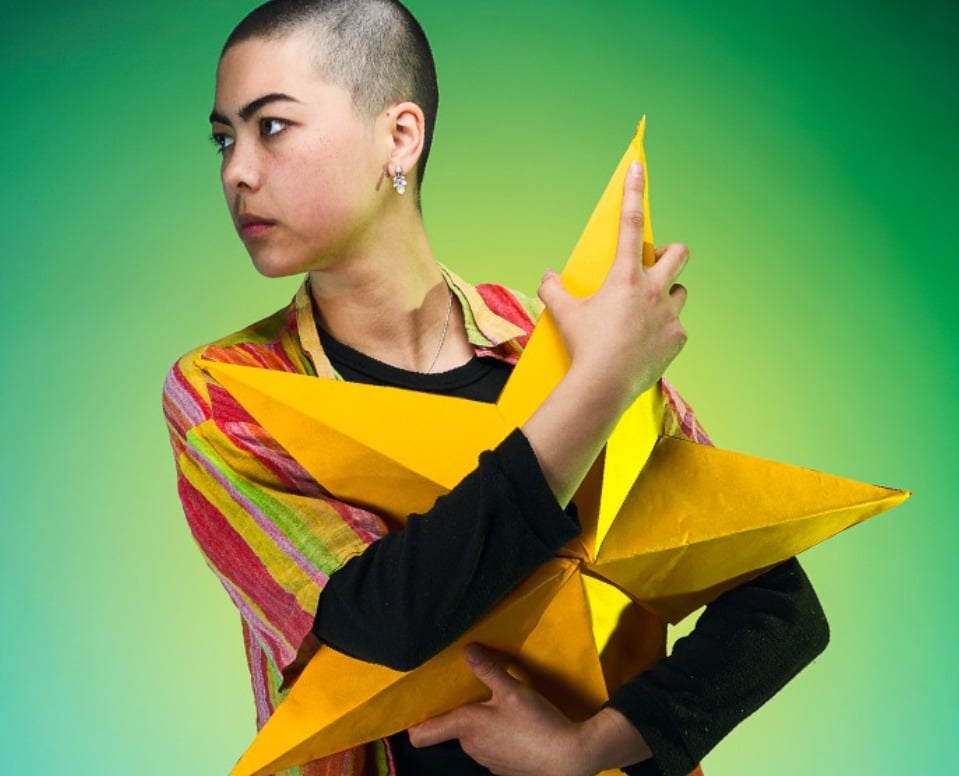
Once upon a time, four fabulous French femmes invented the fairy tale. Not the Grimms. Not Disney. The Fairytalers is a high-energy, history-reclaiming joyride now showing at the Meat Market, and it’s everything your glittery, story-loving heart desires. This whirlwind of a show resurrects the nearly-forgotten lives of Charlotte, Catherine, Marie, and Henriette. The original “Conteuses Précieuses”, who spun tales of ogres and enchanted creatures while battling very real societal monsters of their own: convents, towers, scandal, and patriarchy. Writer and director Ellis Austin Finnie takes these women out of the dusty archives and drops them smack bang into the spotlight, where they absolutely belong.

The concept is simple but striking: the women, now deceased, are deeply unimpressed that the Brothers Grimm got all the credit. They’re trying to uncover any mention of themselves in the modern world. What follows is a meta-theatrical, heartfelt, and hilarious retelling of their legacies, peppered with outrageous storytelling, shadow puppetry, paper crowns, and plenty of fourth-wall-breaking sass.

The cast? Divine.
• Emily Farrell is a scene-stealing delight as the flamboyant and witty Catherine D’Aulnoy.
• Janine Kwok brings warmth and cheek to the quietly passionate Marie L’Heritier.
• Olivia Morison’s performance as Henriette de Murat is grounded and graceful, laced with steely elegance.
• Daisy Valerio is luminous as Charlotte-Rose de Caumont de La Force, commanding both comedy and heartbreak with ease.


The minimalist set by Fiona MacDonald is cleverly functional and the cast shift the pieces around like magical stagehands, transforming spaces with ease and energy. MacDonald’s costume work also shimmers with imagination, nodding to both period aesthetics and playful theatricality.

The lighting and sound design (by Ashleigh Basham and Justin Heaton) enhance the fantastical atmosphere without overpowering the performances. The shadow puppetry sequences, tales told in flickering silhouette on a screen, are especially enchanting and add a lush visual layer that adds to the whimsy.

But beyond the sparkle, this show lands an emotional punch. It’s a celebration of the women who used stories as a means of survival and resistance when they had no other power. It asks: Is it better to be remembered by name, or by the impact you made, even if your name is lost?

By the end of the 90-minute journey, you’ll not only know their names, but you’ll want to write them in glitter across the sky.

An irreverent, intelligent, and emotionally rich love letter to the women who birthed fairy tales. Funny, fierce, and just the right amount of feminist rage wrapped in a velvet ribbon. Go see it. And bring a friend who still thinks the Grimms were first.

To book tickets to Fairytalers, please visit https://www.ellisaustinfinnie.com.au/fairytalers.

Photographer: Freya Valerio

Spread the word on your favourite platform!

The Machine Stops

The Machine Stops

The Machine Stops Rating

Click if you liked this article

1

‘THE MACHINE STOPS’
Stage Play adapted by Briony Dunn from the short story by E.M. FORSTER.
Playing at TheatreWorks, St Kilda from 23rd – 30th August, 2025.

All fans of dystopian novels marvel at the predictions George Orwell made in his 1949 novel, ‘1984’ with many of the tech ideas proving to be true today.

E.M. Forster’s short sci fi story, ‘The Machine Stops’, from 1909, did the same thing way before Orwell did, and was then republished in 1928, translated into 10 languages and voted one of the best novellas up to 1965. During this time, the electric shaver, the television and landing on the moon all seemed sci fi to the masses.

In 2025, our modern-day debate heats up on whether Artificial Intelligence (AI) will destroy humanity and there are strong arguments on both sides, but there’s no denying AI systems that surpass human intelligence, or misalign with human values, could potentially lead to disaster.

Briony Dunn, Head of Writing/Directing and Stage Management at COLLARTS, has adapted Forster’s story for today’s stage, directed it, and co-designed the set for this Theatre Works production, along with Set Designers, Betty Auhi and Niklas Pajanti. Pajanti also designed the lighting, whick pulsates creatively, synchronising with the mood throughout the script, strikingly and is both ominous and futuristic.


The story is set in a world where humanity lives underground and relies on a giant machine to provide its needs. It predicts technologies similar to instant messaging and the internet. Forster pointed to the technology itself as the ultimate controlling force.

Both the set and the lighting are innovative and represent well the way the story would have played out in 1909 – or 1928 – and the way we may see an underground world today. The set imposes from the start, floor to ceiling metallic pillars – not quite to the floor – representing the control of the machine and symbolising its instant messaging, its regulatory power over its subjects, with its geometrical sequence on stage, columns lined in order, 4 x 4 presenting the boundaries humans live within, in a secular way. Only a single chair to the right breaks the sequence on stage.

We are introduced to a mother, Vashti, from the shadows backstage, moving slowly towards the light, which I felt could have been more powerful if done in much less time.

Mary Helen Sassman plays Vashti, Kuno’s mother, however they live on opposite sides of the world, both literally and emotionally.

Dunn’s play also realises this point drastically, focusing on the mother and the son, a juxtoposition without physical connection – at first.

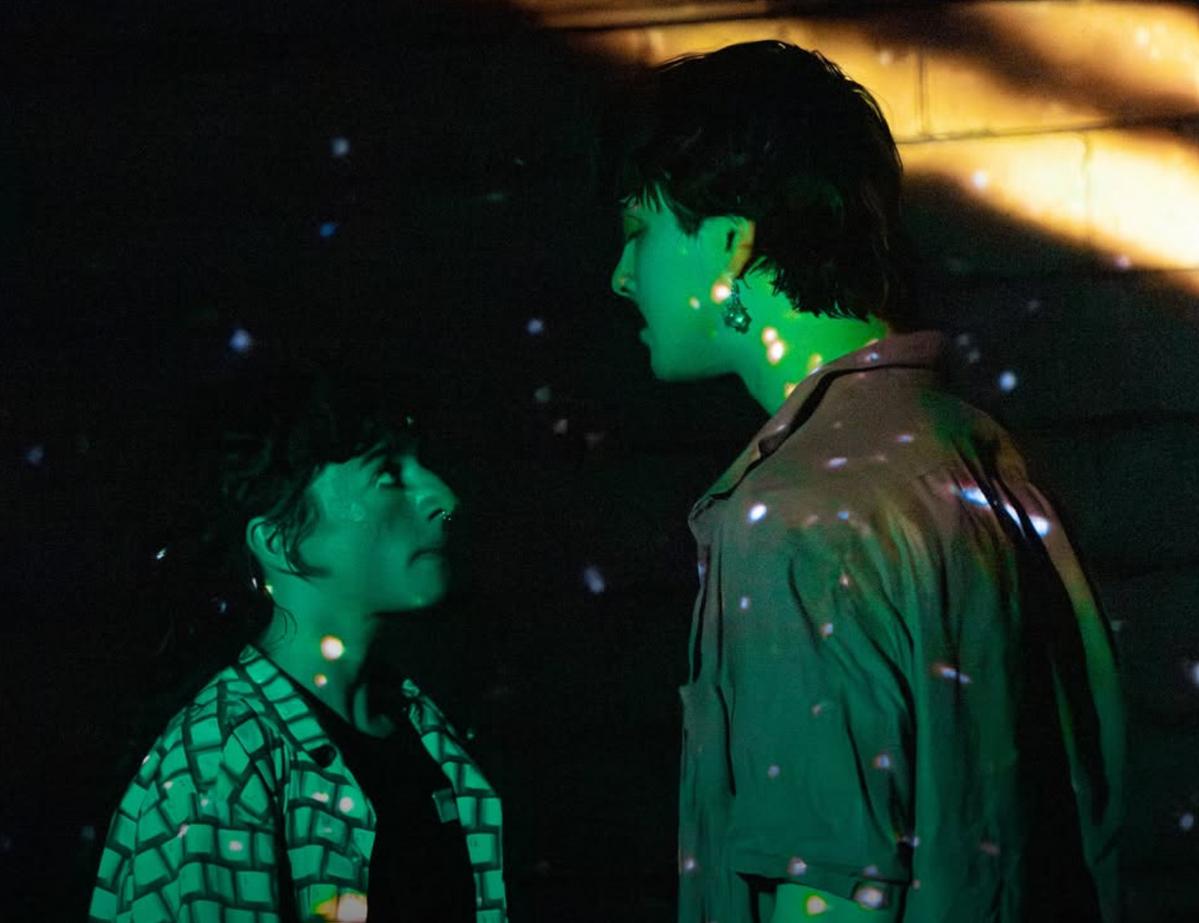
Slick screen projections display grey communication between Vashti and Kuno, similar to our “Face-time”.

In Forster’s story, Vashti is content with her life, producing and endlessly discussing second-hand ‘ideas’ and using her work to avoid real in-person time with friends. Shades of social anxiety during Covid came to mind. Fascinatingly, this prediction from over a century ago has become true of some people today, who take clickbait and three-second sound bites from social media as their truth and real news.

In Briony Dunn’s stage play, Vashti is seen to contrast between happiness and habitual loyalty to the machine with a soul destroying, maniacal loneliness that Sassman portrays too well, almost as if she’s become part of the machine herself.

Kuno, played by Patrick Livesey, returns to his mother (and us) with the raw truth – quite refreshingly. Livesey’s performance had the energy of Richard Burton in Gielgud’s 1964 Hamlet, especially with his delivery of this soliloquy…

“We created the Machine, to do our will, but we cannot make it do our will now. It has robbed us of the sense of space and of the sense of touch, it has blurred every human relation and narrowed down love to a carnal act, it has paralyzed our bodies and our wills, and now it compels us to worship it.”

I look forward to seeing Livesey’s future performances.

A particularly clever scene when the machine finally stops and Vashti can no longer press buttons to satisfy her every need, shows Sassman’s Vashti spiraling desperately out of control.

Dunn’s ending is as Forster wrote and her adaptation is just as successful in providing a warning to humanity that its connection to the natural world is what truly matters.

To book tickets to The Machine Stops, please visit https://www.theatreworks.org.au/2025/the-machine-stops.

Photographer: Hannah Jennings

Spread the word on your favourite platform!

Marian Or The True Tale of Robin Hood

Marian Or The True Tale of Robin Hood

Marian Or The True Tale of Robin Hood Rating

Click if you liked this article

5

Strathmore Theatrical Arts Group (STAG) has opened their third season for 2025 with a rambunctious jaunt through Sherwood Forest and Nottingham Castle.

If you thought you knew the story of Robin Hood and his Merry Men, think again (and think ‘more merry’, and ‘less men’…).

‘Marian, or the True Tale of Robin Hood’ details the ‘real’ story of Robin Hood, where all is not as we thought: Robin Hood is actually Maid Marian in disguise, The Merry Men are by and large made up of women pretending to be men, and love runs (very!) rampant in all its glorious forms across Nottingham Castle and Sherwood Forest.

Director Brian Edmond has drawn together an utterly fabulous cast, who all bring their individual and diverse characters to life in hilarious fashion. Each actor gave strong and nuanced performances across the board. The sometimes witty and sometimes crass humour kept the audience smiling and laughing throughout the entire show.

‘Marian’ is a smorgasbord of entertainment: wall-to-wall jokes, strong and quirky characters, an abundance of action and fight scenes, and love in all its glory (be that queer love, straight love, lost love, self-love, and of course plenty of sex).


The play has a strong (and overtly obvious) theme of sexuality and gender identity, very cleverly approached through humour. Using such a well-known story as Robin Hood to tackle these important topics is a testament to the play’s writer, Adam Szymkowicz. It really is a genius way to address issues and ideas around gender and sexuality in a way that can easily appeal to a wide audience.

STAG has really done a fabulous job bringing ‘Marian’ to life, with a simple but effective set and lighting, fabulous costumes, and oodles of (very fun to watch) fight choreography.

If you want an entertaining night out a good laugh, definitely go and see ‘Marian’!

‘Marian or the True Tale of Robin Hood’ is on for a limited season at STAG from Thursday 21 August to Saturday 30 August 2025. With some shows already sold out, make sure to book in quickly to not miss out!

Keep an eye out for the fourth and final season for 2025 from STAG, ‘The Beaty Queen of Leenane’, directed by Matthew Freeman, with performances running from the 13th to the 22nd of November 2025.

To book tickets to Marian Or The True Tale of Robin Hood, please visit https://www.stagtheatre.org/.

Photographer: Dave Swann

Spread the word on your favourite platform!

How Education Can Change It All

Educating Rita

Educating Rita Rating

Click if you liked this article

2

Educating Rita is an interesting and thoughtful but slow-moving show. Consisting solely of conversations in a single room, on a single topic of education. This show follows Rita, a 27-year-old hair dresser in Liverpool beginning university, and engaging 1:1 with her professor, Dr Frank Bryant, in his office. Rita and Frank debate and discuss education, class, and alcoholism. Educating Rita’s strong script consistently obtains laughs from the audience, a credit to the comedic timing of the actors and the keen direction of Sharon Maine. This show was engaging and pulled in the audience through the powerful relationship it builds between its protagonists. The morally split and endearing characters create space for the audience to ask themselves the value of education, and its impact on social class.

This production boasts an interesting and authentic set, with piles of books that weaved in and out of the story. The characters moved about the office comfortably aided by simple and appropriate lighting. Rita and Frank sport funky costumes, exhibiting era and class appropriate wardrobes that support the audience’s immersion into Rita and Frank’s world. All the components of the show worked well together to bring Frank’s office to life.


This is clearly a show that wants its audience to question education and its value, as opposed to or in direct conflict of social capital and value. Rita and Frank toy with the educational imbalance and social inequality between them, creating and building tension in their relationship. Appropriately, or sadly (for me), the show contains some literary references that went over my head, but likely more educated people will understand. Perhaps that was a purposeful design, for the characters to highlight their educational and social superiority. Either way, the literary references enhanced the experience of the show, bringing literature to the forefront of Rita and Frank’s discussions.

At different points of the show Rita struggles with writing papers, alluding to the challenges of womanhood. Rita struggles to balance her work, domestic duties, and school. In her dissolution of society Rita notices neighbours becoming numb and looking for purpose, Frank and Rita’s conversation turns towards the awe and wonderment of life, traversing trivial struggles and mounting monumental issues we all face in life. Rita notes that there is ‘not enough time to find myself,’ alluding to the feminist struggle and desire to take on the world. Rita faces the struggle of conforming to society and giving in to peer pressure, or pushing against social expectation to achieve academically.

This play determines how education changes us, or not. It maintains a quiet sense of humour throughout, allowing the impact of heavy themes to wash over the audience amongst light hearted quips between Rita and Frank. The divergence of ideas and values pulls the characters apart, the central relationship splintering over time.

To book tickets to Educating Rita, please visit https://thebasintheatre.au/event/season-4-2025/2025-08-07/.

Photographer: Jason Triggs

Spread the word on your favourite platform!