Where Harmony Meets Healing: The Heartbreak Choir

The Heartbreak Choir

The Heartbreak Choir Rating

★★★★★

Click if you liked this article

5

Opening to a robust audience at Brisbane’s PIP Theatre, The Heartbreak Choir by the late playwright Aidan Fennessy explores the healing power of song while deeper tensions simmer beneath the surface of a country community.

Deftly directed by Sherryl Lea Secomb, The Heartbreak Choir invites us into the world of a small group of choristers who splinter from their established choir, incensed over a matter of principle. With a new name, a new space to rehearse and a public debut looming, the newly formed choir is determined to right the wrongs of the past. As the first act unfolds, snippets of dialogue and moments of interaction hint at an undercurrent of tension, gradually revealing the basis of this moral divide by Act One’s conclusion.

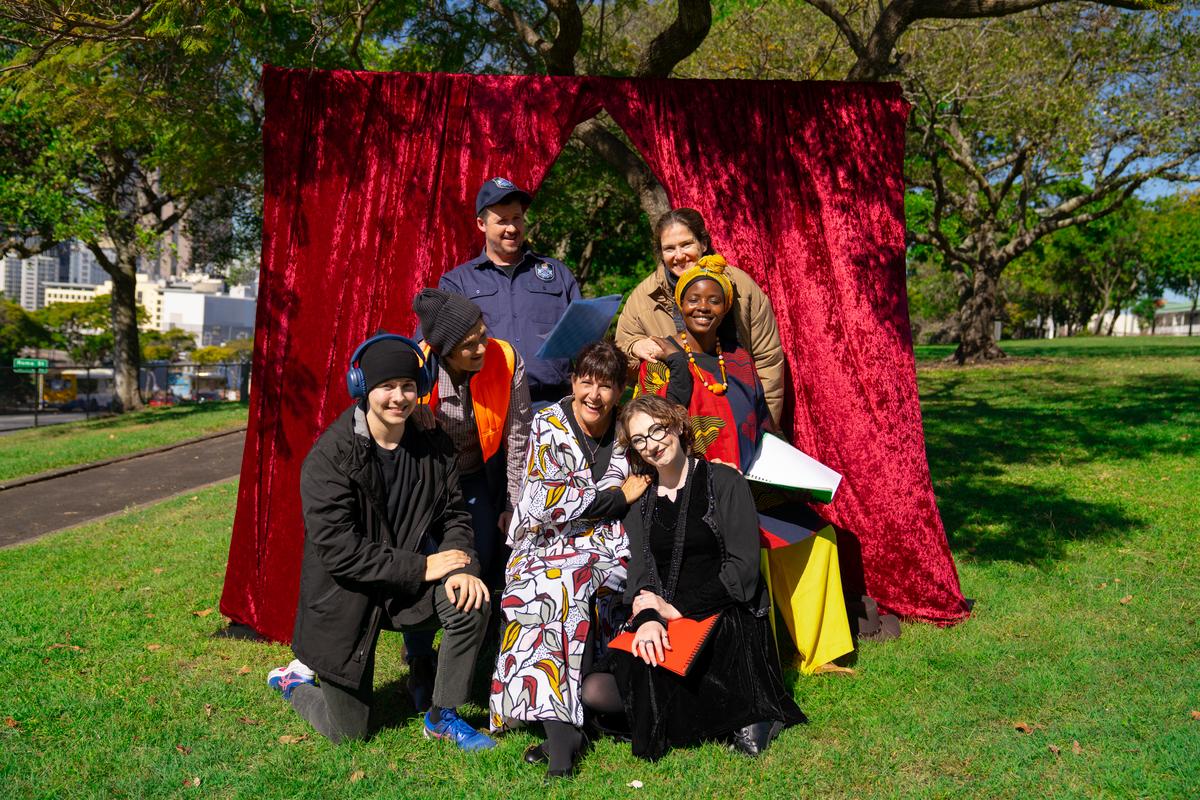
The play opens in a tired community hall on the outskirts of a rural Australian town. Hannah Page’s sound design is immediately immersive as a woman enters, flicks on a buzzing fluorescent light and coaxes the only radiant bar heater to life. The simple set features a kitchenette, worn metal fold-up chairs and a stock standard piano. It’s not too long before the eclectic mix of characters arrive for their first breakaway choir rehearsal under their leader Barbara (Catarina Hebbard).
Anchoring the choir group is Barbara, exuding a faded elegance and grounding warmth. She is level headed and guides the group with gentle authority.

Straight talking and bustling farmer Mack is brought to life by Gemma Galley. Her refreshing authenticity and ability to burst into a room and inject it with a bombastic energy sets you back in your chair. There’s a stark contrast between Mack and child Savannah (Micheal Enright), who selectively communicates non-verbally. Similarly affected by anxiety, this contrast highlights how differently people can express their inner turmoil.

Though often quiet, Savannah carries a presence impossible to ignore; sassy and stubborn, yet intensely observational. With angelic singing voice and signing, Enright’s portrayal compels you to lean in further to interpret their messages.
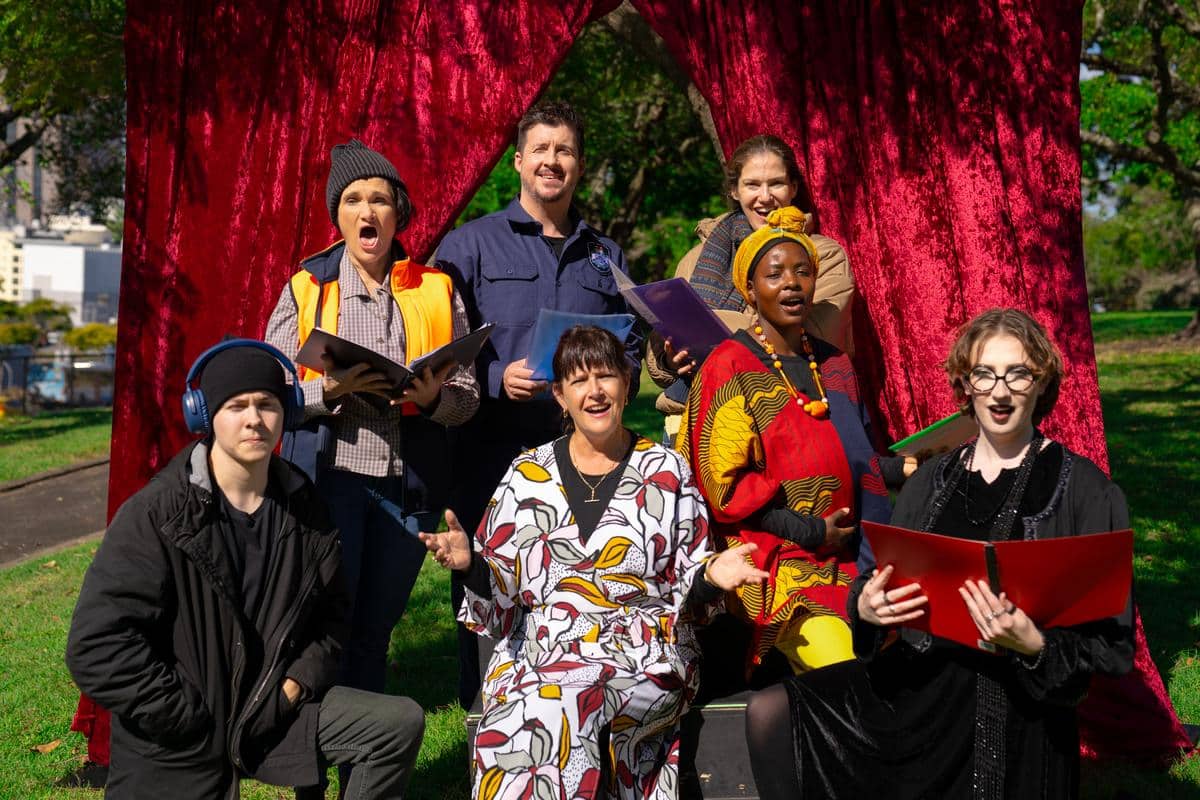
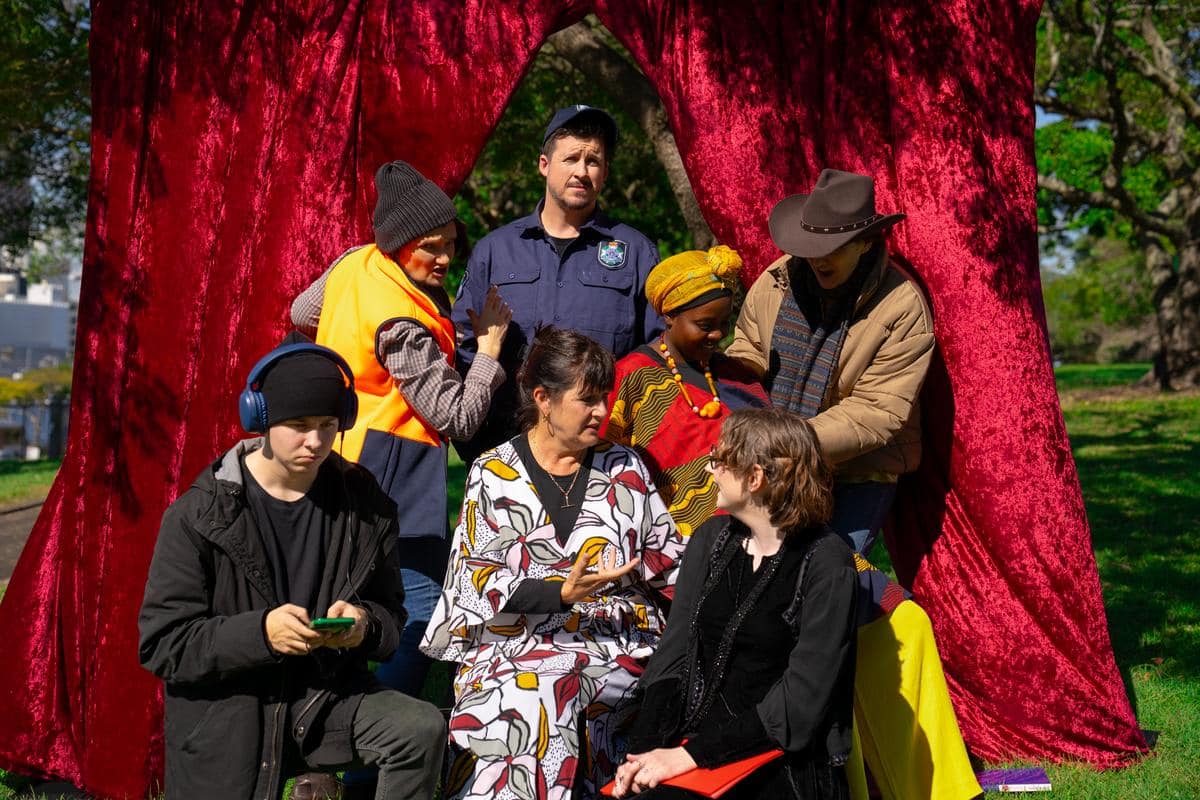


Diedre Grace portrays Totty—frighteningly organised, a delightfully brazen inability to read the room, and getting about in Hi-Viz gear for no obvious reason. Diedre’s unfiltered delivery of lines in tense situations never fails to pop the bubble of tension, bringing a fresh swell of energy to the scene.

Assini, the soulful, heavily pregnant Zimbabwean woman emits the necessary warmth to the group. Through her poignant stance and pragmatic reactions, Brightholly Nininahazwe is unafraid to quietly stand her ground in spaces of moral division.

Nervously gatecrashing this new tight knit bubble of choristers is senior police offer Peter (played by Bradley McCaw), burdened with both the weight of his past and reservations about what his future holds. There’s a humble vulnerability McCaw brings to the role, which ultimately acts as a catalyst for the choir to deal with their past.

Benjamin Cole, as son of Peter, perfectly aids McCaw in displaying the contrast between the different impacts of grief on a person. Both racked with shock from recent events; they convey the significance that trauma holds in shaping who you are and how you act.

Although Beau’s transformation is slow, his character arc feels rewarding to watch unfold. And with few lines, Cole successfully utilised body language and unspoken interpersonal dynamics to illustrate his unacknowledged emotional story.

The plays’ darker themes are balanced remarkably well with humour and quirky characters, testament to the strong ensemble cast. It’s difficult to pick a clear standout performer—each brings such heart and believability to their role that the play wouldn’t feel complete without any of them.

While the underlying message of this production is quite a serious one, most of the show is surprisingly funny, with plenty of classic Aussie slang, humorous ramblings, and raw character interactions sparking moments of laughter around the room.

With the finale song Our Little Town, composed and arranged by Bradley McCaw, and in collaboration with local choir Ignite, led by Harmony Woollet, the production provides a joyous tribute to the power of connection through community.

PIP Theatre’s The Heartbreak Choir is performing till the 19th September. For tickets please visit: 2026 | The Heartbreak Choir | PIP Theatre

To book tickets to The Heartbreak Choir, please visit https://piptheatre.org/heartbreak-choir/.
Spread the word on your favourite platform!

Two Towns, Two Outsiders And No Guarantee Of Landing On Your Feet

The Maxine Mellor Double Bill

The Maxine Mellor Double Bill Rating

★★★★★

Click if you liked this article

6

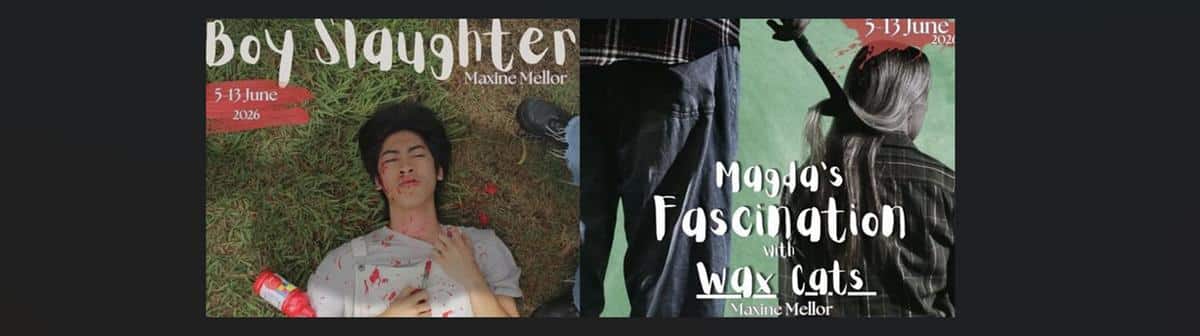
Sun Wine and Arts present Boy Slaughter and Magda’s Fascination with Wax Cats as a double bill from Brisbane-based playwright Maxine Mellor. The two plays present similar themes of the Australian gothic, rural isolation, escapism and outsider characters constrained by their small-town culture. Each play uses a rural township as a backdrop to examine isolation, fractured family dynamics and the struggle to confront the status quo.

Boy Slaughter opens with Jimmy Slaughter (Vince Lapore) directly addressing the audience engaging us with reflections on his life, upbringing and the difficult and toxic relationship he endures with his father, the local butcher. Jimmy’s neighbour Nell (Daena Rae) serves as his shining light and one true friend amid the play’s darker themes. Jimmy yearns to pursue his artistic side, while escaping the stifling constraints of the small-town, at the hand of his father Brute’s alpha male brutality.

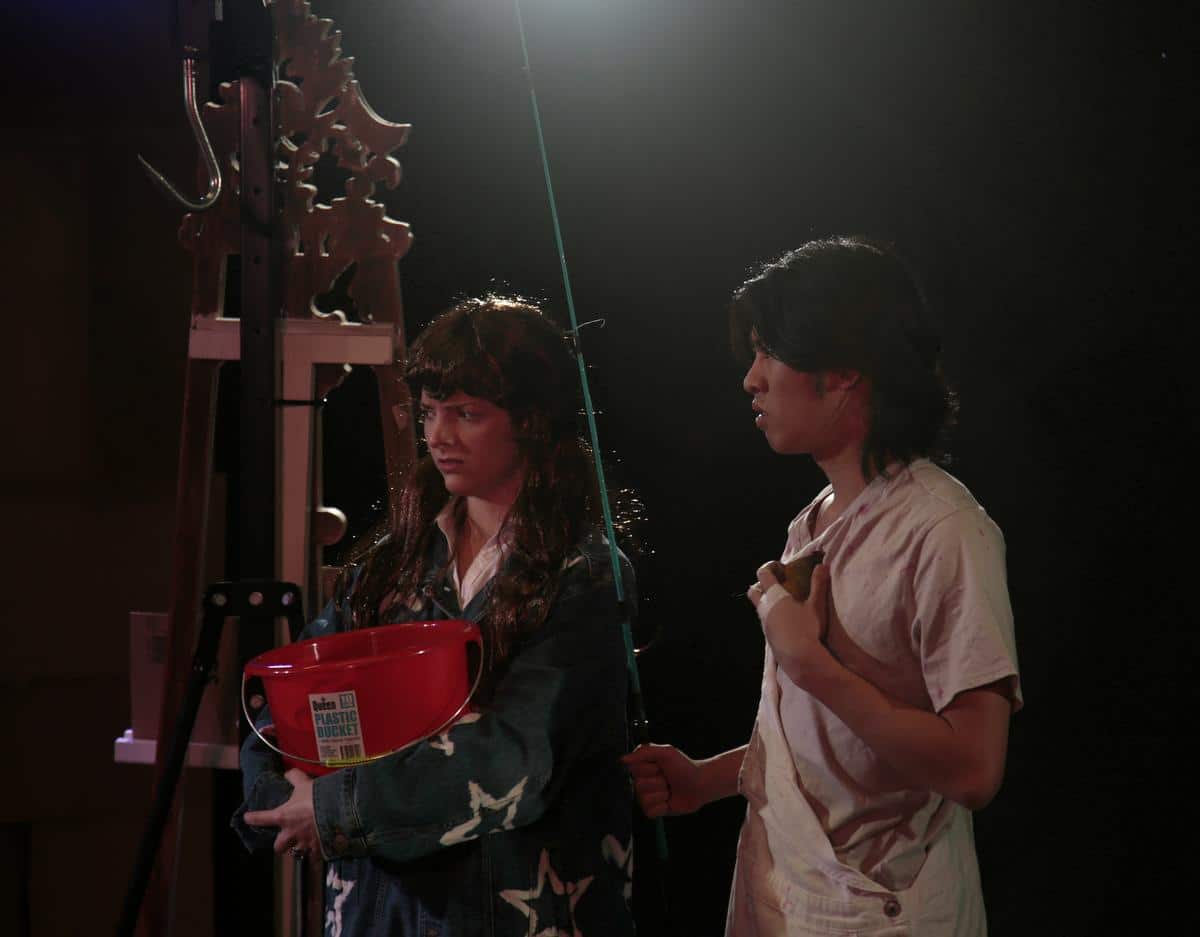
Director Carter Firmager utilises a warehouse style black box space to create an intimate space for this four person play. Set design was simple, highlighting Jimmy’s artwork collaging the walls like oversized Post-it notes. Complimented by a dining table alternating as a butcher’s block, and art space, allows us to focus on the intense emotion and storyline. A tripod style art easel also rotates to become a meat hook. Refrigeration hum sounds, along with softer lighting helped build tension, giving us the immersive experience of a butcher’s cold room.

Alex Sturdee (as Brute) leans into his character’s intensity and menace creating a haunting stage presence. His wild-eyed predatory gaze was more than enough to create a strong sense of unease from the audience. Mary Veitch compellingly plays Rosie; Brute’s new girlfriend having met at anger management classes. Rosie serves to give Jimmy welcome space from his overbearing father but equally stirs up discourse between Jimmy and Brute.


Overall, through Jimmy’s eyes, we witness the challenges of pursuing one’s dreams in an environment resistant to change. It’s his determination that empowers him to begin carving out a future on his own terms.

While Boy Slaughter explores the impacts of violence, masculinity and the oppressive culture of a small rural township, Magda’s Fascination with Wax Cats propels us into a more cerebral experience, trading external drama for a feverish internal struggle.

In a parallel rural town, Magda opens the second play with a frenzied lyrical outpour, as she grapples with identity, trauma and isolation. Maxine Mellor’s well-crafted monologue-driven play is delivered with rhythmic vigour by Rose Swanepoel, the first scene clearly establishing her fragile psychological state.

Magda cycles us through the fractured maze of her mind, each mini-monologue punctuated by the numbing chant “and that’s Magda.” The repetition emphasises how her third-person narrative conceals her trauma and provides a fragile framework for getting through everyday life.

Delivering Magda’s psychological torment with such stamina and energy is true testament to Rose’s ability to sustain such an intense role.

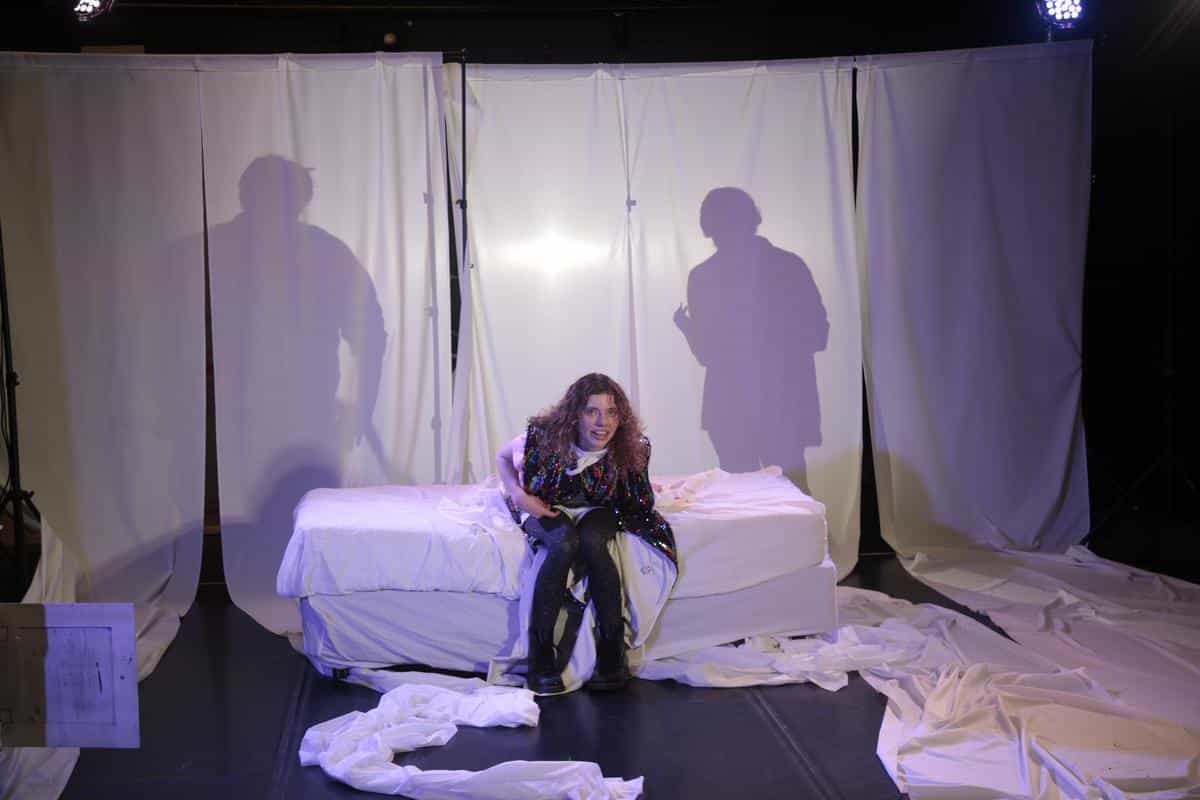
There’s an apt starkness to the intimate space entirely draped in white sheets, a bed and side table effectively mimicking a psyche hospital ward as Magda’s assumed home. Other props such as the use of a straight jacket and a wheelchair intensify the confines of her environment. Rose effectively uses the stage space to express Magda’s physicality keeping her constantly in motion and incorporating a nervous tic—adding a textured layer to her portrayal.

Under the thoughtful direction of Hamish Chappell, the three supporting cast function largely as configurations from Magdas’s psyche, leaving the audience to question if the scene unfolding is real or imagined through her coke bottle lenses.

Sophie Duck (Magda’s older sister Ellie), Taigh Saville (Rob), and Ben Kasper (Billy) deliver compelling performances, functioning less as anchors and more as antagonists within Magda’s fractured world.

The turning point in the play is the stripping back of the 3rd person narrative and Magda’s rude awakening after witnessing something brutal forcing her to confront her lived reality.

As a viewing experience and with the utmost respect to Mellor, neither of the plays seek to employ the convention of a happy ending or a tidy resolution. Instead, they leave the audience with an unnerving sense of relief as the stage finally blacks out—a testament to the power of the writing and the emotional weight of the stories being told.

Notably, Sun Wine and Arts continue to explore nuanced characters and complex stories without breaking a sweat, and this production was no exception.

Boy Slaughter and Magda’s Fascination with Wax Cats is performing at Studio 1 Yeerongpilly, Brisbane till the 13th June. (There is the option to see the plays as a double bill or individually.)

To book tickets for this double bill please visit: Maxine Mellor Double Bill

To book tickets to The Maxine Mellor Double Bill, please visit https://events.humanitix.com/maxine-mellor-double-bill.

Spread the word on your favourite platform!

Romeo & Juliet – An 80s Reimagining!

Romeo & Juliet

Romeo & Juliet Rating

★★★★★

Click if you liked this article

2

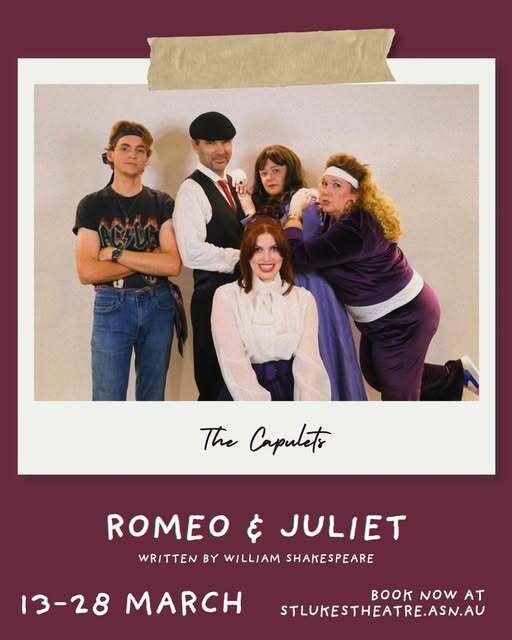
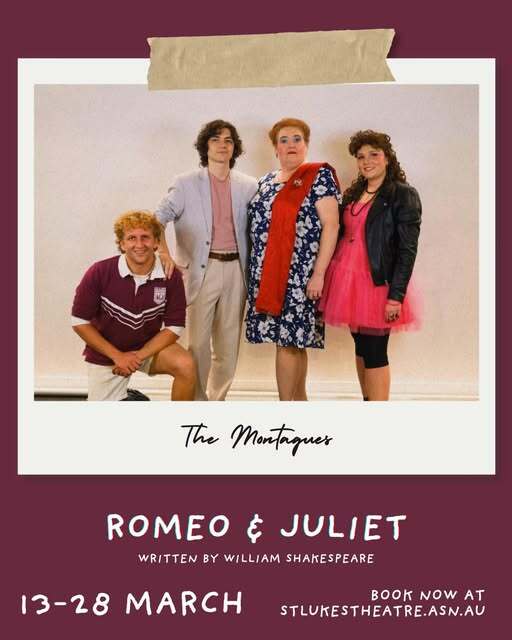
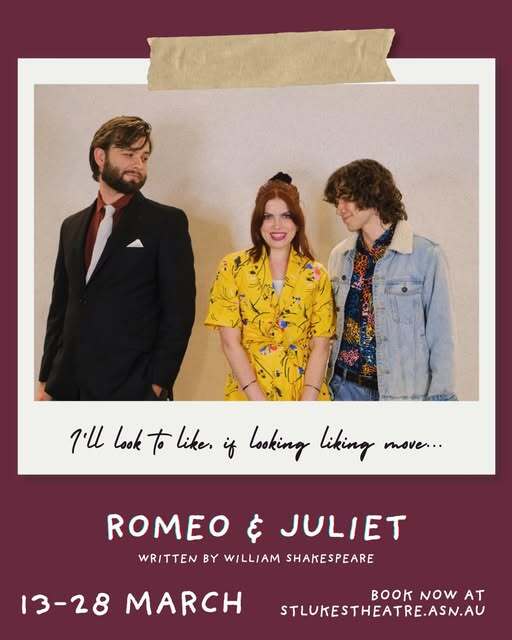
St Luke’s Theatre Society’s adaptation of Romeo and Juliet reimagines this timeless Shakespeare tragedy with an 80s backdrop: the iconic decade that shocked our senses with a mixtape of neon colours and bold prints, leg warmers, lycra, big hair and rebellious youth culture.

Assuming not all are familiar with the storyline, Romeo and Juliet fall deeply in love despite their feuding families. Their secret relationship and plans go awry and lead to an untimely tragedy that finally compels the two families to reconcile.

If you’ve not had the luxury of surviving this decade, the question arises: why the 80s? The rebellious pop culture and emotionally defiant spirit of this decade echo Romeo and Juliet’s determination to follow their love despite social rules. U2’s song ‘With or Without You’ is just one example of a music transition used to reflect the pain of loving someone in impossible circumstances.

The Director-June Balfour takes us on this 80s inspired journey transitioning scenes with aptly chosen songs, often tongue-in-cheek, revisiting music icons such as Tears for Fears, Madonna, INXS, and Queen.

Nestled in the grounds of St Luke’s community church is a modern performance space. Sound production effectively delivers the dense prose often found in Shakespeare plays. A central revolving platform was used to alternate between Juliet’s bedroom and other locations including Romeo’s quarters. Utilising the centre aisle and steps as an entry and exit point for actors, cleverly extended the performance space creating a more intimate and immersive experience.


The portrayal of Romeo was delivered strongly by Lachlan Gregory Hugh, his mastery of the Shakespeare script effortlessly showing light and shade. Romeo’s footy-loving cousin Benvolio (Giorgio Impiccini) played his role with gusto and high levels of energy, bringing the scene to life wherever he went. Madelyn Scott’s commitment to the role of Romeo’s friend Mercutio brought clarity and meaning to the witty wordplay of Shakespeare.

Lillian Dowdell earnestly portrays Juliet bringing a quiet confidence to the role. The dynamic between Juliet and her Nurse was engaging and playful, their banter evoking much laughter from the audience. Ellie Bickerdike, as the bawdy touchy-feely nurse, leans into the role so much it’s bordering on cringeworthy.

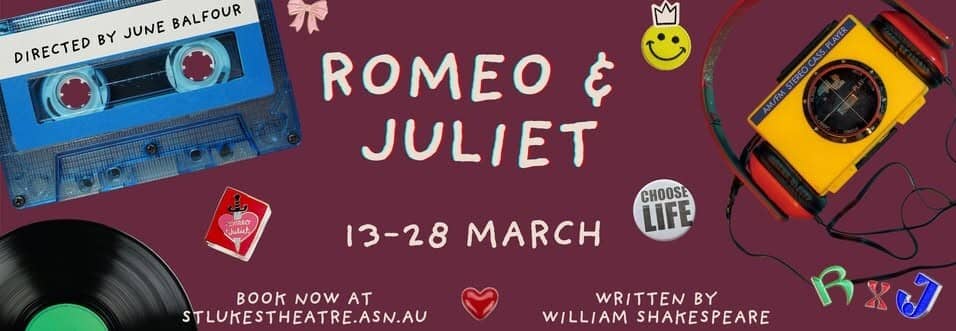
The costuming showcased the hyper-coloured boldness of 80s fashion. Using set props like a Walkman and a gremlin plushie were fitting nods to the decade. I particularly liked the inclusion of Juliet’s drop-waist wedding dress!

While well-intentioned, the 80s tracks to transition scenes sometimes disrupted the mood, creating a disconnect with the story. The attempt to blend upbeat 80s music as light humour with the emotional volatility of the play occasionally interrupted the momentum, ultimately causing certain moments to fall flat.

Overall, the production succeeded in highlighting the timelessness of Shakespeare’s story. While it made bold use of 80s fashion and music, the theme was more decorative than immersive, still offering enjoyable relatability and engagement with the audience. This connection was further enhanced by creative staging and strong performances.

Romeo and Juliet is showing at St Luke’s Theatre Society, Brisbane until the 28th March. For tickets go to:
https://stlukestheatre.asn.au/

To book tickets to Romeo & Juliet, please visit https://stlukestheatre.asn.au/.

Photographer: carpediam.ink

Spread the word on your favourite platform!

Wyrd Sisters – Brisbane Arts Theatre

Wyrd Sisters

Wyrd Sisters Rating

★★★★★

Click if you liked this article

3

Stephen Briggs adaptation of Terry Pratchetts fantasy fiction novel Wyrd sisters, invites the audience into a world of parody in a humorous blend of Monty Python absurdism meets Shakespeare.

Opening with three witches (the Wyrd Sisters) huddled over a cauldron we hear the line: “When shall we three meet again?” and with a deadpan “Well I can do next Tuesday”, the satirical tone is set and we soon realise this play won’t take itself too seriously. Woven into this fantasy adaptation are meddling witches, a scheming duke and duchess, a murdered king’s ghost, a baby heir smuggled into hiding, a travelling troupe of actors and a reluctant fool. Restoring the rightful heir to the throne becomes the witches’ main plight all while challenging the philosophy of whether we control our destiny or it controls us.

Director Sally Daly undoubtedly had a task ahead of her bringing Wyrd Sisters to life and to eager Pratchett fans and non-fans alike. Stephen Briggs script manages to weave wit, fantasy, magic and thought-provoking narratives inside nuanced references to Macbeth. And in playful meta-theatrical style it makes nod to Hamlet and A Midsummer night’s dream.

The Stagehouse theatre, plays host to this production and offers a lovely expansive stage. The tri-level minimalist set relies heavily on the lighting to shape scenes requiring more intimate space. At other times the very large stage wasn’t helpful to the actors and often diminished the actors’ presence and impact.

Sound also proved challenging. Without strong projection or microphones, several lines were lost into the void, extinguishing the punch of some of the sharper comedic beats. This was disappointing for the actors and I noticed more than a few audience members leaning in to hear. Sound projection was an ongoing issue, especially with the Fool (Sam Bentley), whose enthusiastic movement and antics often muffled his dialogue.

Sam Bentley as The Fool embodies the presence and accent reminiscent of Lord Percy in the Black Adder, and is very fitting to this period piece.


Costuming was on point and provided much of the authenticity and atmosphere this farcical period piece demanded. The three witches each had their own distinctive costume style as are their characters. Granny Weatherwax played by Amanda Lay provided a formidable anchor for the two other witches. The junior witch Magrat played by Marisa Bucolo added a youthful energy to her role. Nicky Whichelow as Nanny Ogg is a standout with her delightful contorted facial expressions providing great comic relief.

The Duke (Aodhan Thomas) and Duchess (Jacqueline Ellis) deliver their lines with confidence though there are times when their exchanges lack cohesion and flow. The duke navigates his personal demise and nervous breakdown with great energy again emphasising a nod to Shakespeare.

Nick Daly’s portrayal of the oblivious heir Tomjon shines with his bright upper register voice, conveying the naivety and innocence essential to the character.

Special mention goes to the support actors and ensemble cast who often play more than one role with quick changes. Although the first act suffered with some pacing issues, and tentative delivery of dialogue at times, the second act was a lot stronger. The sound projection had improved, and I’m sure these opening night nerves and tweaks will resolve with future shows.

All things considered, the production’s strong ensemble work and the clever Shakespeare-tinged script make Wyrd Sisters an entertaining show.

Wyrd Sisters is running at StageHouse theatre Stafford for a limited season until the 22nd of November.

For bookings go to: Terry Pratchett’s Wyrd Sisters Tickets, Stagehouse Theatre, Stafford | TryBooking Australia

To book tickets to Wyrd Sisters, please visit https://www.artstheatre.com.au/wyrd-sisters/.

Spread the word on your favourite platform!

Subscribe to What's The Show

Reviews, show news and what is on, straight to your inbox.