Worlds Alive 2026

Worlds Alive 2026

Worlds Alive 2026 Rating

Click if you liked this article

Offering five separate perspectives of oppression, suppression, and corruption across different cultures but with the same result of division and pathos, Worlds Alive presented plays and excerpts as if listening to a radio. In a current world of media and without costumes, a set or lighting, the spotlight was on the beauty or directness of the word. It required concentration and some stamina but was well worth it.

Kunene and the King presented two people from opposing cultures and with past apartheid history hanging overhead. With one person ageing and the other caring for the aged, the audience was hoping for a developing friendship. Despite the antagonism due to a disappointment of the present socio-political environment, eventually deep conversations led to an understanding. Both actors generated a connection with well-rehearsed readings intertwined with the beauty of King Lear but also the foolishness of misunderstanding and ageing. With no set, the language was all the audience had and a powerful message was relayed of how mis-communication results in missing the opportunity for understanding and peace.

Miss Margarita’s Way – it was a hard act to follow the first powerful play. The actor offered a dark comedic vignette of suppression and indoctrination starting with youth. It left people quite rightly nervous of being in her space!


An Evening at the Opera – a couple at war with themselves and with a history of their despotic family ties and corruption, the relationship erupts as the dictator focuses on a macho-style leadership of ‘bread and circuses’ to appear as a benevolent dictator. At the same time, his wife, who has come from a line of family dictators, faces herself literally in the mirror and has to come to terms with who she is and what she has become. With her mother’s ghost offering dutiful female advice from the past, the future looks bleak. The actors each kept the audience uncomfortable enough to recognise the underlying political corruption with the overlay of a marriage and family dynasty.

Night Picture of Rain Sound – a reader questions the symbolism of Romeo and Juliet, offering a different perspective and possible outcome. The actor presented quietly and thoughtfully how we should question what we are supposed to believe, perform or be and for what purpose really?

The Struggle of the Naga Tribe – the full ensemble presented as a Greek chorus swapping roles to offer different perspectives. There were the corrupt business developers deliberately misinterpreting and demonstrating the results of economic progress to the benevolent but corrupt government who choose to ignore the impact on a peaceful village. Other voices included the village leader and people recognising too late that they have also been sold a story and that their culture and soul has been sold at a huge price. The actors powerfully presented alternating points of view with a sobering ending of ‘too little, too late’.

The audience listened carefully, absorbing and resonating with the social messages applauding each piece as a separate entity. It was at times bald, poetic and informative and well worth the effort.

To book tickets to Worlds Alive 2026, please visit https://www.scenetheatresydney.net.au/.

Spread the word on your favourite platform!

Look At The State Of The Carpet

Look At The State Of The Carpet

Look At The State Of The Carpet Rating

Click if you liked this article

Expect the unexpected and experience the theatre of the absurd where the choices in life are shown to often be irrational, meaningless and out of the box.

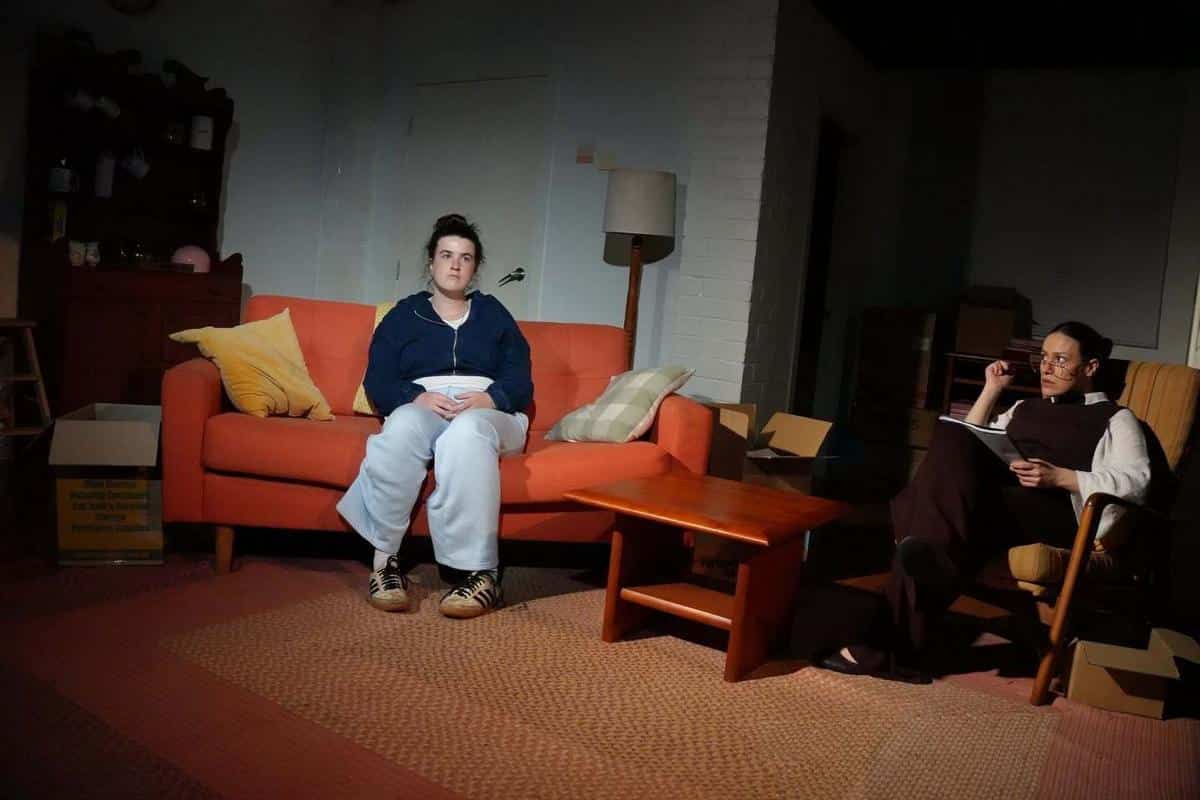
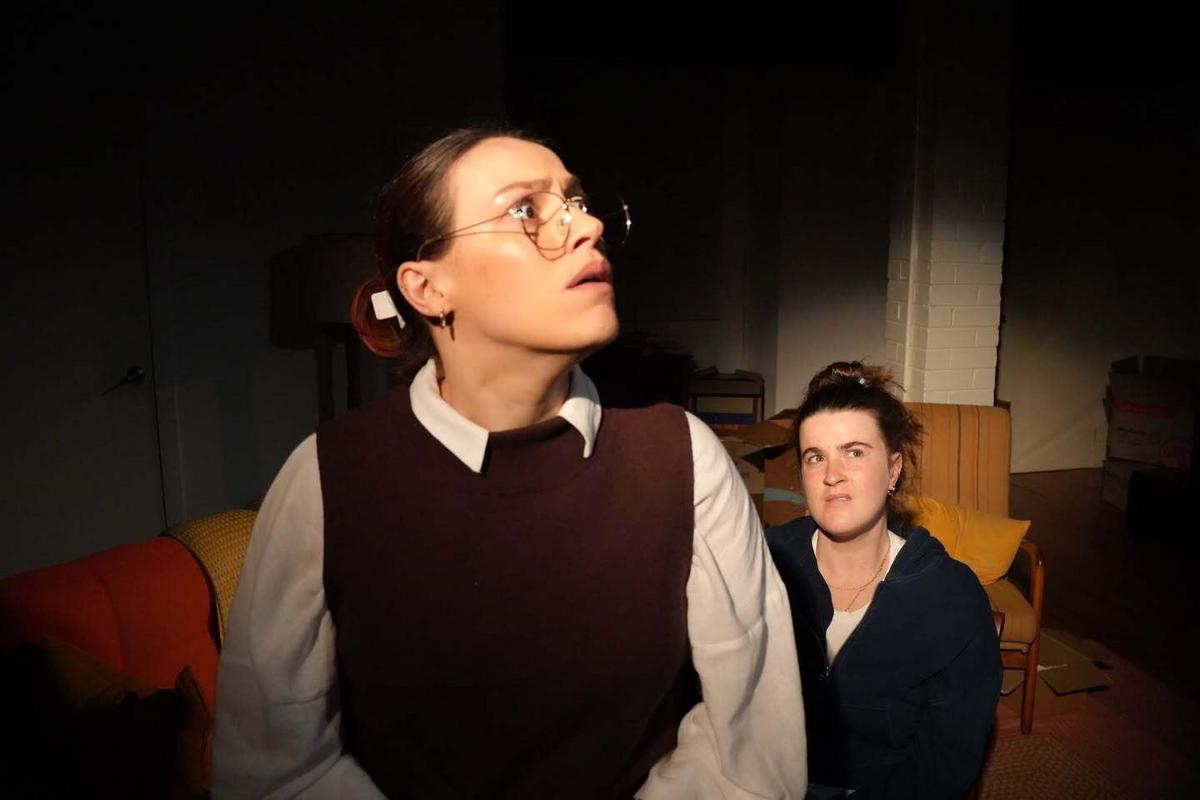
Two friends demonstrated the frustrations and bond that occurs over years with layers of history and tolerance. Both actors showed their flair for the theatrics of theatre and the desire to be in the spotlight playing off each other. One living life through a disorganised chaos and the other living life through chaotic order. Both ignoring what they don’t want or need to see in each other or themselves and opening up to the ebb and flow of friendship that requires dedication and tenacity.

In the gritty space of the Old Fitzroy Theatre below the hotel bar, the audience witnessed close at hand, the clash of chaos and order between two different approaches to life. The basic set and lights put a spotlight on the two characters and clothes and music were the costumes of the play. It all added to the nitty, gritty of day to day life that has gone through the normal life stages that each character has experienced and endured.


As with all relationships, the comments were funny, cruel and often elicited uncomfortable laughter from the audience. At times, the humour was slapstick and visual and other times it was odd and illogical as we stepped in to the minds of the individual friends. Both actors interacted with audience members drawing them in to the day to day emotions blurring the lines between separation and involvement. Each character provided an odd view of their life but also a focus on each other’s choices and mistakes. There was a sense of the unpredictable as they acted face to face with audience members adding to the zany and sense of anything could happen and it did and this was their way of getting through it all.

Using different media, they showed off, sang, emoted and went from woe to glee over the stupidity of it all. A particularly funny piece was miming to a woman’s desire for a more interesting job adding to the zany and illogical choices people take along the way and leaving us wondering why?

Although the comedic pace was at times uneven, the audience appeared to leave having explored the desire and need of two people determined to retain the friendship in spite of their differences and interpretations on how life has impacted upon each other.

To book tickets to Look At The State Of The Carpet, please visit https://www.oldfitztheatre.com.au/look-at-the-state-of-the-carpet-1.

Spread the word on your favourite platform!

Monster

Monster

Monster Rating

Click if you liked this article

0

Performance theatre is often most effective in the context of a paired back stage and minimal props. In Monster – Directed by Kim Hardwick – a talented cast give compelling performances and bring Duncan Macmillan’s cracker of a script to life. This is the first time his characters have come to Sydney, and the intimate setting of KXT Theatre in Broadway was the perfectly suited venue to see them play out. Audience members bear witness to the type of theatre in which the flicker of a flame sparked makes a room to hold its breath, and a small box on the dinner table transforms the promise of engagement into a complex and foreboding omen.

The “Monster” in Macmillan’s play is seemingly clear from the moment that stage lighting illuminates the youngest face of the cast. Campbell Parsons is electrifying as Darryl, a budding psychopath who speaks with convincing intensity about burning buildings, setting off fire extinguishers and playing with knives. Darryl idolises notoriously evil figures like Charles Manson and Jack the Ripper and informs his new teacher Tom (Tony J Black) – or as he calls him – “Agency” that he has aspirations to be just like these people one day. Daryll seems to have an eerie level of unspoken insight into his situation, and Parsons – as an actor – is able to use physicality and tone to accurately command the audience’s attention.

Darryl is a child whose pain has rendered him so incapable of anything productive beyond creating a spectacle of it. He exposes his new teacher’s vulnerabilities with ease; collecting them as ammunition to be inflicted at the right time. Black holds the character of the frustrated teacher well, and when he is regrettably drawn into comments about his race and level of affluence, it is clear that Darryl has successfully projected his own feelings of difference and shame onto his next unwitting victim. Darryl’s feelings seem to be so unbearable that even his Nan is not safe, evident by a moment in which he expresses to Tom that he fantasises about stabbing her in the back when she cooks his dinner each night.

The themes in this play are not for the faint of heart. Mental illness, social class, trauma and despair bounce around the room, as the stellar acting exposes the machinations of truly flawed people. Grey areas in moral culpability are explored, and when new characters enters the stage, they serve only to ask more questions than to answer them.


Tom’s soon to be wife Jodie (Romney Hamilton), as well as Darryl’s Nan ‘Ms Clarke’ or Rita (Linda Nicholls-Gidley), both do justice to the part of people who are trapped and out of their depth. Rita’s constant and fraught attempts to avoid associations with her surname – or to take any accountability for her grandson’s behaviour – are revealing aspects of the script. It is clear that despite being lonely, Rita does not want to be bound to the responsibility with which she is endowed, and she instead chooses to find what little solace she can in her “faith”. Her partner Carl – who only ever appears as a name in this play – is a character that seems to supersede all evil that Darryl mentions he is capable of to Tom.

There are glimmers of hope and humour in the performance and in one scene, Darryl hints of the notion that a child who has been written off as “inherently bad” may perhaps be capable of empathy (or at very least guilt) if someone were to truly care for him. However, what follows this scene adds an even greater depth to the plot, in the idea that people can inflict ferocious pain onto others when their own has gone completely unchecked.

In its intimate exploration of familiar but profound themes, this is a play – and venue – that allows for a communion of thought from an invested audience. The Director and cast treat the subject matter with respect, which means the themes are capable of reaching a thinking and feeling audience. It was – at some stages in this performance – difficult to avoid exchanging furtive glances with audience members on the opposite side, as they navigated their own visceral reactions to the many transfixing moments in the play.

More than ever, it is important that human beings continue to explore the puzzling moral issues within this play. Conversations ignited after this version of Monster are likely to spill out of the theatre bar and onto the streets well after the last scene. Don’t miss out on this one, and be sure to take a good friend or family member to yarn with after the show.

I give this one 4 stars (and a fantastic director)!

To book tickets to Monster , please visit https://www.kingsxtheatre.com/monster.

Photographer: Abraham de Souza

Spread the word on your favourite platform!

Fair Play

Fair Play

Fair Play Rating

Click if you liked this article

2

“It’s always messy on the line,” beautifully and succinctly captures the direction and essence of the production, “Fair Play”, directed and produced by Emma Whitehead and written by Ella Road. The play interlaces intimate moments on the track between two rivals-to-friends, Ann and Sophie, acted by Rachel Crossan and Elodie Westhoff. Dividing into smaller slice of life scenes, these moments are framed and given pace by a clever synergy of lighting (EJ Zielinski) and sound (Mitchell Brown and Osibi Akerejola) that drops you into the chest of the female runner, the pulsating rhythm throughout serving as a heartbeat, underscoring the fast-paced and electrifying feeling of the professional sports world. The set design is minimalistic, fitted out with monkey bars, and otherwise serves as a pure canvas for choreography (Cassidy McDermott Smith) that has a modern, sleek feeling, athletic and tying skilfully into the movements of the storyline.

Ann and Sophie couldn’t be further from one another in many ways- race, privilege, culture, upbringing. And while the pair are able to bridge this gap, there are other elements at play, issues that Road, handles with nuance and mastery. The chemistry between our two leads is playful, layered, and expressive of a transitional phase of girlhood to womanhood, as they find their footings in a world that seems built almost expressly as a challenge to their foundations, a test to their spirit. For women in running, in sports in general, life is complicated in ways that men’s sports is not. We, as spectators, see a lineup of women, all equal before the whistle is blown. “Fair Play” peels back the veneer and reveals the complications in a way that that tries its very best to be square.


Building momentum from a lighter, breezier first half, the second half delves more deeply into the special circumstances and unique standards to which our women in professional sports are held. “Fair Play” gets to the heart of the matter. When conversations turn to who should be allowed to participate in sport and to what extent, it is much easier to be dismissive of experiences without having heard from them firsthand. Placing us in the conversation, things are immediately more complicated. It is refreshing to see things from only these two characters’ points of view as it fully envelopes and immerses us in their world. While sex and gender are spotlighted, and lines are drawn, a tangled argument is exposed, one that is deeply personal and highly politicised. What is the basis of sex and gender, how we define what is fair, and the sexism in women’s sports is illuminated in new ways without giving answers. The open ending is where the candour of our characters shine; who they are to become, and how the world of women in running will adapt is yet to be decided. They are changed by their experiences, weary in some ways, but with an enduring spirit. Fair Play is well played, intimately drawn, and expansive enough not to feel like you are being told what to think.

To book tickets to Fair Play, please visit https://www.oldfitztheatre.com.au/fair-play.

Photographer: Robert Miniter

Spread the word on your favourite platform!