
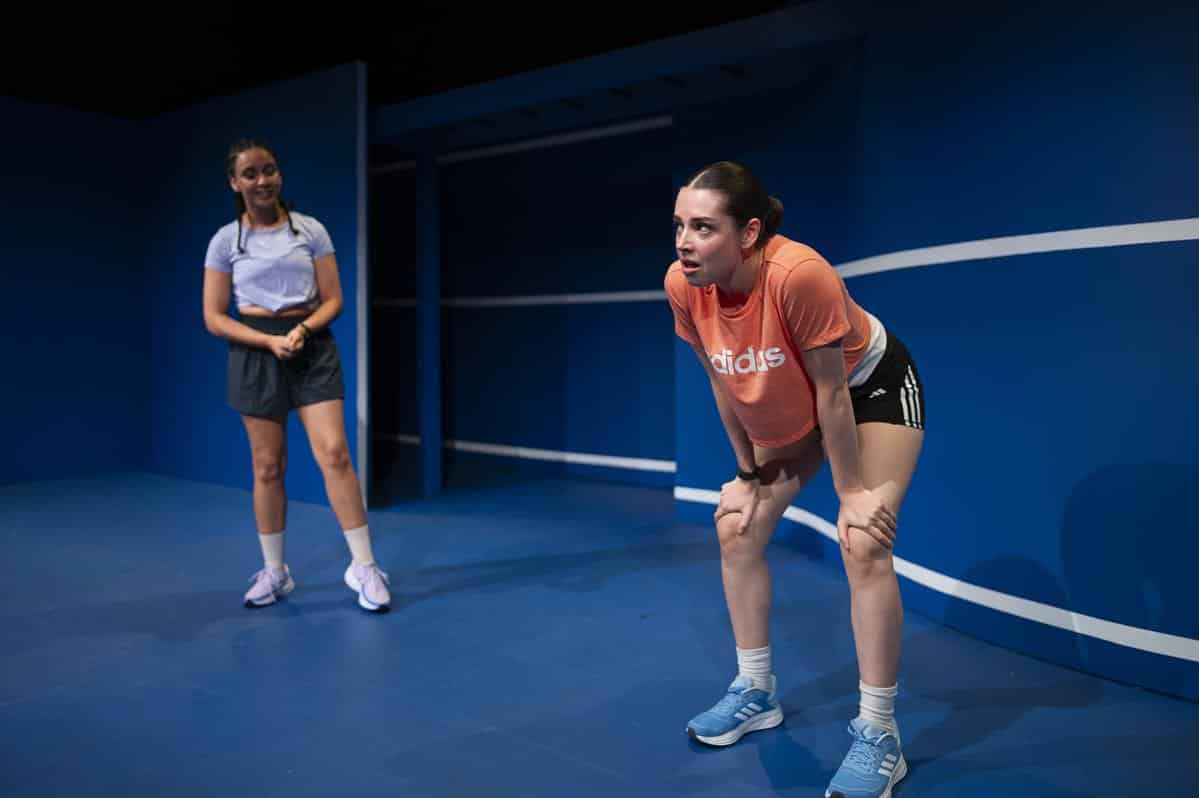
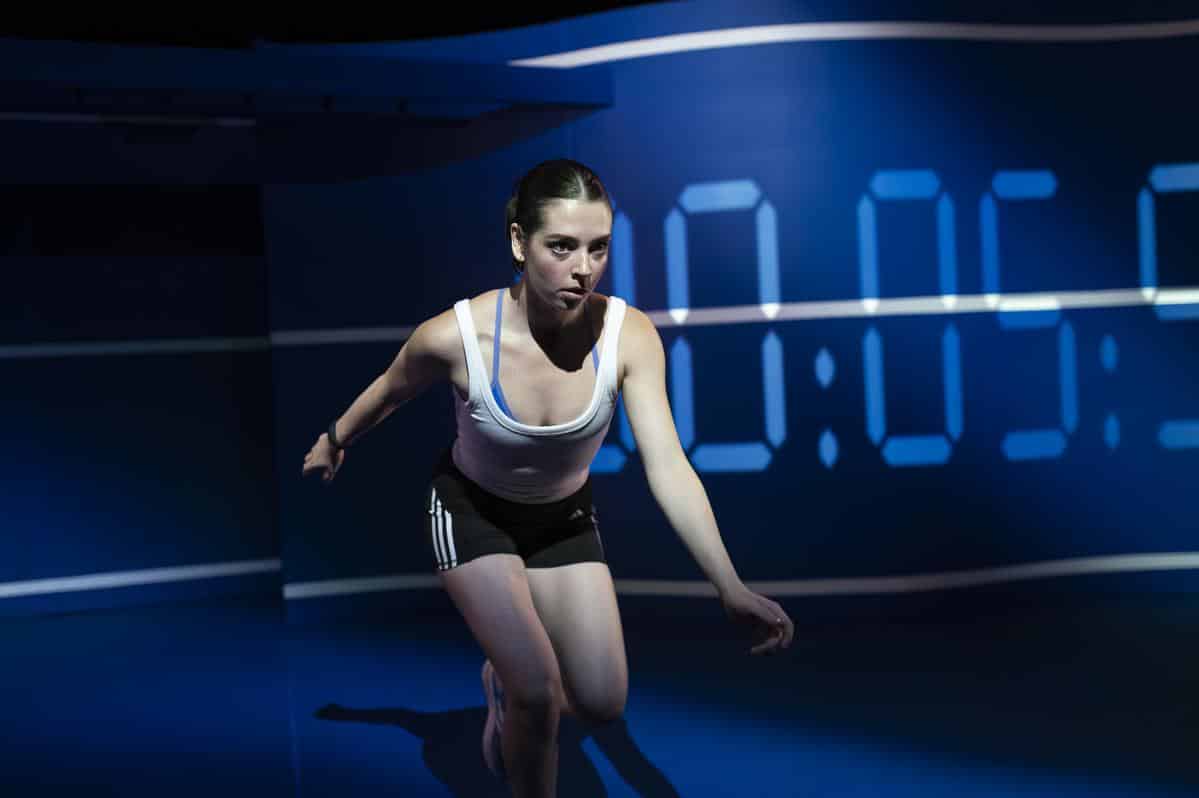
“It’s always messy on the line,” beautifully and succinctly captures the direction and essence of the production, “Fair Play”, directed and produced by Emma Whitehead and written by Ella Road. The play interlaces intimate moments on the track between two rivals-to-friends, Ann and Sophie, acted by Rachel Crossan and Elodie Westhoff. Dividing into smaller slice of life scenes, these moments are framed and given pace by a clever synergy of lighting (EJ Zielinski) and sound (Mitchell Brown and Osibi Akerejola) that drops you into the chest of the female runner, the pulsating rhythm throughout serving as a heartbeat, underscoring the fast-paced and electrifying feeling of the professional sports world. The set design is minimalistic, fitted out with monkey bars, and otherwise serves as a pure canvas for choreography (Cassidy McDermott Smith) that has a modern, sleek feeling, athletic and tying skilfully into the movements of the storyline.
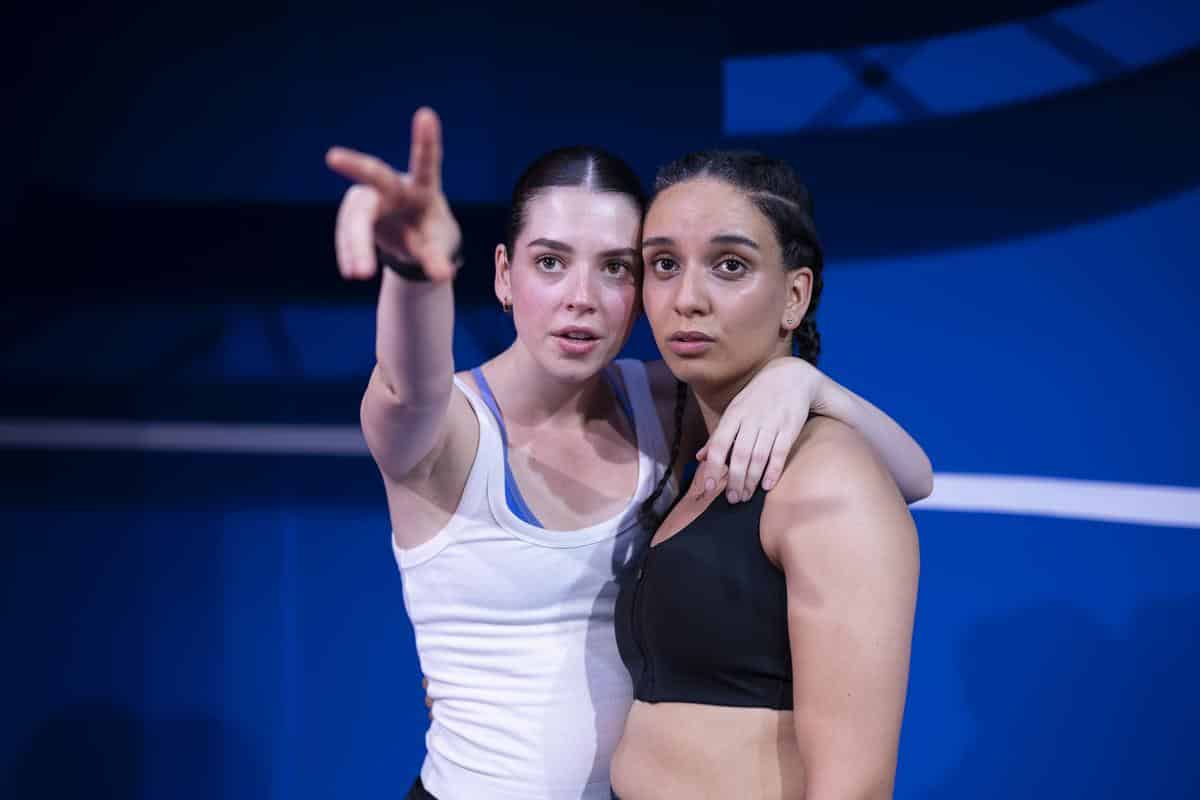
Ann and Sophie couldn’t be further from one another in many ways- race, privilege, culture, upbringing. And while the pair are able to bridge this gap, there are other elements at play, issues that Road, handles with nuance and mastery. The chemistry between our two leads is playful, layered, and expressive of a transitional phase of girlhood to womanhood, as they find their footings in a world that seems built almost expressly as a challenge to their foundations, a test to their spirit. For women in running, in sports in general, life is complicated in ways that men’s sports is not. We, as spectators, see a lineup of women, all equal before the whistle is blown. “Fair Play” peels back the veneer and reveals the complications in a way that that tries its very best to be square.
Building momentum from a lighter, breezier first half, the second half delves more deeply into the special circumstances and unique standards to which our women in professional sports are held. “Fair Play” gets to the heart of the matter. When conversations turn to who should be allowed to participate in sport and to what extent, it is much easier to be dismissive of experiences without having heard from them firsthand. Placing us in the conversation, things are immediately more complicated. It is refreshing to see things from only these two characters’ points of view as it fully envelopes and immerses us in their world. While sex and gender are spotlighted, and lines are drawn, a tangled argument is exposed, one that is deeply personal and highly politicised. What is the basis of sex and gender, how we define what is fair, and the sexism in women’s sports is illuminated in new ways without giving answers. The open ending is where the candour of our characters shine; who they are to become, and how the world of women in running will adapt is yet to be decided. They are changed by their experiences, weary in some ways, but with an enduring spirit. Fair Play is well played, intimately drawn, and expansive enough not to feel like you are being told what to think.
To book tickets to Fair Play, please visit https://www.oldfitztheatre.com.au/fair-play.
Photographer: Robert Miniter