Heaven: The Longing Beneath The Surface

Heaven

Heaven Rating

★★★★★

Click if you liked this article

3

Two spotlights. One long wooden bench. That’s all that occupies the simple stage. Yet from this minimal set emerges a richly layered, emotionally textured piece of theatre. Heaven is a quietly compelling two-hander that rests entirely on the shoulders of its actors, and both carry it with grace, depth, and humour.

In alternating monologues, Mairead (Lucy Miller) and Mal (Noel Hodda) each tell their side of a shared story. They never speak directly to one another, yet the interplay of their perspectives – tender, funny, and heartbreaking – creates a powerful sense of connection. The chemistry is in the contrast: Mairead is fiery, frustrated, and yearning for affection; Mal is warm, wry, and wrestling with a long-buried truth.

Set in a rural Irish town on the night of a mutual friend’s wedding, Heaven captures a pivotal moment in two lives quietly unravelling. Mairead, long disconnected from both her husband and daughter, finds herself tempted by an old flame. Mal, equally starved for intimacy, reveals his lifelong but unacknowledged attraction to young men – something he has kept hidden behind the veil of domesticity. His quip about fantasising over “Jesus” as a young altar boy is one of several unexpected, laugh-out-loud themes that punctuate the play’s poignant revelations.

Director Kate Gaul describes the couple as “great friends, warm to each other,” but with “huge parts of themselves they haven’t revealed.” That observation anchors the emotional core of Heaven. Each character has settled into a life that looks fine from the outside but feels hollow within. On this one night, their reflections hint at the fragile possibility of change – of choosing not comfort, but truth.

O’Brien’s writing is lyrical and intimate. There’s an authenticity in both characters that feels deeply human – flawed, funny, searching. If the title Heaven seems elusive at first, it may be because both characters are chasing their own vision of it, hoping to escape the quiet despair of lives not fully lived.

Performed in the intimate amphitheatre-style space of The Loading Dock Theatre at Qtopia Sydney, the production’s closeness intensifies its impact. Every line lands clearly, every expression matters. With only subtle musical cues, the emotional texture is carried entirely by the strength of the performances – and both Miller and Hodda deliver. Both are Australian yet their Irish accents sound authentic!

The venue itself is worth a visit. Located in the heritage-listed former Darlinghurst Police Station, Qtopia is the largest museum and cultural centre dedicated to queer history and culture in the world. With four buildings on site, it’s worth arriving early or staying after the show to explore. A bar onsite offers refreshments, and the audience – an even mix of ages and genders – added to the warm, community feel.

Presented by Bitchin Wolf, a theatre and film company devoted to bold, magical storytelling, Heaven runs until 31 May. The performance lasts 90 minutes without interval. Tickets are $45 general admission and $35 concession.

A moving, quietly radical meditation on love, regret, and identity, Heaven proves that even the simplest staging can hold a world of complexity.

Written by Eugene O’Brien | Directed by Kate Gaul | Presented by Bitchin Wolf at The Loading Dock Theatre, Qtopia Sydney

To book tickets to Heaven, please visit https://events.humanitix.com/heaven-at-the-loading-dock.

Photographer: Alex Vaughan

Spread the word on your favourite platform!

Interwoven Lives: A Review of Various Characters

Various Characters

Various Characters Rating

★★★★★

Click if you liked this article

‘Various Characters’ is an aptly titled play that explores the emotional terrain of six individuals, each living in their own world and caught in the tension between isolation and connection. Their lives – diverse, troubled, and at times tender – intersect by circumstance, creating a tapestry of modern identity, dislocation, and longing.

Set in early 21st-century Sydney, the play touches on themes of multiculturalism and cultural identity, exploring how difference both separates and defines us. Through these characters, we glimpse the struggle of living in a society where connection is craved but hard-won.

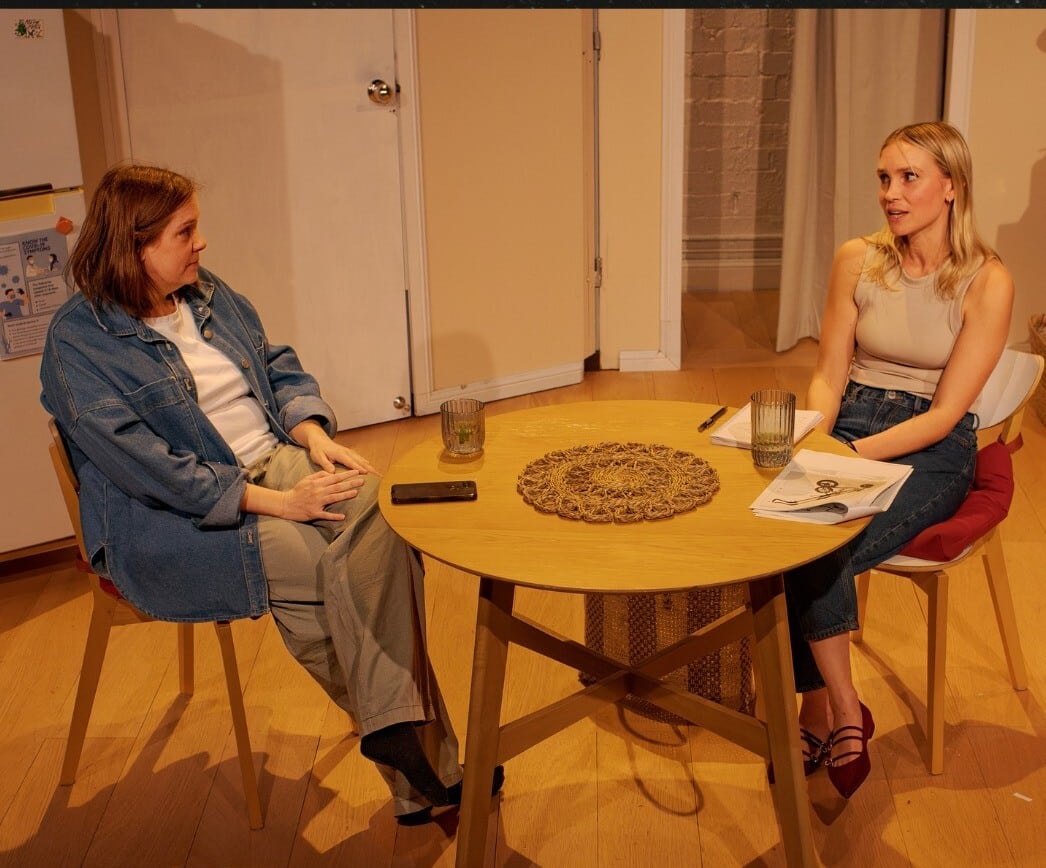
Each character wrestles with personal transformation. Nina (Georgia Da Silva) is plagued by uncertainty and fear; Raoul (Tony Goh) stumbles through his inability to express himself and fit into the community; Mile (Tate Wilkinson-Alexander) grapples with identity and the burdens of responsibility. Boris, played with wide-eyed charm by Maliyan Blair, lives in a romantic fantasy. Zita (Nashy MZ) attempts to exert influence on the world around her, while Greta, portrayed with particular depth by Kate Bookallil, seeks to rewrite her future and reclaim a sense of purpose.

Bookallil’s performance as Greta, a Croatian mother, is a standout – rich in authenticity, expression, and control. Her presence brings emotional gravity to the piece. Blair’s Boris is also noteworthy, his youthful optimism providing contrast to the more subdued characters.

Though engaging and evocative, the narrative at times lacked clarity. Some character motivations felt opaque, leaving the audience uncertain as to why certain events unfolded. Still, the emotional beats mostly land, offering poignant moments of insight.

Technically, the production was tight. Set changes were executed smoothly in near darkness, a testament to the cast’s discipline. The minimalist staging adapted cleverly to both indoor and outdoor settings, and the restrained use of music helped maintain focus on the dialogue and action.

Performed at Flight Path Theatre – appropriately named, given the frequent sounds filtering in from low-flying planes – the two-sided amphitheatre ensured an intimate viewing experience, with every seat offering proximity to the stage. The theatre holds 90-100 people and has a bar with snacks. The demographic of the crowd was mostly younger with a mix of ages and ethnicities.

Written and produced by Ć ime KneĆŸević and directed by Victor Kalka, ‘Various Characters’ offers a glimpse into lives trying to make sense of themselves and each other. While not every thread resolves cleanly, the performance is heartfelt, timely, and thought-provoking.

This play has an approximate runtime of 80 minutes, with no interval. The season runs from May 7 to 17, 2025. To book tickets to Various Characters, please visit https://www.flightpaththeatre.org/whats-on/various-characters.

Spread the word on your favourite platform!

Posh: Presented At The Old Fitz

Posh

Posh Rating

★★★★★

Click if you liked this article

5

“Boys will be boys”—a phrase as old as time, and in Posh, it becomes both a celebration and a condemnation. From the moment you step into the theatre, you’re transported into the opulent, eerie calm of a private dining room in a British house. A long table is laid out for ten, gleaming with anticipation. But this isn’t any dinner party—it’s a resurrection of legacy, a night with The Riot Club.

The play, penned with sharpness and nuance, builds its tension masterfully. We wait with bated breath for the dinner to begin, as the lore of past debauchery—smashed chandeliers, demolished rooms—echoes through stories of old. This elite society of British best and brightest has long thrived on mayhem masked as tradition. But in the present, their antics have come under fire, forcing them to tread carefully. This dinner is meant to be their ‘resurrection’.

The cast is nothing short of magnetic. Each actor carves a distinct identity, from the naive newcomer brimming with excitement to finally earn his seat at the table, to the lewd over sexualised brute who arranges a prostitute as entertainment. The chemistry is palpable; the banter quick and witty. You find yourself drawn in, laughing, charmed by the absurdity, even wishing for a moment you were part of the mayhem. There’s an undeniable allure to their camaraderie—rituals that bind, jokes that exclude outsiders, a shared past that feels bigger than all of them.

But that’s where Posh truly shines—luring you into complicity before ripping away the curtain. As drinks flow and inhibitions fall, the evening spirals. A dark undercurrent emerges: a generational rage, the resentment of young aristocrats who believe they’ve been muted in modern Britain, where privilege is no longer applauded but looked down on. Their descent into violence is shocking yet all too believable. And when the inevitable consequences arrive, the final twist cuts deep—money shields, privilege prevails, and accountability is artfully dodged. A crime becomes a credential.

What makes Posh exhilarating is not just its pace or wit, but its layers. It’s a play that makes you laugh, then makes you uncomfortable for having laughed. It seduces, then indicts. Director and cast navigate these shifts with precision. The set design and costumes are elegant and old-world-like —a perfect metaphor for the world these boys inhabit, symbolic of the class system that has existed for generations. And the writing is as clever as it is cutting, never veering into caricature but instead painting a disturbingly real portrait of entitlement unchecked.

In a landscape where theatre often grapples with contemporary questions of identity and power, Posh stands out. With only two female characters, it doesn’t pretend to be balanced—it chooses to focus, with almost clinical scrutiny, on the male diaspora. It shows us men in their glory, their chaos, their fear, and their failure.

Posh is not just a play. It’s an invitation to the table, then a rude awakening.

To book tickets to Posh, please visit https://www.oldfitztheatre.com.au/posh.

Photographer: Robert Catto

Spread the word on your favourite platform!

Snakeface – A Young Woman’s Raw And Unfiltered Portrait

Snakeface

Snakeface Rating

★★★★★

Click if you liked this article

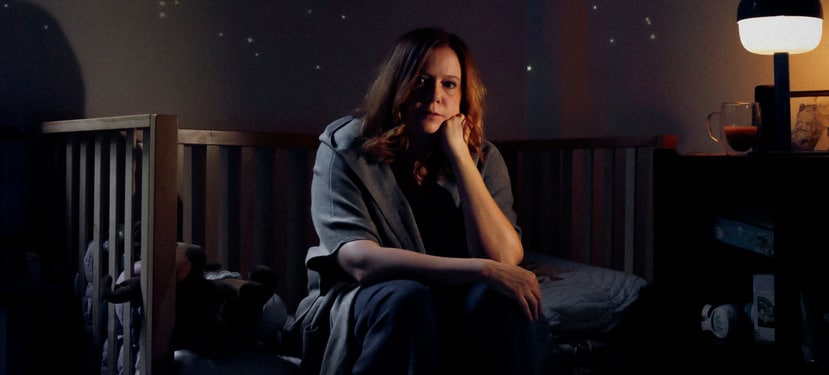
Written and performed by Aliyah Knight, Snakeface is an unapologetically raw solo performance that plunges the audience into the turbulent mind of a young black woman navigating love, identity, and self-worth in white Australia. Staged in an intimate, amphitheatre-style venue seating no more than 80 people, the sparse set and close quarters create a confessional atmosphere – almost as if we’ve been invited into Snakeface’s private reckoning.

The play unfolds as a 90-minute monologue – fast-paced, fragmented, and emotionally charged. Knight’s character spirals through thoughts and memories, swinging between the emotional highs and gut-wrenching lows of relationships: a girlfriend she adores but who drifts in and out of her life, predatory men, and the isolating ache of being unseen. These aren’t clean narrative arcs but messy, unresolved entanglements – mirroring the chaos within.

There are moments of levity, brief flashes of sharp humour that puncture the heaviness. Yet overall, the experience is intense, almost claustrophobic in its honesty. It’s not an easy listen – the sheer density of language and emotional weight can be exhausting – but it’s also riveting.

Knight’s sculptor identity is cleverly embedded in the staging. A large block of soft clay sits at the centre of the set, which she digs into and manipulates as the performance progresses. By the end, she’s covered in it – a visceral visual metaphor for how we mould and are moulded by our traumas, desires, and decisions. The mesh backdrop, which doubles as a projection screen, flashes fragmented thoughts and phrases, echoing her inner turmoil and providing commentary or emotional cues for the audience.

The sound design by Marco Cher-Gibard adds an atmospheric layer – ranging from subtle ambient textures to pounding nightclub beats – underscoring shifts in mood and energy. Similarly, lighting by Rachel Lee and projection design by Wendy Yu enhance the storytelling, immersing us deeper into Snakeface’s emotional landscape.

Though the structure at times feels loose, even meandering, it’s this lack of polish that gives Snakeface its edge. It’s not about resolution – it’s about being seen in the mess. And Knight, as the sole performer, commands the space with stamina and vulnerability, keeping the audience engaged throughout.

Directed and dramaturged by Bernadette Fam and supported by a team of creatives – including producer Madeleine Gandhi, set and props designer Keerthi Subramanyam, and movement director Fetu Taku – Snakeface is a collaborative feat with Knight’s bold performance at its heart.

The audience was predominantly female and spanned a wide age range, clearly resonating with the rawness and relatability of the themes. Practical comforts – padded seats, excellent air conditioning, and the welcome permission to bring drinks into the theatre – made the experience physically enjoyable, despite the emotional intensity onstage.

Snakeface is not a traditional play – it’s a poetic excavation, a cry for recognition, and a reflection of one woman’s attempt to make sense of her fractured world. It may not be comfortable viewing, but it is compelling, urgent, and defiantly human.

Snakeface was awarded runner-up in the Australian Theatre Festival NYC 2024 New Play Award.

To book tickets to Snakeface, please visit https://belvoir.com.au/productions/snakeface/.

Photographer: Abraham de Souza

Spread the word on your favourite platform!

Subscribe to What's The Show

Reviews, show news and what is on, straight to your inbox.