The Appleton Ladies’ Potato Race

The Appleton Ladies' Potato Race

The Appleton Ladies’ Potato Race Rating

Click if you liked this article

2

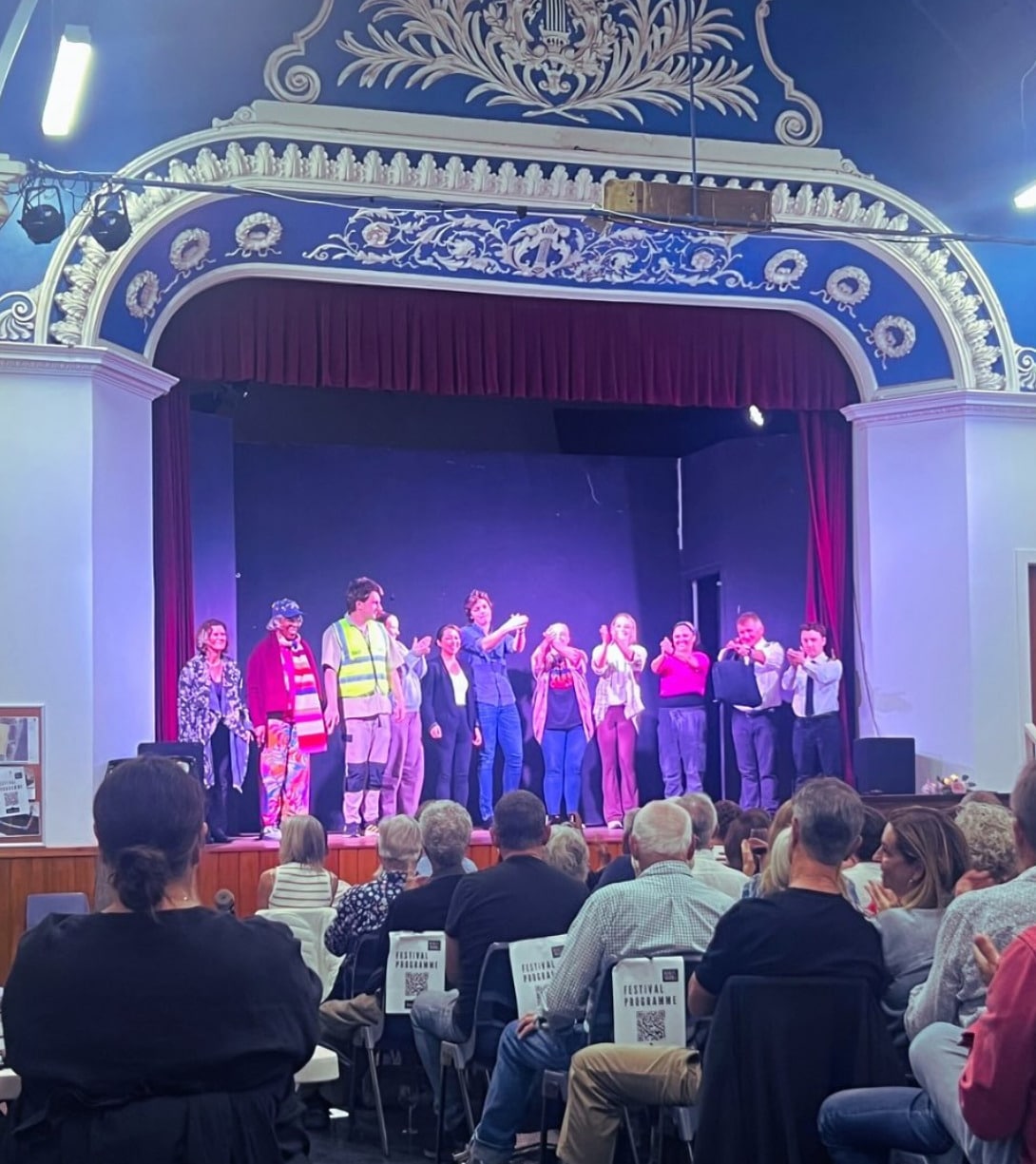
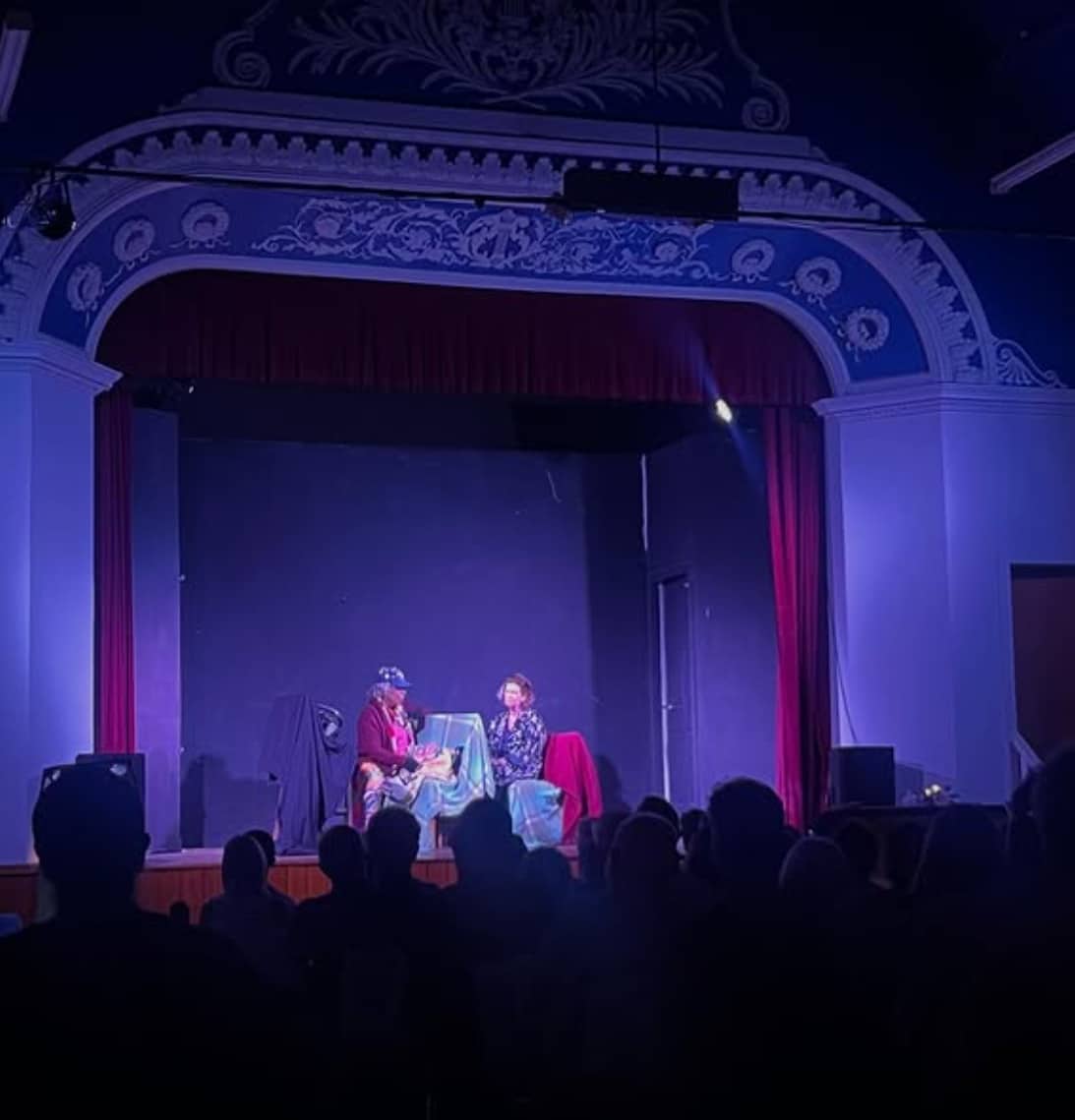
The Appleton ladies potato race is Australiana at its very best! Set in a country town, that puts on an annual potato race, awash with old prejudices and an unwillingness to break tradition sets the scene. Penny the town’s doctor played by Courtney Farrow is fighting for equal prize money for the women’s race. And so the battle begins on breaking decade’s long traditions and the towns set in stone ideologies.

The all female cast led by the two matriarchs of the show Christine Greenough who plays Bev and Kate Mannix who plays Barb stole the show. Christine’s portrayal of Bev was nuanced and had emotional depth. Bev is a real salt of the earth type character and you will be laughing at some of the choice Australian profanity she uses. Kate Mannix’s Barb portrayal bounced off Bev so well that you believed that they were lifelong friends.

Ultimately this show has a lot of heart. Perfect for young and old, it’s a show that reminds you to fight for what you believe in. The set is simple but It doesn’t need to be elaborate as the relationships in the show are what matter.


Sharni Ludowyk plays Nikki who is the town’s hairdresser and mum of four boys. The tension between Nikki and Penny the doctor create a great battle of wills and will make you question whose side you are on. Moja Band plays Rania who is a refugee brings soul to the show, and really highlights the themes of fitting in and still fighting for what you believe in.

Melanie Tait’s expertly written Appleton ladies potato race is filled with Australian language and relatable characters. The dialogue flows very easily and has themes of struggle, past burdens and humour sprinkled throughout. Alexandra Pelvin is the shows director, and honestly everything worked. A thoroughly enjoyable show.

The Zenith theatre is a great auditorium style theatre, its intimate and with the seats at different heights you will never not be able to see the action. Located in Chatswood and close to eateries you can make a night of it, grab some dinner and watch a show that will have you laughing and leave you with a smile as you walk out the door.

To book tickets to The Appleton Ladies’ Potato Race, please visit https://pymbleplayers.com.au/tickets.

Photographer: Daniel Ferris

Spread the word on your favourite platform!

‘To Save Your Soul, Shake Your Soul.’

Daytime Deewane

Daytime Deewane Rating

Click if you liked this article

3

Daytime Deewane is an uplifting and high-energy play by award-winning UK writer Azan Ahmed, written from, in his words, ‘a place of radical joy. ‘

The play dives into the 1990s’ era of London’s daytime raves, when brown men were often excluded from nightclubs, forbidden to share public space with non-Asians. To circumvent this, young brown men from the Asian diaspora converged on nightclubs between 3pm and 6pm to lose themselves in the cultural euphoria of Bhangra music and dance.

Racism and identity and the ways in which they perniciously intertwine are the overarching themes of Daytime Deewane. For example, if you’re told enough times that your brown or black skin makes you inferior, odds are you might come to inhabit
this self-belief.

Directed by Iranian-Australian Sepy Baghaei (Wish You Were Here, Gate Theatre), Daytime Deewane introduces Muslim cousins, Farhan (Ariyan Sharma) and Sadiq (Ashan Kumar). Both young men are heavily burdened by generational family expectations of them to be ‘good Muslim boys’ and ‘proper British men’ 1. It is 1997 and they are at the last ever London daytime rave. Bhangra music plays, a dhol drum beats hauntingly. Here is a safe space in which they can fully immerse themselves into the euphoric music and dance, a place to celebrate culture and free expression.

Farhan is the quiet cousin, the conformist to Sadiq’s rebel. They argue, disagree, plead, weep, push and shove. They only have until 6pm to come up with the solutions to their questions. This is, after all, the final daytime rave.


Playwright Ahmed brilliantly weaves spoken word with Bhangra music and dance, lending a sense of urgency to the play. Each of these elements synergise exquisitely with the other, with Bhangra the conduit that unites Farhan and Sadiq in their explorations of self. The language of the play is poetic, tender in places, angry and bold in others. Short pauses in dialogue allow the audience to digest the nuances and complexities at hand during that racially divisive time in London’s history.

Ariyan Sharma (STC, Dear Evan Hansen) as Farhan is terrific casting. His portrayal is rich with humour and compassion, his belief in the unbreakable bond of cousins is touching and evocative. The audience laughed, cried, cheered him on. His interactions with the audience were engaging and highly entertaining. He brings humour and compassion to the role, his whimsical facial expressions are timed perfectly, and yes, he can dance!

Sadiq is played by Ashan Kumar (MainStage Debut). He dresses gangsta-style, soccer hoodie, baggy denim jeans with chains, thick silver jewellery, and sports a flip-top Motorola. Kumar inhabits Sadiq – he is angry, funny, tender, loud, despairing and inherently likeable. He speaks volumes with expressive hand and arm gestures that intensify every spoken word. His audience interaction was hilarious.

The set clearly reflected a 1990s’ nightclub with strip lighting on the floor, shooting strobes, and neon green strip lighting on the ceiling. During the dance components, the light show brought the stage to brilliant life.

Daytime Deewane is a thoroughly enjoyable, immersive production richly imbued with the playwright’s ‘radical joy.’ Don’t miss it!

To book tickets to Daytime Deewane, please visit https://riversideparramatta.com.au/whats-on/daytime-deewane/.

Photographer: Phil Erbacher

Spread the word on your favourite platform!

Seed Hunters – A Global Movement for a Better World?

Seed Hunters

Seed Hunters Rating

Click if you liked this article

1

What if the world we live in could be peaceful? This is one wish that many people, me included, could hope for in our lifetime. What if people could make this happen by conceiving children who will become men who are less aggressive and less of the “toxic tough guy”?

Scene Theatre Sydney’s play, Seed Hunters, made its premiere debut at the Pitt St Uniting Performance Space, and this question is one which is explored by a group of women. They are known as “Seed Hunters”. This is a movement of women from all over the world who, based on science, they believe that men of mixed ancestry are more likely to be more intelligent and less combative.

Set in Peking in 1976, students are invited by the Chinese government into a post-Mao world. It’s here that Rosa (portrayed by Fabiola Pellegrino) attempts to seduce a young Australian named Bob (played by Micah Doughty). Nearly 40 years later in present time in Australia, Bob discovers his niece Bridget (portrayed by Julia Grace) is a part of the Seed Hunters movement.

Julia Grace delivered an earnest and compelling performance as Bridget, capturing her youthful idealism and determination. She investigates women’s groups in ancient Greece, the Hopi Indians in Arizona, and various other women who study men, all in search of the perfect match. Bridget befriends Larry (played by Oliver Harcourt) and the audience learns what it is she wants from him. (“I need Larry and his mixed-up genes”)


Meanwhile, Bridget’s sister Sarah (Madison Chippendale) returns home to be reunited with her. She has news of her own. Larry’s brother Jack (Theo Rule), a kids show host with no kids of his own, reacts with shock when he learns of Bridget’s plan. The girls’ grandmother, Dorothy (Joan Rodd), takes the opportunity to share her thoughts directly with her granddaughters.

There are a lot of characters in Seed Hunters – with a cast of eleven sharing the stage, telling their different stories interwoven with art, the stars and history. The director Melissa Paris reminds us that “the seeds of transformation are planted by real people…whether through protest, parenting, music, art or simply refusing to stay silent, their stories echo today’s struggle and dreams.” Themes of self-identity and grief were intermingled with family dynamics.

The cast also took on various tasks, such as turning pages on a stand positioned at one side that displayed the names of the characters’ locations. These titles might have been more visible if they were larger or positioned slightly higher. The staging featured multiple levels, and a sense of intimacy was achieved through the characters’ interactions along the central aisle. However, since the play took place in a large venue with a high ceiling, I occasionally had trouble hearing some of the dialogue. Seed Hunters sound and lighting designer Jay Murrin chose some songs which were beautiful, providing the perfect atmosphere that complemented the scenes.

On leaving this performance, there were a few discussion points that came up from this very interesting concept. What will this seed hunters movement evolve into, in the future? Is this the way leading to a peaceful world?

Seed Hunters was written by Australian playwright Carol Dance.
Season run: October 17 – October 26 2025
Venue: Pitt Street Uniting Church Performance Space, 264 Pitt St, Sydney
Duration: Approximately 105 minutes
Tickets: Students $35, Concession/ Senior $45, Adults $55
www.ticketebo.com.au/scene-theatre-sydney/seed-hunters

To book tickets to Seed Hunters, please visit https://www.scenetheatresydney.net.au/seed-hunters.

Photographer: Robert Catto

Spread the word on your favourite platform!

Kentucky Fried Camus: Work, But This Time Like You Mean It

Work, But This Time Like You Mean It

Work, But This Time Like You Mean It Rating

Click if you liked this article

1

“Fiction is the lie through which we tell the truth” is perhaps a slightly pretentious opening, but for this 90-minute absurdist extravaganza swinging a baseball bat at the time-honoured tradition of underpaying and disrespecting fast-food workers, I feel it deserved. Nestled between the Wharf theatres of STC and just above Bell Shakespeare, Canberra Youth Theatre have taken their eight person ensemble piece – Work, But This Time Like You Mean It, into ATYP’s Rebel Theatre for a mere three day sprint. And sprint it did.

From the moment you enter the theatre, what the piece is making fun of jumps out at you. The seven pre-set cast wear factory-cheap, McDonalds-esque polyester yellow, red, and black uniforms, already invoking that very all-too specific minimum-wage-job sweaty discomfort. These aesthetics continued to carry through the set; a curious set-up of a bright-red slope into a neon-yellow ballpit. One employee, Georgie Bianchini, sits deeply engrossed in the Employee Handbook, alone in her devotion to the rules and regulations of the world around her. The piece began with a jolt of movement, and truly did not stop moving until its final moments. In many ways, this was an incredibly strong ensemble piece because of this speed and movement. Bodies and voices came together to create the cacophony of stress necessary to accurately represent a job like this – although individually some struggled to fill the larger space.

The physicality was excellent across the board – Matthew Hogan and Sterling Notley being particularly shining examples, throwing themselves at the floor and each other with full conviction to create very fun moments of physical comedy. The ball pit came immediately into play, sailing across the stage worker to worker in an innovative reimagining of a production line, bringing a visual chaos that was usually very rewarding – although was distracting during the more intimate monologue sequences. The projector in the back was also used incredibly well, never stealing focus away from the performers or used as a crutch. Congratulations must go specifically to Kathleen Kershaw for her excellent aesthetic communication, Ethan Hamill on projection work and Patrick Haesler for a score that felt just as nervous to be there as we were.


With a piece that makes its argument so clearly visually, in some ways it allows the script and actors to give it some breathing room, and it was here I felt the piece struggled. Political theatre often entices us to have strong emotional moments, yet with an ensemble piece that moves this quickly, and is often almost incomprehensibly absurdist, these emotional moments jut out in a way that don’t quite make sense in the context of the show as a whole. In moments like the chicken dance sequence, or the work-place accident, the piece shows without telling us the sheer ridiculousness of what we ask young people to do without proper training or protection. This makes pull-away monologues that reiterate this point slightly redundant, and distracting from the larger flow of the show. This was more difficult when there was unclear separation from the wackier ensemble character, to the more personal monologue persona.

This being said, both Blue Hyslop and Quinn Goodwin succeeded in bridging the gap between absurdism and emotional reality. Hyslop delivered an almost Fight Club inspired monologue about his hallucinated happy place which although being farcical, was convincing because we felt his belief in every emotional point. Goodwin, in turn, took us through her plummeting mental health with well executed brimming neuroticism. I also enjoyed the staging of Goodwin’s private moments, the confession booth of the audience stairs elevated her vulnerability beautifully. Kathleen Dunkley and Emma Piva’s emotional moments are delivered as a duo, and whilst the two had great chemistry and created an interesting relationship, on a writing level, the scenes scraped just under the line of absurd, which made them feel out of place and underdeveloped by the ending.

I enjoyed their work through the chaos of the ending significantly more, as both were allowed to flex their comedic muscles as a duo whilst being better supported by the script. Georgie Bianchini served in some ways as the audience’s inside man to the chaos on stage, and held her own comedically throughout, even as her character was often pushed aside. Hannah Cornelia gave a similarly entertaining performance as the ever-frustrating customer, lack of self-awareness and all.

Work, But This Time Like You Mean It was an entertaining example of the ridiculous nature of the mundane, and was supported well through its blocking and ensemble work. Although I wished for more of a full-hearted commitment to absurdism, I enjoyed the argument being presented and the aesthetic framework it was presented inside. The performers worked incredibly well together, and many had very touching moments through their asides. Upon leaving, I was left with three things: that I didn’t miss hospitality, that I should probably go join my local union, and that the kids, at least in theatre, would be alright.

To book tickets to Work, But This Time Like You Mean It, please visit https://canberrayouththeatre.com.au/production/work-but/.

Spread the word on your favourite platform!