Steel Magnolias

Steel Magnolias

Steel Magnolias Rating

★★★★★

Click if you liked this article

5

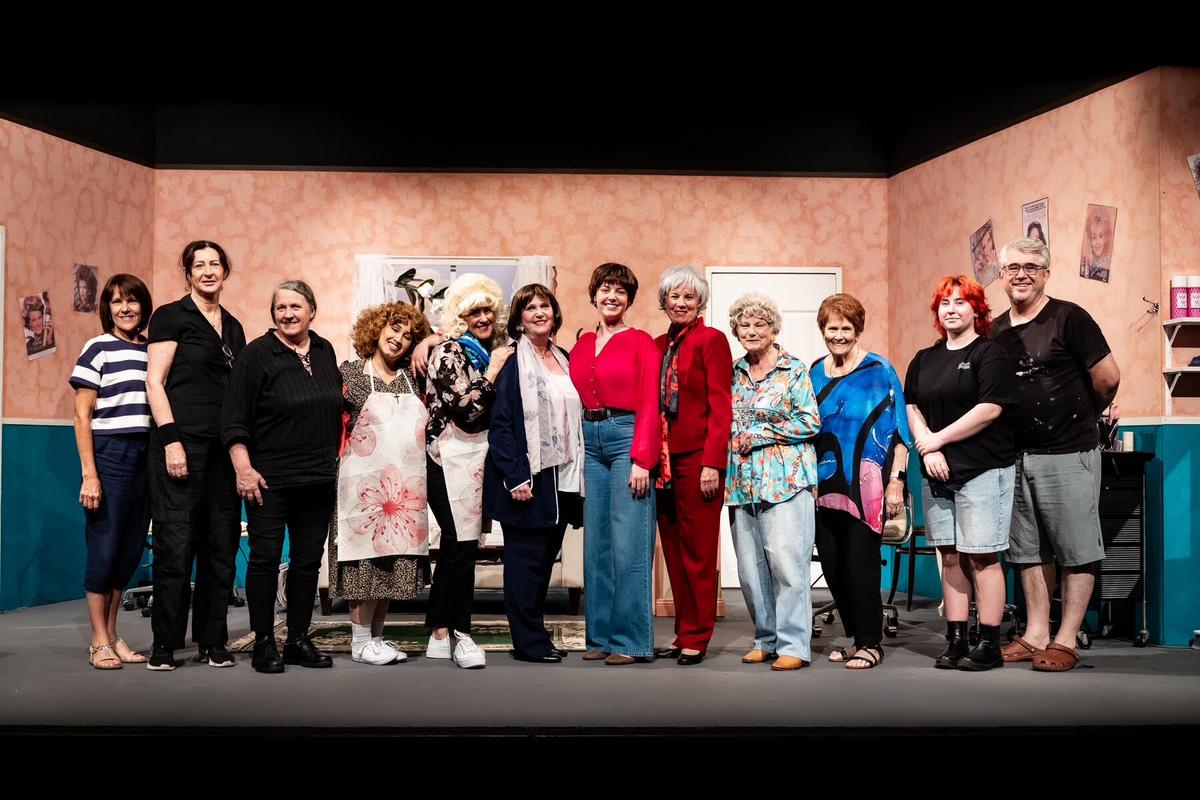
There is a reason Steel Magnolias continues to appeal to audiences, particularly those already familiar with the much-loved film. The beauty salon feels like a real workplace. The set is convincing, the hairdressing activity believable, and the women’s relationships emerge as naturally from their work as from Robert Harling’s dialogue. This matters in a play where love and grief grow out of gossip, teasing and ordinary friendship.

Mel Day gives Truvy the right combination of warmth and no-nonsense authority. Her salon is a place of welcome, but it is also a business, and Day never loses sight of that practical side of the character. Alongside her, Evelyn Georgia has the more complicated task of portraying Annelle’s evolution from an uncertain newcomer into a confident member of the group. The two often work at opposite sides of the stage, yet their growing bond remains apparent. Georgia keeps Annelle’s changing circumstances and newfound religious conviction connected to the anxious young woman who first entered the salon, rather than making her development feel like a succession of disconnected characters.

Lyn Lee has some of the play’s funniest dialogue as the irascible Ouiser, and delivers it with excellent timing. But her achievement lies equally in finding the seriousness beneath the barbs. Ouiser may be difficult, but there is genuine affection and loyalty in her friendships. Margaret Short’s Clairee is an ideal foil: every bit as capable of a cutting remark, but with the elegant assurance of someone who can make an insult sound like a social courtesy. Lee and Short understand the rhythm of their exchanges and the long familiarity behind them.

Crucially, neither pair works in isolation. Even when attention falls elsewhere, the actresses keep the salon socially alive, listening and reacting without distracting from the scene.

Those performances provide the humour and texture of the production. Its emotional centre, however, belongs to Grace Johnson as Shelby and Christiane Brawley as her mother, M’Lynn.
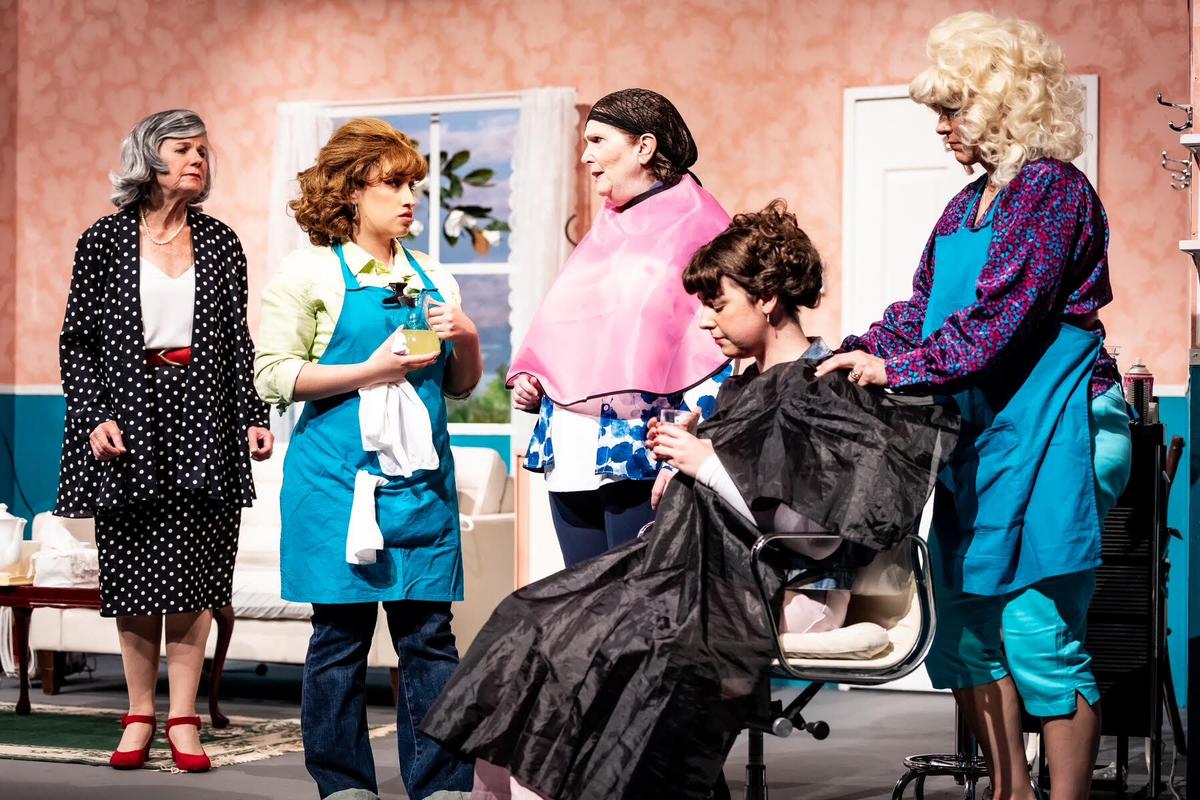
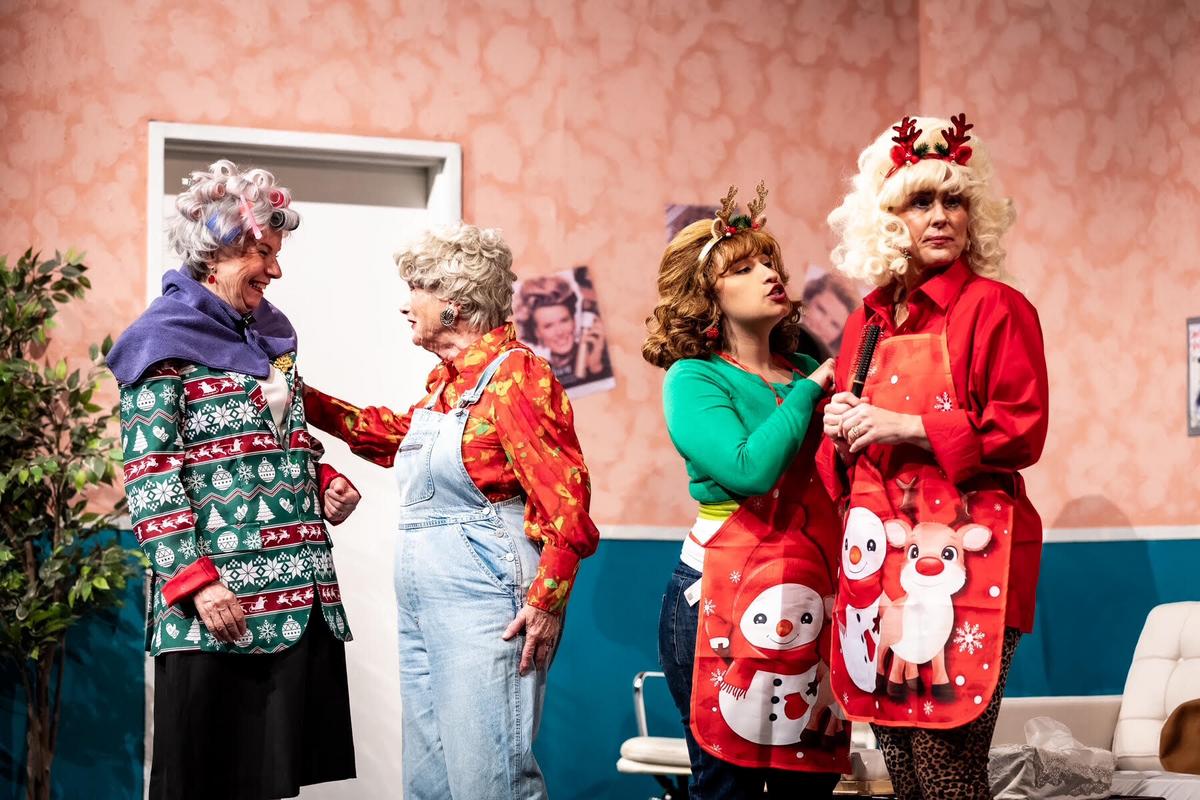
 

Johnson makes Shelby naturally warm and engaging, with a conviction that becomes particularly clear when she announces her pregnancy despite the medical risks. Shelby seems almost oblivious to her mother’s fear, but she is neither frivolous nor uncertain. She has made her decision. As she speaks, Brawley turns away from Shelby so that the audience can see M’Lynn’s face. It is an extraordinarily effective choice. With little dialogue, Brawley conveys genuine terror for her daughter while Shelby continues to speak with optimism. Their contrasting performances establish the tragedy’s emotional foundations.

Brawley’s greatest achievement comes later, in two passages that demand almost opposite emotional registers. When M’Lynn describes Shelby’s death, she does so quietly, with honesty and clarity. The gentleness of the account makes her love unmistakable, and the effect was evident in the tears around the auditorium. Brawley does not need to press for emotion; she trusts the words and the character.

Then the composure breaks. Within minutes, Brawley moves from controlled tenderness to raw, almost ungovernable rage and anguish. The shift is startling but entirely credible. Much of this passage leaves M’Lynn carrying the dramatic weight without another character to play directly against. Brawley holds it through the force and specificity of her performance.

Even the release into comedy is carefully judged. When Clairee suggests M’Lynn hit Ouiser, Short and Lee time the moment perfectly, allowing laughter to emerge from grief without diminishing it.

Brawley and Johnson deserved the particularly enthusiastic applause they received. This is an ensemble production whose women feel like a community, but its finest achievement is the mother-daughter relationship at its heart. Whether the audience knows the story from the film or encounters it anew, the love is what makes the loss matter.

To book tickets to Steel Magnolias, please visit https://www.guildtheatre.com.au/reserve-tickets/.

Spread the word on your favourite platform!

A Shot In The Dark

A Shot In The Dark

A Shot In The Dark Rating

★★★★★

Click if you liked this article

3

Comedy often succeeds not simply because of good jokes, but because of rhythm. Jason Spindlow’s production of A Shot in the Dark understands this well, balancing measured scenes with bursts of energetic physical comedy to create a production that remains engaging from beginning to end. Rather than maintaining a relentless pace, quieter moments allow both the characters and the humour to develop before the action accelerates, making the comic peaks land all the more effectively.

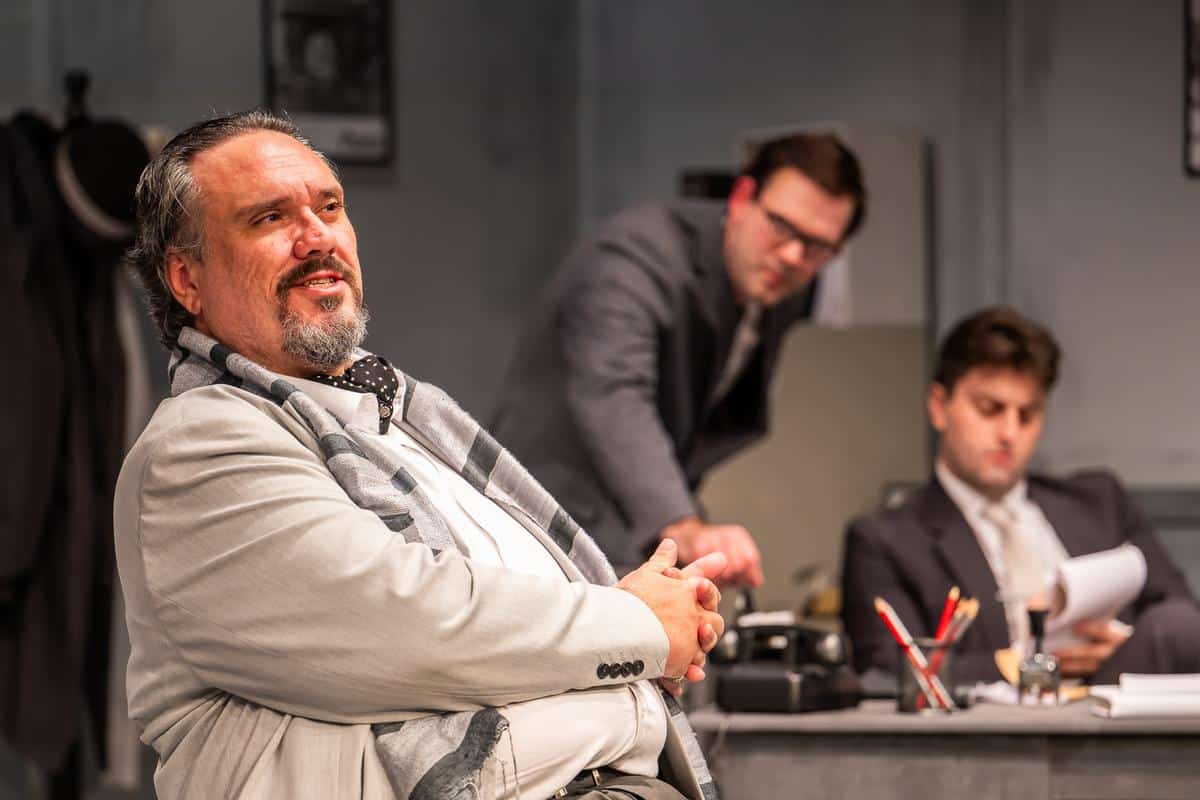
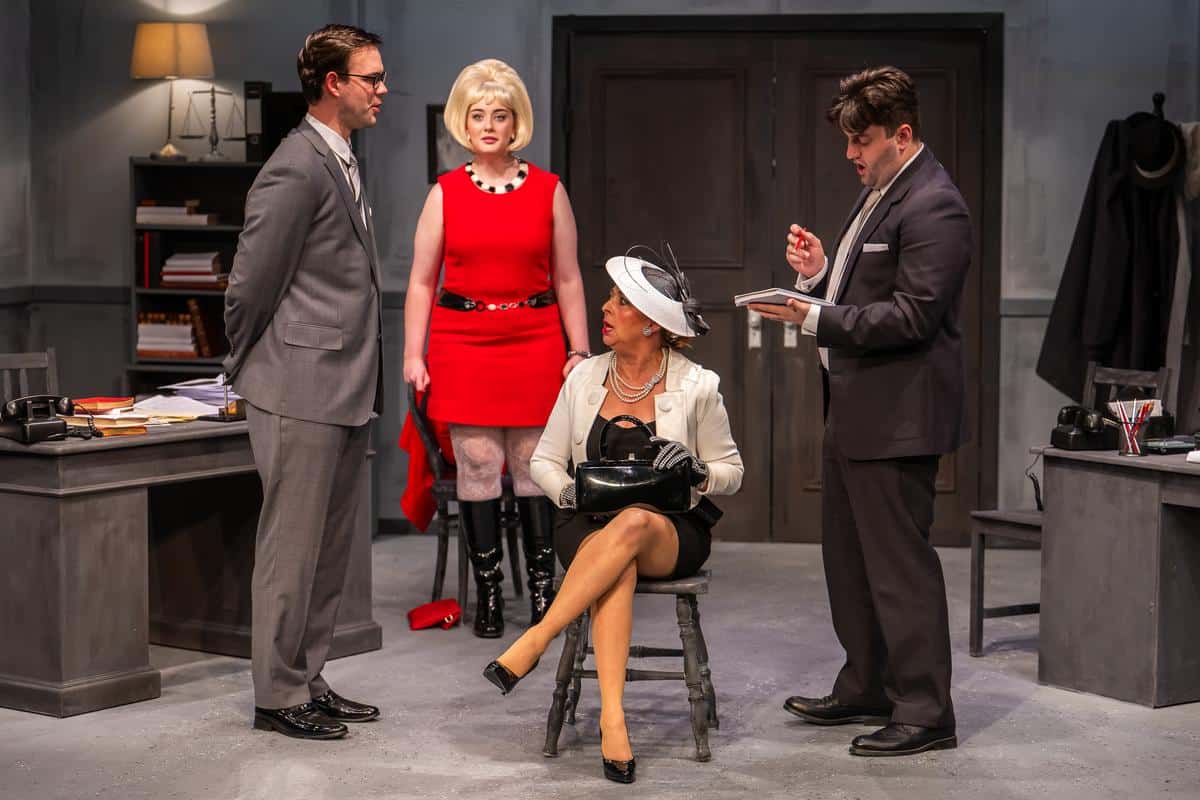
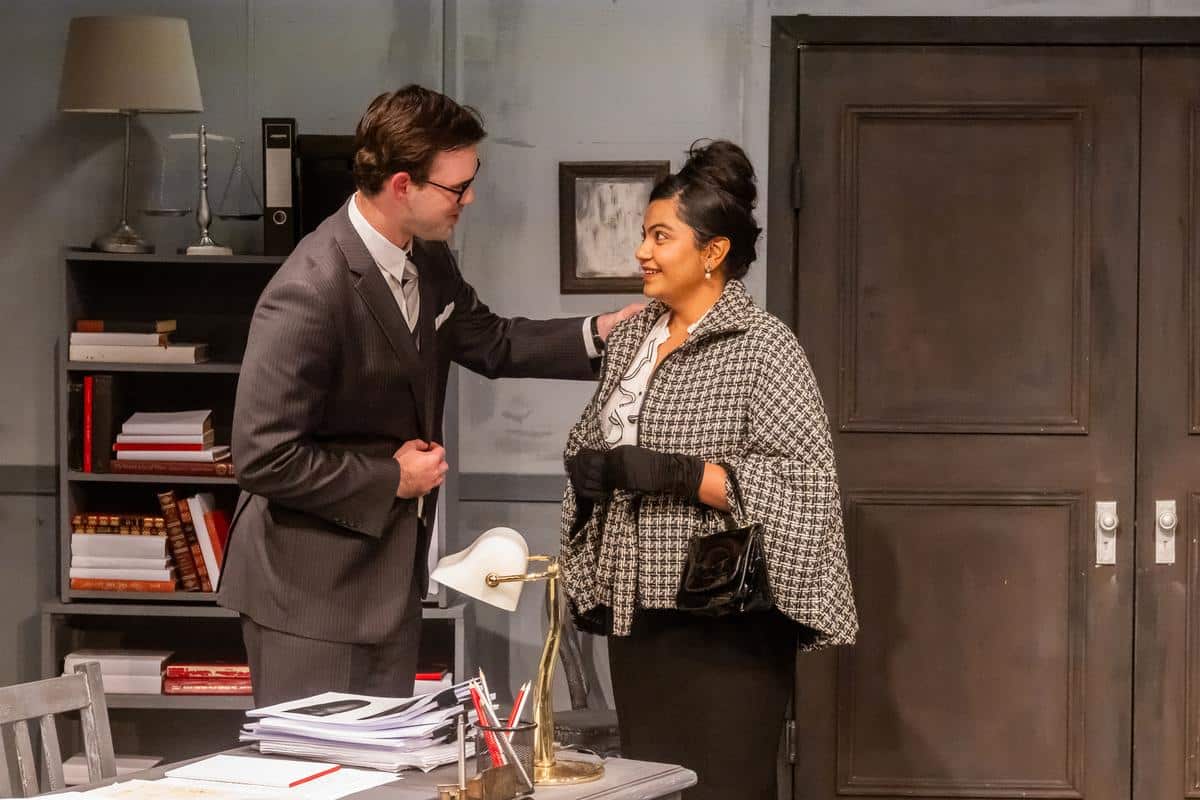
Ben Wheeler anchors the production as Paul Sevigne, presenting an examining magistrate whose fierce commitment to justice gradually collides with his growing attraction to the irrepressible Josefa Lantenay. Wheeler gives Sevigne authority from the outset, yet reveals the cracks beneath his composed exterior through excellent physical comedy. Whether shuffling papers in frustration, gently rebuking Morestan for openly staring at Josefa, or sprawling awkwardly across his desk in a futile attempt to prevent his wife from seeing his beautiful suspect, Wheeler communicates Sevigne’s increasingly impossible predicament almost entirely through body language. Importantly, the comedy never undermines the character’s integrity. Sevigne’s determination to discover the truth remains the engine that drives the play forward.

Ella Rose Titterton is captivating as Josefa Lantenay. Visually, she dominates the stage, dressed in vibrant red and black against a production otherwise defined by shades of black, white and grey. The contrast immediately establishes Josefa as the disruptive force within this ordered world. Titterton plays her as vivacious, brazen and keenly aware of the effect she has on those around her. Josefa delights in the attention she attracts and the jealousy she provokes, yet the performance avoids reducing her to a flirt. Beneath her confidence lies a woman caught in an impossible situation, forced to conceal information or risk conviction and execution for murder. Titterton gives the character warmth and nuance, ensuring Josefa remains sympathetic even as she continually complicates the investigation.


Lachlan Armstrong proves an outstanding comic foil as Morestan. Though firmly a supporting character, he arguably receives the biggest laughs of the evening through superb comic timing and wonderfully expressive reactions. His wide-eyed fascination with Josefa, mischievous grins during Sevigne’s interrogations and perfectly judged physical comedy consistently delight the audience without distracting from the central story. A second-act sequence involving the frantic concealment of a centrefold magazine is particularly well executed. Morestan is more than simply comic relief; Armstrong presents him as a genuinely capable assistant whose inability to disguise his reactions provides a perfect contrast to Sevigne’s increasingly strained professionalism.

Among the supporting cast, Aditya gives Antoinette Sevigne a calculating edge. Her concern extends beyond marital jealousy to protecting the social position that accompanies her husband’s career, making her suspicion of Josefa both understandable and, ultimately, justified. Ben Pobjie plays Benjamin Beaurevers with languid confidence, maintaining complete composure until events finally expose him, while Faith Jessel gives Dominique Beaurevers an eccentricity that skirts absurdity without tipping into caricature. Peter Phan brings quiet authority to Lablache, presenting Sevigne’s superior as meticulously controlled rather than bombastic, before demonstrating impressive versatility later in the evening with a memorable piece of broad physical comedy as the prison guard.

The production’s visual design is equally thoughtful. Abby Bishop’s set is convincing without becoming cluttered, allowing the actors ample room for the production’s physical humour. The central chair becomes almost a stage within the stage, naturally drawing attention whenever a character occupies it. Leone Sharp’s costumes establish a stylish mid-century aesthetic while reinforcing the play’s visual language through a restrained monochrome palette, broken only by Josefa’s striking red wardrobe. Together they create a world where order and disruption are immediately recognisable before a word is spoken.
By combining assured performances, intelligent direction and carefully considered design, this production captures both the wit and humanity of A Shot in the Dark. It is a polished and consistently entertaining evening of theatre, led by a strong ensemble that understands comedy is as much about character and timing as it is about laughter.

To book tickets to A Shot In The Dark, please visit https://paviliontheatre.org.au/a-shot-in-the-dark/.

Photographer: Chris Lundie

Spread the word on your favourite platform!

Subscribe to What's The Show

Reviews, show news and what is on, straight to your inbox.