Spanish Film Festival: Upon Open Sky

Spanish Film Festival: Upon Open Sky

Spanish Film Festival: Upon Open Sky Rating

Click if you liked this article

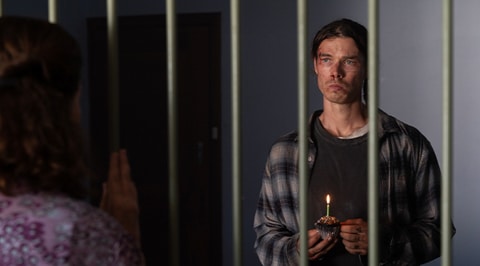
Upon Open Sky is a Mexican crime drama set in the 90s, mainly in the Coahuila desert, an arid expanse covering much of the border between Mexico and the US. It is based on a screenplay by Guillermo Arriaga, the Mexican novelist and screenwriter who received an award at Cannes for his The Three Burials of Melquiades Estrada in 2005. The film is the directorial debut of his two children, Mariana and Santiago Arriaga.

In a prelude, we see a father and son embarking on a hunting trip. They are full of anticipation, and the boy relishes the time with his father. An emphatically final accident happens. The screen goes black. The sound tells us the other vehicle drove off.

Fast forward to two years later, we see two upper-middle-class teenage boys, Salvador (Theo Goldin) and his older brother Fernando (Maximo Hollander), still grieving the loss of their father. They live with their mother, stepfather, and stepsister, Paula (Federica Garcia).

Short-fused Fernando haunts the local wrecker’s yard, doing amateur forensic reconstructions of car accidents, an obsession he is unable to shake, along with the anger that fuels his search for the driver of the truck that collided with his father’s car. He locates the man and persuades his younger brother to go on a revenge road trip. Salvador, who was with his father in the accident, says he does not remember what happened.

The trauma of the accident becomes so heavy they decide to go to the place where it occurred to find an explanation for what happened. The parents leave on a holiday, and the siblings take off to the Mexican border.

Joined by the pretty, telenovela-obsessed Paula, who they barely know, and her boyfriend, Eduardo, initially oblivious to the brothers’ intentions, the siblings embark on a tense journey into adulthood, which has them come to terms with losing their father. Paula has deep pockets and expensive tastes, so the boys find themselves travelling in style.

Spanish Film Festival: Upon Open Sky

She seems unfazed by the discovery that her stepbrothers have stolen her father’s gun. The siblings are withdrawn, and Paula’s motivations are opaque. For each, the trip means something different: for Fernando, revenge, and for Salvador, closure. Eduardo sees it as an opportunity to sleep with Paula. She may just be bored or want to fit in with her newly found family.

Paula’s mother died when she was a baby, so there are no memories or ghosts. Paula appears spoiled and only looks alive when teasing her brothers. Halfway through the film, we find Paula is not just a sexual ornament; she is an important part of the story, with enough weight to provoke reactions.

Theo Goldin deserves a special note as Salvador. He is convincing, quiet, and thoughtful for most of the film. Despite being the youngest, he shows better judgment and acts with poise.

Upon Open Sky is a road movie and a coming-of-age. Sometimes, it is a Western, shown by the concealed revolver, the van they drive and the clothes they wear. The landscape is shown in panorama and small details. The score from Ludovico Einaudi aids in giving a mood to the unforgiving backdrop. This is a powerful thriller imbued with youthful rage that questions forgiveness and love within the family as each character learns about themselves and the world.

The action and relationships are also on the move while on the road. The outcome is not overdone, which is uncommon in Mexican cinema. It’s as if the directors discover, along with the siblings, that maturity comes not with revenge but self-restraint.

Spread the word on your favourite platform!

Spread the word on your favourite platform!

Spanish Film Festival: Jokes and Cigarettes

Jokes and Cigarettes

Jokes and Cigarettes Rating

Click if you liked this article

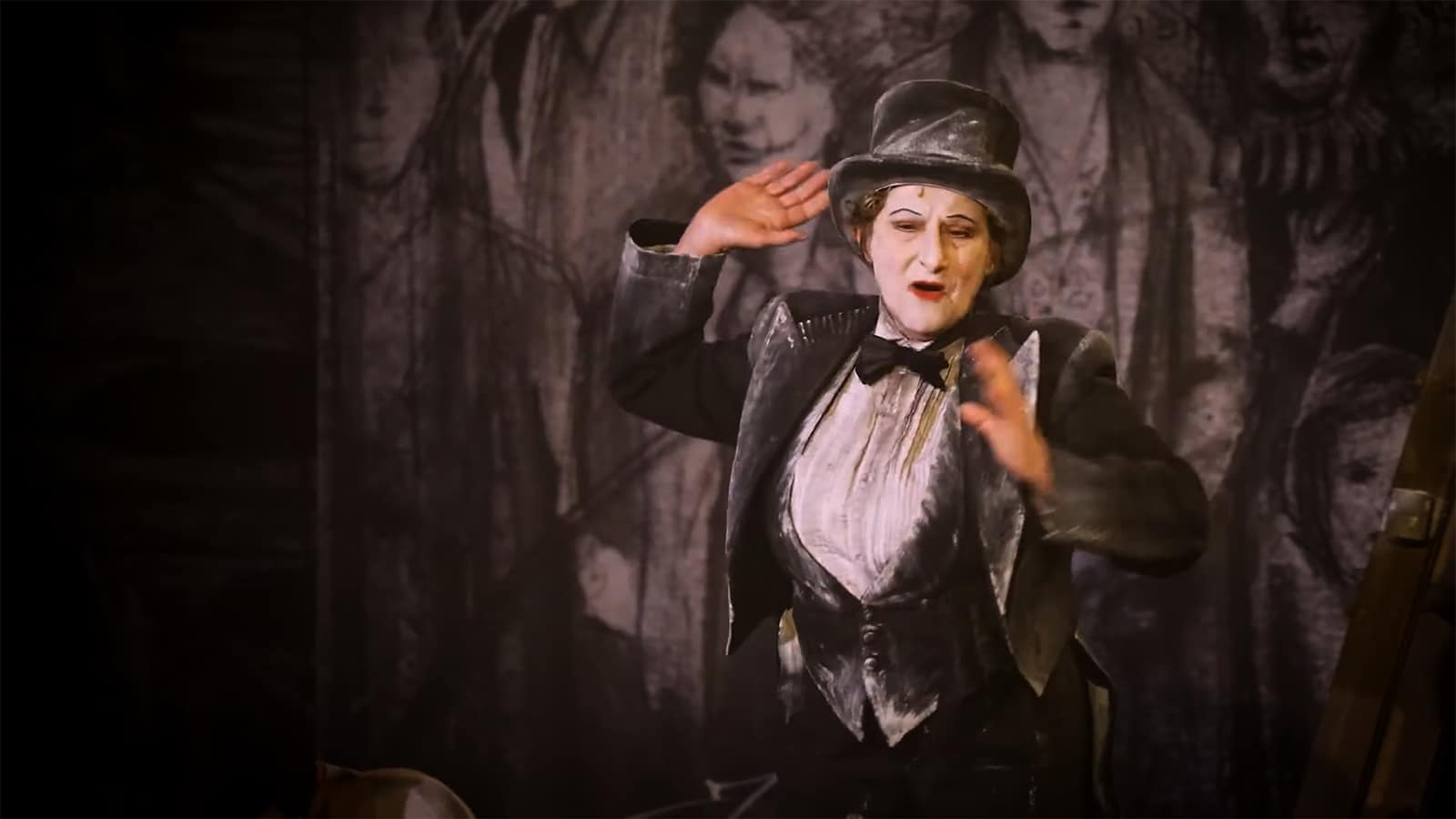
Director David Trueba says of his film Jokes and Cigarettes – “This is a film about humour, and about survival. Eugenio was one of the most popular comedians of the Transition. Everything about his appearance was at odds with humour: a serious man, with no gestures, hiding behind tinted glasses and a black shirt, with a lit cigarette behind a microphone, who would be the one to make a whole country laugh. But… what was hidden inside him?”

Directed and written by multiple Goya Award winner David Trueba and starring David Verdaguer in a virtuoso performance, Jokes and Cigarettes tells the story of the famous Catalan comedian Eugenio, the chain-smoking comedian known for his deadpan delivery, his smoked glasses and his trademark total black attire. It concentrates on his formative years as a comedian during the 60s and 70s, where he became a fixture on the TV sets of every Spaniard.

Barcelona, late 1960s. A young jeweller named Eugenio meets Conchita on a bus and it is smitten. Eugenio learns to play guitar to follow Conchita a singer, and, despite stage fright, they start to play together. When Conchita leaves Barcelona for two weeks, she convinces Eugenio to perform solo and Eugenio becomes a phenomenon in the city’s underground comedy scene. Helped by Conchita, he creates his comedy ego–the dark glasses, the black shirt, the barstool, the cigarettes and the high ball glass–the character that would soon become an unexpected success.

The producer Edmon Roch recalls, “I remember when I went to see the comedian who made people laugh before he’d even opened his mouth. I was ten years old, and I could see my parents laughing their heads off at the sight of this tall man sitting on a stool, stretching out his every movement with an unperturbed gesture before he started to speak. There was a liturgy, an expectation, a palpable ritual. Later, when I discovered Buster Keaton, I thought of Eugenio’s unflappable face, he’s still present in our memory and his humour lives on.”

Jokes and Cigarettes

David Verdaguer delivers a totally believable performance as Eugenio. His deadpan delivery as a comedian is perfection contrasting with his love for his wife and son. I particularly enjoyed the scene where he drops in on his son’s school concert, surprising his son who is doing an impersonation of his father’s comedy act.

Carolina Yuste is compassionate, loving and also totally believable as Eugenio’s wife, Conchita. Her early scenes with Verdaguer are a joy to watch and her death scene is a tearjerker.
Beautifully photographed, Jokes and Cigarettes also has a magical soundtrack of 60s and 70s Catalan music.

Jokes and Cigarettes is a film about humour and survival that explores what was hiding behind that serious man that made a whole country laugh!

Spread the word on your favourite platform!

Spread the word on your favourite platform!

Equus by X Collective

Equus

Equus Rating

Click if you liked this article

1

Peter Shaffer’s 1973 play ‘Equus’ has been described in various ways over the decades. One reviewer said the play was a deep dive into psychiatry, religion, and sexuality. The horses serve as both paraphilic loci and objects of ecstatic worship while an emotionally desiccated doctor struggles to find purpose in his practice.

Another said the play confabulates a complex Romantic, Jungian, and Freudian mythos around the depraved acts of this desperately mentally ill individual, positing that (at least in the view of the self-abnegating child psychiatrist who interrogates him) his act was a kind of Dionysian acting out, or a sort of religious ecstasy, motivated by a sublimated homoeroticism that is displaced onto horses rather than men.

If you’re still with me, which I truly hope you are, the deep dive into the psyche of each of the protagonists in the production I watched last night put on by the X Collective at The Holy Trinity Hall on Ann Street in Fortitude Valley was done well.

The play is based on meetings between psychiatrist Martin Dysart, played by Greg Scurr, and his young patient Alan Strang, played by Adam Dobson, with flashbacks and interactions with other characters. It follows the psychiatrist trying to understand why the boy stabbed the horses he was caring for in the eyes while wrestling with his own sense of purpose and the nature of his work.

It’s a richly layered play that draws us into the disturbed psyche of the boy, drilling down into his madness. It’s not so much a whodunnit as a why-did-he-do-it? A puritanical father, an obsessively religious mother, and the boy’s preoccupation with horses. Dysart gets to the truth when he tricks Alan into reliving the events of the night of the blinding. In the process, Dr Dysart is seen to be just as disturbed as his patient.

This is a play for two main actors, depicting a battle between reason and instinct, and an ensemble piece for others who double as people and horses. There is good work from Jules Berry as a magistrate seeking to save the boy as well as stave off Dysart’s breakdown, Stephen Jubber as Alan’s oppressive father, Julia Johnson as his Bible-quoting mother, Roxanne Gardner as the boy’s would-be lover, Caroline Sparrow as the Nurse, and Henry Solomon who plays the roles of The Horseman and Harry Dalton the stable owner.

Performed in a church, the audience sits in the nave, the stage area is in front of the main altar, and the players not on stage sit behind in the apse. The acoustics are suited for facing the pews, and thus, sometimes, during crosstalk, even excellent voices can become slightly lost in the transepts, which, ironically, makes the audience lean in to hear better.

The space is effectively a stable strewn with straw and drawn together with the asylum. The ensemble portraying the horses provides an animalistic physicality that, combined with dialogue, reaches its fingers into the audience’s psyche. The X Collective have done a fine job of harnessing this unruly beast of a play.

It’s a demanding text for the actors playing the tortured adolescent patient and the troubled and complex psychiatrist treating him as they launch into a murky exploration of patient and physician. Dysart’s relaxed façade initially crumbles as he becomes increasingly fixated on the unanswerable questions of his work and more entangled with Alan’s volatile psyche.

Equus is definitely well worth a watch, but don’t waste time, as this unique play only runs for two weekends with sessions as follows:-

  • Fri 7th June, 7:30pm
  • Sat 8th June, 7:30pm
  • Fri 14th June, 7:30pm
  • Sat 15th June, 7:30pm
Spread the word on your favourite platform!

Spread the word on your favourite platform!

Merrily We Roll Along

Merrily We Roll Along

Merrily We Roll Along Rating

Click if you liked this article

2

According to theatre director Tim Hill, he asked himself how he could get the massive Broadway production of Stephen Sondheim’s “often forgotten masterpiece” Merrily We Roll Along done in Brisbane’s smallest theatre, Ad Astra. He answered the question admirably by getting a great cast and crew. Friday’s show was to a packed house that thoroughly enjoyed it.

The musical, told in reverse, starts with Frank, a rich and famous songwriter and film producer (Stephen Hirst) at a party in his swank Los Angeles pad in 1976, after the premiere of his latest film. The years roll back, and we watch how he went from a penniless composer, along with his oldest friends, theatre critic Mary Flynn (Natasha Veselinovi), and Pulitzer-winning playwright Charles Kringas, Frank’s former best friend and lyricist (Alex Watson).

All three were primed to change the world through words and music. However, success opened doors that led them away from what, and who, they loved the most. Misplaced marital trust, infidelity, unrequited love, an absentee father, drugs and alcoholism, almost all the gritty themes of our industry get illuminated, as we bop along to Sondheim’s brilliance buoyed by the talent of the exceptional players.

Most of the cast plays ensemble roles. But Jordan Twigg gives a gorgeous femme fatale feel to Gussie’s role. Chris Kellet gives Joe Josephson a creditable New York Jewish accent and feel. Heidi Enchelmaier gives Beth Spencer, Frank’s first wife, a poignancy, difficult to deliver in a musical.

At one point, Alex Watson almost rouses the audience to a standing ovation with Charley Kringas’ spitfire speech/singing. Chelsea Burton plays several characters, but as Meg Kincaid, she’s almost irresistible. Liam O’Byrne creditably camps up his characters. Two young fellows, Edward Hill, and Milo White, apparently play the role of Frank Jr. It seems Milo can look forward to a career in show biz.

Kudos to musical director Ben Murray, choreographer Tess Hill, and the crew for fitting the many facets together in this frolic. It’s fabulous. Most astonishing was the de-aging that all the characters embodied. Originally, when Sondheim first put the show on Broadway in the 1930’s, it was created for a cast of teenagers, and young adults, and wasn’t much of a success. This production of the show demonstrates that it really should have been.

This is the first time the production has been brought to a Queensland stage, and if Friday’s show is anything to go by, it will not be the last. It plays until Thursday, June 6 at Ad Astra, 57 Misterton Street in Fortitude Valley. You can learn more by going to https://www.adastracreativity.com.

Spread the word on your favourite platform!

Spread the word on your favourite platform!