The Friendships We Let Go

For The Best

For The Best Rating

Click if you liked this article

3

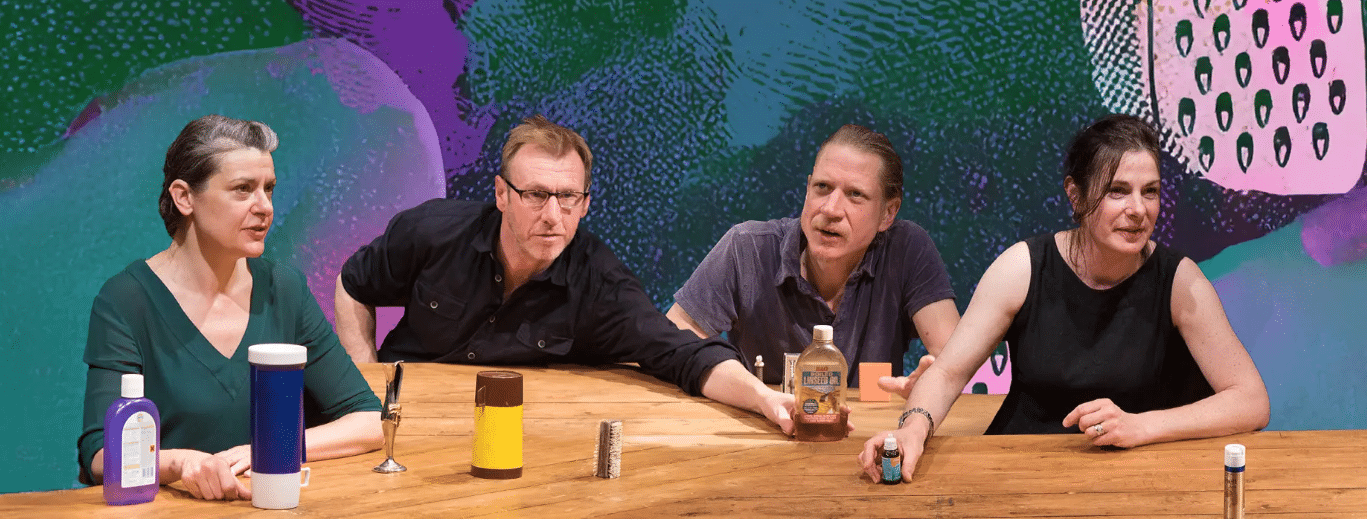
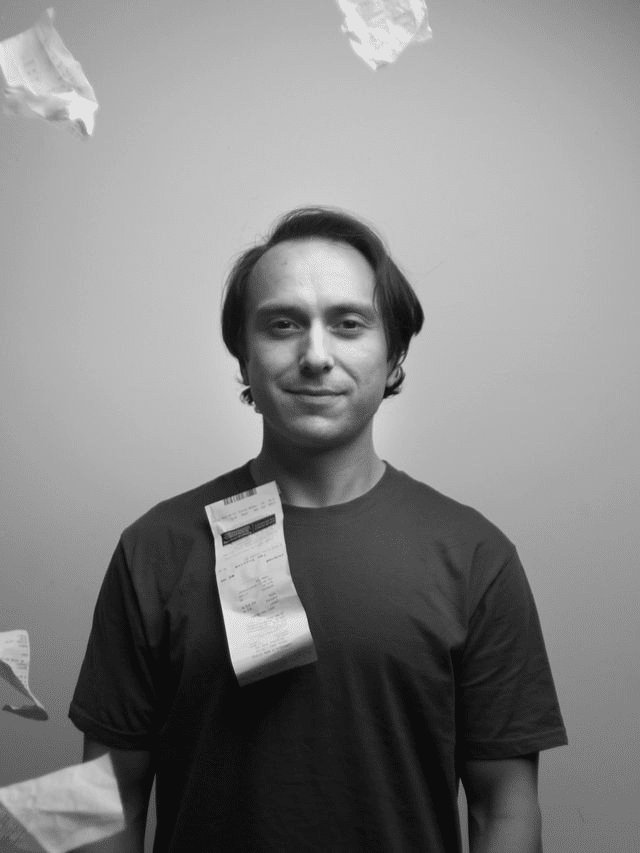
For The Best, playing at the Melville Main Hall, is a heartbreaking, yet relatable piece of verbatim theatre created by Jeffrey Jay Fowler, Mark Storen, and Georgia King. The show focuses on friendships from the community that have fallen apart in one way or another. From the minute the show began, I knew that it would be relatable in more ways than one and really had me thinking about who my close friends are. The set is simple with three performers sitting at the front of the theater, with only music stands for their scripts and microphones, which allows you to focus on the stories. A handful of chairs were lined up on either side of the performers with the musician, Luke Dux, amongst them. Soft live music compliments the stories but isn’t overpowering and the lighting is simple but effective. The house lights never fully go out. From the minute you sit down, you feel as though you are a part of the show, that you are listening to a friend. We are asked to think of a friend we no longer know.

The performers, Mark Storen, Georgia King, and Alexandra Nell do a fantastic job embodying different characters convincingly. If you were to close your eyes, you wouldn’t realize that there were only three performers. Their tones offer humor when necessary that had the audience chuckling. The stronger lines are said in sync by the performers, reflecting how well the stories have been rehearsed. You begin to feel even closer to the performers when they tell their own personal stories of betrayal and lost friendships. During the intense parts of the stories, the music intensifies with the performers’ words. The stories are little heartaches that will make you feel for the people they belong to.


It is also made clear of how much research went into collecting the stories. It was said that in a lifetime, a person has 150 stable relationships but only three to five close relationships. Interviews were held at the Melville Library and a trend was quickly set: Women were more clearly confident with their stories, like they had told their story multiple times while men sometimes hadn’t realized that a friendship had ended until they sat down and thought about it. After the show, we were invited to the foyer, where the performers would collect stories for the following performance.

This show will truly make you think about who your close friends are. It is a profound and thought provoking piece of theatre that will leave you thinking about your own friendships and relationships. This is a story that stays with you long after you leave the venue.

To book tickets to For The Best, please visit https://www.thelastgreathunt.com/.

Spread the word on your favourite platform!

Bags Packed But Nowhere To Hide: Away At The Theatre On Chester

Away by Michael Gow

Away by Michael Gow Rating

Click if you liked this article

4

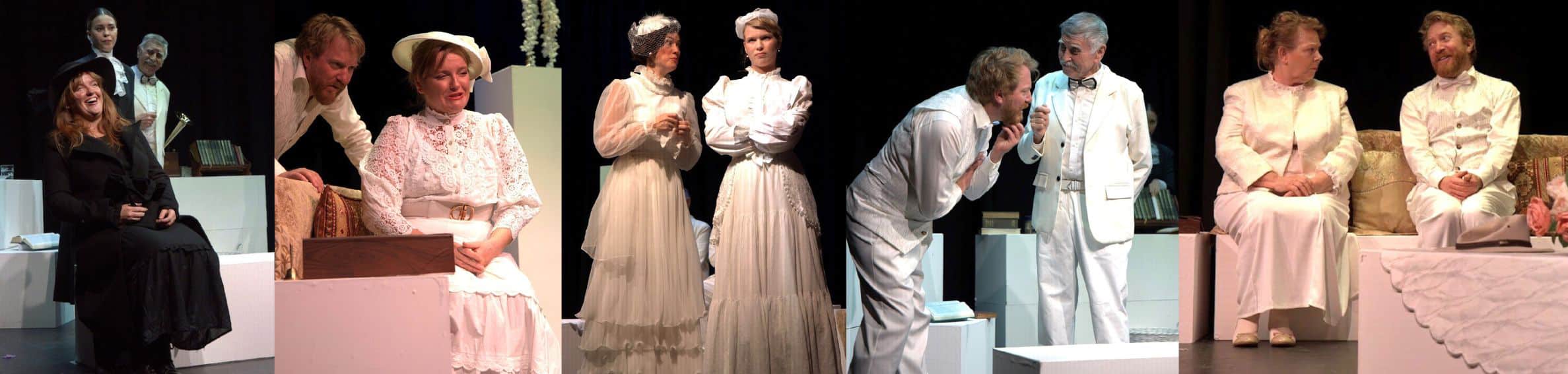
At the Theatre on Chester, the space itself becomes part of the storytelling. Its cosy intimacy draws the audience in, dissolving the boundary between stage and seats and creating a sense of shared experience that suits Michael Gow’s Away very nicely. Under the sensitive direction of Carla Moore, this is a production that leans fully into the emotional closeness the venue affords.

Away is an easy story to be pulled into, not because it is simple, but because it is so recognisably human. Across three families, Gow’s play explores grief, loss, and the ways we lay both love and burden upon each other.

A simple but effective set – dominated by a cleverly realistic mobile tree – leaves the way clear for attention to focus on a strong cast. The opening scene features the closing moments of a school performance of A Midsummer Night’s Dream – the dancers moving with an endearingly clumsy grace – followed by a sweet exchange between two awkward teens, Tom and Meg. Tom (Lucas Dockrill), clearly has a crush on Meg (Tara Bishop), and is every bit as smooth and graceful about expressing it as you would expect from a teenage boy. It all seems to be going well though, until the parents arrive.

Meg’s parents, Gwen and Jim, are decidedly underwhelmed, driven by Gwen’s apparent determination to seek and find fault at every given opportunity. It’s quickly evident that that the female leads will dominate in this production, with Anna Desjardins doing a wonderful job of portraying the state of barely contained rage and resentment that Gwen seems to live in. The spikey, confrontational energy held in her tight body and twitching hands is at times uncomfortable to sit with, but tremendously effective. Beside this, the apologetically shuffling Jim (Cam Ralph), whose sole mission seems to be to appease his wife – there’s clearly love there, as well as some level of understanding – is somewhat overshadowed.

By contrast, Tom’s parents Harry (Ian Boland) and Vic (Tracey Okeby Lucan) are warm and effusive, evident pride spilling over as they greet their son. A little too effusive, maybe? It’s one of the many threads that weave together to explain motivations, but not for a while.


The scene (and many subsequent scenes) is stolen though, by Karen Pattinson as Coral, the wife of headmaster Roy (Martin Bell). Coral drifts on the edges of scenes like a ghost; there but not there. Roy and Coral lost their son in the Vietnam war, and Coral now alternates between complete dissociation and a series of somewhat ghastly attempts to put a socially acceptable mask on at the urging of her husband, who just wants to move on with life with the woman he used to know. She succeeds, at moments, to look and act somewhat normally, but you can see the effort trembling at the edges of her face before she drifts back into her own world of pain.

Rounding out the stable of strong female leads, Tara Bishop plays Meg with quiet restraint. Meg is chafing at the bonds of expectation that tie her to her mother’s happiness – or rather, lack of it – and the moments where she starts to pull away and challenge the situation land with the subtle authority of a much older actor. She’s one to watch going forward.

Lucas Dockrill’s Tom is worth mentioning as similarly grounded, offering a portrayal of genuine sweetness and vulnerability. His openness is engaging, though there are moments where emotional beats are pushed too quickly, slightly undercutting the character’s natural awkwardness.

Although the premise of the play is that all three families are going away for a holiday over Christmas, the theme of… awayness, for lack of a better word, permeates through every character. Gwen flees into anger to avoid confronting the trauma of her past; Meg longs to escape the crushing responsibility for her mother’s happiness; Roy seeks distance from grief in the pursuit of normality; while Coral retreats into dissociation or fantasy to escape her pain. For the remaining characters, separation of another kind hovers – but I’ll leave the audience to discover that for themselves.

For all its emotional weight, the production is far from relentlessly bleak. A distinctly Australian humour surfaces throughout, with Oscar Baird deserving a special mention for his energetic multi-role performance, including a memorable and unexpectedly arresting banjo solo during the campsite talent show.

As its threads converge, Away ultimately reveals itself as a story not just about leaving, but about coming home – to connection, empathy, and shared understanding. It’s a quietly affecting journey, and a production well worth experiencing.

Season: April 10 – May 2
Buy tickets via: https://www.ticketor.com/theatreonchester/default#buy

To book tickets to Away by Michael Gow , please visit https://www.ticketor.com/theatreonchester/default#buy.

Spread the word on your favourite platform!

Australia Day – Therry Theatre

Australia Day

Australia Day Rating

Click if you liked this article

Australia Day is Jonathan Biggins’ satirical look at the workings of rural councils and in particular an Australia Day organising committee. While the cast do their best with the script, Biggins wrote it in 2012, it now feels worn and the characters hollow. Some of the attempted humour is offensive (which seems to be the point) but if audience members can get past that, Australia Day is funny in parts if a little passed its use by date.

Set in 2016 in the fictional rural town of Makarrata, the play begins in the town’s scout hall as the members of the local Australia Day organising committee arrive to begin the planning for the following year’s Australia Day celebrations. The committee is composed of Brian Harrigan (Stephen Bills) the town’s Mayor and Liberal party member who is also seeking pre-selection for the local federal seat and Robert Wilson (Adam Schultz) the Deputy Mayor who is Liberal leaning but not a party member. Joining them are long standing committee members, Maree Bucknell (Kristina Kidd) the President of the Country Women’s Association and bigoted Wally Stewart (Steve Kidd OAM) who is a local builder. There are also newer members of the committee, Helen McInnes (Michele Kelsey) who has relocated from the city and a member of the Greens and Chester Lee (Ollie Xu) who is an Australian-born son of Vietnamese refugees and a new schoolteacher.


As the committee meetings unfold and Australia Day approaches disagreements develop ranging from the choice of sausages for the BBQ through to just plainly intolerant views. Political power plays and personal agendas also unfold.

Local place names are substituted into the script to add a local flavour. The whole cast perform admirably, and the play is directed competently by Jude Hines, however the limits of the script only ever allows them to develop shallow caricatures. As normal for Therry Theatre, their excellent production crew do an outstanding job in bringing the production into being.

Warning: a deeply offensive name for Aboriginal people is used in the play as well as an equally offensive name for disabled people.

Therry Theatre has a long history of brilliant productions. Their production last year of Come from Away was an absolute stand out. Compared to that, Australia Day feels like a bit of a misstep (although humorous in parts) as they are capable of much greater things and we eagerly anticipate their production of Jesus Christ Superstar in July.

Reviewed by Rob McKinnon
Rating; 3/5

Production Details
Venue: The Arts Theatre, Angas Street, Adelaide
Performance Dates: to Saturday 18 April 2026.
Times: 2.00pm / 7.30pm
Tickets: https://www.trybooking.com/DHTFT

To book tickets to Australia Day, please visit https://therry.org.au/.

Photographer: Andrew Trimmings

Spread the word on your favourite platform!

The Effect – Dopamine, Love, or Both?

The Effect

The Effect Rating

Click if you liked this article

I’m already fairly familiar with The Effect by Lucy Prebble when I sit down in the Theatre Works audience, the play having first debuted in 2012 at the National Theatre in London and been played across the world since. More than a decade later the show has made its way down to Key Conspirators and I’m curious what they’ll do with it. The four-hander mainly follows two participants in an antidepressant drug trial, Connie and Tristan, as they begin to fall in love – but whether it’s caused by the supplementary dopamine coursing through their veins is troublingly unknown to them and the doctors alike.

As needed for any tight cast show, the ensemble is near flawless. Directed superbly by Alonso Pineda, each actor embodies their character to their utmost limits.

Emma Choy, playing Dr Lorna James, has wrapped everything she does in anxiety. Her vocal tone, her gaze, her slight shifting, all build to a near pitiful portrayal of the doctor until it reveals a spine that stands straight throughout all the chaos. Choy is endearing and heart-breaking all at once, honing in on the lovable awkwardness so we can watch it be torn apart.

Jessica Martin finds an unexpected confidence in Connie instead of the bashful and desperate versions I’ve previously seen. Martin lets Connie discover a self-aware power which becomes fascinating to watch be desperately clung to and employed against Tristan and Dr James. It also got to rear its head beautifully well within the intimate and vulnerable relationship with Damon Baudin’s Tristan that made me blush to watch.


Baudin’s physicalisation is intoxicating to watch. His bounces, his fidgets, his careful curation of presence are all highly rendered. Tristan feels real. He’s able to slip from small and helpless to explosive in the blink of an eye, weaving a carefully constructed pathos through a character that could easily become scarily dominating and uncomfortable. To balance such crassness with an earnest love that you root for, proves Baudin is a master of his craft.

Similarly, Philip Hayden as Dr Toby Sealey carefully toes the line between a pretentious dickhead and a man genuinely trying his best. The role of Dr Sealey is one that can quickly slip into caricature or downright evil, but Hayden brings a needed empathy. You trust that he believes his own words, even if you vehemently disagree with them.

Pineda has intelligently leant into the repetition and isolation of the text. People are scattered across large spaces, making them feel simultaneously alone and claustrophobic. We want to escape the trial as much as they do. There is also an employment of voyeurism by both the characters and the audience that creates a layered effect of examining the show as its own experiment. Occasionally during the longer scenes between Connie and Tristan, the staging did start to feel a bit static, mainly because I was desperate for more play as soon as the characters could escape the rigidity.

Vulcan is meticulous in his design, the aesthetics feel entirely in tune with the clinical and desaturated nature of the text. The stage is split into three distinct areas. We have the main downstage area acting as the facility where only the actors can bring it colour and life, amplified by the grey-scale costumes. Then we have the two-story set up where below are realistically rendered medical facilities and above is a transient play space that moves from bedroom, to stage, to a platform for the watchful eye. This two-story set up smartly allows itself to be hidden away, only visible when lit, letting us sit in the dark, unstimulating emptiness with Connie and Tristan.

Additionally, Vulcan has built an absolute spectacle of lighting into the membranes of the set. The set is the lighting and the lighting is the set: it’s symbiotic. Using an array of lighting bars, Vulcan had created lighting that breathes and has a life of its own, almost reacting organically to actors. Vulcan is not afraid of the dark either. Light is only introduced when it’s absolutely required, the haunting scene of Dr Lorna James sitting quietly in the dark comes to mind.

The Effect is a tight production that doesn’t do more than it needs to, threading all production areas together to prioritise the themes of the text. With a wicked ensemble and beautiful design, the show is not to be missed!

To book tickets to The Effect, please visit https://www.theatreworks.org.au/2026/the-effect.

Spread the word on your favourite platform!