Aphrodite: Beauty Disassembled

Aphrodite

Aphrodite Rating

★★★★★

Click if you liked this article

In Sydney Chamber Opera’s Aphrodite, the act of looking becomes its own kind of violence. Composed by acclaimed American composer Nico Muhly with a libretto by Laura Lethlean, and presented in association with Omega Ensemble, this striking new work reimagines the goddess of love not as a figure of desire but as a symbol of distortion; a mirror in which the modern self dissolves.

The story follows Ava, a thoughtful academic whose book, The Aphrodite Complex, catapults her to sudden fame after being adapted into a hit documentary. As her public image grows, her personal life fractures. Ava becomes consumed by the pursuit of perfection, sculpting herself for the gaze of others while losing touch with intimacy, authenticity, and selfhood. When the goddess Aphrodite herself appears, cool, composed, and elusive, Ava’s carefully constructed world begins to collapse.

Director Alexander Berlage’s use of live video is both conceptually and theatrically masterful. Cameras flank the stage, embedded in mobile phones, and hang from the ceiling, capturing the performers in extreme close-up. These images, not just of faces but of hands, feet, clothing, trembling skin, are projected on a large screen above the stage, which simultaneously displays the libretto. What emerges is a fragmented portrait of each character: isolated body parts, captured and magnified, turned into objects of scrutiny and aesthetic judgement.

Rather than drawing the audience closer, these hyper-intimate visuals create distance. We are not watching the characters as whole people; we are dissecting them. The body becomes content. Ava becomes an image. Even her moments of vulnerability are caught, cropped, and curated. The overhead camera is particularly cruel: it frames her from above like an anatomical specimen, cold and clinical, as if the goddess herself were observing.

Jessica O’Donoghue gives a deeply affecting performance as Ava, vocally assured and emotionally transparent. Her portrayal balances intellect and fragility, making Ava’s descent into disconnection feel both inevitable and tragic. Puerto Rican soprano Meechot Marrero, in her Australian debut, brings an arresting stillness to Aphrodite. Her presence is magnetic and inscrutable, her voice radiant. She is not temptation incarnate but myth personified; unknowable, unmoved.

Muhly’s score is luminous and precise, shifting between shimmering textures and silences that seem to stretch time. The Omega Ensemble plays with clarity and control, amplifying the opera’s psychological tension without overwhelming its introspective tone.

Aphrodite is a cool, elegant gut-punch of an opera, a work that refuses sentimentality in favour of scalpel-like insight. It’s about beauty, yes, but more importantly, it’s about the cost of being seen only in parts. By disassembling its characters on screen and in sound, it delivers a quietly devastating truth: there can be no connection until we are allowed to exist as whole.

To book tickets to Aphrodite, please visit https://www.sydneychamberopera.com/2025/02/17/aphrodite/.

Photographer: Daniel Boud

Spread the word on your favourite platform!

Koreaboo: Showing Now At The Belvoir Theatre

Koreaboo

Koreaboo Rating

★★★★★

Click if you liked this article

1

Koreaboo (Griffin Theatre Company), now playing at Downstairs Belvoir is actor and playwright Michelle Lim Davidson’s story of being a Korean Australian adoptee. But as Lim Davidson states in her playwright’s notes in the program, Koreaboo is not just her story; it is the story of so many international adoptees who have found themselves growing up caught between two cultures, perhaps always grappling with the unanswered questions: ‘Who am I?’ and ‘Where do I belong?’

The intimate space of the Downstairs Theatre at Belvoir is perfect for the cramped, fluorescent-lit convenience store or ‘mart’ in which most of the play’s action takes place. Hannah (Lim Davidson) arrives, straight off a flight from Sydney, at her biological mother, Umma’s, mart during a sweltering Korean summer. It’s soon revealed they’ve had contact before but this time Hannah has high expectations for her visit – she wants to finally connect with her Umma, and she desperately wants some answers to her long-held questions about her Korean family.

Umma, played delightfully by Heather Jeong, smiles sweetly, but her apparent cuteness belies a stubborn determination to avoid her past at all costs. Her life is firmly situated in the present, stacking ramen cups, fixing a pesky fridge light and tending to her colourful collection of garden gnomes. Umma would rather Hannah had never turned up on her neatly swept doorstep. And she doesn’t hesitate to take any opportunity to remind Hannah of this.

Michelle Lim Davidson is a gifted comedic actor, and in writing Koreaboo, she has wisely used comedy to portray a heartbreaking story. Rather than making her story glib, however, the humour serves to help us connect with the pathos of the situation, avoiding melodramatic cliches that other stories of reuniting with lost relatives might fall into. Initially appearing to be an odd couple, it soon becomes clear Hannah and Umma both share a love of performing.

Hannah tries to impress Umma with a rendition of her winning ‘All That Jazz’ number for the Lake Macquarie Eisteddfod 12 years category, but Umma is scathing: ‘Your mother let you wear a sequinned leotard at 12?’ Umma who is obsessed with the talent show Star Power (think Australia’s Got Talent K-style) lives out her own unfulfilled dreams through the contestants on screen. The reality show becomes a point of connection for the two: What if Hannah can revive her long-dormant stage skills and win Star Power? Would Umma finally accept her then?

K-pop culture infuses Koreaboo. Umma randomly quotes from K-pop songs and is obsessed with the eerily pretty Korean pop star, Suga. In fact, the term ‘Koreaboo’ (far from just a cute sounding name as I initially thought), is slang for a non-Korean person who is infatuated with Korean culture, especially K-pop and K-dramas. But, it’s not applied in a complimentary way. Is Hannah a ‘Koreaboo’, someone who is desperately trying to be Korean but never will be?

Derogatory term or not, Koreaboo is a delightful story that deserves to be told, but also to be seen. My hope is that more untold stories of adoptees like Michelle Lim Davidson are given a platform (or stage), rather than being ignored or conveniently brushed under the carpet. How many other cross-cultural stories do Australians have that are waiting to be told? Griffin Theatre Company has shown again that they truly are the grassroots champion of home-grown Australian theatre, giving voice to contemporary, multicultural Australian stories.

To book tickets to Koreaboo, please visit https://griffintheatre.com.au/whats-on/koreaboo/.

Spread the word on your favourite platform!

The Lady Vanishes

The Lady Vanishes

The Lady Vanishes Rating

★★★★★

Click if you liked this article

3

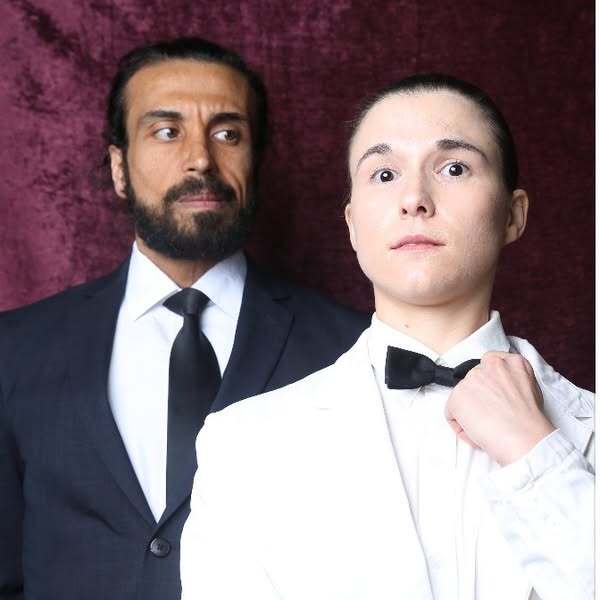
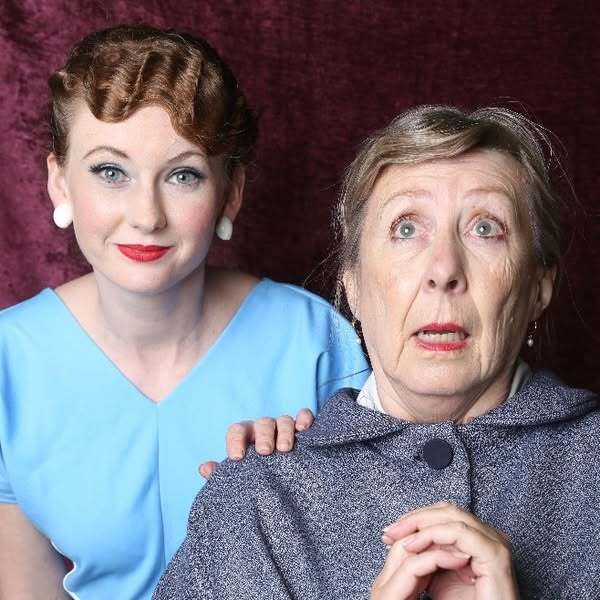
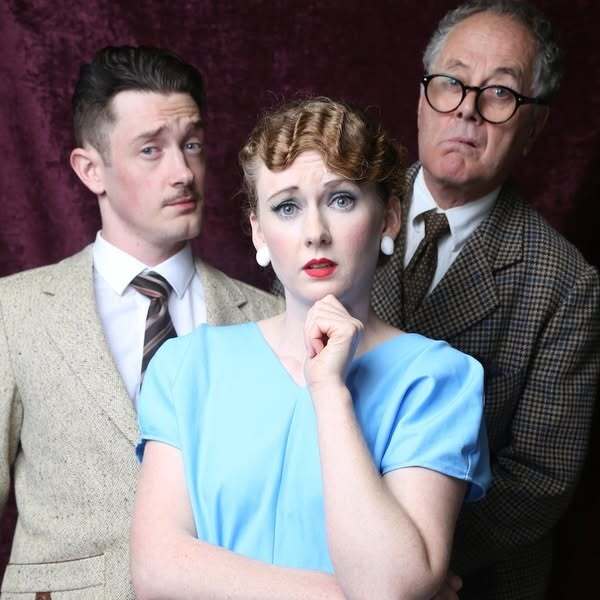
Celebrating its 80th year in style and in a brand-new theatre space, the Genesian Theatre Company presents – The Lady Vanishes, adapted by Derek Webb from the novel on which the Alfred Hitchcock’s classic 1938 film was based.

This production is a nostalgic and atmospheric journey back to a time of intrigue and stiff upper lips – all aboard a European train where one woman vanishes and everyone seems to be hiding something.

The ingenuity of the staging cannot be overstated. The design team masterfully evokes the confined, shifting world of a train carriage through clever use of sliding compartment doors and evocative soundscapes. Seamlessly moving the action from the dining car to corridor to first class, the production invites the audience to feel like passengers themselves, peering down corridors and eavesdropping on hushed conversations. This immersive approach is one of the production’s strongest assets, providing a dynamic sense of movement and urgency.


The story itself remains a compelling whodunit, as Iris Carr – on her journey home – becomes increasingly frantic when a fellow passenger, the governess Miss Froy, mysteriously disappears. What follows is a delightful unraveling of truth and deception, as each character’s potential motive for denial (or deceit) is revealed. The play cleverly engages the audience, turning us into sleuths trying to piece together the puzzle.

Tonally, however, the production feels somewhat uneven. Some actors leaned heavily into broad caricature, while others remained grounded in more traditional realism. This dichotomy occasionally pulled focus from the central tension of the plot.

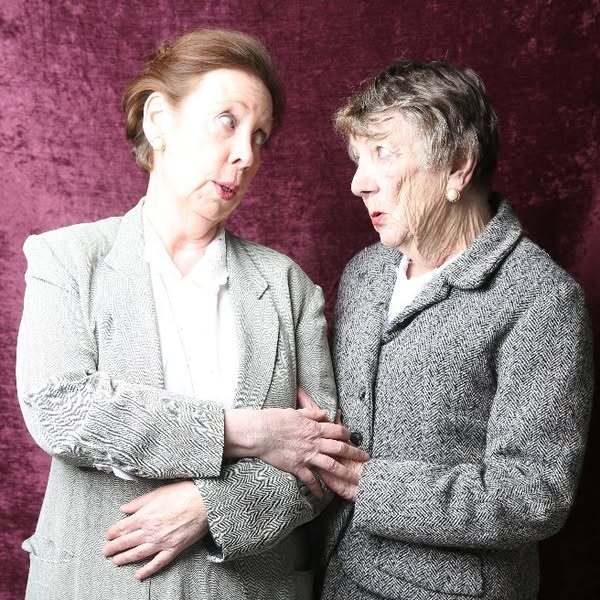
That said, several performances stood out. The sister duo Evelyn and Rose brought genuine laughs with their dry wit and impeccable timing, while Mrs Barnes was a wonderfully nervous delight. In the central role, Iris Carr shone brightest when allowed to play her role with sincerity and emotional depth.

The Lady Vanishes is a joy to watch and the Genesian’s new theatre space is a fitting stage for this lively, imaginative production – a celebration of the company’s legacy and a testament to the enduring power of classic storytelling. Here is to 80 more years to come!

To book tickets to The Lady Vanishes, please visit https://www.genesiantheatre.com.au/.

Spread the word on your favourite platform!

Samana Sunrise at the Spanish Film Festival

Opening Gala - Spanish Film Festival (Samana Sunrise)

Opening Gala – Spanish Film Festival (Samana Sunrise) Rating

★★★★★

Click if you liked this article

The HSBC Spanish film festival opened recently across the country and I was lucky enough to attend the opening night Gala in Sydney. Taking over all 4 screens at the Palace Cinemas in Moore Park, they started the party with endless prosecco, Spanish cocktails, delicious paella, and a lively band that inspired guests to hit the dance floor. It was so much fun the film almost became an afterthought, but eventually the party had to stop as everyone meandered into their respective screens in a suitably Spanish way, well after the advertised starting time.

Directed by Rafa Cortes, Samana Sunrise (Amanece en Samaná in Spanish), is a romantic-comedy based on the play Cancún by Jordi Galcerán. Two married couples, Ale and Santi (Luisa Mayol and Luis Tosar), and Natalia and Mario (Bárbara Santa-Cruz and Luis Zahera), go on holiday in a Dominican resort to celebrate two decades of friendship. The carefree holiday quickly changes when Ale drunkenly confesses to a small deception that led to Santi dating and eventually marrying her instead of his original interest, Natalia. The next morning, Ale wakes up in shock to find Mario in her room and Santi acting as if he’s married to Natalia. The rest of the film (yes, really) is Ale slowly coming to realise her friends truly believe this new reality and are not just playing a lavish prank.

This ‘what if’ alternate reality device was the perfect set-up to explore deeper themes of fate and love, and how small decisions can dramatically impact our own lives and those of the people we care about. To its credit, the film was a lot of fun, and funny, with outstanding performances from the cast, especially Luis Zahera and Luisa Mayol.

The cinematography adequately captured both the beauty of the Samana landscape and the intimacy of the relationships. I’d like to have seen Cortés dive into the deeper themes that were set up so perfectly at the start. Spain has always had an extraordinary film culture, full of talent and inventiveness, so I’m excited to see more of the festival.

The HSBC Spanish Film Festival is on in Sydney until the 9th of July all around Australia. To book tickets to this years Spanish Film Festival (Samana Sunrise), please visit https://spanishfilmfestival.com/.

Spread the word on your favourite platform!

Subscribe to What's The Show

Reviews, show news and what is on, straight to your inbox.