Between A Judge And Jury: A Company Of Twelve

12 Angry Actors

12 Angry Actors Rating

★★★★★

Click if you liked this article

5

From the moment I sit down, the minimal stage is set. A table and some chairs on one side, as well as on the other. Blaring music ensues, demanding attention. Anticipation. One does not know quite what to expect, so we sit in silence, waiting—for some serious action to take place.

And then, one by one, the actors emerge onstage. We, the audience, become voyeurs of an audition scene taking place at a local theatre group, where the actors jauntily greet one another and are excited about their upcoming show.

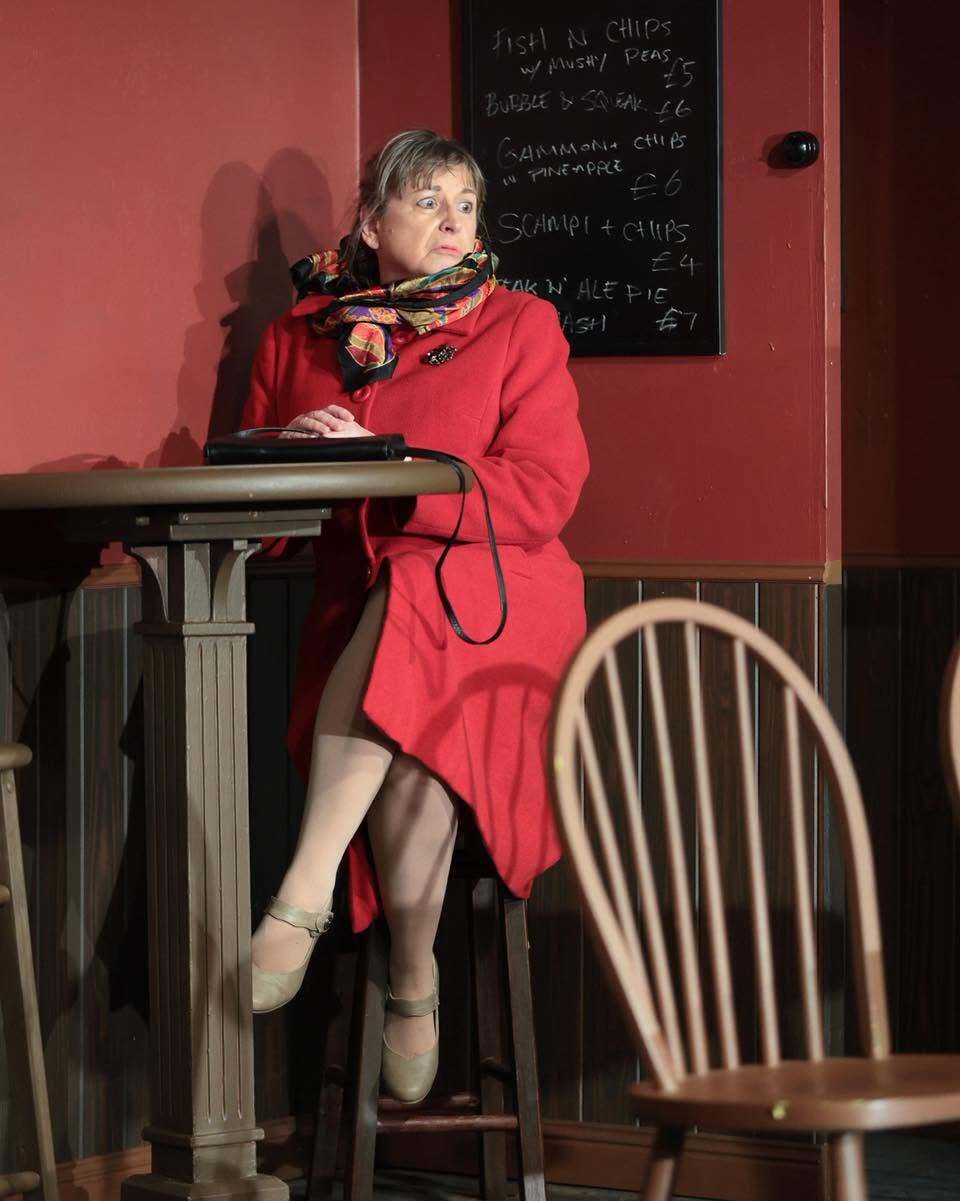
But little do they know, that 5 days from opening night, their eagerness will soon turn sour by some incriminating news about their fellow castmate. The show’s leading man named Matthew, who has a very tainted past.

And here is where the moral dilemma begins amongst the company of 12. Should one choose to stay and perform alongside this offending man? Or does one just carry on, as if the past has never happened? As judgement rears its ugly head, a wedge begins to form between the cast, and slowly, each actor reveals their thoughts and reasoning behind their decision to stay or go.
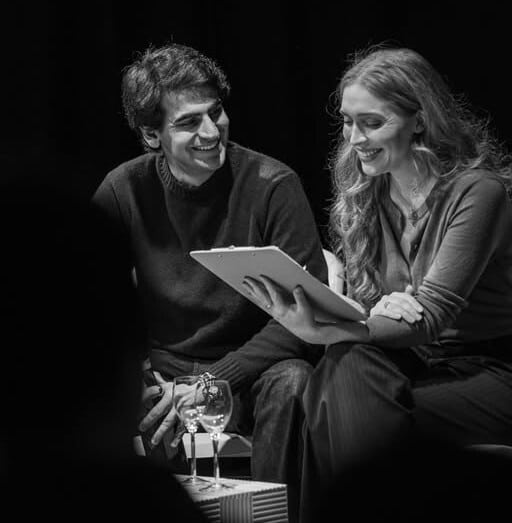
 

There are raw, powerful themes in this production involving the darkness of human behaviour, trauma, discrimination and the real-life moral ethics behind the criminal justice system when it comes forgiving offenders. At times, emotional eruptions awaken our senses and faces us to ponder what personal penance truly means, and whether someone that has already served time deserves to be integrated back into the arms of society, or be left to suffer in vain.

The show’s two leads, Kay and Ted, played by Celine Khoury and Alexander Given, rightly deserve to be greatly applauded, and really carry this show from start to finish.

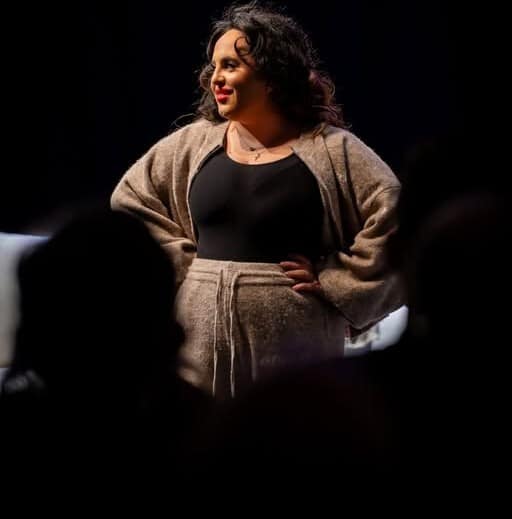
Celine Khoury, a real-life criminal defence lawyer who co-wrote the show, takes us through the full range of her emotions, blending her raw level of experience with courage, bravery, heart, and passion; taking us through her journey that is, at times, such a Catch-22, it is so difficult to pick a side to lean on. As her compassion asks us not to necessarily decide, but rather to debate whether humans are indeed capable of change, and be granted a second chance at a normal life.

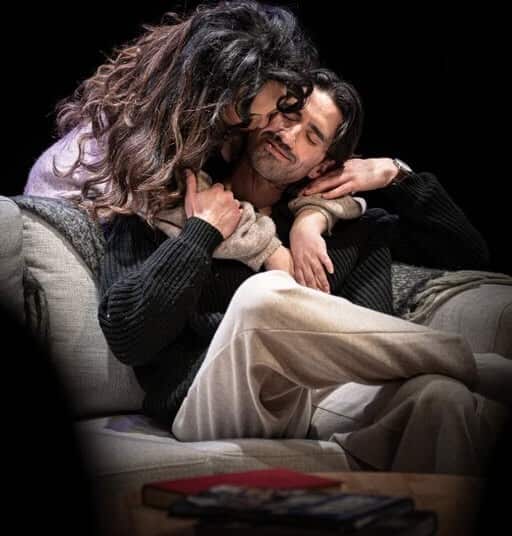
But Alexander Given, a gifted actor playing Kay’s love interest Ted, is truly the one to watch. From the moment he appeared on stage, his naturalistic energy and strength of character shone through. Every intent was clear. Every nuanced choice in every scene was so organic, innate and genuine, with a style all his own. Even in his most emotionally-charged scenes, he was able to build them slowly, taking us on his character’s complex journey with great aplomb, and to great effect.

In all, this show is an absolute must-see for those who are craving something different in modern Australian theatre. For this show was more than simply a drama. It kept us open-minded. It was thought-provoking, adding modern themes that will surely speak to fresh audiences for generations to come.

To book tickets to 12 Angry Actors, please visit https://meatmarket.org.au/event/12-angry-actors/2026-08-20/.

Spread the word on your favourite platform!

Big Religion: A Divine Tale of Saints, Sinners & Disco Dance Winners

Big Religion

Big Religion Rating

★★★★★

Click if you liked this article

5

In an ever-changing world, there may be times where we feel the need more for meaning in our lives. More purpose. More direction. For this reason? We may turn to religion for salvation. To steady our belief systems. To set our minds at ease. Some for spiritual reasons. And others? For personal reasons.

The ‘Big-ness’ of religion cannot be underestimated, and often pondered. Is it channelled through divinity, and drummed into us via institutional structures and educational systems? Or can there be a simpler way: through the universal language of heart-to-heart connection?

Which begs another question for the curious-minded: Is the idea of inner connection to source or spirit linear or abstract? Is there a rigid system for it only, or is that a fallacy we have come to accept as true?

The show, Big Religion, written and directed by Maddi Formosa, seeks to explore these very same themes, albeit through a fun, theatrical realm of holy zaniness. Where we, the audience, begin our madcap ride in a 360 degree theatre-in-the-round, outlined with big cross-shaped black stage, save for two black blocks that are used for seating. A wall behind the stage is used as a guide (via a projection lens) to guide us scene-by-scene with cheeky gothic script and humorous titles to keep the audience amused, engaged (and not asking too many questions!).


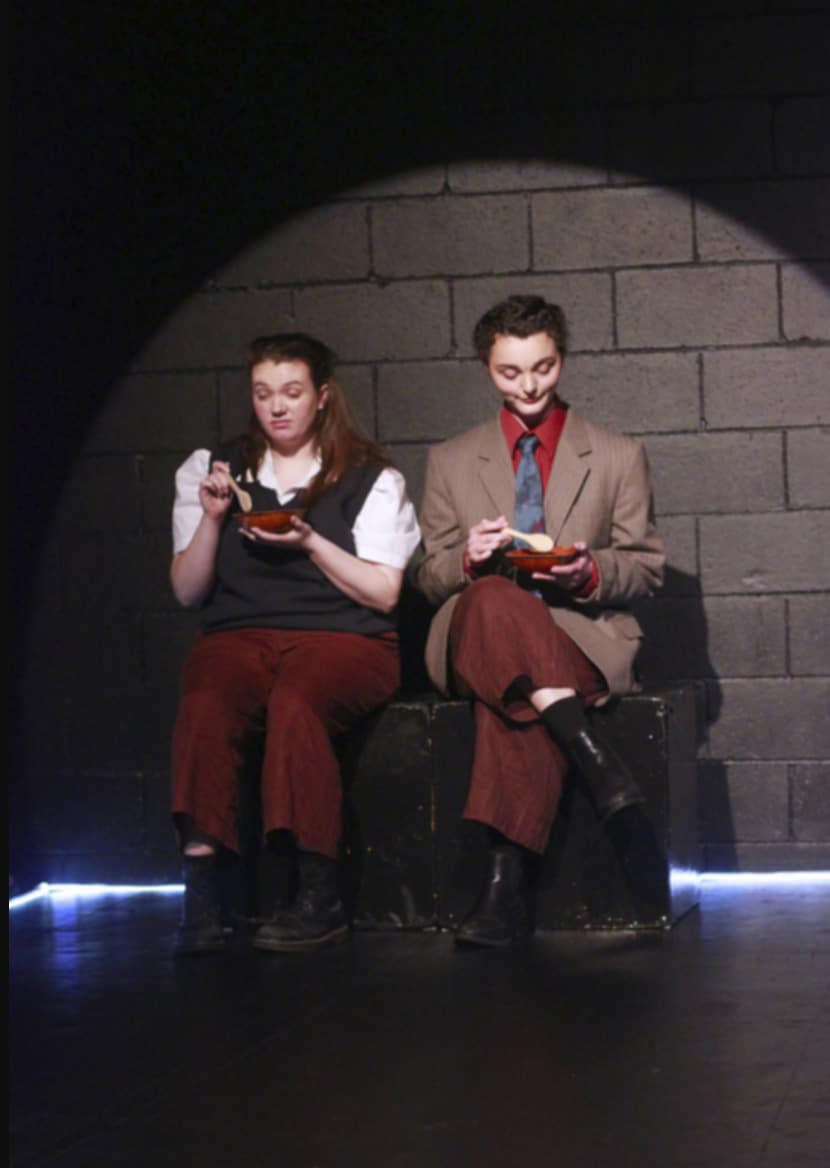
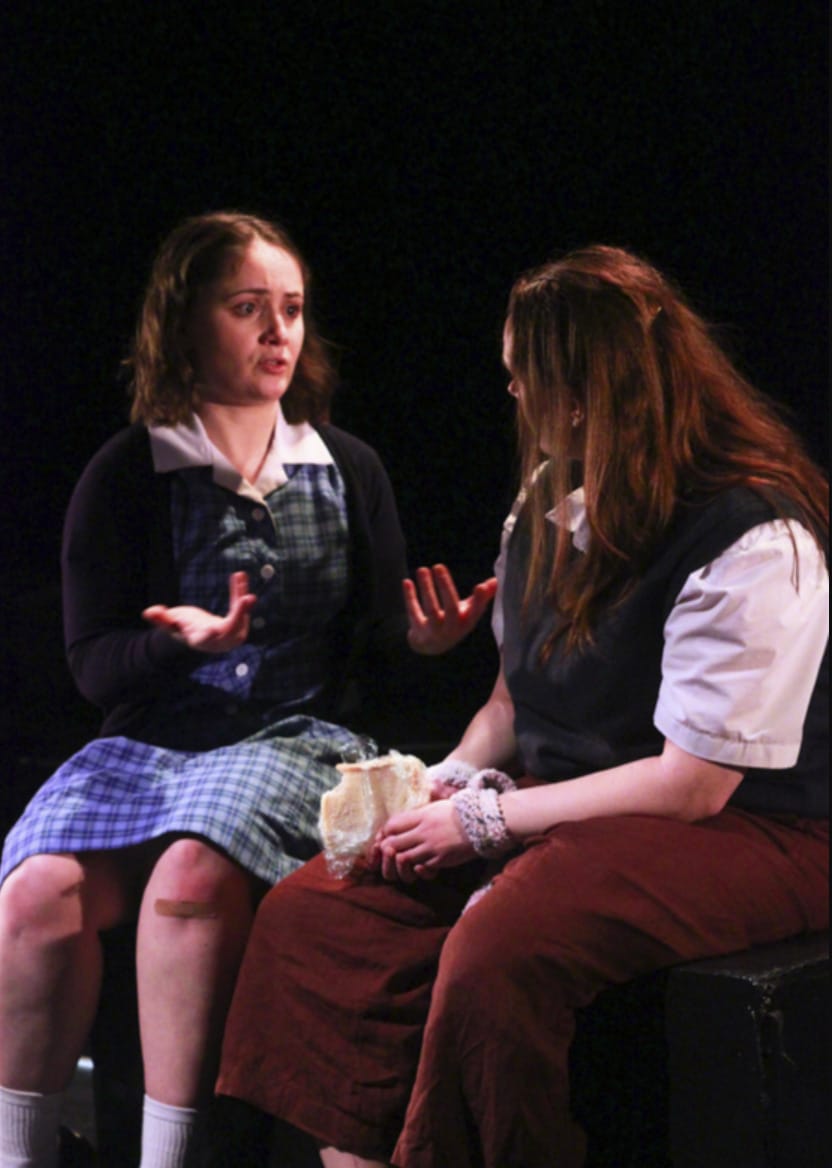
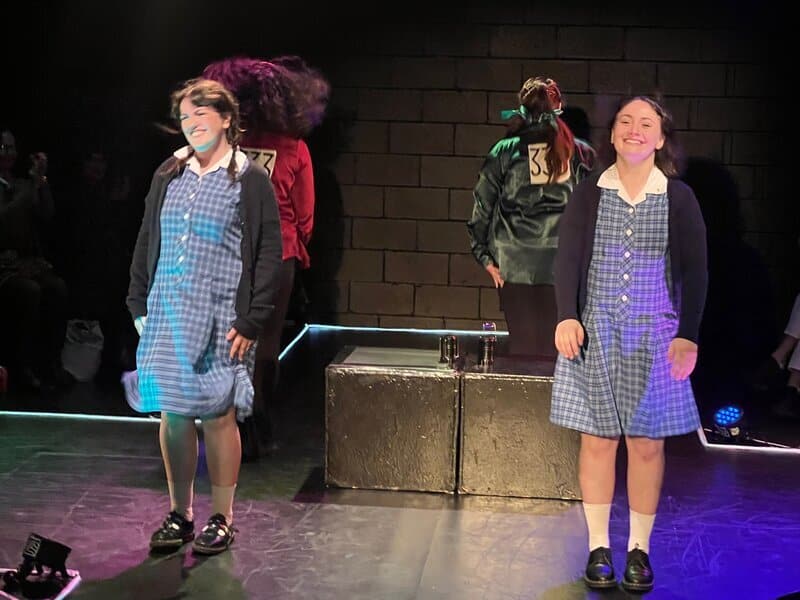
And so, under the guise and space of a huge cross, we staunchly sit under the so-called eyes of the Almighty, along with two feisty and largely frustrated 14-year-old catholic schoolgirls: rebellious rebel Jan, divinely played by Caitlin McCallig, who is railing against the institution she is chained under. Desperate to stand for something important within her school’s strict sacred walls of religo mumbo-jumbo, she chooses attention-seeking promiscuity as the answer, as that is where she places her worth in the world.

Her best-friend Dav? Is the opposite, scholarly and more subservient to her environment, gorgeously played by Gabrielle Ward. For Dav seeks to endure harsh, corporal punitive methods on purpose, as that is all she thinks she is worth. Indeed, both of these girls, the play’s heroines, are seeking some sort of salvation, and some refuge, even if they don’t fully understand why.

Meanwhile, things are also happening in the heavenly, spiritual realm as well. A co-worker-turned-love-story in fact, between naive ‘Being’, played by Megan Scolyer-Gray, a curiously-minded angel, with a dangerous and stubborn ability to ‘think’, who has been assigned observation work on earth, and ‘Also being’, a professional and highly dutiful Angel, awarded a second chance to observe life on earth, and played to a ‘T’, basked in brilliant subtlety, by Jett Chudleigh.

This way, Formosa takes us one step further, and seeks to also challenge our thoughts about heavenly helpers, known as angels, and what challenges they also must face in the line of ‘heavenly duty’, which brings another interesting parody to ‘Big Religion’, especially when the feisty schoolgirls and innocent angels meet, and the story unfolds in an hilarious yet tender way, full of surprises on every corner.

In all, this is a heartwarming must-see tale with a fantastic cast of characters. Where we learn what it means to be both earthly and divine. Where ultimately, we rediscover where true salvation may be found for us all— via the ‘BIG-ness’ of soulful connections.

To book tickets to Big Religion, please visit https://www.theatreworks.org.au/2026/big-religion.

Spread the word on your favourite platform!

It Takes Two: A Gripping Lens Of Life, Love and Loss

Two

Two Rating

★★★★★

Click if you liked this article

3

In our life’s journey, it’s safe to say that we may likely get to experience the gamut of relational dynamics. Some may be genuine, some may be deemed unhealthy or harmful; but more often than not; they are largely played out behind closed doors, where couples may hide their truth from the outside world for privacy’s sake, or in deeper cases, to protect the masks they portray to the outside world.

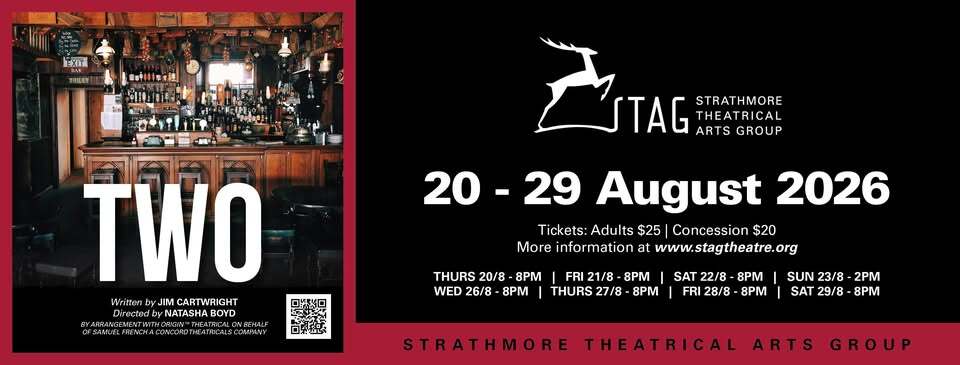
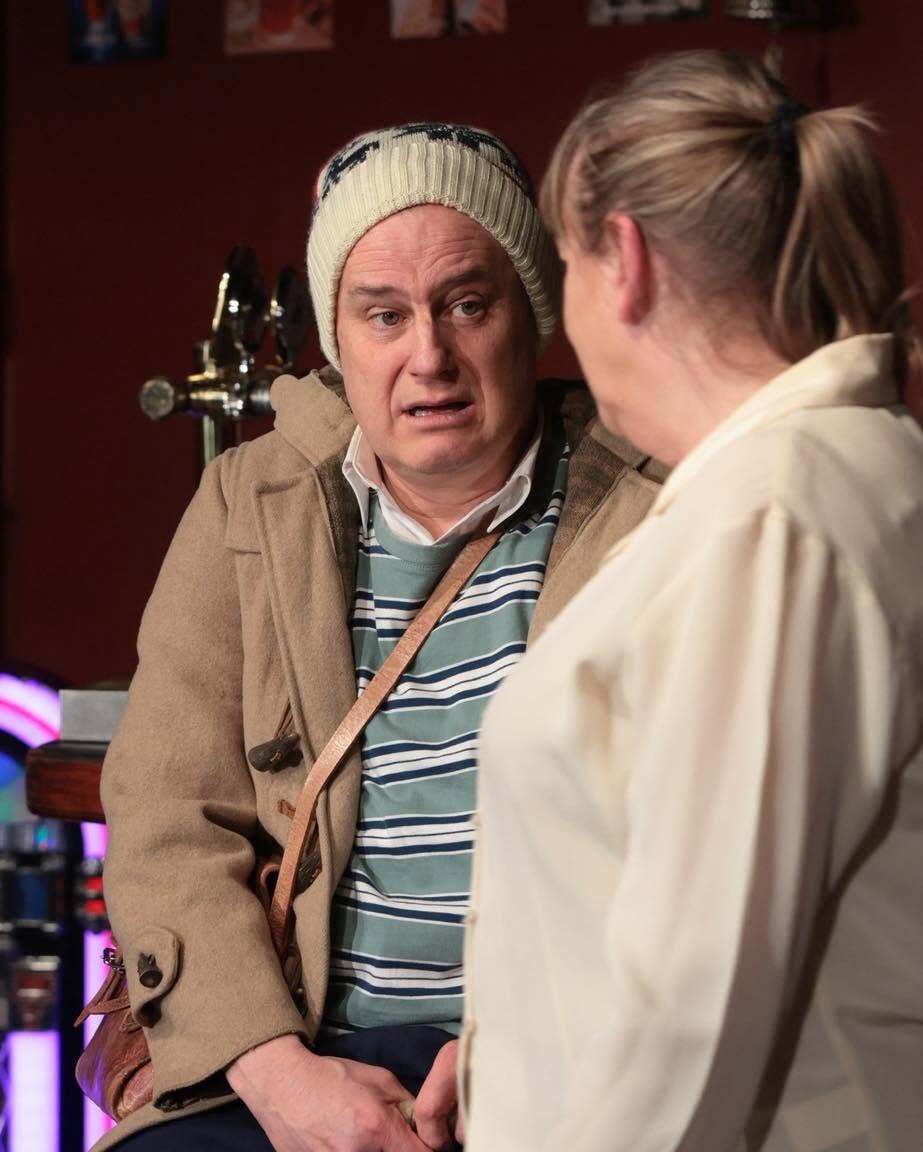
But in the case of playwright Jim Cartwright, his masterful take on the complexity of human relationships, his play aptly entitled ‘Two’, turns the ‘behind-closed-doors’ theory on its head - instead having the audience focus on the fractured relationship between a boisterous, bickering landlord and his counterpart, a landlady - both publicans of a working- class Northern English pub. Tasking us ‘head-first’ with a particular duty - of piecing together the ‘why’s’ behind the ‘cocktail of cracks’ we are witnessing in their relationship. Is it largely due to infidelity? Or is it simply a love/hate relationship where both parties have simply outgrown one another?

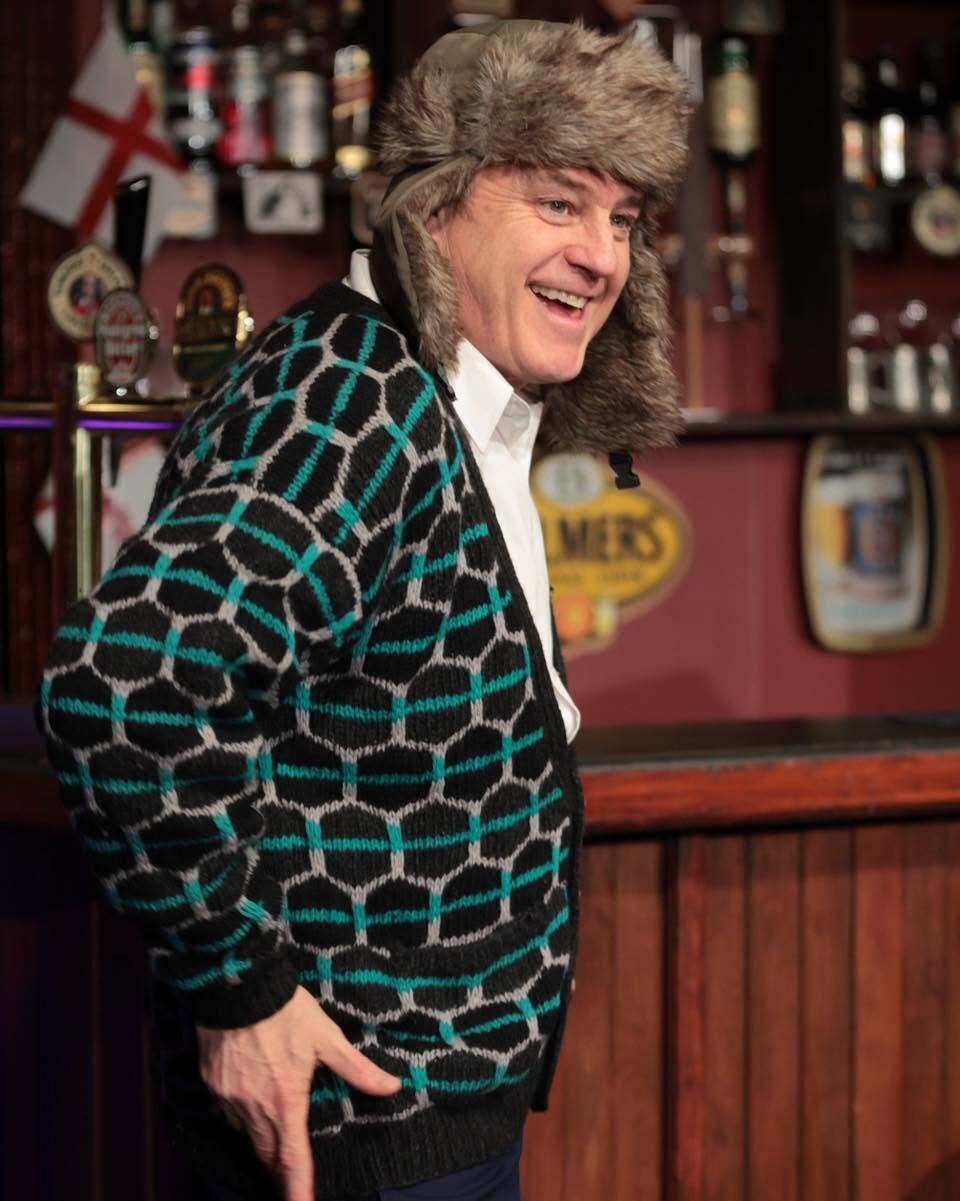
But wait — that is not all. For Cartwright dared to take it one step further, and distract us from the issue at hand; perhaps to set the record straight. Setting this couple’s woes aside, we remain glued to this pub setting, and instead are greeted by a revolving door of 14 other pub patrons (all played to perfection by the show’s only 2 leads), where we get to experience the gamut of different relationship dynamics, and how both genders choose to survive within walls of light vs shade; of the highest-of-highs, to the woest-of-woes. There are comedic moments, as well as grimmer ones that are at times, harder to bear witness to.

The difference in this play? Is that surprisingly, BOTH genders are shown in these scenes to be equally as lustful, resilient, bittersweet, deeply troubled and lonely. Posing a question to us about the power play in romantic relationships. Do they go both ways? Are there indeed two sides to the coin? And if so; can both sexes sometimes be deemed equally good or bad, when it comes to relationships?

As we start to question this, Cartwright cleverly places us back into the first dynamic - the blaring energy of the landlord and landlady, to piece together whether there is any hope left in their fractured relationship.


Speaking of which, the landlord, played by the very charismatic Chris Mentor, is simply mesmerising as he is so nuanced in every character he plays. From a sensitive 7 year old boy, to a damaged husband, to a widower tenderly describing his grief. And yet, his presence is unwavering and strong; remaining confident and courageous enough to tell stories that range from deeply funny to deeply broken. From his seamless performance, it is clear why Chris Mentor was cast in this demanding lead role.

As the Landlady, Angelique Pascoe is exquisite, and her energy of ferocity perfectly matched the role required to play the landlord’s counterpart. Every part she played had the bite and the stacks of humour needed to play such complex female characters, many who owned difficult backgrounds and stories not for the faint-hearted. But she conquered each tale with aplomb, as if it spoke to her heart, completely.

Cartwright’s powerful play ‘Two’, is brilliantly directed by Natasha Boyd, who has perfected in her actors the precise bridging of comedy vs pathos needed to keep us hooked; gripping us in every scene with a spectrum of human emotion and an unbridled energy that pulls no punches. Where in a span of 80 minutes, the audience is fully immersed in a fly-on-the-wall experience of witnessing a vivid cross-section of complex characters come to life inside the closed door of a pub. Where we can bear witness to what it truly means to be human in our most challenging moments.

And lastly, I feel it fitting to mention the incredible set design crew that brought this little English pub to life. From the detailed 80”s lighting fixtures to the bright and jolly jukebox. From the old wooden bar and classic dartboard to the colourful wall-to-wall postered ads all in their fine 80’s form. From every angle, not one detail was left out — even creating a makeshift hallway with paintings off one side of the stage, bringing the aspect of pure realism to the audience, whichever way their eyes looked.

All this, was what indeed made STAG’s ‘Two’ a dramatic experience like no other, filled with a scope of comedy, grit, storytelling and a sum of surprises - making this a winning night out at the theatre.

To book tickets to Two, please visit https://www.trybooking.com/events/landing/1528222.

Photographer: Dave Swann

Spread the word on your favourite platform!

Cleopatra & Antony

Cleopatra & Antony

Cleopatra & Antony Rating

★★★★★

Click if you liked this article

2

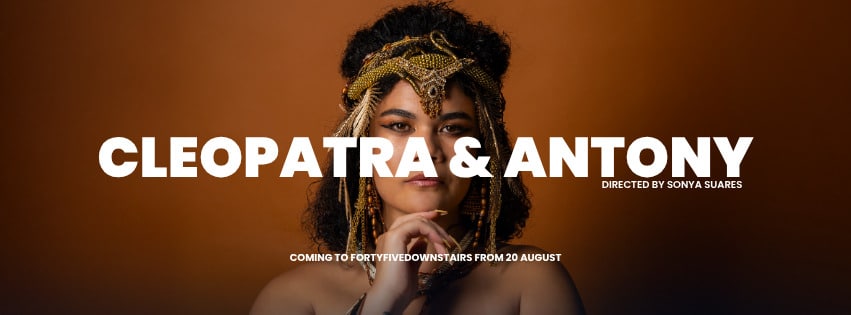
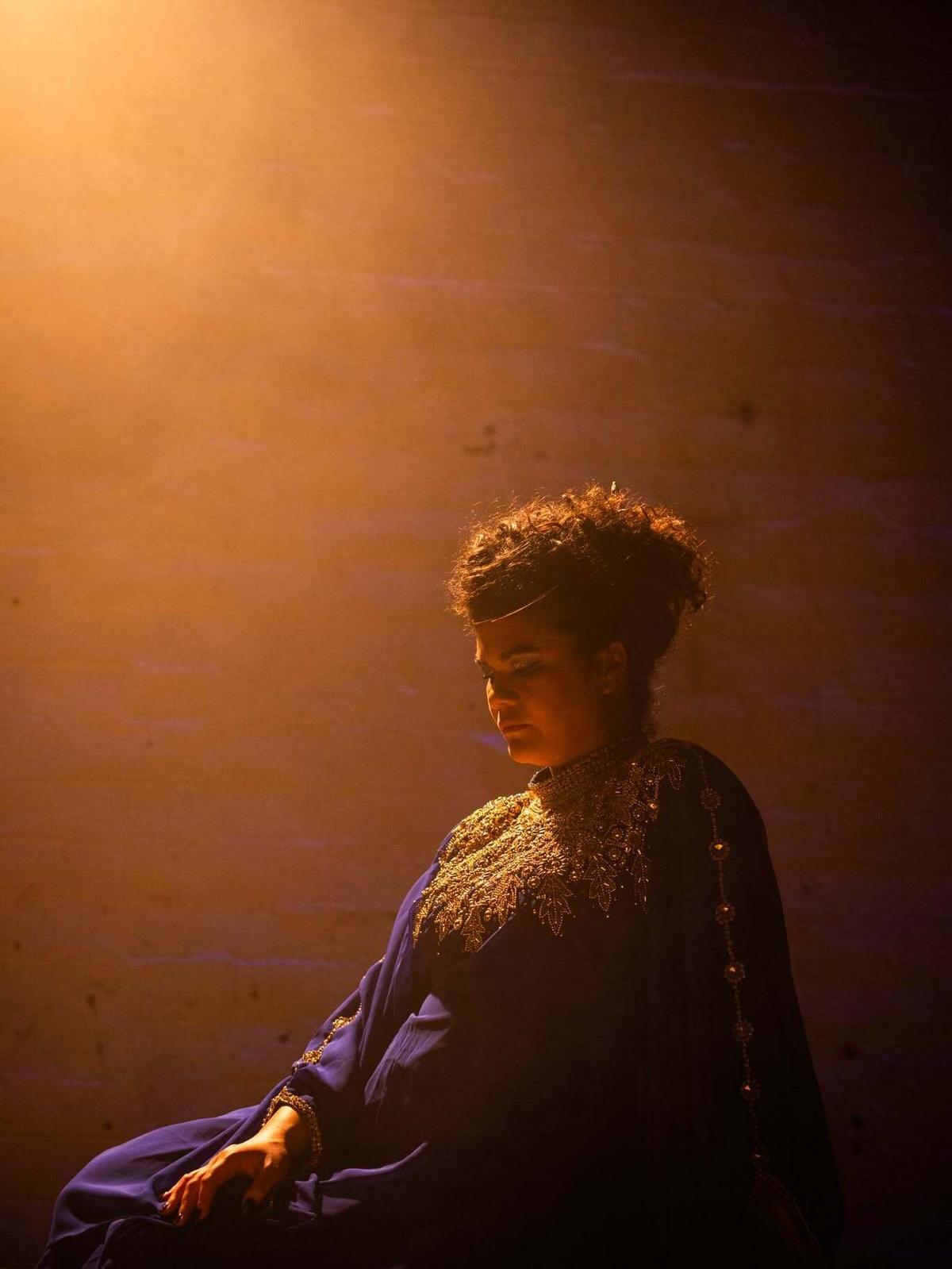
With a simple reframe, the Melbourne Shakespeare Company’s ‘Cleopatra & Antony’ signals a deviation from the norm long before curtains up. Shakespeare’s original play centres the Roman general Mark Antony, but this production flips the script to spotlight his infamous beau, the Egyptian queen Cleopatra.

Shakespeare’s ‘Antony & Cleopatra’ follows the powerful relationship between Cleopatra and Mark Antony and their tragic demise as casualties of the crowning Roman Empire. The tragedy is one of Shakespeare’s more ambitious works, notorious for its numerous scenes spanning scores of characters, relationships and locales. On paper, it’s a bit of a slog, so it’s the direction that makes or breaks this production.

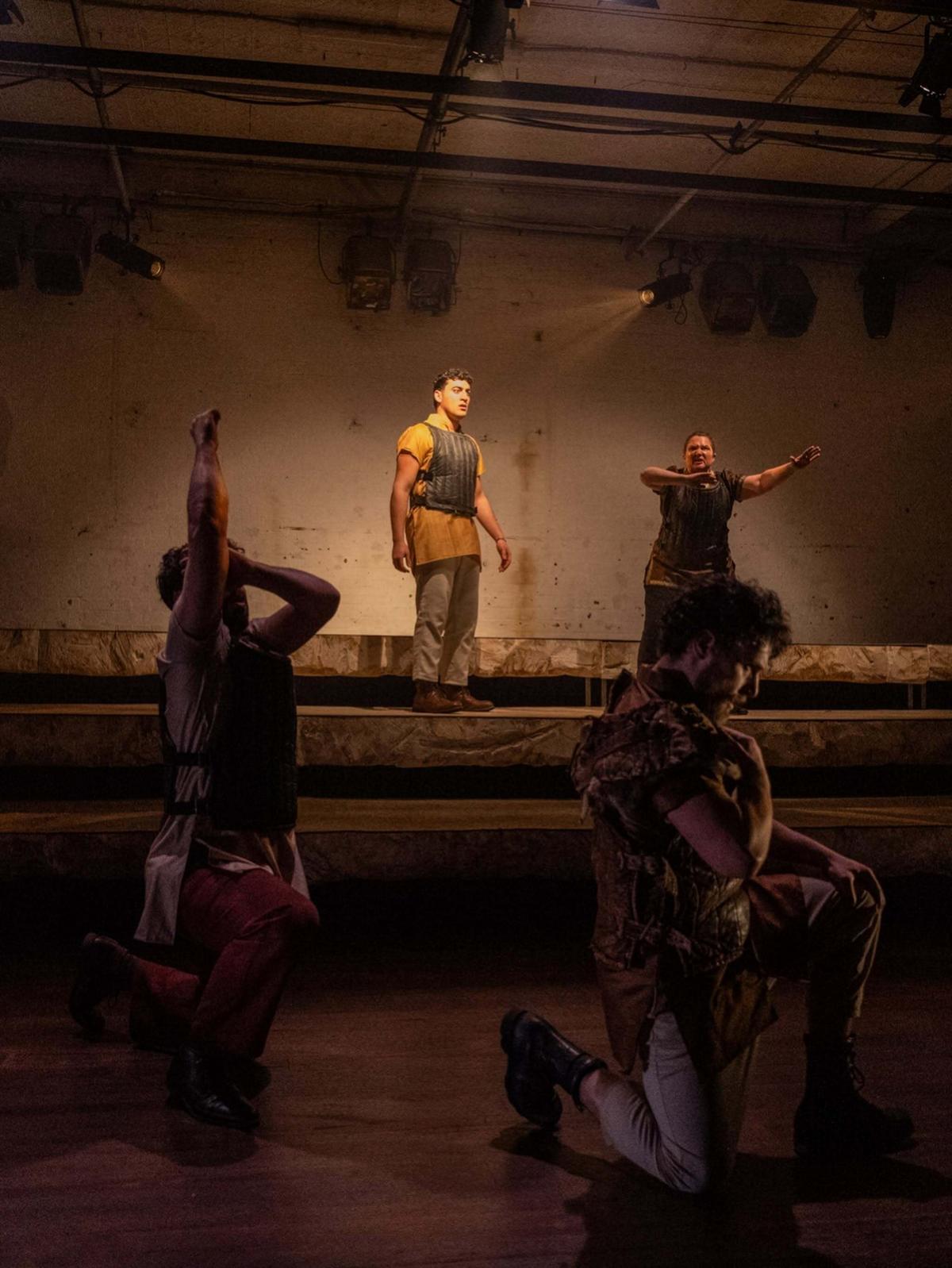
The Melbourne Shakespeare Company's adaptation sat dreamlike between traditional and contemporary. On stage, the set (designed by Eloise Kent) was pared back, with organic splays of linen, stone and smoke; pale fawns and ochres evoking a dusky Mediterranean villa.


Crazy, stupid love is the one luxury Cleopatra and Antony can’t afford; their chaotic affair begets a doubly chaotic state of affairs. Sonya Suares directs ‘Cleopatra & Antony’ with that restless, impulsive passion which grated at times to watch, but only for its bitter truth. That’s where tragedy lives, in the oh-so-avoidable. We’re meant to shake our heads at the foolishness of these characters because we aren’t the fools in love (until we are).

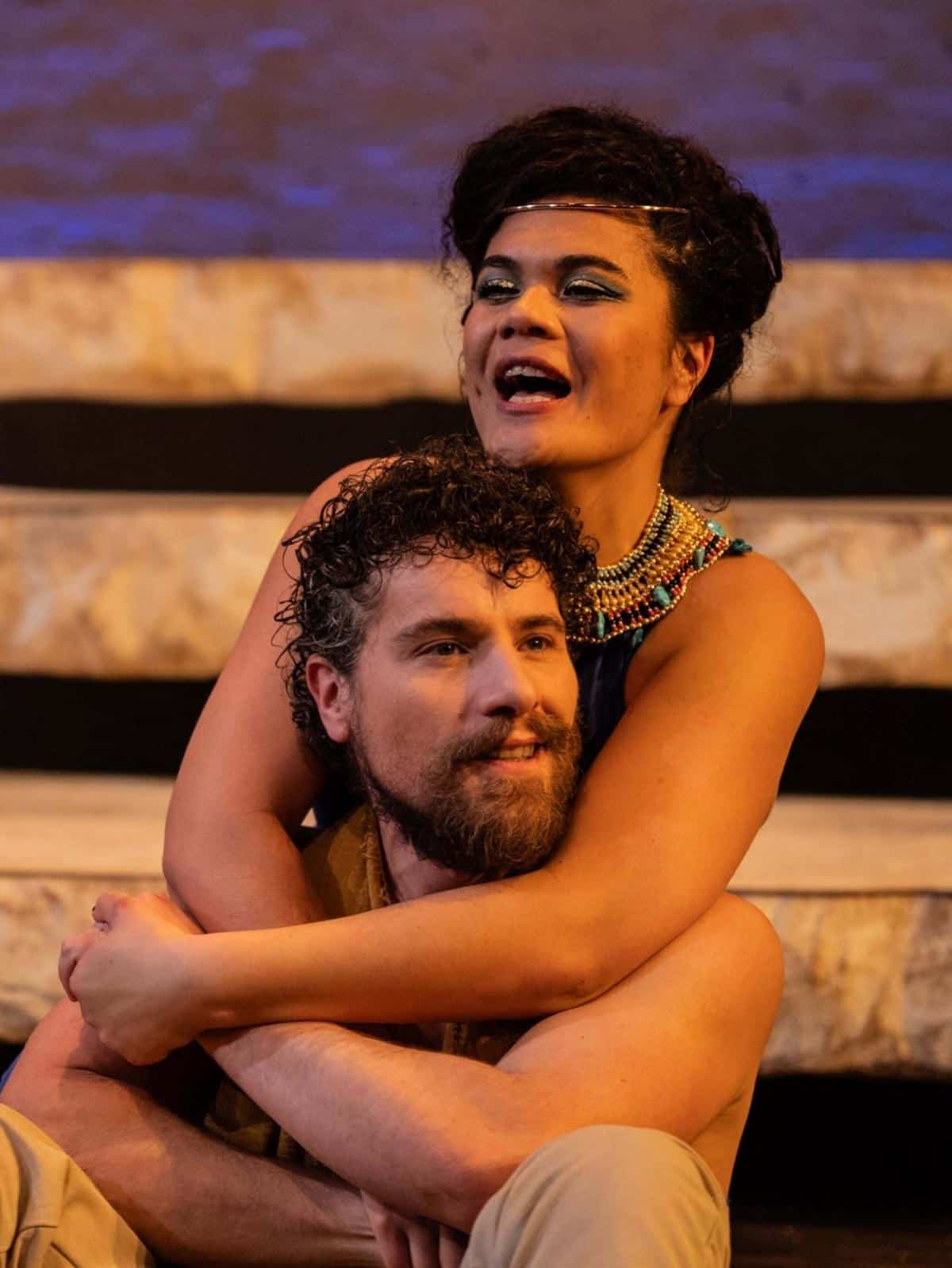
Akina Edmond’s Cleopatra and Louis Lucente's Antony were forces in their own right and all the more powerful together. Intense, playful and hotblooded, the two moved as if in orbit and fed off each other’s boundless energy until their final devastating moments. Supported by strong characters from Tsungirai Wachenuka’s Charmian to Jennifer Vuletic’s Agrippa, Laura Iris Hill’s Enobarbus and the multifaceted ensemble, the chemistry on stage was palpable.

I appreciated the intention to make the content more digestible, but I’m unsure if Charmian’s metatextual narration answered this adaptation’s purpose. The play stretches itself across so many histories and contexts that I wonder what—if any—method there would be to compensate for gaps in audience knowledge. For a lesser-known play, it struggles to reap the benefits of contemporary direction. Strip off the frills, let us relish in the madness.

I’m similarly undecided if anything new was added for me in the reframing of Cleopatra’s role, though I will say this: there’s a power in perception and Cleopatra is one of history’s most misunderstood figures. Even if the story remained the same, the Melbourne Shakespeare Company’s adaptation extends an invitation to its audience to recontextualise a previously fixed character, wielding the transformative power of narration to ask a critical question: who is telling the story?

To book tickets to Cleopatra & Antony, please visit https://www.melbourneshakespeare.com/cleopatra-and-antony.

Spread the word on your favourite platform!

Subscribe to What's The Show

Reviews, show news and what is on, straight to your inbox.