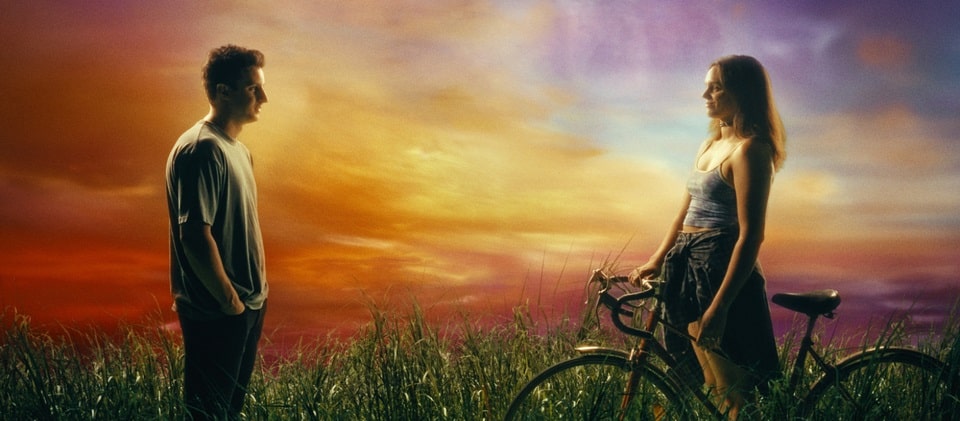
The Last Train to Madeline is an emotive and nostalgic play that follows childhood best friends Maddy and Luke in Wangaratta from the ages of 8, 16, and 23 as their lives collide.
Staged at the Meat Market in North Melbourne, the set was immediately striking: the floor was filled with three old TVs flickering with static, while the rest of the space was filled with train tracks, fake plants, and a structure above.
The chemistry between the two leads (Ruby Maishman as Maddy and Eddie Orton as Luke) carries the show- it’s no easy feat to have a production with only 2 characters, and they make it look effortless, with a natural rapport. Much like the world of a child that revolves around only yourself and your best friend – we never see any other characters on stage, but their presence is felt – especially that of Maddy’s father, the driving force behind many of her actions.
Maishman’s Maddy effectively transitioned from an 8-year-old coming to terms with a stifling town and a mother who can’t look after her properly to a teenager desperate to escape. The audience can see how Orton’s Luke has been deeply impacted by Maddy’s actions—from a hopeful and eager-to-please 8-year-old to a 23-year-old who tells her that he is “tired.”
Utilising the same costumes for all 3 time periods, we as the audience are clued in by Maishman and Orton’s juvenile lilt and innocent conversations to indicate they are 8; these are noticeably absent as the characters age before our eyes.
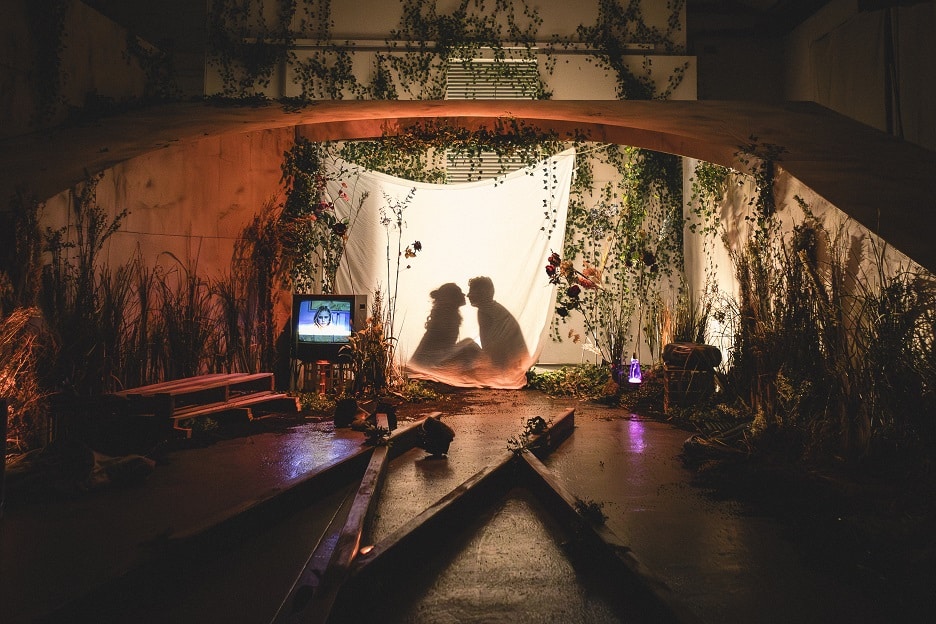
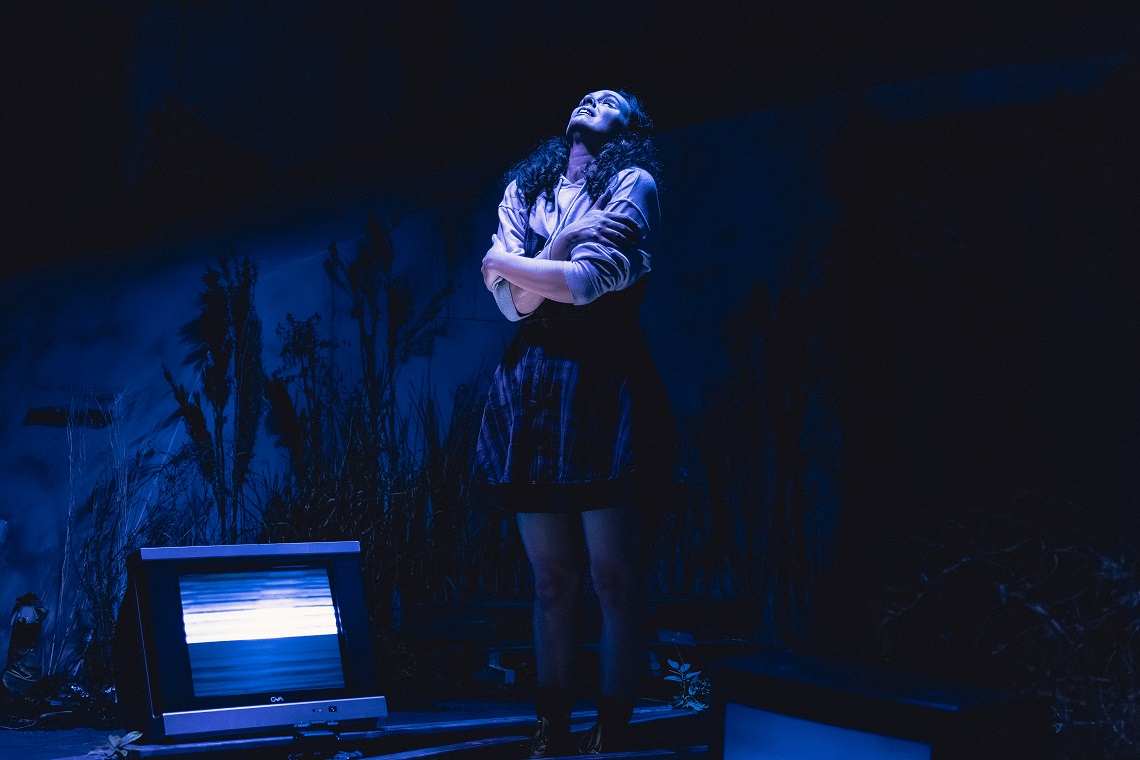
At times, I felt anxious for the fate of the seminal prop of the video camera- especially in the scenes as 8-year-olds where it was getting thrown around – but both actors exhibited immense skill in their physicality, dodging the many TVs lining the stage and climbing the elevated structure (sitting on the edge of a row gave me an advantage of having the best view for these scenes).
The projection of the video camera’s live film onto the TVs reinforced the sense that these vignettes of Maddy and Luke’s lives were Luke’s memories being replayed. The play’s pacing continually draws you in, as the pieces of two characters’ lives are constantly being put together, and we revisit their most formative moments.
Despite the heightened, biting dialogue between the two leads, humour shined through: “You can’t marry your dog; she’s a girl,” says 8-year-old Luke…. “It’s 2003,” replies Maddy, cleverly grounding the audience in the past amid a soundtrack of 2000s-2010s indie pop and classics.
I wouldn’t be surprised if a movie or TV show of The Last Train to Madeline were a possibility for the future; the audience couldn’t help but root for (and sometimes see themselves in) the two youths. The dreamlike quality of the staging and the ruthlessly accurate adolescent dialogue made for exhilarating and comforting viewing.
The Last Train To Madeline is in its final week. Sessions run each night at 7:30 p.m. with the closing night scheduled for 6 p.m. on June 29th. Please don’t miss your chance to see this unique new Australian play.