Cleopatra & Antony

Cleopatra & Antony

Cleopatra & Antony Rating

Click if you liked this article

2

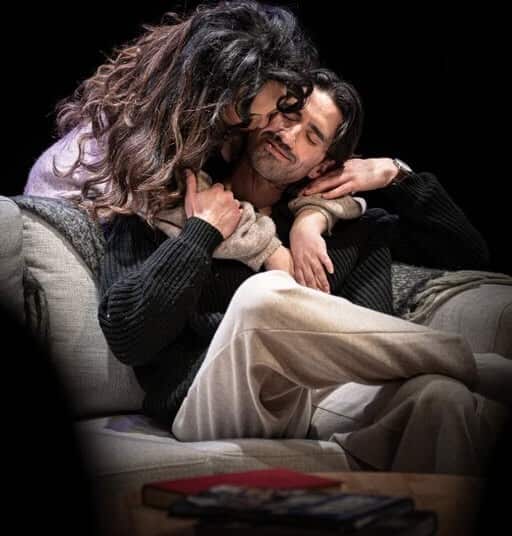
With a simple reframe, the Melbourne Shakespeare Company’s ‘Cleopatra & Antony’ signals a deviation from the norm long before curtains up. Shakespeare’s original play centres the Roman general Mark Antony, but this production flips the script to spotlight his infamous beau, the Egyptian queen Cleopatra.

Shakespeare’s ‘Antony & Cleopatra’ follows the powerful relationship between Cleopatra and Mark Antony and their tragic demise as casualties of the crowning Roman Empire. The tragedy is one of Shakespeare’s more ambitious works, notorious for its numerous scenes spanning scores of characters, relationships and locales. On paper, it’s a bit of a slog, so it’s the direction that makes or breaks this production.

The Melbourne Shakespeare Company’s adaptation sat dreamlike between traditional and contemporary. On stage, the set (designed by Eloise Kent) was pared back, with organic splays of linen, stone and smoke; pale fawns and ochres evoking a dusky Mediterranean villa.


Crazy, stupid love is the one luxury Cleopatra and Antony can’t afford; their chaotic affair begets a doubly chaotic state of affairs. Sonya Suares directs ‘Cleopatra & Antony’ with that restless, impulsive passion which grated at times to watch, but only for its bitter truth. That’s where tragedy lives, in the oh-so-avoidable. We’re meant to shake our heads at the foolishness of these characters because we aren’t the fools in love (until we are).

Akina Edmond’s Cleopatra and Louis Lucente’s Antony were forces in their own right and all the more powerful together. Intense, playful and hotblooded, the two moved as if in orbit and fed off each other’s boundless energy until their final devastating moments. Supported by strong characters from Tsungirai Wachenuka’s Charmian to Jennifer Vuletic’s Agrippa, Laura Iris Hill’s Enobarbus and the multifaceted ensemble, the chemistry on stage was palpable.

I appreciated the intention to make the content more digestible, but I’m unsure if Charmian’s metatextual narration answered this adaptation’s purpose. The play stretches itself across so many histories and contexts that I wonder what—if any—method there would be to compensate for gaps in audience knowledge. For a lesser-known play, it struggles to reap the benefits of contemporary direction. Strip off the frills, let us relish in the madness.

I’m similarly undecided if anything new was added for me in the reframing of Cleopatra’s role, though I will say this: there’s a power in perception and Cleopatra is one of history’s most misunderstood figures. Even if the story remained the same, the Melbourne Shakespeare Company’s adaptation extends an invitation to its audience to recontextualise a previously fixed character, wielding the transformative power of narration to ask a critical question: who is telling the story?

To book tickets to Cleopatra & Antony, please visit https://www.melbourneshakespeare.com/cleopatra-and-antony.

Spread the word on your favourite platform!

William Shakespeare’s Reservoir Dogs

William Shakespeare's Reservoir Dogs

William Shakespeare’s Reservoir Dogs Rating

Click if you liked this article

3

To quickly address the obvious question: no, you don’t need to have seen Reservoir Dogs to enjoy this show…but it does help. I went to see this show with a friend who had never seen Tarantino’s film, and I hadn’t watched it since 2021, though I brushed up on it before writing this review. We also sat next to someone who had clearly seen the movie recently and was laughing at every gag. So, regardless of your exposure to Shakespeare or Tarantino, you’re in for a great time. The Ghostlight League’s adaptation is a charming, witty show performed by a cast full of chemistry.

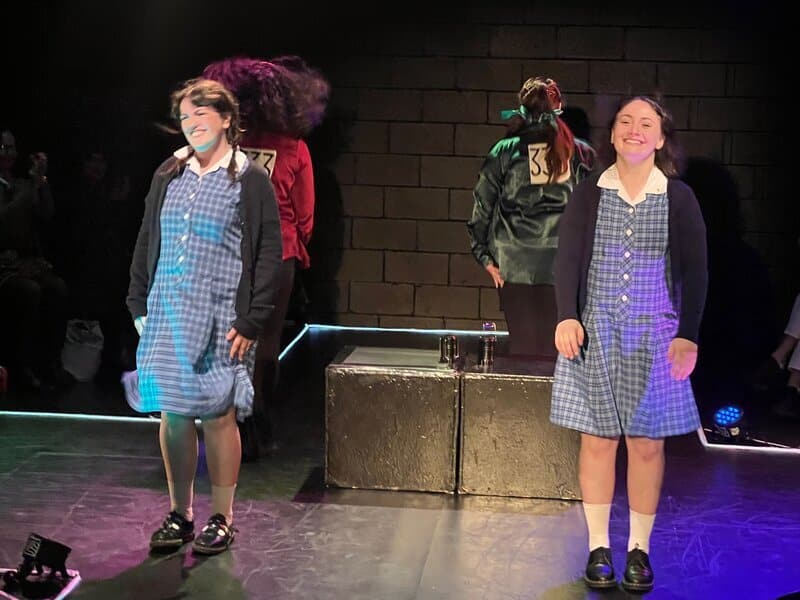
The writer (Steven Hopley) and director (Rob Lloyd) are clearly aware of the tropes they’re adopting and use them to create a rich and layered world. A ‘bardcore’ band plays covers of the original soundtrack, the staging is sparse and the cast is genderbent – it’s ‘hyper Shakespearean’ and proud of it, heightening its conventions for laughs while still entirely ‘committing to the bit’. The script mostly sticks to the original structure and meaning of the film’s dialogue, which makes it fun to hear how Tarantino’s macho banter gets reworded into poetry, with a few real Shakespeare quotes thrown in as easter eggs. The only moments that seemed out of place were some of the more violent scenes; it would be hard and somewhat inappropriate to be just as bloody as the film, but I couldn’t help feeling that some moments could have been gorier and more visceral rather than being played for laughs. Despite this, the intensity, rhythm and borderline homoeroticism of the original story feel right at home in the world of Shakespeare, which is a huge credit to the ambition and skill of the team who married these two distinct styles.


Both film and stage show depend on the rapport of their ensemble cast, and the Theatreworks production really stuck the landing with their actors. Many have worked together before in other companies such as Scary Goats Theatre, and there isn’t a weak link among them. Some highlights include the fraught and physical bond between Sir Orange (Elysia Janssen) and Sir White (Cassandra Hart), Seon Williams’ deft delivery of ‘Elizabethan’ English as Sir Pink, and Corey Glamuzina’s portrayal of Sir Blonde, an effortlessly slimy psychopath. While occasionally some of the English accents made lines harder to parse, the strong physical acting across the board made it easy to get sucked into the story, and every character felt multi-dimensional, no matter how many or few lines they got.

While this adaptation successfully showed the similarities between Shakepeare and Tarantino as storytellers, there’s one key difference at its heart: while Shakespeare mostly wrote about those with legitimized state power (royals, nobles, merchants etc.), Reservoir Dogs lives in the criminal underworld. The slight twist to the play’s ending shows an awareness of this theme and lays bare the potential of adaptations like these. William Shakespeare’s Reservoir Dogs is definitely a novelty and a fun night out, but it also stands on its own as a captivating tragicomedy about power, trust and the blurry lines between ‘good’ and ‘bad’ guys. It’s an ambitious show that has set my own personal standards very high for what adaptations of Shakespeare should be, and I look forward to seeing what this creative team does next, whatever influences they may pull from.

To book tickets to William Shakespeare’s Reservoir Dogs, please visit https://www.theatreworks.org.au/2026/william-shakespeares-reservoir-dogs.

Spread the word on your favourite platform!

Proof Of Concept

Proof Of Concept

Proof Of Concept Rating

Click if you liked this article

2

Due to the nature of what these works are meant to be, this review might be a little tight on the finer details. Proof of Concept was presented as part of The Motley Bauhaus’ Netherworld festival, a program deliberately built around discovery, experimentation and unexpected one-off performances.

‘Proof of Concept’ is a 60 minute double feature of two short plays, presented as a sort of works-in-progress experiment. ‘RAGEFUL’, written by Rebecca Perich, one-third of the creative team alongside performer/producer Maggie Vali, is a dystopian Black Mirror-esque glimpse into a reality where medical misogyny has gone too far. Women who express themselves and their emotions are sent to “therapy” to be “treated”. In other words, they are Pavlov’d with shock therapy into submission. The latter, OCD-Disco, written by Yakinthi, sees two strangers with OCD thrust into a bizarre race against the clock. Their respective OCD becomes a major driving force for the events of the play, and ultimately becomes a connective element as the action progresses.

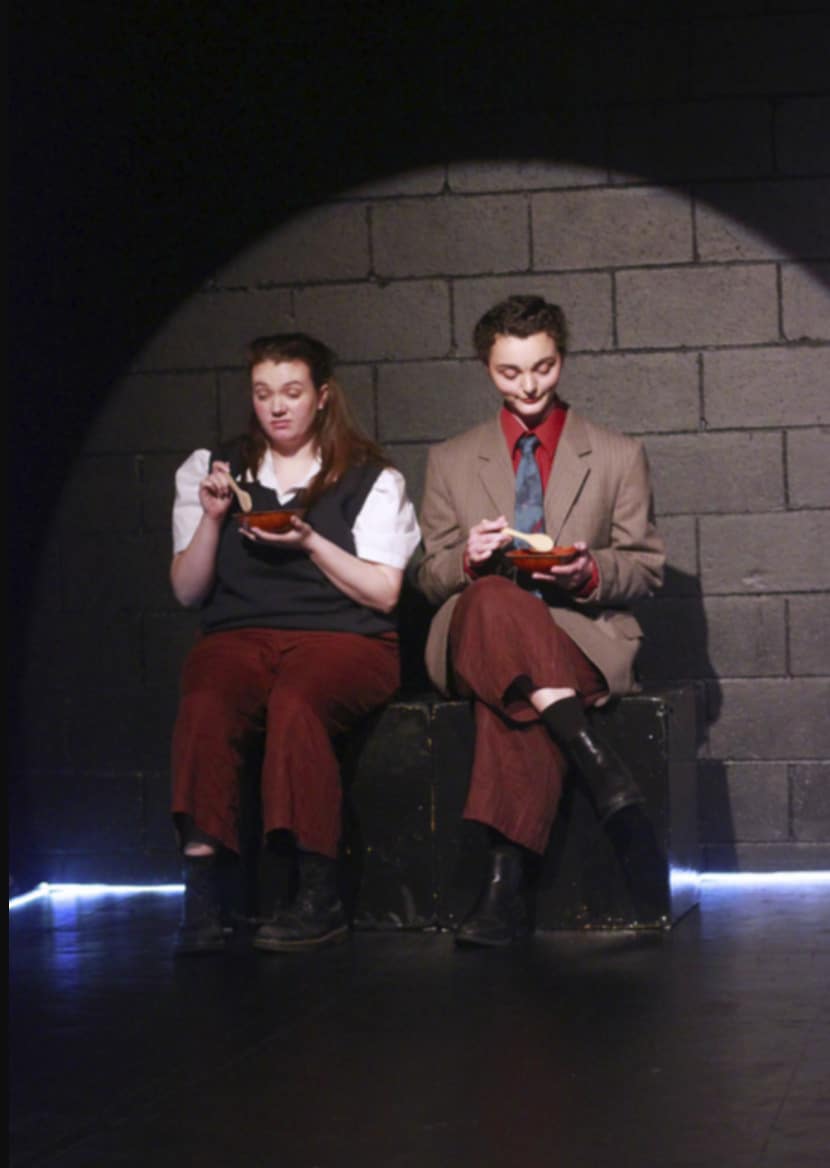
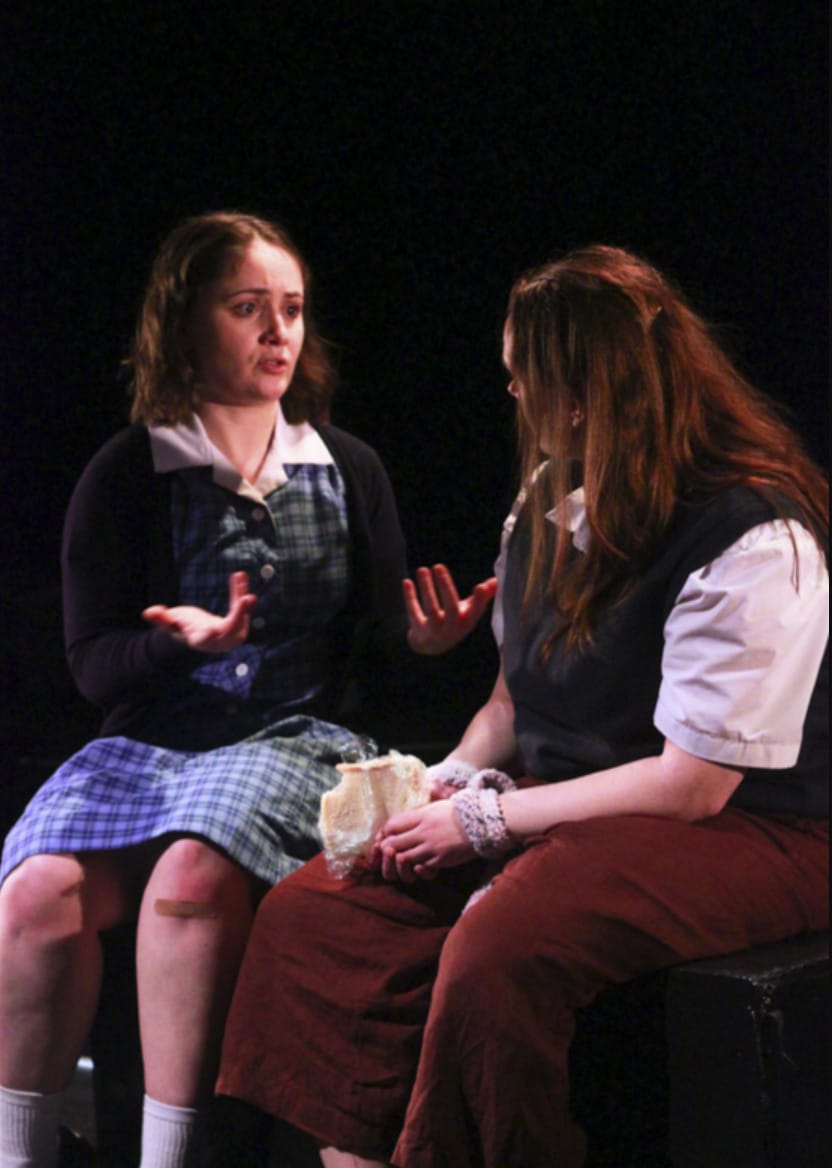
As you can probably gather, the overall presentations of ‘RAGEFUL’ and ‘OCD-Disco’ as they currently stand are very much still in their infancy. Cues will go off seemingly at random, lines and blocking feel freshly-walked through, there are bits of dialogue that don’t seem to be enforced by neighbouring sections. It is very much like I’ve walked into their very first tech and dress rehearsal, and they’ve just recently gone off prompt. That chaos certainly lends a sense of explorative play to each piece, and as such, there is a refreshing level of spontaneity in the performances. Considering the minimal space and resources these two plays are working with, it is rather impressive how much atmosphere is generated by some nifty lighting design and sound usage.


I think my biggest reservations belong on the writing and conceptual side of things. While I believe that there is plenty of fertile soil laid in both, I did find that there was an overall lack of consistency in the materialising of these ideas. RAGEFUL felt like it had way more gas in the tank, but it spent a lot of its already restricted time spinning its wheels, leading us to an ending that felt like it could’ve continued on. I was particularly confused as to what was meant to be happening in OCD-Disco. I can only assume it was intended to be a finding-friendship-in-unlikely-situations kind of deal, but the action and dialogue was a bit too scattered to make that fully work by its conclusion. Sitting down and delineating more cogent plotlines will greatly benefit these two plays.

The depiction of OCD also felt somewhat stereotypical at times, given the complexity of the disorder. As the work develops, further consideration of how these experiences are represented could add greater nuance and depth to the characters and broaden the scope of the piece.

Overall though, I see Proof of Concept as a spirited attempt at creating sharp, lightning-in-a-bottle theatre, with quite a bit of room for improvement. I would love to see these two pieces get fleshed out more down the line, and the sky really is the limit in terms of possibilities. Certainly a larger space, an abundance of time, and full commitment to these visions will strengthen the muscles. I encourage these three to keep exploring and go as large as possible. I’ll be keeping an eye out for the results.

To book tickets to Proof Of Concept, please visit https://www.eventfinda.com.au/2026/proof-of-concept/melbourne/carlton.

Photographer: Callan Trewenack

Spread the word on your favourite platform!

84 Charing Cross Road

84 Charing Cross Road

84 Charing Cross Road Rating

Click if you liked this article

7

84 Charing Cross Road embraces the audience like a warm cup of tea. Upon entering the theatre (and after enjoying a complimentary drink), I was greeted with my first look at the detailed cosy set that perfectly introduced me to the atmosphere of the play. At first glance an untidy New York brownstone might not have much in common with an antique London store, however the two locations perfectly compliment each other as they have one major set dressing in common: an abundance of books. This play is a bibliophile’s dream and the set’s numerous piles of haphazardly stacked books and well stocked shelves beautifully reflect the script’s repeated references to classic and obscure literary titles.

After a few minutes of taking in the detailed set before me, actors entered and I was able to sit back and enjoy a show that I, unusually, had absolutely no prior knowledge of.

Set across two cities and two decades, 84 Charing Cross Road tells the story of a New York playwright who, after struggling to find nice copies of rare books in America, reaches out to an antique book store in London. Told entirely through letters, the play explores what becomes a very close friendship between the bookseller and the playwright.


Due to the nature of the script, essentially a large collection of monologues, this is a play that could very easily fall into the trap of being visually boring. However the emotional dedication of lead actors Helen Ellis and Andy Rigby, coupled with the stellar efforts of ensemble members Sarah Sundstrom, Stuart Daddo-Langlois, Bethany Backo, Rosemary Buchanan, Madeleine Brown and Tim Byron. The cohesion of the cast was phenomenal, from the many, many period accurate costumes to the easy nature with which they moved about the stage and the familiarity with which they interacted with each other.

Special props must be given to actress Helen Ellis who portrays wanderlust playwright Helene Hanff. Separated from her castmates by an ocean (and a wall of books), Ellis represents the New York half of the show alone, holding down a unique accent and maintaining a captivating stage presence despite having no one to interact with for the entirety of the play. The role requires a marathon of acting and Ellis performs it with apparent ease, fluidly welcoming both the bookstore and the audience into her little brownstone.

I would strongly recommend this heart tuggingly emotional, cosy little play to fans of theatre and literature alike.

To book tickets to 84 Charing Cross Road , please visit https://thebasintheatre.au/event/84-charing-cross-road-by-james-roose-evans/2026-08-09/.

Photographer: Jason Triggs

Spread the word on your favourite platform!

Subscribe to What's The Show

Reviews, show news and what is on, straight to your inbox.