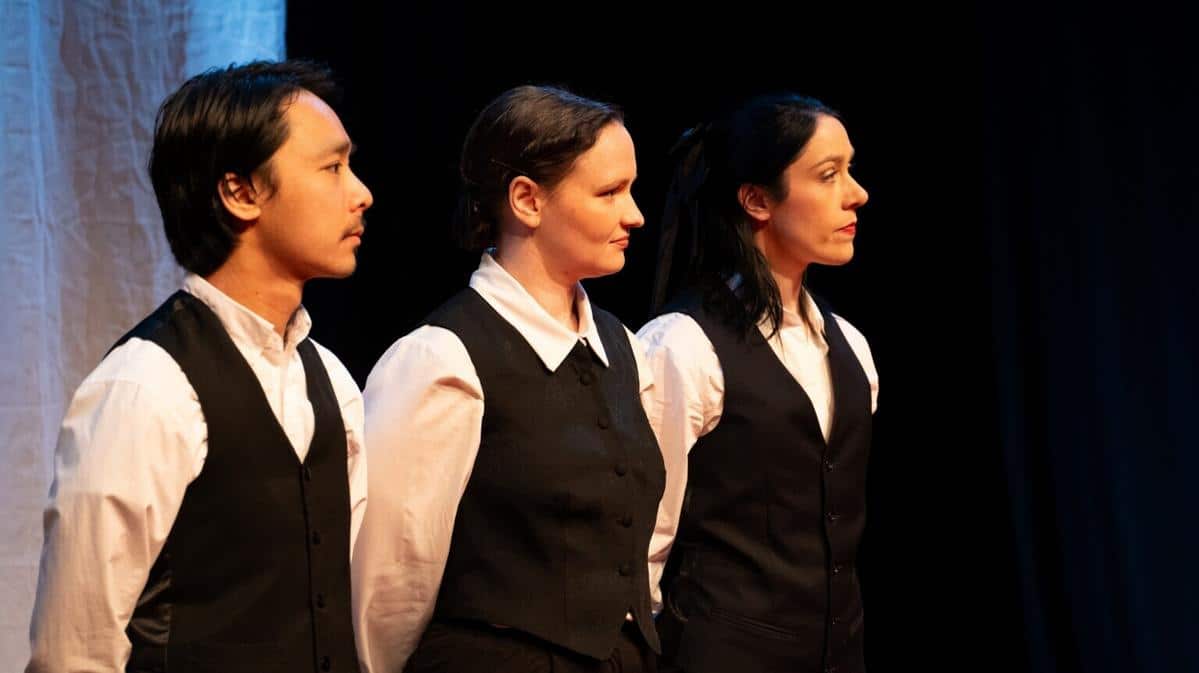
A large, opulent curtain sits upstage centre. Welcoming a long, lustrous dining table enveloped by an ivory tablecloth. Underneath it, a majestic round red carpet, fit for royalty. Staff in uniform stand to order. Staring straight ahead.
As if butter wouldn’t melt in their mouths. As if, we are in the enclosure of a bountiful environment.
Blue lights flicker on and off, ominously. Like thunder from the gods. As they do, staff move forward and back; in different directions.
Signifying perhaps, that there are cracks in these foundations.
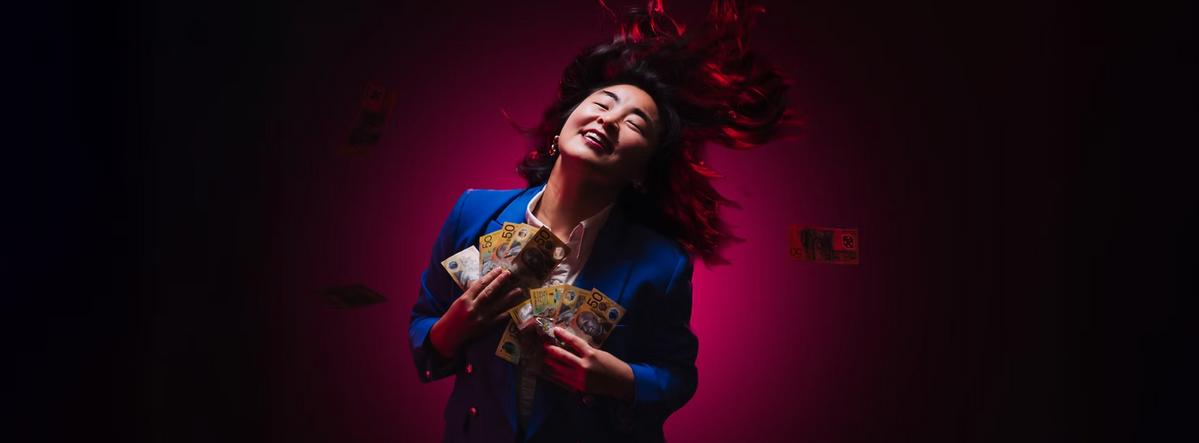
At each surge, movements of the staff continue to jerkily bend and twist. Someone lies down on the table, as if resting after a long hard day. As this lonesome figure sleeps, the staff move and swerve closer and closer to the audience. We watch in awe as the rest of the cast emerge from underneath this table like vultures, as they catch money thrown around freely. As they in turn, give out this printed money to us in the audience.
So we can breathe in the opulent energy of Athens. Of the language of its secret benefactor, Timon.
An ultra-generous philanthropist and restaurateur. A public figure for all-things-good. A patron of the arts. A genuine human who loves his community and has great aspirations for his city. His high-octane restaurant serves up bountiful meals to the elite. He doles out money equally to statesmen as he does to bail out petty criminals. From artists to painters to influencers. Everyone in high positions are given Timon’s riches.
So naturally, Timon believes wholeheartedly, that these people appreciate his generosity. That they also mean well. That universally speaking, ‘humans are genuinely loving and appreciative.’ Timon is convinced that to whom he gives, is a blessing he will ‘receive back in kind’.
That camaraderie is everything.
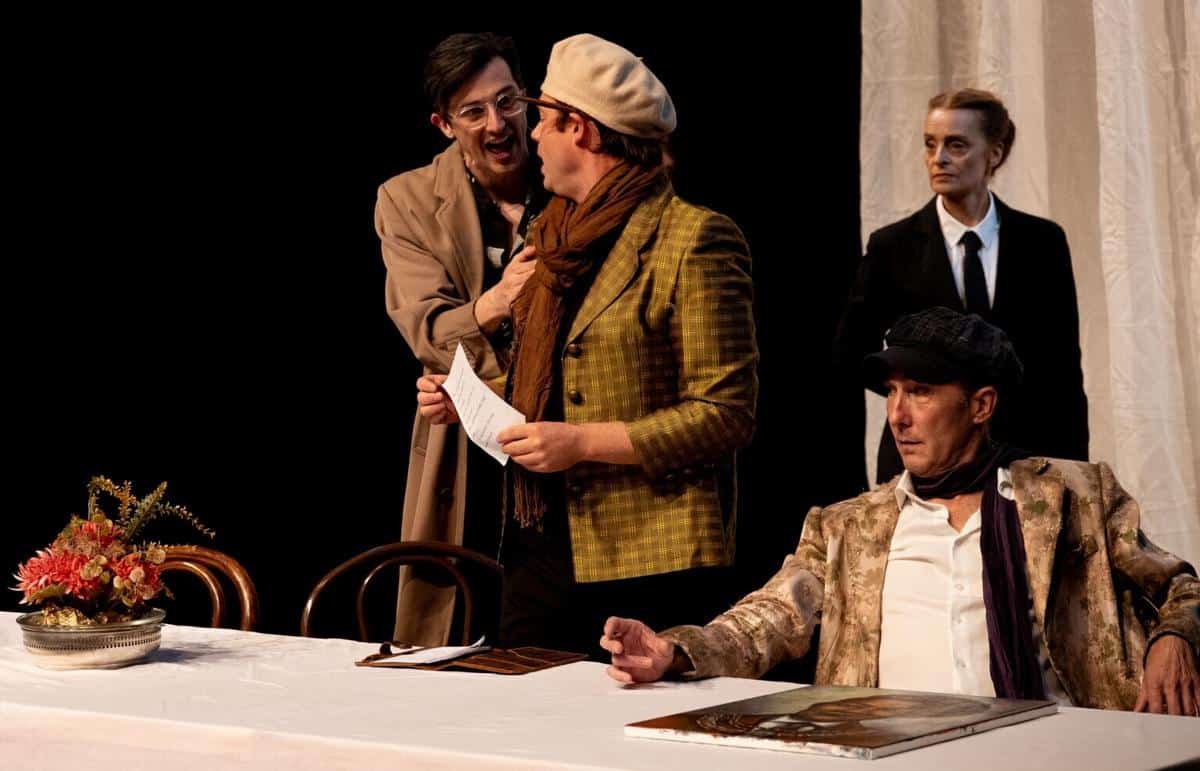
And Timon, according to his ‘smoke and mirrors’ circle? Is indeed a gift from the Grecian gods. He’s the gift that keeps on giving. So much so, that Apermantis, the town’s paparazzi photographer, and keen observer of human behaviour, views these gatherings with disdain. Shamelessly calling out these freeloaders to Timon. Warning Timon that they are deceiving him, and in turn, refuses to dine with them.
Timon just laughs this off.
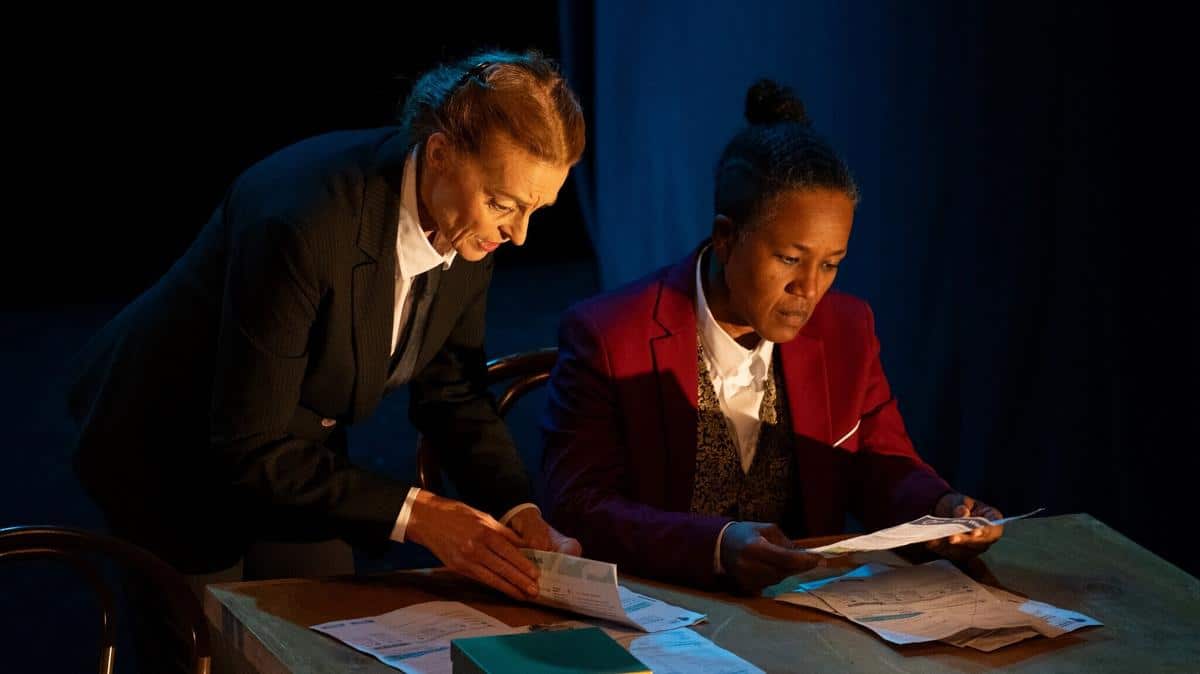
That is, until Timon’s assistant Flavius points out that he has no more money to give anybody. For Timon is in debt. He has accidentally bankrolled the state ‘a little too much’. His funds are being spent by his ‘well-healed friends’ for corruptive means. His flashy restaurant will be no more. His business is in economic crisis.
Timon’s otherworldly state of Greek god-like generosity? Comes crashing down to earth like a crack of flickering thunder.
Flavius, in a state of distress, suggests that Timon ask his friends to pay him back the monies he gave them (to service the public). Instead of coming to his rescue? His friends are instead repulsed by this act and refuse to dig into their pockets.
What ensues? Is a lesson for Timon. A tuition about division. That when it comes to someone’s generosity in society, humanity can be divided in their actions.
There are the givers, and there are the takers.
How, when it comes to money or kindness – ‘the takers’ will receive, but behind our backs? Be our secret foes, wrestling with resentment. That takers use individuals for their own greed. And that greed, on a higher-level playing field?
Can lead to corruption.
Which is what consumes the mind of Timon as he struggles through this point. So much so, that Timon becomes a recluse, unable to deal with the corrupt minds of his once beloved city.
But more importantly, this story is about how the shocking effects of betrayal, especially from those he believed he could trust – can sometimes have devastating consequences.
This modern-day version of William Shakespeare and Thomas Middleton’s Timon of Athens is a well-rounded, humorous satire. Introspectively directed by Claire Nicholls and Kevin Hopkins, it is a wine-and-dine fest of music, dance and physical delights. The main roles are non- binary, which I loved, creating a fresh, empowering take on Shakespeare’s iconic works, (which in the past, was largely reserved only for males). And the quality of acting, especially from the seasoned ensemble, was sharp, precise and exciting to watch.
The set design, also created by directors Claire Nicholls and Kevin Hopkins— was minimalistic, yet the colours on stage resembled familiar colours of world leadership. The red, white and blue of the American and Australian flags, to start. Perhaps representing our modern global capitalist systems. The dolling out of $100 Australian dollars to each audience member? Perhaps to immerse us in the folly of money, that often has the potential to weaken our perspective, not strengthen it. Much like those in power in our current climate. They too have the potential to create serious economic disaster, if they have not done so already.
Also equally impressive was the physical movements onstage that tied in seamlessly with the actions. The miming of the three-piece band in the background of Timon’s dinner parties. The rebellion of Timon’s friendship clan turning against him in slow motion via the news. And the military coup that takes place at the end of the play, with slow-motion movements of warfare. An overthrow of a corrupt state, to create order in Athens once again.
There are a few actors in this riveting show worth their weight in gold.
Scott Jackson, as Lucius the poet, deliciously brims with cheeky wit. His crisp consonants elevating the stage alongside his hilarious antics, electrifying outfits, slick physicalities, and oozing Athenian pretentiousness.
Helen Hopkins is sensational as Timon’s most trusted advisor Flavius. She has a focused intensity, commanding firmness, and a tender-yet-sturdy quality to her performance that is riveting to watch.
And finally, Jovanna Hepburn sets the theatre ablaze as Timon. From start to finish, she pillars this production with a force beyond words, exemplifying the heartbeat of excellence for modern Shakespearean works. Her rhythmic resonance booms with every pentameter. Her physicality embodying overflowing emotions of despair. Her stamina and emotional architecture exemplifying the innate qualities needed to bring a history of theatrical greatness to life.
Proudly developed as part of the Prague Shakespeare Company’s 2025 Summer Shakespeare Intensive program, Th’UnGuarded Duncan should consider themselves mighty proud to co-present a lessor-known Shakespearean work that hold great relevance to today’s world, for the 2026 Theatreworks season.
To book tickets to Timon Of Athens, please visit https://www.theatreworks.org.au/2026/timon-of-athens.
Photographer: Andrew Cullimore