Theatrical Inc’s Bring It On The Musical To Open At The National Theatre In July!

Feature-Bring It On The Musical

Bring It On The Musical has firmly established itself as a contemporary classic since its premiere in 2011. In July, Melbourne’s beloved independent theatre group, Theatrical Inc will bring Bring It On’s renowned athleticism and high energy to The National Theatre in St Kilda from July 11th to July 26th.

Based on the beloved hit film franchise, Bring it On this award-winning musical follows the journey of Cameron, champion teen cheerleader Campbell, who finds herself at a crossroads when she is redistricted from her affluent high school to the rival high school, Jackson High. In a bid for victory, she joins forces with their fearless dance crew to compete against her old squad at the Cheerleading Nationals. The clever story highlights the clash between these two social worlds, bringing to the stage diverse perspectives that brought depth and comedy to the universal high school experience well ahead of its time in the early 2000s.

Boasting a prestigious creative lineage of Broadway’s finest, the show features a high-energy score collaboration between Lin-Manuel Miranda (Hamilton, In The Heights) and Pulitzer Prize-winning composer Tom Kitt (American Idiot, Jagged Little Pill) – and a witty book by Tony Award winner Jeff Whitty (Avenue Q). This powerhouse creative team led the original Broadway production to earn 2013 Tony Award nominations for both Best Musical and Best Choreography.

Director Tahra Cannon said, “We’re incredibly excited by the progress of Bring It On: The Musical. Every rehearsal continues to showcase the exceptional talent, dedication and versatility within this cast. The energy, athleticism and commitment these performers bring to the production is truly impressive, and it’s been exciting to watch the show grow week by week. Audiences can expect a vibrant, high-energy production filled with outstanding performances and plenty of heart.”

Bring It On The Musical continues the film’s legacy, centering on the idea that genuine friendship and personal identity are more significant than winning championships and navigating high school social order. The story celebrates its diverse teen characters, including Broadway’s first openly transgender high school character, as they learn to embrace their authentic selves, reject cliques, and value integrity and teamwork – over prioritizing oneself over others.

Choreographer Louise Panagiotidis said, “It’s been so exciting to watch the choreography come to life in Bring It On rehearsals. We have such a talented cast who are bringing so much passion to every number, and I can’t wait to share all of their hard work with audiences soon!”

Bring It On The Musical is bold, explosive and unapologetically fun, a full throttle celebration of ambition, identity and finding your crew. Get ready to feel the beat, raise the stakes and bring it!

Bring It On The Musical will play for a limited season at The National Theatre in St Kilda from July 11 to July 26. Tickets are now on sale at booktickets.com.au

PERFORMANCE DATES
Saturday July 11 – 1.30pm (Preview)
Saturday July 11 – 7.30pm (Opening Night)
Sunday July 12 – 1.30pm and 6.30pm
Thursday July 16 – 7.30pm
Friday July 17 – 7.30pm
Saturday July 18 – 1.30pm and 7.30pm
Sunday July 19 – 6.30pm
Wednesday July 22 – 7.30pm
Thursday July 23 – 7.30pm
Friday July 24 – 7.30pm
Saturday July 25 – 1.30pm
Saturday July 25 – 7.30pm
Sunday July 26 – 1.30pm
Sunday July 26 – 6.30pm

TICKETS
booktickets.com.au
Preview (July 11) – $65
Premium – $119
A Reserve – $65

PRODUCTION TEAM:
Executive Producer: Andrew Gyopar
Director: Tahra Cannon
Musical Director: Claire Gurrin
Choreographer: Louise Panagiotidis

CAST LIST:
Emily McDougall – Campbell
Jenna Mole – Bridget
Taylor-Anne Bright – Eva
Cara Mia Honan – Skylar
Elle Fenelon – Kylar | featured dancer
Fergus Rann – Steven
Alyssa Jandayan – Danielle
Yurina Kutsukake – Nautica
Ari Rego – La Cieniga
Flynn Hunter – Randall
Zade Nabole – Twig
Sho Tochigi – Cameron
Gemma Rushton – Ensemble
Emma Pervan – Ensemble
Sahana Paine – Ensemble
Melissa Pritsis – Ensemble
Hayley Fields – Ensemble
Hugo Barbey – Ensemble
Lucy Kitching – Ensemble
Victoria Pickard – Ensemble
Alyson King – Ensemble
Taliyah Radio – Ensemble | Featured Dancer
Imogene White – Ensemble
Trinity Kelly – Ensemble
Erin Davis – Ensemble
Georgia Kemp – Ensemble | Featured Dancer
Maria Ospina – Cheer Leader
Abbey Duckworth – Cheer Leader
Shari Pieris – Cheer Leader
Vini Ramesh – Ensemble | Danielle Cover

 

Spread the word on your favourite platform!

Breaking The Code: The Turing Test

Breaking The Code

Breaking The Code Rating

Click if you liked this article

2

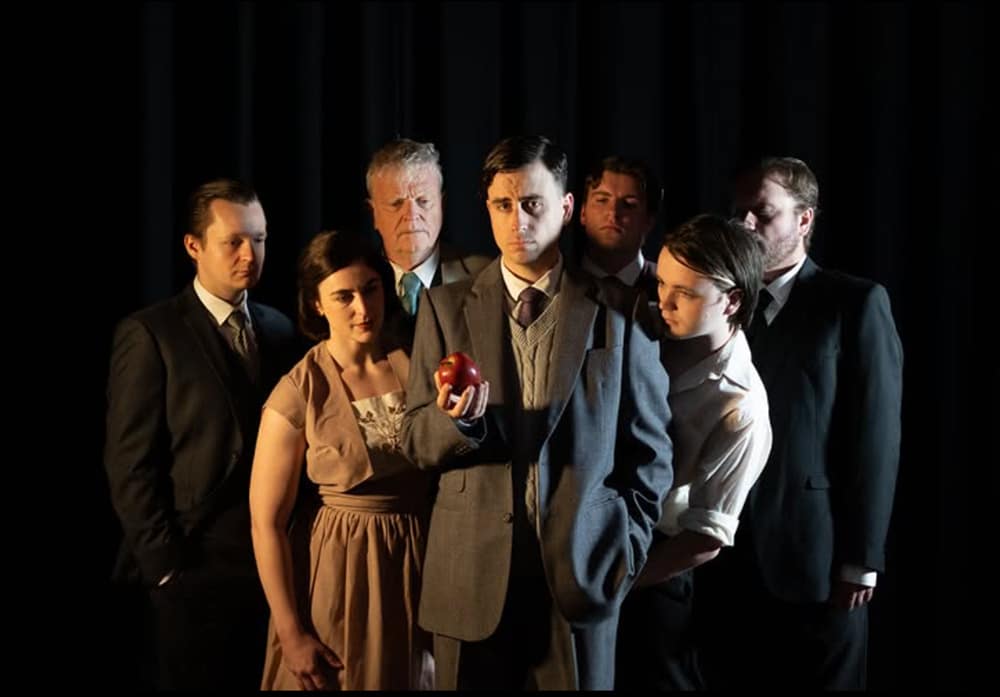
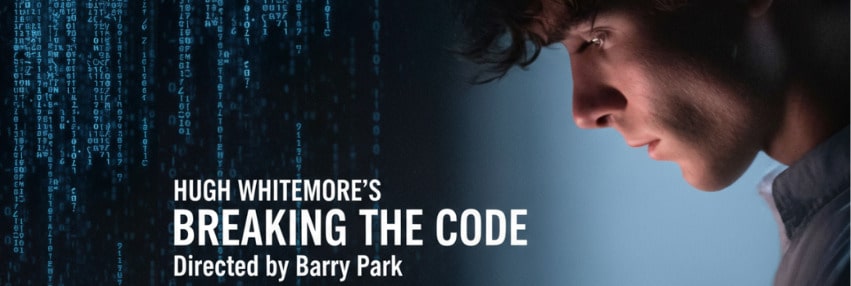
Hugh Whitemore’s Breaking the Code is built around one of the great contradictions of the twentieth century: Alan Turing helped change the course of history, yet was punished by the very society that benefited from his genius.

Presented by Melville Theatre Company and directed by Barry Park, Breaking the Code is based on Andrew Hodges’ biography Alan Turing: The Enigma. It is a biographical drama about genius, secrecy, sexuality, punishment and the moral contradictions of mid-twentieth-century Britain. It is also a play about codes in more than one sense: wartime codes, mathematical codes, legal codes, social codes, and the private codes by which people try to survive.

At its centre is Thomas Dimmick as Alan Turing. It is a demanding role, and Dimmick carries a large share of the evening. Turing is rarely absent from the action, and the performance requires stamina as well as emotional and intellectual precision. Dimmick gives the role a thoughtful intelligence, holding together the contradictions of a brilliant, awkward, playful, stubborn and vulnerable man.

What gives the story its continuing force is that Turing was not only a victim of legal and social cruelty. He was also a mind looking far beyond his own age. His work helped lay the foundations for modern computing, and his thinking around machine intelligence now feels strikingly prophetic. In an era where artificial intelligence is no longer theoretical but part of daily life, the play’s glimpses of Turing as the man who helped imagine the “electronic brain” are among its most intriguing moments.

The production is strongest when it allows us to see that larger figure: not only the man who helped break Enigma, but a kind of national superhero, now recognised with his image on the British £50 note. The cruelty of his treatment lands most strongly when set against the scale of what he gave, and the scale of what his country failed to honour in his own lifetime.


The supporting cast bring considerable strength to the production. Patrick Downes diligently inhabits Detective Mick Ross, giving him the firmness of a man of the law as he conducts several interrogations of Turing. Anna Head successfully represents the motherly perspective of the 1940s and 1950s as Sara Turing, loving her son while remaining unaware of his sexuality. Jack Riches plays the mildly scheming and villainous Ron Miller, the low-level thief and lover whose actions help set Turing’s downfall in motion.

Grace Edwards brings warmth and clarity to Pat Green, giving insight into Turing’s wartime years and accurately portraying a relationship in which his homosexuality is accepted rather than condemned. Martin Forsey portrays Turing’s wartime boss, Dillwyn Knox, with strength and empathy, with many of their scenes providing thoughtful debate around social codes, judgement and compassion. Rounding out the ensemble, Nicholas Mountain, Nate Tonkin and Jamie Brooker ably help fill out the emotional and social world around Turing.

Barry Park’s direction treats the material with seriousness and respect. Mark Nicholson’s lighting and the simple, functional staging support the shifting locations, while Merri Ford’s costuming helps anchor the period. This is a sincere and committed community theatre production, led by a strong central performance and a clear respect for the man at the heart of the story.

When Breaking the Code was first staged in 1986, it was undoubtedly working to break taboos. Its treatment of homosexuality, state persecution and moral hypocrisy would have carried a sharper social charge in the era in which it was written. In 2026, those injustices are no less appalling, but they are less likely to shock an audience in quite the same way. For that reason, the play is most effective when it moves beyond the fact of persecution and into the more complicated territory of Turing’s mind, isolation, contradictions and historical significance.

Turing emerges as a man who broke codes for his country, imagined the future for the world, and was constrained by the moral codes of his own society. Melville Theatre Company’s production gives that story a thoughtful and respectful staging, with a committed cast and a strong sense of care for the remarkable life at its centre.

To book tickets to Breaking The Code, please visit https://www.trybooking.com/events/landing/1569149.

Photographer: Curtain Call Creatives

Spread the word on your favourite platform!

The Almighty Sometimes: When Protection Becomes Control

The Almighty Sometimes

The Almighty Sometimes Rating

Click if you liked this article

2

The Almighty Sometimes asks a question that sits uneasily at the heart of family life: when does care become control?

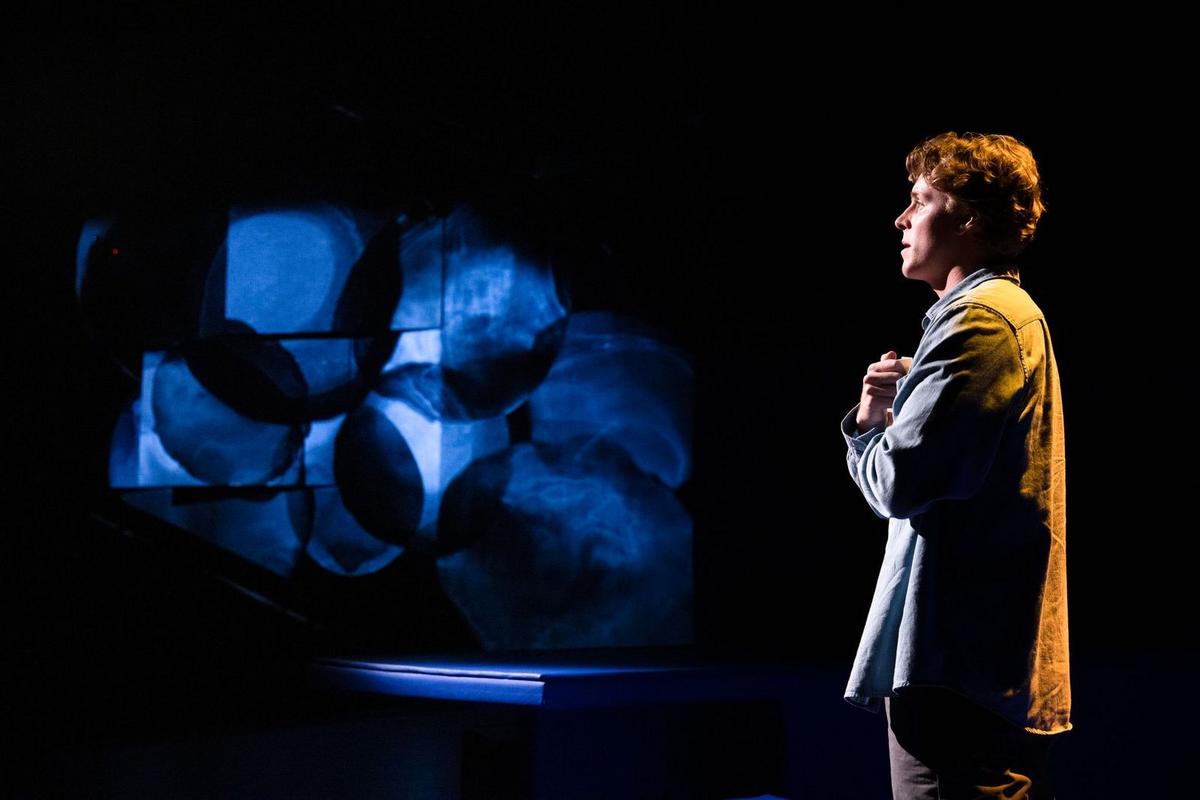
Written by Kendall Feaver and presented by Black Swan State Theatre Company, the play enters the complicated emotional terrain between mental health, medication, autonomy and parental love. At its centre is Anna, an 18-year-old beginning to ask who she might be beyond the prescriptions and diagnoses that have shaped much of her life. For her mother Renee, that search for independence is inseparable from fear, memory and the instinct to protect.

It is a powerful premise, and one the production handles with intelligence and sensitivity. The Almighty Sometimes is not a simple argument for one side over another. Anna’s desire for agency is deeply understandable. Renee’s fear is also deeply human. The play’s strength lies in its refusal to make either woman easy to judge.

Director Emily McLean gives the story space to breathe. The production allows the audience to sit inside the tension rather than being pushed toward an obvious conclusion. This is not merely a play about mental illness, nor merely a mother-daughter drama. It is about the difficult place where love, risk, responsibility and control overlap.

‘Ana Ika brings urgency and volatility to Anna, capturing the restlessness of a young woman desperate to define herself on her own terms. It is a demanding role, full of emotional turns, humour, anger and vulnerability.


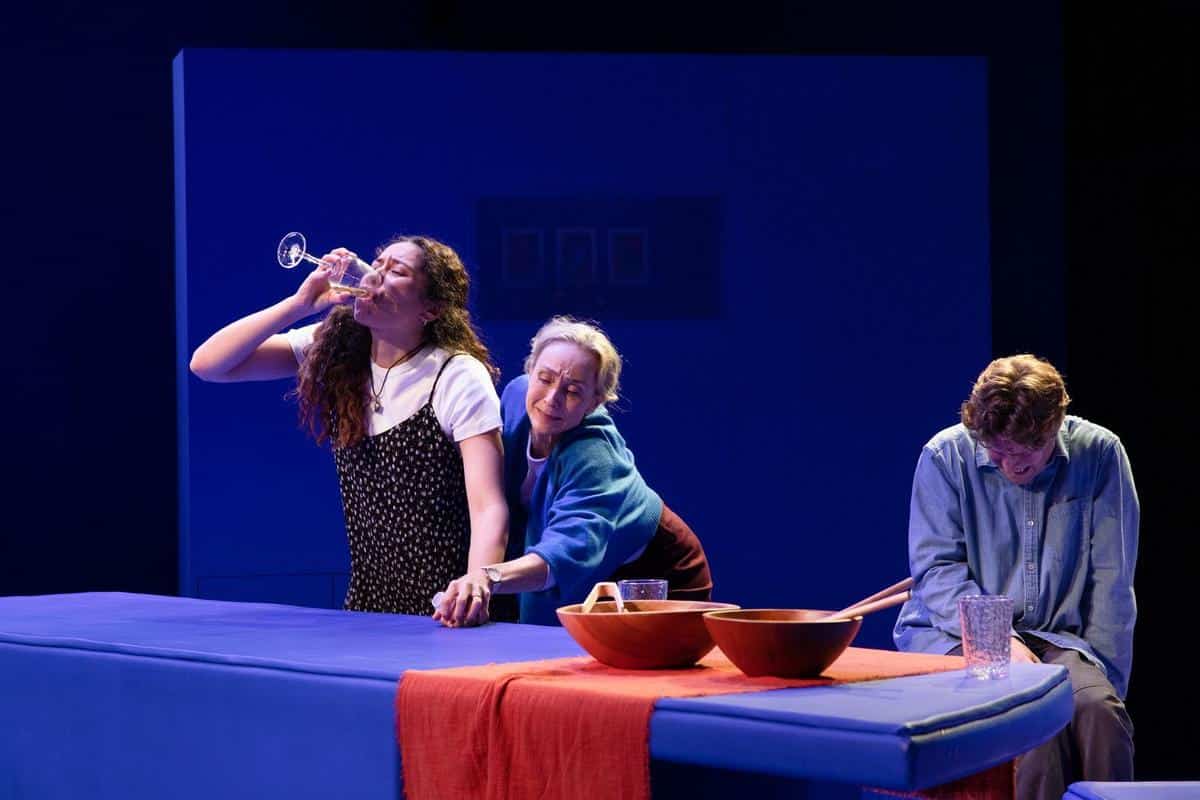
Alison van Reeken is excellent as Renee, presenting a mother whose love has been shaped by years of vigilance. There is no easy sentimentality in the performance. Renee’s care is practical, anxious, frightened and forceful; the performance makes clear how easily love can become tangled with fear.

Amy Mathews brings authority and composure to Vivienne, while Harry Gilchrist is very effective as Oliver. His performance adds warmth, humour and emotional contrast, giving the production some of its most natural and engaging moments.

The creative elements give the production a distinct visual identity. Fiona Bruce’s set and costume design makes strong use of a cool, blue-toned world; a choice the program links to ideas of protection, intensity and emotional excess. Karen Cook’s lighting supports the production’s movement between domestic realism and more heightened emotional moments.

The Almighty Sometimes is not light entertainment, but it is compelling theatre. It asks difficult questions without flattening them into easy answers. How much risk should a person be allowed to take in pursuit of independence? How far can love go before it becomes possession? What happens when the person you are trying to protect also needs freedom from you? These are not comfortable questions, but the play explores them with intelligence and sensitivity, providing much food for thought and is carried by a strong ensemble.

The Almighty Sometimes is a mature and absorbing production from Black Swan State Theatre Company; a thoughtful drama that leaves you pondering the difficult questions it asks about love, risk, responsibility and control.

To book tickets to The Almighty Sometimes, please visit https://blackswantheatre.com.au/season-2026/the-almighty-sometimes.

Photographer: Daniel J Grant

Spread the word on your favourite platform!

The Roommate

The Roommate

The Roommate Rating

Click if you liked this article

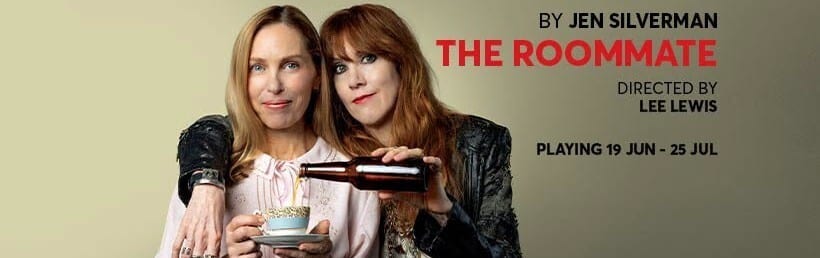
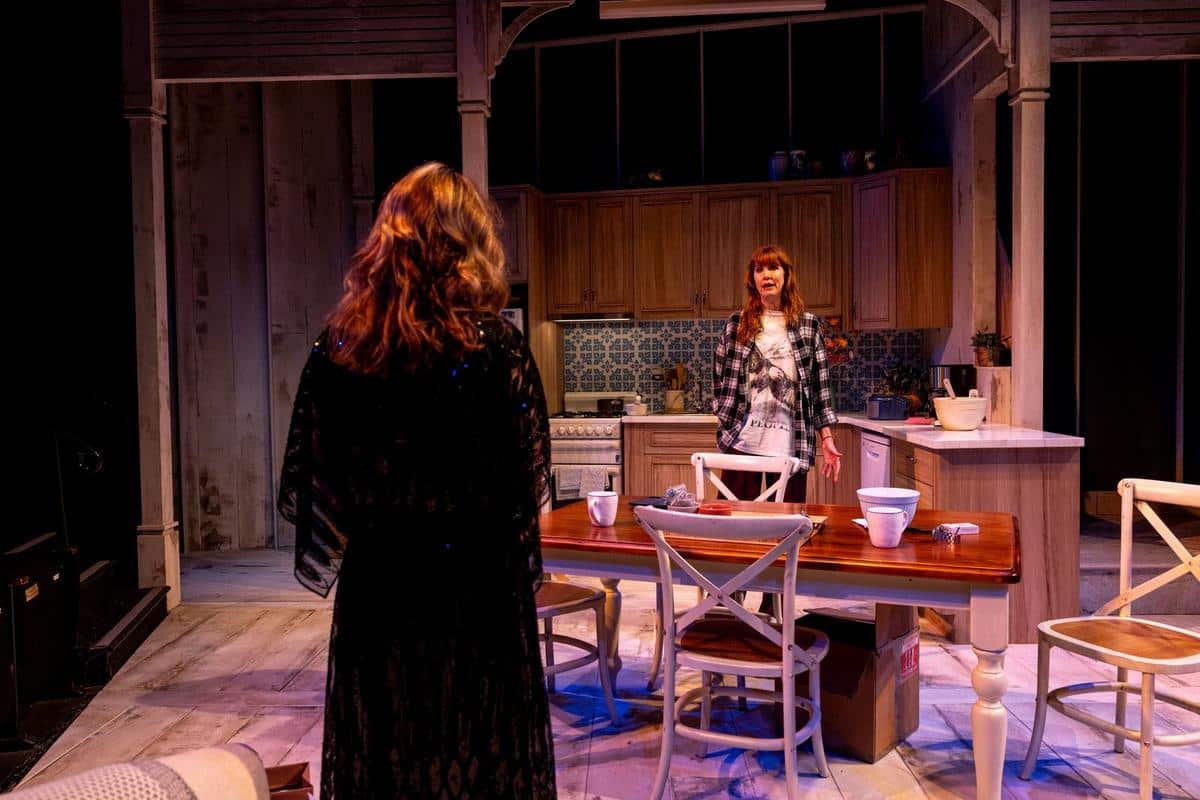
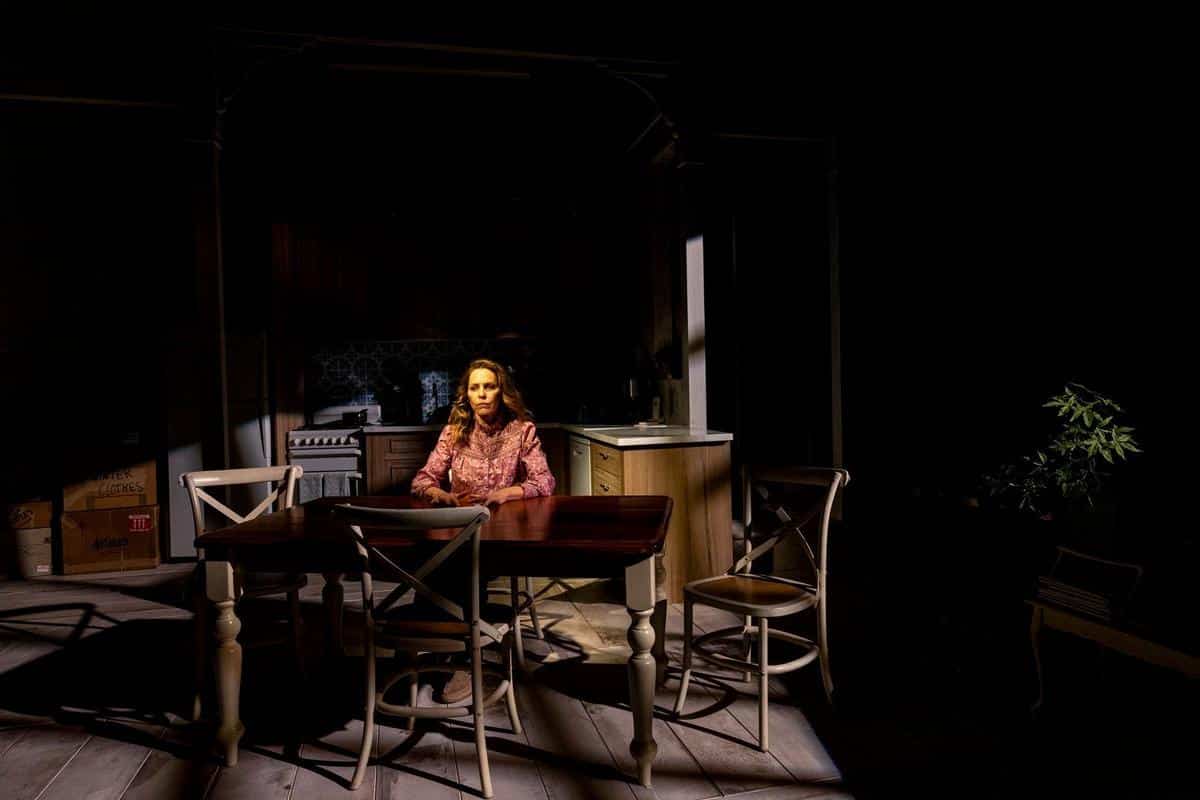
We are taken to the Mid-West of the USA with a very tidy kitchen setting where everything has its place and would for the next umpteen years. Enter Sharon, wonderfully played by Lucy Bell with great comedic timing. Dressed in conservative jeans and the right blouse, her restlessness is evident. Her life is about to be turned inside out and upside down by someone who will reflect the questions she has started to ask herself. Who is she? Like water in a kettle the steam has to be released.

Jen Silverman’s dialogue is vital and clever highlighting one person’s search for freedom and another person demonstrating the price we may pay. The audience was in for a ride.

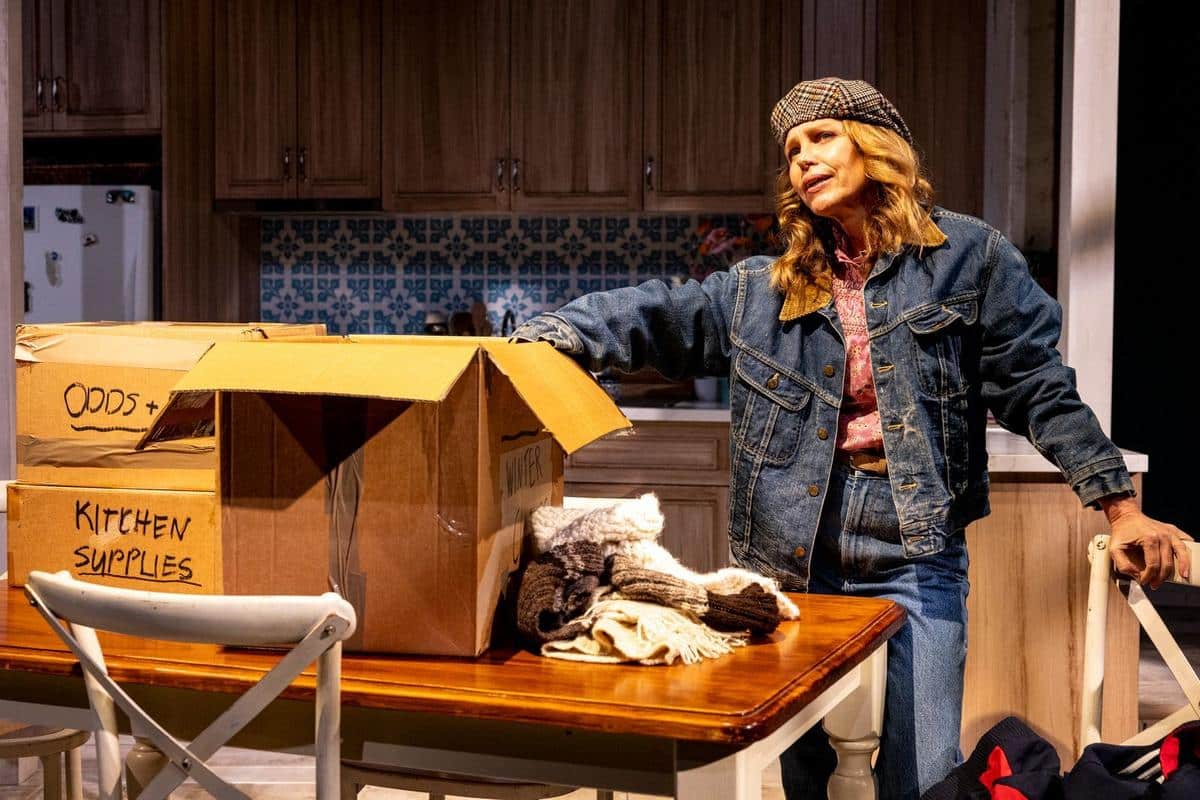
Robyn, her new roommate, a dry, sardonic and New York weary woman, shows up with obvious secrets trailing behind her. Wonderfully played with a great New York accent, she slowly reveals who she is as Sharon bluntly asks all the wrong questions. In hip New York clothing and announcing that she is alternative, two states and personalities meet. Boxes with Robyn’s hidden past pile up in the neat kitchen stirring Sharon’s curiosity propelling her forward to unleash her inner self. Even the milk has to change as Sharon is introduced to a different way of living and being.


The actors immediately present an uneasy chemistry between the two women revealing to Sharon that her learning French, pretending that she may go to Paris is all about seeking freedom but there is a price to pay. Sharon reflects all that Robyn isn’t and the audience senses that she is seeking the opposite. Searching for a conservative community and escaping her past life, she collides with Sharon and the two set off on a venture and adventure.

As Sharon moves forward and Robyn goes backwards, the kitchen unravels, rubbish is on the floor and boxes and memories are unpacked. Sharon reveals her personality and the audience laughs with her, not at her, and there is a sense of ‘go girl’ as she reveals her alter ego. At the same time, the audience observes with sympathy and empathy as Robyn is focusing on containing her previous way of life but is drawn to Sharon’s exuberant movement in to a new way of being and thinking.

The acting convinces the audience how Robyn is perfect as the foil to Sharon and the repartee between them is fast, funny and poignant at the same time. Distant children only visible on the phone add some sense of both women’s history and issues. Without giving the ending away, both move forward and there is a wonderful twist at the end.

To book tickets to The Roommate, please visit https://www.ensemble.com.au/shows/the-roommate/.

Photographer: Brett Boardman

Spread the word on your favourite platform!

Subscribe to What's The Show

Reviews, show news and what is on, straight to your inbox.