A Mirror

A Mirror

A Mirror Rating

Click if you liked this article

3

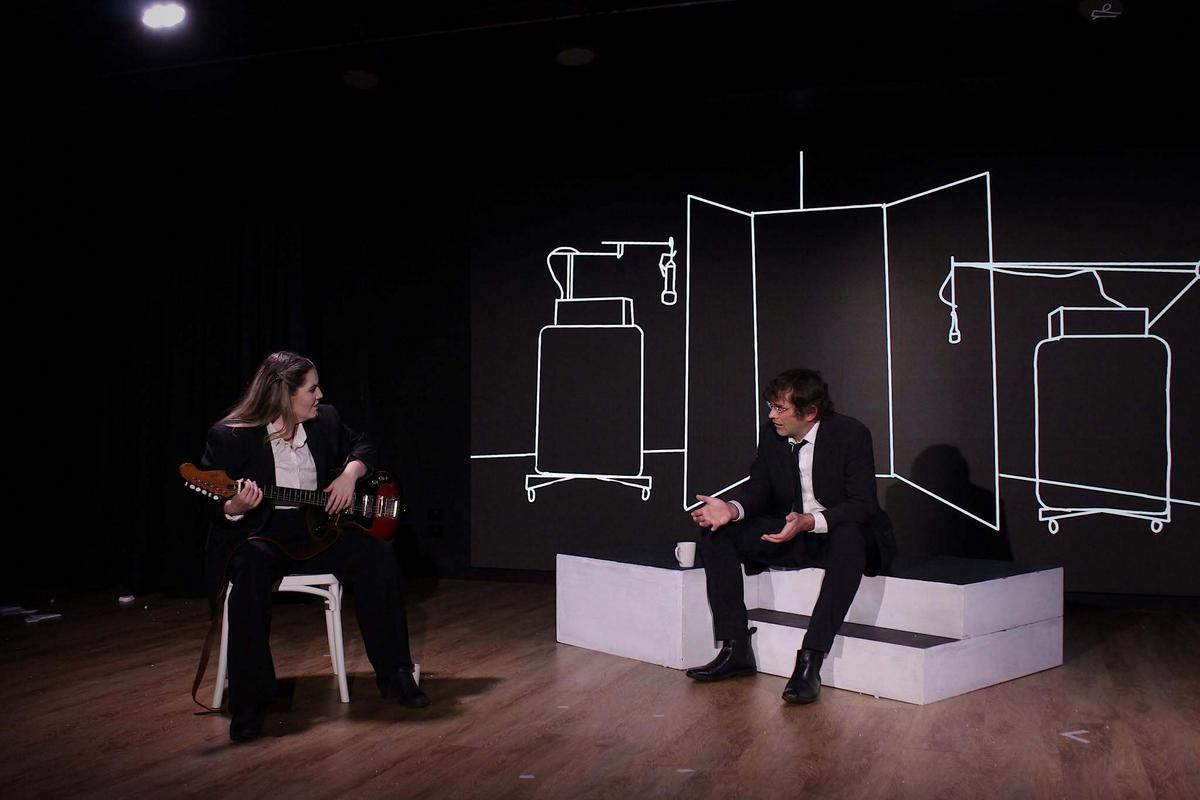
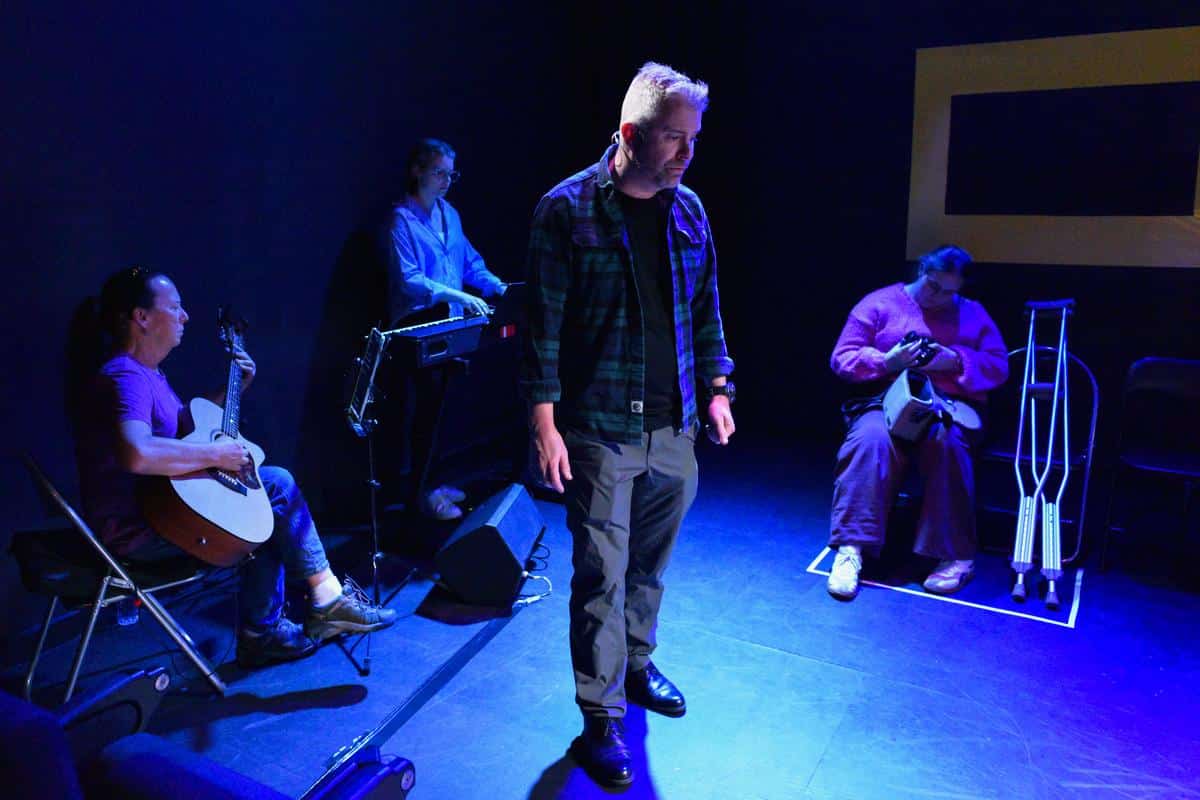
As you enter the theatre for ‘A Mirror’, it feels less like attending a play and more like arriving at a celebration. The foyer hums with anticipation. Ushers hand you a wedding programme, neatly printed with the order of events, inviting you to witness a union. It is a charming touch—until you turn the paper over. There, instead of a sentimental note, is a stark Oath of Allegiance to the Motherland. The shift is immediate and unsettling. You take your seat—slightly more uncomfortable than expected—and as the festivities begin, you sense that you are not merely watching a wedding. You are being watched yourself.

From the outset, Holcroft’s play establishes a world chillingly reminiscent of George Orwell’s ‘1984’. The auditorium becomes part of the dystopia. Eyes seem to linger too long. Applause feels monitored. In this society, a misstep, a wrong look, an insufficiently enthusiastic smile—any of these could betray you. The atmosphere is thick with suspicion.

The wedding that frames the narrative is a masterstroke of theatrical irony. Traditionally a symbol of joy and new beginnings, here it is a hollow performance: a carefully constructed fiction designed to appease the authorities. Beneath rehearsed vows and forced laughter lies desperation. The ceremony becomes a metaphor for the wider social order—an elaborate façade maintained for survival. Love is secondary; compliance is everything.


As the story unfolds, we are drawn into the lives of writers coerced into producing patriotic fabrications. They are tasked with rewriting history, inventing heroes, and manufacturing narratives that glorify the regime. Their creativity, once a source of meaning, becomes an instrument of oppression. Through intimidation and propaganda, they are compelled to betray not only the truth but also themselves. Holcroft incisively explores how authoritarian systems corrupt the act of storytelling, transforming art into ammunition.

Yet the weight of the subject matter, combined with the absence of an intermission, makes the production feel deliberately relentless. There is no pause for reflection, no moment to breathe. While this structural choice reinforces the suffocating atmosphere of the regime, it also renders the experience slow at times, even long. The unbroken intensity mirrors the characters’ entrapment, asking the audience to endure the same sustained pressure.

When the lights dim, the impact lingers. The play offers no easy catharsis, no triumphant overthrow. Instead, it leaves the audience with a question that echoes long after departure: would you speak the truth if the price were injury, imprisonment, even death?

In its bitterness, the play achieves a powerful moral clarity. It compels compassion, provokes self‑examination, and reminds us that while regimes built on lies may feel immovable, they persist only as long as individuals choose silence over courage. The truth may not always triumph—but as long as there are people willing to tell it, even at great cost, it can.

To book tickets to A Mirror, please visit https://belvoir.com.au/productions/a-mirror/.

Photographer: Brett Boardman

Spread the word on your favourite platform!

Moving, Off-Beat, And Deeply Tender

Tonsils + Tweezers

Tonsils + Tweezers Rating

Click if you liked this article

3

As we enter the theatre, an actor in boxers, a singlet, and a sleeveless tuxedo top is already on stage, catching our attention with a scientific riddle and collecting our answers as we take our seats. When the lights focus on them, the show officially begins, the riddle now in the hands of two figures we come to know as Lewis (Tweezers) and Tonsils, our excitable and endearing narrator.

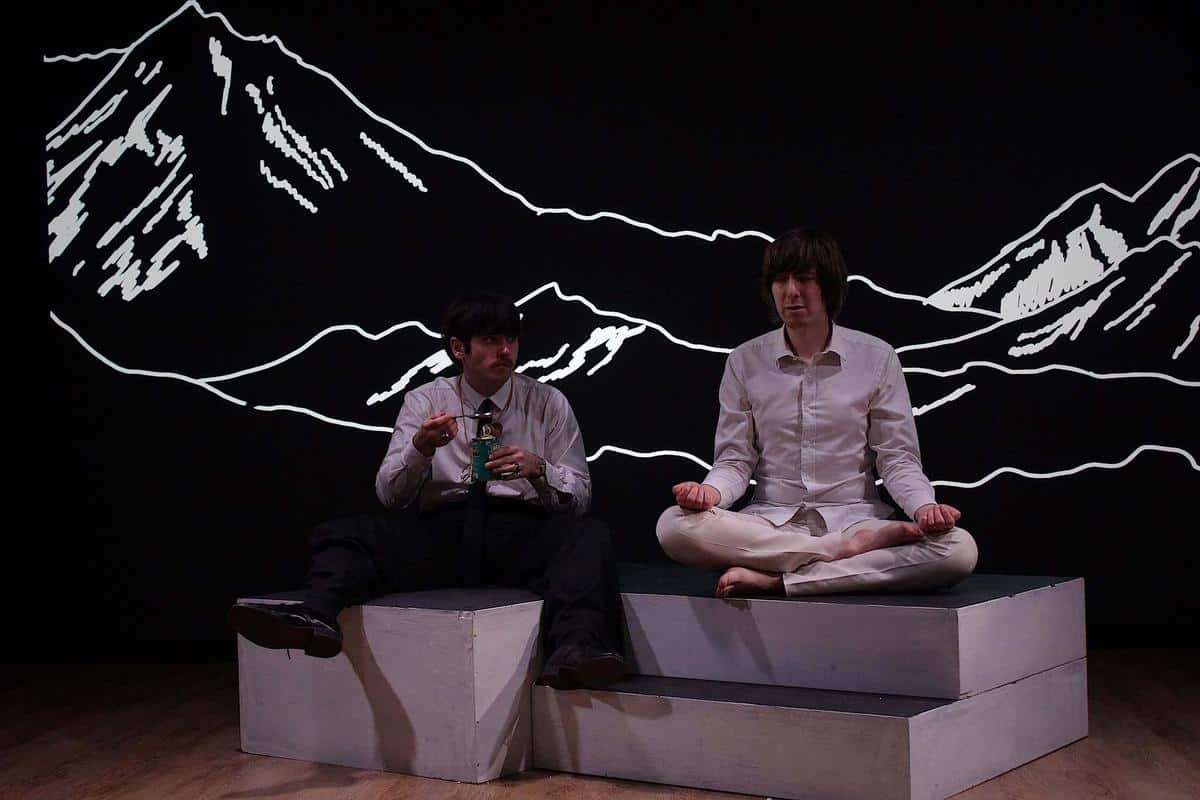
The set, designed by Bella Saltearn, is deceptively simple; vintage wallpaper, a small corner kitchenette, two chairs off to the side. It grounds us in a space that slips gently through times, ages, and memories.

Early on, we’re warned something terrible will happen in eight minutes, setting an urgent emotional pace for Tonsils as they try to save Lewis from whatever fate lies ahead.

Max and Beth enter as narrative threads of their own. Their present-day scenes (preparing to perform Macbeth) become a vehicle for reflecting on the past. Gradually, it’s revealed that Max was one of the “Fountain Boys,” childhood bullies of Lewis and Tonsils.

Matthew Phillips’ tightly orchestrated sound design, paired with Poppy Townsend’s nuanced lighting, adds immense texture. What seems simple at first quickly reveals itself to be intricately timed, every shadow and flicker purposeful, especially as moments of puppetry and shadowplay appear.


Lia T’s delicate compositions, together with handmade props and playful visual touches, bring a sense of whimsy that keeps us laughing even as the story edges toward heartbreak.

This is part of the emotional rollercoaster of this piece; you go from belly laughs to a shocked silence, or deep tenderness in moments. This is the show’s quiet brilliance, sustained by an exceptional ensemble. Ariyan  Sharma, as Tonsils, fills every inch of the space with captivating energy, never losing the thread even through unexpected moments (a broken glass in the audience doesn’t faze Ariyan for a second). Caitlin  Green and Toby  Carey offer depth and grounded humour, while Victor Y Z Xu’s performance as Lewis is a slow-build ache, leaving more than a few of us wiping away tears by their powerful performance in the final moments of the play.

Lucy Rossen’s direction is thoughtful, playful, and deeply human. Lucy navigates Will O’Mahony’s script with care, finding the humour within the heaviness and the truth within the surreal. Tonsils + Tweezers is a darkly funny and haunting exploration of friendship, grief, and the fragile membrane between imagination and reality.

There is a reference to how Macbeth is known as “A tragedy of the imagination…” and this is clearly drawing a correlation between Macbeth and Tonsils + Tweezers. We are seeing what happens when the veil between reality and imagination is held together by the flimsiest thread.

It’s deep themes, and hard subjects are not for everyone but it was truly enjoyable from start to finish, and relatable on so many levels (some you wouldn’t want to share with most people). It was light, painful and incredibly touching all at once. It will leave you tender but grateful.

To book tickets to Tonsils + Tweezers, please visit https://www.oldfitztheatre.com.au/tonsils-tweezers.

Photographer: Nicholas Warrand

Spread the word on your favourite platform!

Worlds Alive 2026: Five Short World Plays Never Before Seen In Australia

Feature-WORLDS ALIVE 2026

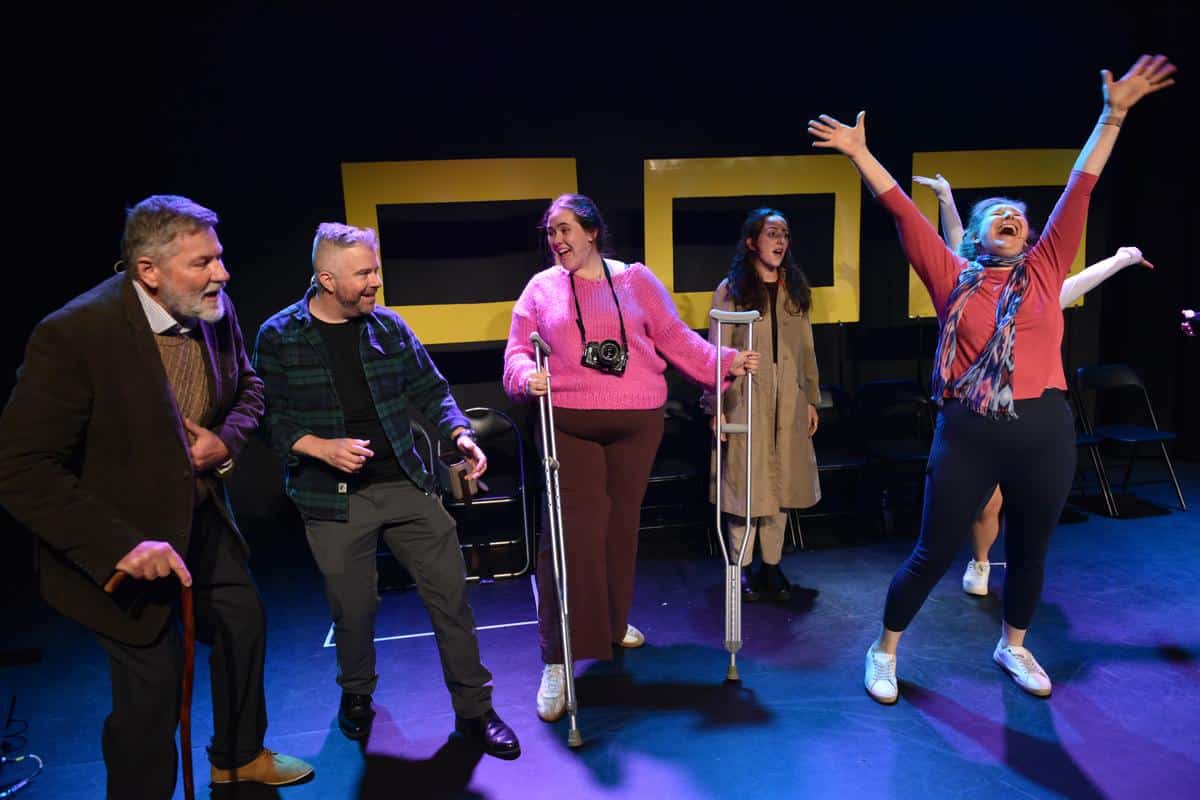
Elaine Hudson directs eight professional actors in five short contemporary world plays. These award-winning plays have never been seen in Australia. Carol Dance, the Artistic Director of Scene theatre Sydney, selected the plays for global thinkers, theatre lovers and curious Sydneysiders. All the plays are entertaining, progressive and relevant to our times. They are presented as dramatic readings, script-in-hand.

From South Africa: Kunene and the King by John Kani, OBE. The play premiered in 2019 at the Royal Shakespeare Company to great acclaim. In the story, an elderly English actor in South Africa is trying to remember the lines to King Lear. Kunene, his black carer, helps him and interprets Lear in a new way. They are an odd pair, and their comic spats finally lead to mutual respect. It is powerful entertaining theatre.

From Brazil: Miss Margarida’s Way by Roberto Athayde. This short comic monologue has been produced in more than thirty countries, including on Broadway.

From The Philippines: A Night at the Opera by Floy Quintos. This 2017 play portrays the power of the elite in The Philippines. A ‘wife vs husband’ tense tête-à-tête ends in humour that saves the relationship.

From Indonesia: The Struggle of the Naga Tribe by W. Rendra. The Naga villagers protect their copper-rich sacred mountain from the ogres (westerners) when a corporation bribes the tribe’s Queen. There are good people and bad people on both sides.

From Korea: The Sound of Rain Falling, by Sue Ja Joo. This short lyrical work captures how the smallest sounds — rain on a roof, silence between words — can stir longing, connection and unexpected insight. Poetic without being precious, the play presents a gentle respite from our complicated world.

The performers of WORLDS ALIVE 2026 are Seth Eren, Paul Williamson, Tiang Lim, Ruba el-Kaddoumi, Micah Doughty, Madison Chippendale, Christopher Brown and Alan Faulkner. The director is Elaine Hudson.

Artistic Director Carol Dance says: “All the world’s a stage” and we want to provide Sydney with great theatre from around the world. The good reviews of last year’s WORLDS ALIVE prompted us to bring another set of exciting world plays to Sydney audiences. Here are reviews of last year’s WORLDS ALIVE:

The performances were well received by an enthusiastic audience. The plays were performed with commitment and vibrancy. Sydney Arts Guide

Great acting and a good range of plays! Maggy Franklin, Theatre Time Sydney

The actors were all fantastic. I loved the variety. I loved all the plays. WORLDS ALIVE wonderfully invited us to think globally and act locally through the power of storytelling. Brett Martin, VP, United Nations Association of Australia (NSW)

Details of playwrights, plays and actors: https://www.scenetheatresydney.net.au/worlds-alive-26

When: March 13 and 14, 2026, 7PM
Duration: 2 hours
Where: Walsh Bay Arts Precinct of Sydney (opposite the entrance to Sydney Dance Company on Pier 4)
Tickets: $35 and $25 for students

Bookings: https://events.humanitix.com/worlds-alive-2026 ($35 and $25 students)


Spread the word on your favourite platform!

The “Calendar Girls” Idea Takes Off, More Than Expected!

Calendar Girls

Calendar Girls Rating

Click if you liked this article

3

The Lane Cove Theatre Company’s production of Calendar Girls was absolutely delightful, where fresh “sunflowery-goodness” shone from the stage via the actors! Although the play has a serious undertone, with one of the character’s husband, John (Darren Gibson) passing away from leukemia, Director, Light and Sound Designer Kathy Petrakis led the company towards showcasing an inspiring story which evolved into a powerful celebration of a group of women. The story highlights their bravery in stepping beyond their comfort zone along with the unbreakable bonds of friendship.

Based on a true story, Calendar Girls opens with a group of mature women attempting to do a yoga class, led by Chris (Michelle Bellamy), which dissolves into teasing each other. The audience quickly sees the easy-going friendship between these women, who meet regularly in Yorkshire at the Women’s Institute.

When the unthinkable happens and John falls sick, diagnosed with leukemia, his wife Annie (Anita Lenzo) is devastated. Having been previously viewed as a bright and positive presence on stage, Gibson’s portrayal of his character John struck me deeply, as he convincingly shrinks into his former self – sitting in a wheelchair and speaking weakly- evoking a powerful emotional impact.

When he passes, the way this is told was respectfully done, with writer Tim Firth ensuring that John’s legacy and wish for his loved ones would be like his favourite flower, the sunflower. The line “the last phase of the sunflower is the most glorious” appears to live on as a blessing. So begins a heartfelt mission to raise money for leukaemia research and to improve the relatives’ waiting room in the hospital by replacing an old uncomfortable lounge.


Chris and Annie come up with the idea for their group of friends to pose nude for the upcoming WI calendar, and it takes some convincing for the others to agree. Bellamy’s portrayal of outgoing Chris was noteworthy, and she showed the vulnerability of her character as well as her fierce strength. Lenzo playing the grieving widow Annie, was acted with heart and a quiet determination.

Each of the women were given props to use in their photo shoot. I won’t give any spoilers away, except to say that how the photo shoot was done, was in equal parts both tasteful and hilarious! I would imagine that this task of having a live “nude” photoshoot onstage would have been a challenge, so well done to the cast and crew. The audience loved this scene!

Blake Nicholas, portraying the calendar’s photographer Lawrence, and later toward the end of the play, another photographer named Liam, gave strong performances as both. Pauline Garner’s character Marie gave her the opportunity to showcase her comedic flair as the uptight head of the WI Yorkshire branch, particularly in a scene where she is playing a game of badminton with Ruth.

What I really liked about Calendar Girls was that each woman in this friendship group had a story to tell and the actors brought their own character’s individuality and quirky personalities to the forefront with sleek nuances and body language. No single character was “the star”. I think that this united the audience closer to the characters. Janette Chambers brought her musical and singing background to the stage playing the confident church organist Cora, the Vicker’s daughter, with spunk! Jessie was played with a twinkling cheekiness by Karen Firmstone, and her delivery of a certain line during the calendar photo shoot had the audience in bouts of laughter. Georgina Philpott, who played Celia, nailed her character’s vibrant personality well. Josephine Birch’s character Ruth had a wide scope of emotions due to her situation which played out as time went on, and she portrayed Ruth’s fragility to strength perfectly. The Yorkshire accent is a difficult one to master, and I’m sure that the cast will continue to polish this distinct accent as the season unfolds.

Calendar Girls felt authentic, in a way that only a well written true story can. The ending was a tribute to people who have been affected by cancer and it was moving and respectful. When we were told the end fundraising total for the “WI Alternative Calendar”, I left the theatre feeling hopeful and impressed by the strength of community and the power of lasting friendships. If you want to feel this way too, combined with a few belly laughs, go and see Calendar Girls in Lane Cove!

Tickets: www.trybooking.com/events/landing/1508641
Duration: 2 hours with interval
Season: 20 February – 1 March 2026
The Pottery Lane Performance Space
1 Pottery Lane, Lane Cove NSW 2066
(There is onsite parking, for free after 6pm)

To book tickets to Calendar Girls, please visit https://www.lanecovetheatrecompany.com.au/.

Photographer: Jim Crew, Lane Cove Creative Photography

Spread the word on your favourite platform!