Seed Hunters – A Global Movement for a Better World?

Seed Hunters

Seed Hunters Rating

Click if you liked this article

1

What if the world we live in could be peaceful? This is one wish that many people, me included, could hope for in our lifetime. What if people could make this happen by conceiving children who will become men who are less aggressive and less of the “toxic tough guy”?

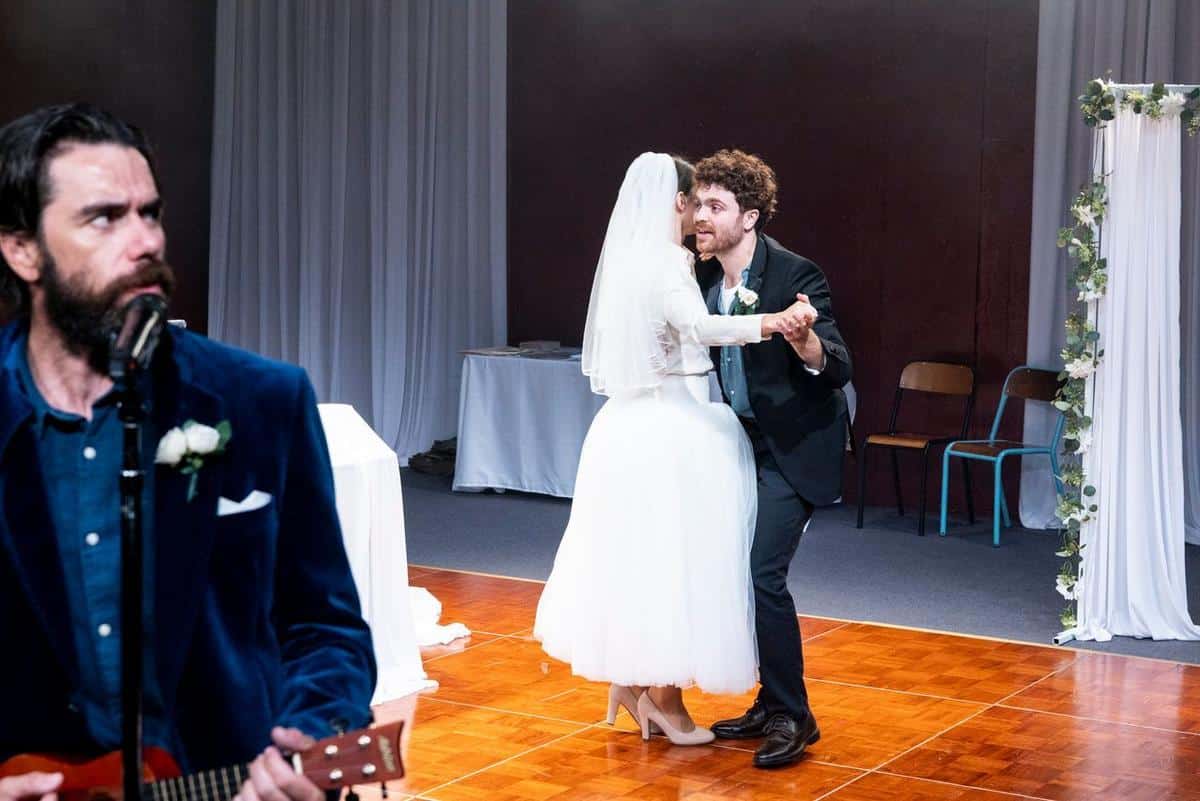
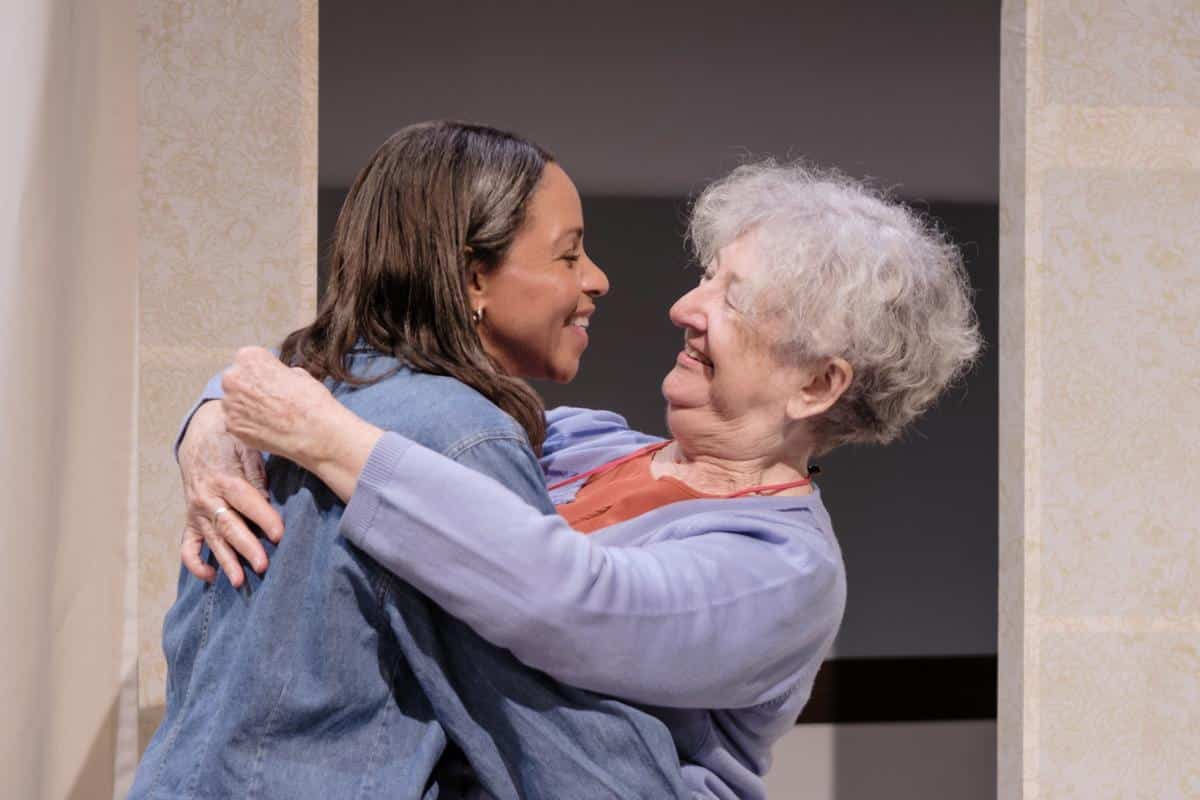
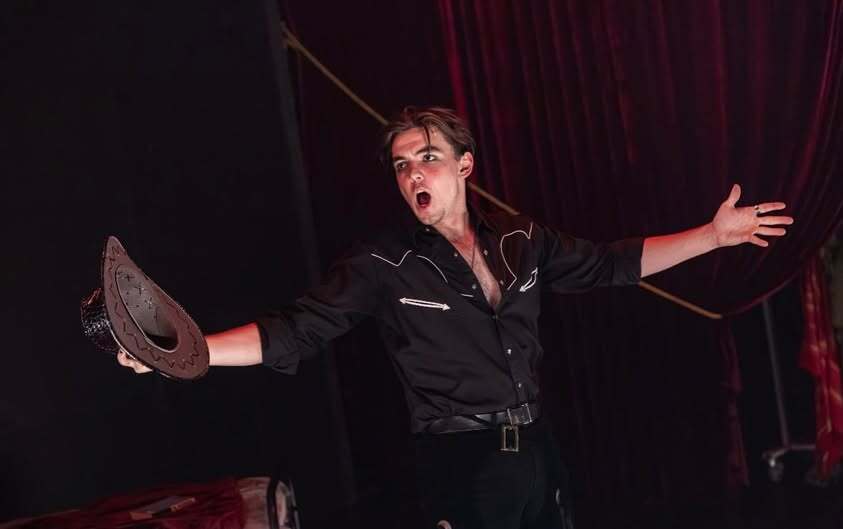
Scene Theatre Sydney’s play, Seed Hunters, made its premiere debut at the Pitt St Uniting Performance Space, and this question is one which is explored by a group of women. They are known as “Seed Hunters”. This is a movement of women from all over the world who, based on science, they believe that men of mixed ancestry are more likely to be more intelligent and less combative.

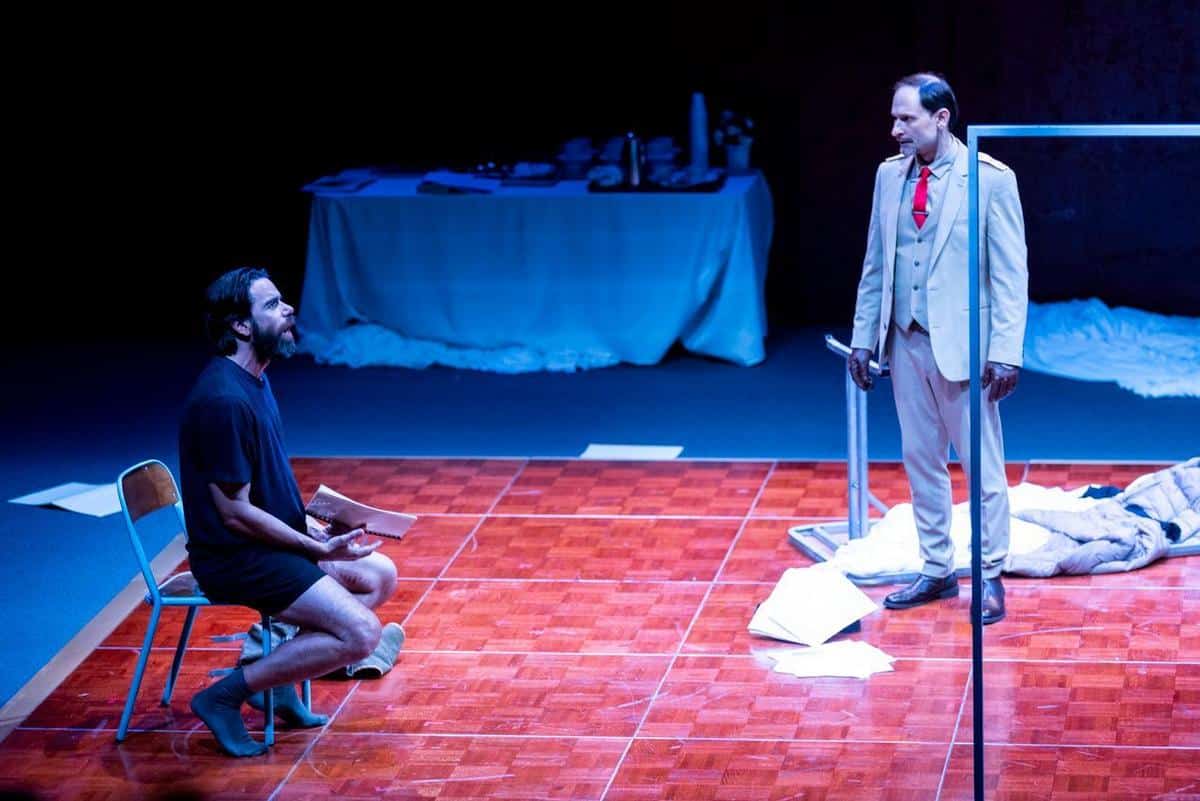
Set in Peking in 1976, students are invited by the Chinese government into a post-Mao world. It’s here that Rosa (portrayed by Fabiola Pellegrino) attempts to seduce a young Australian named Bob (played by Micah Doughty). Nearly 40 years later in present time in Australia, Bob discovers his niece Bridget (portrayed by Julia Grace) is a part of the Seed Hunters movement.

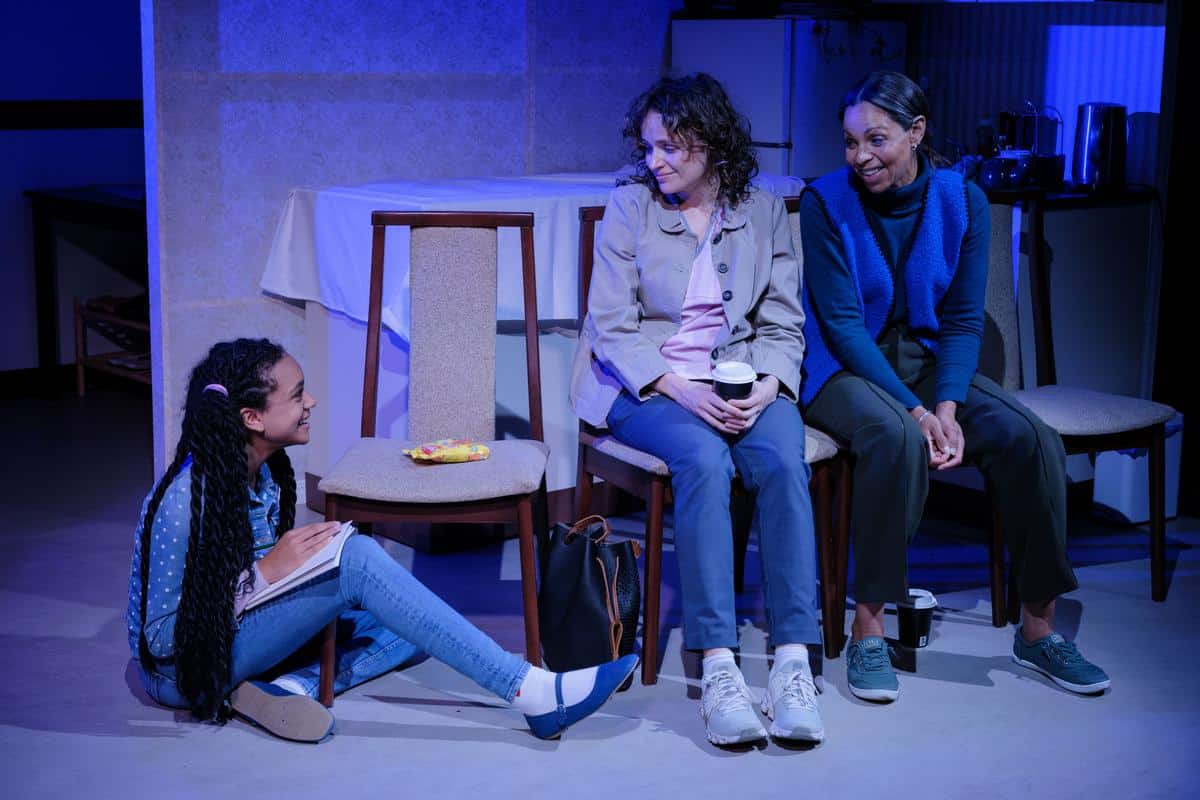
Julia Grace delivered an earnest and compelling performance as Bridget, capturing her youthful idealism and determination. She investigates women’s groups in ancient Greece, the Hopi Indians in Arizona, and various other women who study men, all in search of the perfect match. Bridget befriends Larry (played by Oliver Harcourt) and the audience learns what it is she wants from him. (“I need Larry and his mixed-up genes”)


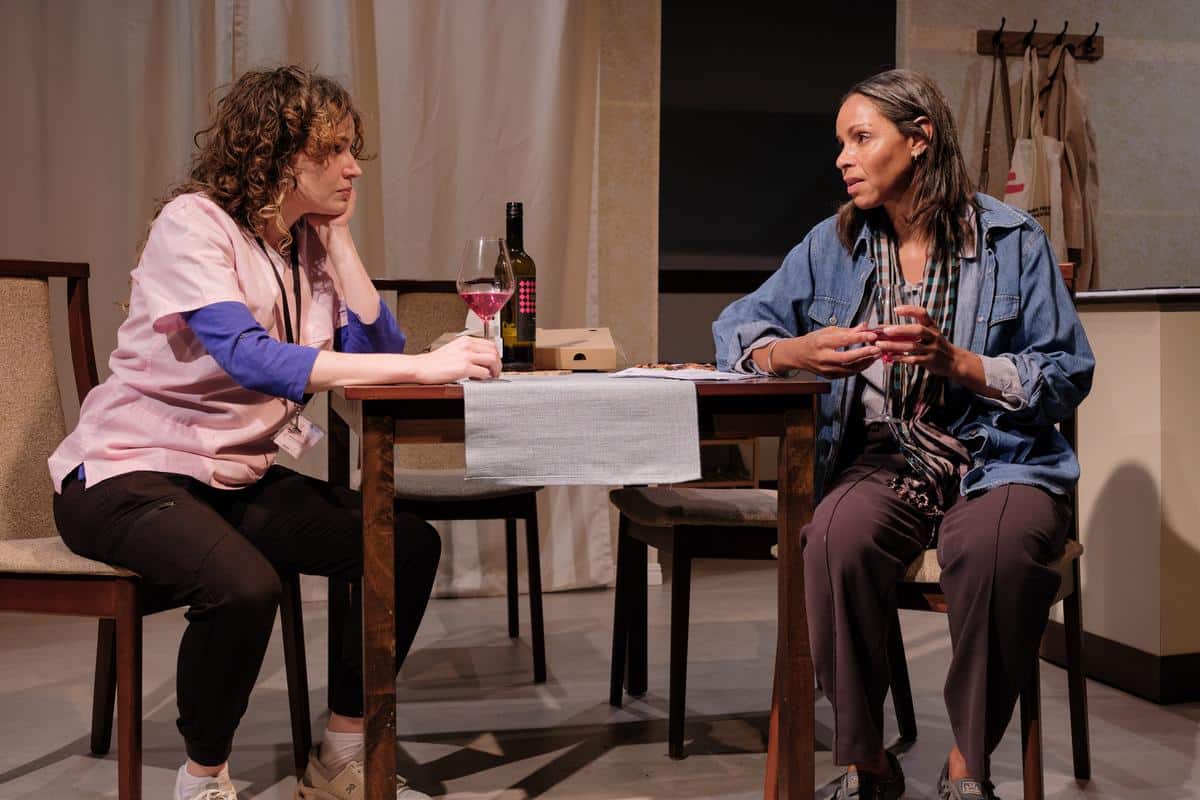
Meanwhile, Bridget’s sister Sarah (Madison Chippendale) returns home to be reunited with her. She has news of her own. Larry’s brother Jack (Theo Rule), a kids show host with no kids of his own, reacts with shock when he learns of Bridget’s plan. The girls’ grandmother, Dorothy (Joan Rodd), takes the opportunity to share her thoughts directly with her granddaughters.

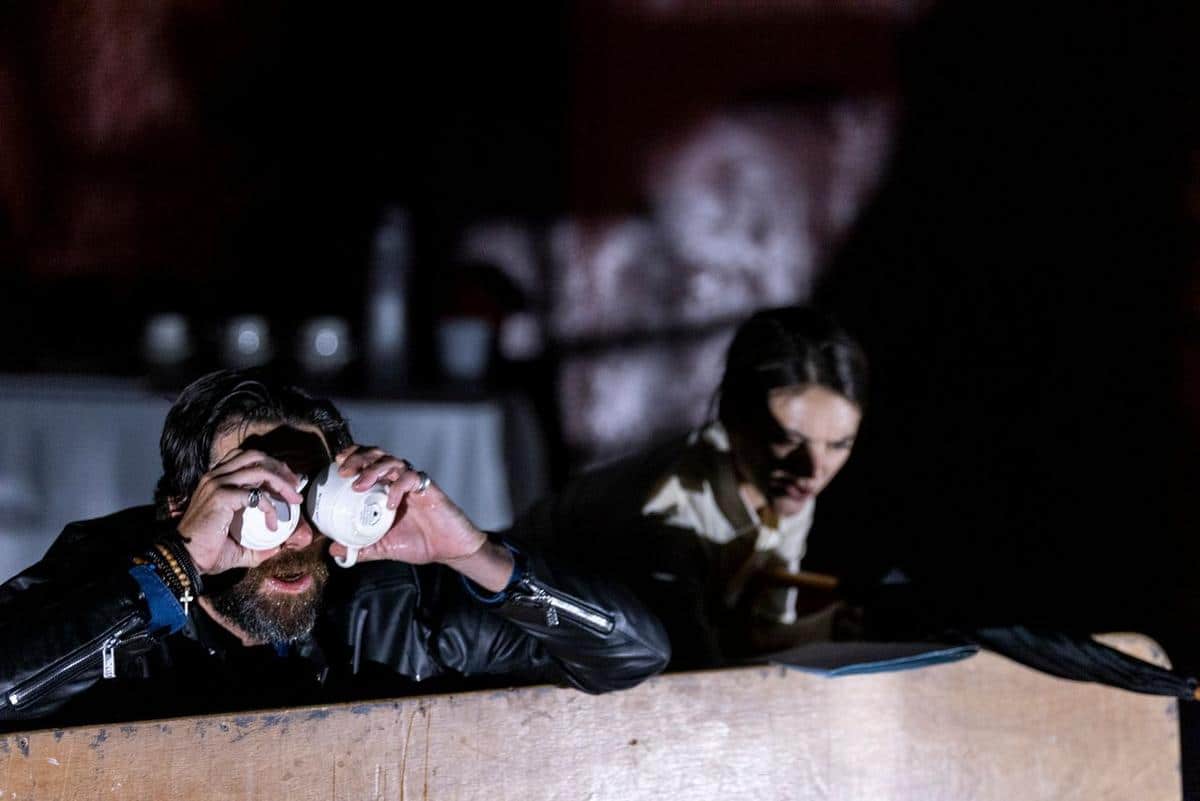
There are a lot of characters in Seed Hunters – with a cast of eleven sharing the stage, telling their different stories interwoven with art, the stars and history. The director Melissa Paris reminds us that “the seeds of transformation are planted by real people…whether through protest, parenting, music, art or simply refusing to stay silent, their stories echo today’s struggle and dreams.” Themes of self-identity and grief were intermingled with family dynamics.

The cast also took on various tasks, such as turning pages on a stand positioned at one side that displayed the names of the characters’ locations. These titles might have been more visible if they were larger or positioned slightly higher. The staging featured multiple levels, and a sense of intimacy was achieved through the characters’ interactions along the central aisle. However, since the play took place in a large venue with a high ceiling, I occasionally had trouble hearing some of the dialogue. Seed Hunters sound and lighting designer Jay Murrin chose some songs which were beautiful, providing the perfect atmosphere that complemented the scenes.

On leaving this performance, there were a few discussion points that came up from this very interesting concept. What will this seed hunters movement evolve into, in the future? Is this the way leading to a peaceful world?

Seed Hunters was written by Australian playwright Carol Dance.
Season run: October 17 – October 26 2025
Venue: Pitt Street Uniting Church Performance Space, 264 Pitt St, Sydney
Duration: Approximately 105 minutes
Tickets: Students $35, Concession/ Senior $45, Adults $55
www.ticketebo.com.au/scene-theatre-sydney/seed-hunters

To book tickets to Seed Hunters, please visit https://www.scenetheatresydney.net.au/seed-hunters.

Photographer: Robert Catto

Spread the word on your favourite platform!

Kentucky Fried Camus: Work, But This Time Like You Mean It

Work, But This Time Like You Mean It

Work, But This Time Like You Mean It Rating

Click if you liked this article

1

“Fiction is the lie through which we tell the truth” is perhaps a slightly pretentious opening, but for this 90-minute absurdist extravaganza swinging a baseball bat at the time-honoured tradition of underpaying and disrespecting fast-food workers, I feel it deserved. Nestled between the Wharf theatres of STC and just above Bell Shakespeare, Canberra Youth Theatre have taken their eight person ensemble piece – Work, But This Time Like You Mean It, into ATYP’s Rebel Theatre for a mere three day sprint. And sprint it did.

From the moment you enter the theatre, what the piece is making fun of jumps out at you. The seven pre-set cast wear factory-cheap, McDonalds-esque polyester yellow, red, and black uniforms, already invoking that very all-too specific minimum-wage-job sweaty discomfort. These aesthetics continued to carry through the set; a curious set-up of a bright-red slope into a neon-yellow ballpit. One employee, Georgie Bianchini, sits deeply engrossed in the Employee Handbook, alone in her devotion to the rules and regulations of the world around her. The piece began with a jolt of movement, and truly did not stop moving until its final moments. In many ways, this was an incredibly strong ensemble piece because of this speed and movement. Bodies and voices came together to create the cacophony of stress necessary to accurately represent a job like this – although individually some struggled to fill the larger space.

The physicality was excellent across the board – Matthew Hogan and Sterling Notley being particularly shining examples, throwing themselves at the floor and each other with full conviction to create very fun moments of physical comedy. The ball pit came immediately into play, sailing across the stage worker to worker in an innovative reimagining of a production line, bringing a visual chaos that was usually very rewarding – although was distracting during the more intimate monologue sequences. The projector in the back was also used incredibly well, never stealing focus away from the performers or used as a crutch. Congratulations must go specifically to Kathleen Kershaw for her excellent aesthetic communication, Ethan Hamill on projection work and Patrick Haesler for a score that felt just as nervous to be there as we were.


With a piece that makes its argument so clearly visually, in some ways it allows the script and actors to give it some breathing room, and it was here I felt the piece struggled. Political theatre often entices us to have strong emotional moments, yet with an ensemble piece that moves this quickly, and is often almost incomprehensibly absurdist, these emotional moments jut out in a way that don’t quite make sense in the context of the show as a whole. In moments like the chicken dance sequence, or the work-place accident, the piece shows without telling us the sheer ridiculousness of what we ask young people to do without proper training or protection. This makes pull-away monologues that reiterate this point slightly redundant, and distracting from the larger flow of the show. This was more difficult when there was unclear separation from the wackier ensemble character, to the more personal monologue persona.

This being said, both Blue Hyslop and Quinn Goodwin succeeded in bridging the gap between absurdism and emotional reality. Hyslop delivered an almost Fight Club inspired monologue about his hallucinated happy place which although being farcical, was convincing because we felt his belief in every emotional point. Goodwin, in turn, took us through her plummeting mental health with well executed brimming neuroticism. I also enjoyed the staging of Goodwin’s private moments, the confession booth of the audience stairs elevated her vulnerability beautifully. Kathleen Dunkley and Emma Piva’s emotional moments are delivered as a duo, and whilst the two had great chemistry and created an interesting relationship, on a writing level, the scenes scraped just under the line of absurd, which made them feel out of place and underdeveloped by the ending.

I enjoyed their work through the chaos of the ending significantly more, as both were allowed to flex their comedic muscles as a duo whilst being better supported by the script. Georgie Bianchini served in some ways as the audience’s inside man to the chaos on stage, and held her own comedically throughout, even as her character was often pushed aside. Hannah Cornelia gave a similarly entertaining performance as the ever-frustrating customer, lack of self-awareness and all.

Work, But This Time Like You Mean It was an entertaining example of the ridiculous nature of the mundane, and was supported well through its blocking and ensemble work. Although I wished for more of a full-hearted commitment to absurdism, I enjoyed the argument being presented and the aesthetic framework it was presented inside. The performers worked incredibly well together, and many had very touching moments through their asides. Upon leaving, I was left with three things: that I didn’t miss hospitality, that I should probably go join my local union, and that the kids, at least in theatre, would be alright.

To book tickets to Work, But This Time Like You Mean It, please visit https://canberrayouththeatre.com.au/production/work-but/.

Spread the word on your favourite platform!

Empathetic Ecoterrorism: Everything I Know About This Waterbottle

Everything I Know About This Water Bottle

Everything I Know About This Water Bottle Rating

Click if you liked this article

2

Theatre, generally, falls into one of two traps. Either it makes an interesting point, but makes you feel nothing, or it makes you cry and laugh and clap your hands, but it doesn’t actually mean anything. Lots of theatre does neither, and yet, Everything I Know About This Waterbottle is a rare case of finally nailing both. In a whip-smart fifty minute dissection of the absurdity of consumerism, writer Micheal Andrew Collins, director Violette Ayad and sole performer Ari Sgouros come together to produce something deeply thought-provoking whilst never letting up on the comedic reins. Indeed, the show is a masterclass in that old saying that comedy and tragedy are simply two sides of the same coin.

Old Fitz is already a miniscule theatre, and many of its productions peacock in this tiny space, forcing you to be a part of their world through sheer proximity. So I must admit I was initially rather perplexed at the show’s choice to literally cut the stage in half. Further, as a fan of diegetic light and sound, my eyes were drawn to the lighting controls and CD that both sat on stage, promising a further muddying of the lines between practitioner and character. Sound continued to impress through the ever-threatening build of rain in the background – Madeleine Picard blending the inner and outer world of the piece with flawless subtly. The canvas draped across the back wall gave the room a haphazard feeling, as if teetering on the edge of collapse. Needless to say, this feeling was replicated much beyond the set. The walls of the Old Fitz were decorated with fluffy clouds, and although this may not have been done specifically for the show on stage, it gave the room a rather avant garde feeling of the outdoors that I really enjoyed. Kudos in this aspect must go to lighting and set designer Morgan Moroney. As the lights dimmed, our sole performer joined us on stage, dropping off her raincoat (a lovely piece of foreshadowing) and leaning down to manually turn up the lights in the room. Sgouros then turned around with a direct address to the audience, setting the tone of the piece and introducing us to both our narrator, and our argument seamlessly.

A one man play is a significant undertaking, especially vocally, and especially for a piece like this that moves so quickly, so I was only the more impressed at Sgouros’s brilliant vocal performance. Her voice filled the space, constantly playing with rhythm, pitch, and tone in a way that allowed her to consistently make the most interesting choice – a valiant effort in a political piece that offers the trap of vocal patterns again and again. Indeed, the humour of the piece felt at least in the beginning as more of a stand up special than a play, which only speaks to the believability of Sgouros’s character work. Never was I convinced it was someone playing something, and not her on stage with us. The comedic work was once again improved by the crew’s careful consideration of comedic timing. In a theatrical landscape that relies so often on speed to create comedy and interest, finding a work not afraid to take their time is a joy. Also – I am an absolute sucker for prop comedy, which was sprinkled throughout the piece delightfully.


Once again I must return to a cardinal rule that defined this piece, comedy and tragedy being two sides of the same coin. The coin, in this piece, was focus. Sgouros was utterly and completely in the zone for her entire performance, and we as the audience couldn’t help but be sucked in with her. It was then this focus that allowed her emotions to shift on a dime. Moment to moment the storytelling shaped her entire being, and not once did her bouts of stress or tragedy feel unearned, even as they were unearthed and satirized moments later. This was commendable again when she faced real-time technical problems, which she adapted to in the moment with seamless humour – and then solved! As a viewer, we felt her intensity in every moment, and we, with her, walked the knife edge between losing it (positively) and losing it (negatively).

Admittedly, I was a little cynical of the show’s premise. Much of climate change theatre boils down to “capitalism is bad and so are boomers and so are you”, leaving you with nothing but an unhelpful sense of guilt as you leave, and an odd, disjointed anger at “the man”. This, again, was batted away by this show team. Everything I Know About This Water Bottle reminds us that yes, we may recycle, and yes, we may reduce our plastic waste, but in matter of fact, the systems and companies around us are so large and so almost-untouchable, that no matter the moral high we may feel by thinking we’re helping, we never really are. In a truly horrifying way, the show reintroduced us to the nihilistic reality of modern day capitalism, and in doing so revealed its core thesis: “the real cost of things”. The real cost of things became a throughline that shaped everything in its path. The real human cost, the real environmental cost, the real emotional cost, the real financial cost. No matter where you looked, no one was telling you the truth about how much was not acknowledged, and then allowed to be ignored for the sake of consumerism. I particularly enjoyed the BP callout for their invention of the “carbon footprint”, and the unloading of climate responsibility onto the individual. This message of our lack of control was interwoven with tiny moments of overwhelm and discomfort, removing the carrot of comedy from us just long enough to recognise how bad it truly is, before giving it right back to keep us constantly, addictively hooked.

As the piece built to its final high, it was revealed to us that we are post-apocalyptic. The long-awaited, ever-warned-about climate disaster has finally stopped crushing people we pretend don’t exist, and it has come for us. In this moment, the piece had one final decision to make, to recognise consumerism being bad, and leaving us with the flat-soda taste of holier-than-thou in our mouths, or to once again reconnect with reality. We got our answer in a deeply touching moment of our main character with an infant child they were asked to take care of, and in doing so, the recognition of the human instinct to protect and provide no matter what. The emotional core of climate change began to unfurl, we want things to change, but we feel useless. We want to be better, but we feel good when we get to have things and give them to others whenever we feel the instinct to. And through this final thread of the argument, the play finished on a gorgeous moment of connection between our main character and their older brother, and the conclusion that we will ultimately save each other, no matter the state of the world around us.

Everything I Know About This Water Bottle shines in every aspect, creating both an intelligent and sympathetic argument, and simultaneously creating emotional highs and lows that feel earned and respectful. Ari Sgouros takes us through the piece with masterful comedic and emotional technique, and the script does everything it can to support her. Truly, my only note is that when she walked too close to us in the audience, we didn’t get quite as much light on her face as I would’ve liked. From production to the stage, this piece is an A Plus example of not just political theatre, but theatre itself.

To book tickets to Everything I Know About This Water Bottle, please visit https://www.oldfitztheatre.com.au/everything-i-know-about-this-water-bottle.

Photographer: Phil Erbacher

Spread the word on your favourite platform!

The Edit

The Edit

The Edit Rating

Click if you liked this article

5

How far would you go to achieve your ultimate goal? Would you lie? Cheat? Manipulate? Abuse?

In ‘The Edit’, a stellar new play by Gabrielle Scawthorn, these questions take center stage—and refuse to let go. Drawing from her own experiences as a teenage reality TV contestant, along with extensive interviews with past participants and producers, Scawthorn has crafted a gripping, 90-minute dive into the constructed chaos of reality television. The result is a sharply observed, emotionally charged two-hander that leaves its audience both breathless and deeply unsettled.

At the heart of the story is Nia, a fresh-faced contestant on the dating reality show ‘Match and Snatch’, played with heartbreaking nuance by Iolanthe. Entering the world of fame-hungry hopefuls in search of love, Nia quickly finds herself under the guidance—and control—of Jess, the show’s cunning producer, portrayed with chilling precision by Matilda Ridgeway.

Jess sees more than just a contestant in Nia; she sees an opportunity. If she can engineer Nia’s victory, it could be her ticket to a coveted Executive Producer role. What follows is a masterclass in manipulation. Jess positions herself as mentor, confidante, even surrogate big sister. But as the pair become increasingly entangled, the cost of “winning” starts to become devastatingly clear.


Scawthorn’s script is razor-sharp and unflinching, laying bare the industry’s underbelly—where edits shape reality, consent becomes murky, and ethics are easily sacrificed for spectacle. The pacing never falters, with each scene escalating in tension until a breaking point is reached: an unforgivable act that shatters the fragile trust between Jess and Nia. What unfolds is not just a takedown of reality TV, but a haunting exploration of ambition, trauma, and complicity.

The performances are exceptional. Iolanthe captures Nia’s transformation from wide-eyed hopeful to hollowed-out winner with heartbreaking clarity, while Ridgeway’s Jess is terrifyingly believable—a woman whose own battles with mental health and eating disorder are buried beneath a facade of control and charisma. Together, the pair deliver a powerhouse performance that earns every second of the final ovation.

‘The Edit’ is not just a play—it’s a challenge to its audience. It asks: where is your line, and under the right pressure, could it shift? It’s a provocative, unforgettable work that forces us to question not only what we watch, but what we’re willing to do—and accept—for success.

To book tickets to The Edit, please visit https://belvoir.com.au/productions/the-edit/.

Photographer: Robert Catto

Spread the word on your favourite platform!