Les Misérables: Unstoppable Icon

Les Miserables

Les Miserables Rating

Click if you liked this article

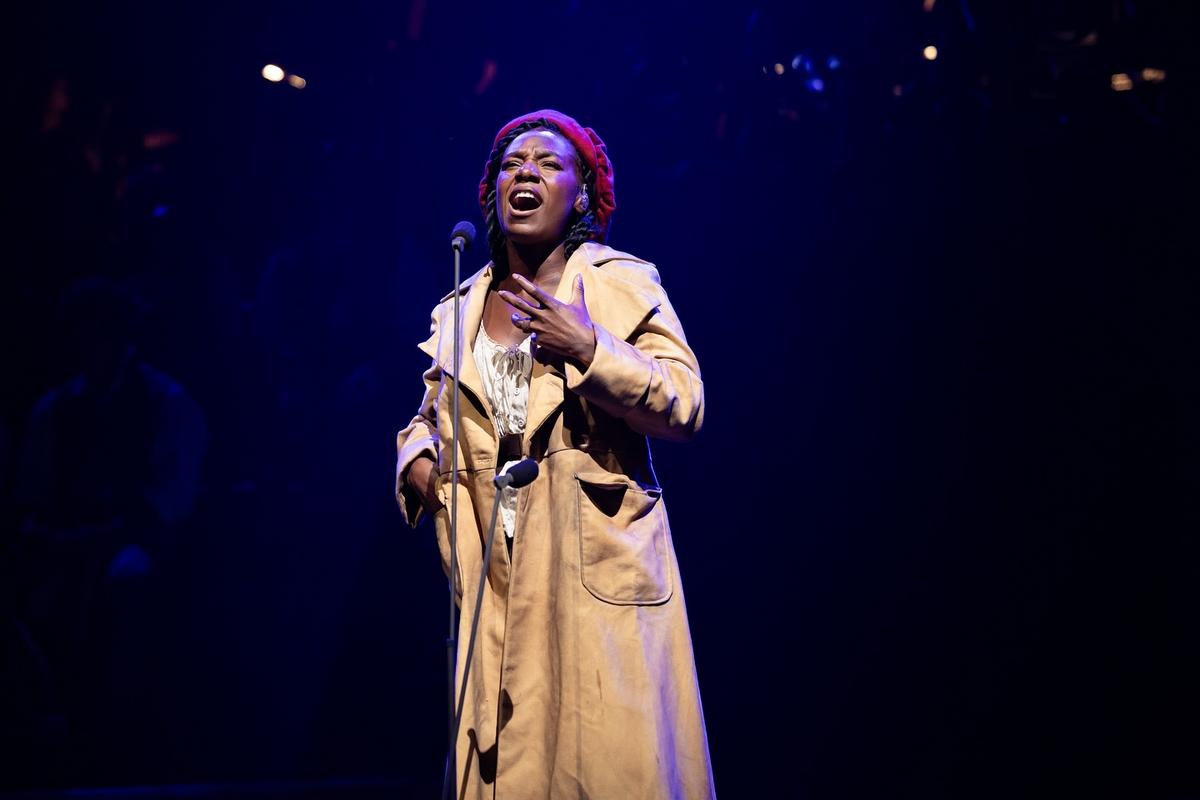
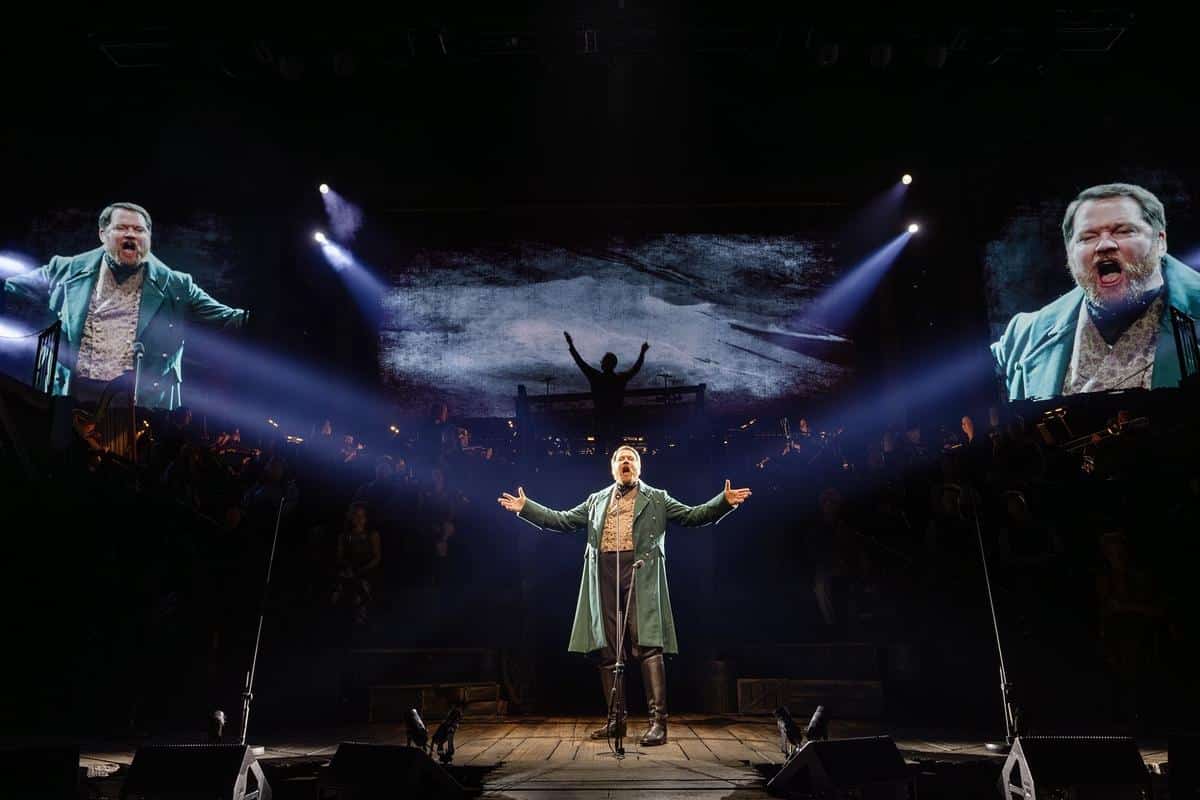
Celebrating 40 years since its’ debut, Les Misérables is now the world’s longest running musical; Within moments of The Arena Spectacular’s opening, it is clear why. While legendary producer Sir Cameron Mackintosh correctly notes the production would succeed with only work lights on an empty stage, The Arena Spectacular boasts 110 world-class actors, musicians, and crew, from 17 nationalities (including one dog), incorporating sensational lighting, a lavishly constructed stage, and phenomenal costuming and makeup.

Complete the picture with a full orchestra and LED screens, in a venue and with effects more associated with rock concerts than musicals, and you have an intensely immersive show, monumentally embodying a ‘more is more’ mantra. While simpler productions of Les Misérables retain the resonance to rouse, the scale and spectacle here create a dazzling and impactful rendition of an unstoppable icon.

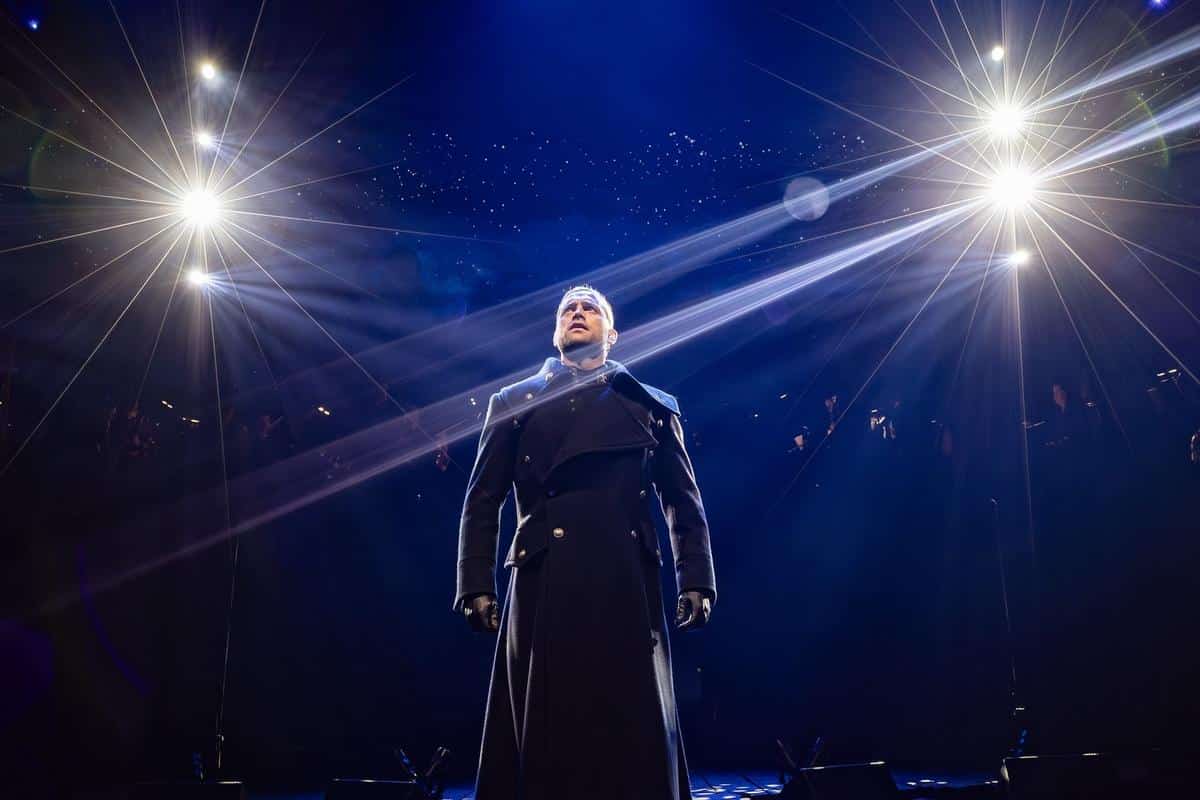
The quality of The Arena Spectacular exceeds expectations, even those informed upon the caliber of the cast and creatives involved; While Bradley Jaden provides a virtuoso performance as Javert the evening I attend, his alternate in the role, Michael Ball, was a member of the original Royal Shakespeare Company production performed in London in 1985, as Marius Pontmercy. The expressively hilarious Marina Prior gives grimy gaud in the role of Madame Thénardier, having played Cosette in the original Australian production back in 1987; A trim looking Matt Lucas charismatically reprises the role of Thénardier opposite her, 15 years after he first performed that role in the 25th Anniversary show at the O2 Arena in London – providing fine comedic relief while also hinting at his character’s attrition from surviving through hardship.

However, it is Lucas’s alumni from the 25th anniversary production who steals the show the night I attend; Tony award winner and Grammy nominee Alfie Boe as Jean Valjean gives a tour de force performance, with exceptional vocal ability unsurprising of a renowned opera singer with resume outside of the musicals, in addition to beautifully nuanced character delivery, showing equal measures of strength and sensitivity in what is essentially the story of his character’s struggles and redemption. Boe’s interplay with other Cast is excellent, the scenes with Bradley Jaden’s Javert especially memorable. Jaden deserves notice for performing Javert with sufficient sympathy, charisma, and recognition to bring likability to such an antagonist; His character’s turmoil and ultimate unravelling are hard-hitting.
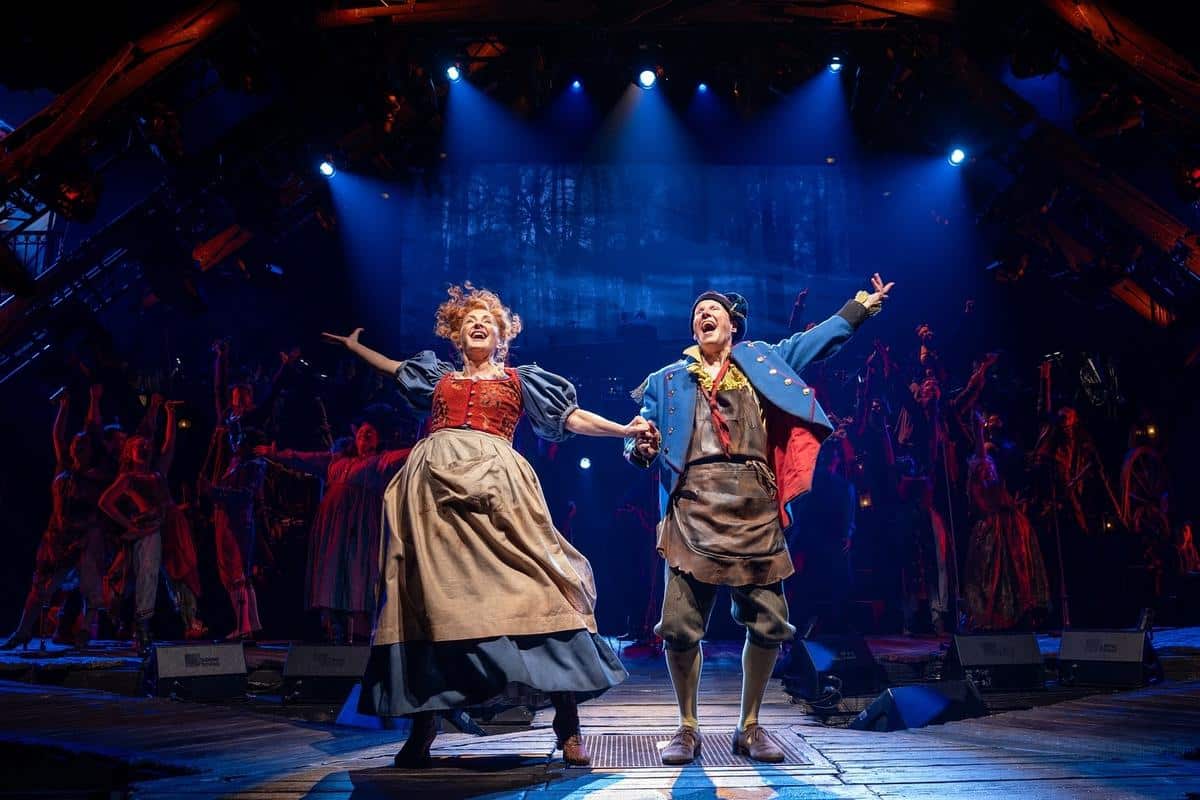
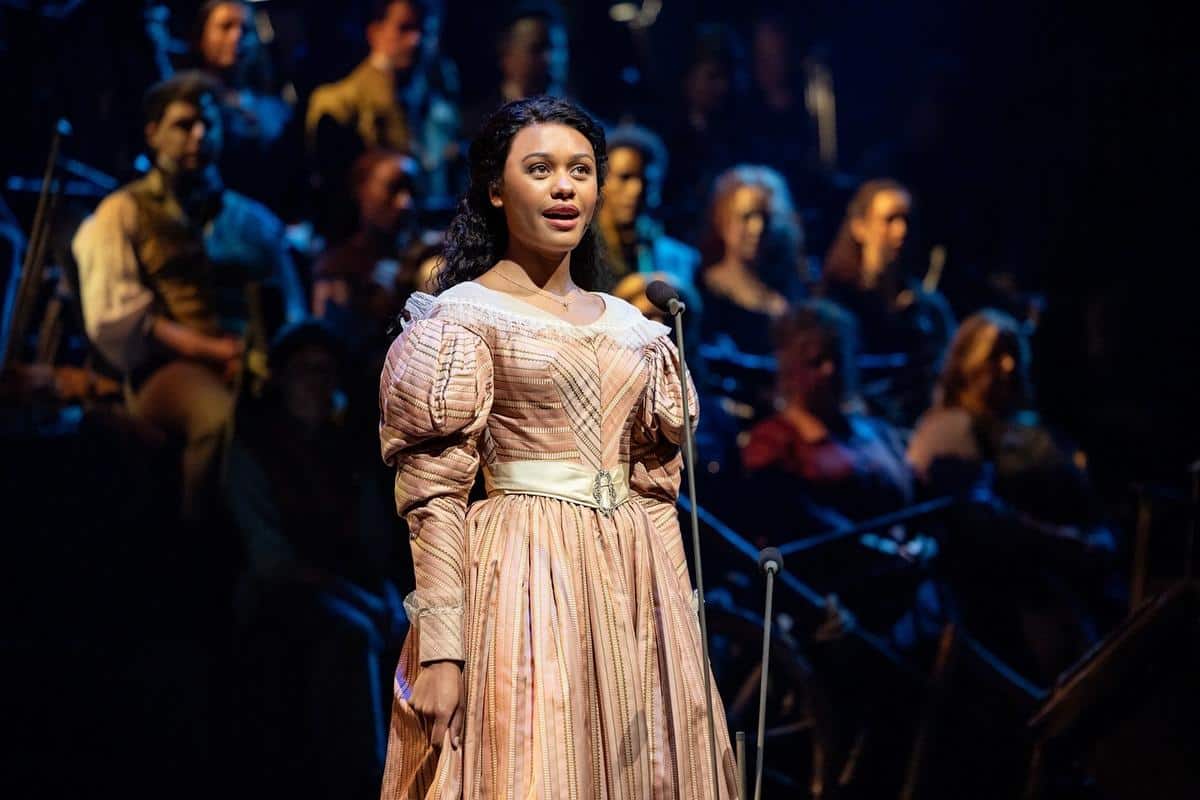
Mary-Jean Caldwell is aching and ethereally lovely in the role of Fantine the evening I attend; The fact this pitch-perfect performer understudies that role, otherwise being credited as Factory Girl in the Brochure, suggests an embarrassment of riches to draw from in the cast. As Marius Pontmercy, Jac Yarrow (or was it Harry Grant Smith?) is another standout, showing strong vocals and great connection, especially in scenes with Beatrice Penny-Touré’s Cosette, and Beth Curnock’s Eponine.

Youngsters Christopher Joseph and Scarlett Sheludko also excel in their respective roles of Gavroche and young Cosette. I did not see the latter, who is reminiscent of a young Lea Salonga, in the curtain call – and suspect that was due to it being after her bedtime. The overall standard of the entire Cast, including the Ensemble, is excellent; All bring presence, dedication, and authenticity in their roles – which they are beautifully made-up and attired to perform. I would be remiss not to mention the Orchestra, under the direction of Adrian Kirk, who tell their sonic story phenomenally.

I do wonder whether the LED screens could have been utilized more throughout the show; While the amplified images of the performers built intimacy and connection which may have otherwise have been lost for audience members in the back rows, the LEDs could have been used to create stage effects (i.e., the rain conspicuously missing during ‘A Little Fall of Rain’) or otherwise fill in plot points referred to but unseen in the production (i.e., Valjean’s feats of strength and bravery). The stage setup, while textured and dynamic, also limits movement of the main characters to a narrow channel, overall. However, such criticisms are picky; The enduring impression and execution of Les Misérables: The Arena Spectacular are triumphant, upholding the legacy of a beloved cultural touchstone, creating its own place in history. The audience were moved to tears throughout, and from their seats in ovation at the conclusion.

To book tickets to Les Miserables, please visit https://lesmisarenatour.com.au/.

Spread the word on your favourite platform!

Spanish Film Festival: El 47

El 47

El 47 Rating

Click if you liked this article

1

The timing of the Spanish Film Festival could not be better, as Sydney plunges into winter, the warmth of the stories, the sun drenched cinematography, and the hot stories from Spain, are truly what the soul needs.

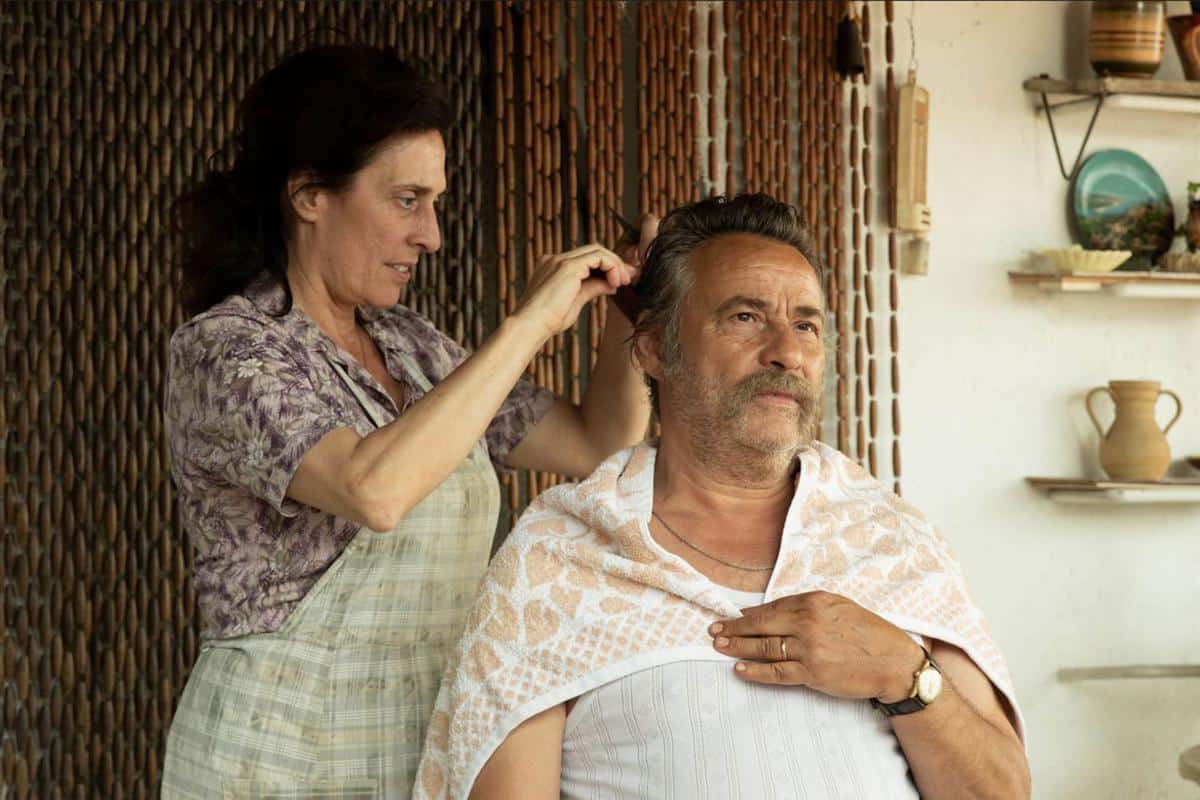
One of the stand outs of the program is the critically acclaimed, multi award winning film about a humble bus driver in charge of route 47 in Barcelona. Little did I expect to be so emotionally moved by a story about a bus driver! But what Manolo stands for is much more than his job, his bus route or career. He comes from a suburb on the outskirts of Barcelona, where each house was built by hand, brick by brick, by Spanish refugees escaping the impoverished and corrupt Andalusian and Extremaduran communities.

Even though the locals bought the land in the Torre Baro district with their own money, they have lived for years as second class citizens of Barcelona, with barely any access to running water, paved roads or political representation.

When Manolo, driving for the city Transport Services, sees the neighbourhood losing its young people, with his own home beginning to crumble away and his wife begging to move away, he decides on one last act of rebellion. After all other politically correct avenues fail – he decides to hijack his bus and take it up to the suburb which politicians labelled unreachable.

The beautiful subtlety of the main actor tugs on the heart strings as you witness what one man’s act of rebellion can achieve. Too often we are told one ‘man’ cannot achieve anything against the ‘greater machine’ but in this true story, that one man’s act of rebellion changes everything!

I stand with Manolo! I want to hijack my own proverbial bus and make a change for the better.

Follow this link to book tickets to El 47 or any other Spanish Films Festival showings @ https://spanishfilmfestival.com/.

Spread the word on your favourite platform!

German Film Festival: Mother’s Baby

Mother's Baby

Mother’s Baby Rating

Click if you liked this article

1

Mothers are supposed to feel an instant, unbreakable bond with their newborn child; or at least, that’s what we’re led to believe. Austrian director, Johanna Moder’s new film, Mother’s Baby, bleakly reminds us that this isn’t always the case.

Forty year old music conductor Julia (Marie Leuenberger) and her loving husband, Georg (Hans Löw), desperately want a baby. When nature doesn’t deliver, they seek the help of Dr Vilfort (Claes Bang), a renowned fertility specialist. In Vilfort’s pristine private clinic, Moder introduces early on an axolotl, a strange looking amphibian that catches Julia’s interest but comes to haunt her (and viewers) later in the film.

With Dr Vilfort’s treatment proving successful, Julia and Georg wait expectantly for the birth of their longed for child. Yet the birth is a difficult one. The baby is whisked away by a medical team as soon as it is born. Moder captures Julia and Georg’s muted shock as they are kept in limbo waiting to meet their baby. When Julia finally gets to hold her baby, she seems underwhelmed, even detached from the child. Julia’s struggle to breastfeed only heightens her disappointment. An overly zealous midwife played by Julia Franz Richter doesn’t help as she pushes Julia to bottle feed instead.

Once home, Julia, long used to being in control in her professional life, continues to struggle to bond with her baby. Usually surrounded by music, the weirdly silent baby she has birthed, starts to unnerve her. Is there something wrong with the child or is Julia paranoid? Hans’ instant bond with their son, who Julia persists in referring to as ‘it’, adds to Julia’s distress.

In one particularly tense moment, Hans returns home from work to be greeted by the sight of Julia engrossed in her music, oblivious to her unfed baby. Julia’s sudden identity shift from world class conductor to stay at home mother has hit her hard. Hans fails to understand, reminding Julia as they argue that ‘It’s what we agreed!’. Is Julia’s lack of maternal connection with her baby a tell-tale sign of postpartum depression or is there something more sinister at play?

Increasingly frustrated by Julia’s unexpected reaction to new motherhood even the normally placid Georg starts to doubt his wife’s mental stability. Returning to Dr Vilfort, Julia insists there is something wrong with her baby, demanding answers from the preternaturally cool physician. In what smacks of medical misogyny, Vilfort condescendingly suggests Julia is the problem. We cringe as Georg joins cravenly with the doctor in agreeing that Julia needs help.

Moder’s psychologically chilling story of new motherhood achieves its aim of unnerving its viewers so that they feel vicariously the altered reality of the postpartum phase. Billed as a dark comedy, the film is inconsistent in creating humour; nonetheless, Moder is successful in capturing the absurdity of motherhood in a world which continues to unfairly insist on idealising maternity.

To book tickets to Mother’s Baby, or any other film in the German Film Festival, please visit https://germanfilmfestival.com.au/.

Spread the word on your favourite platform!

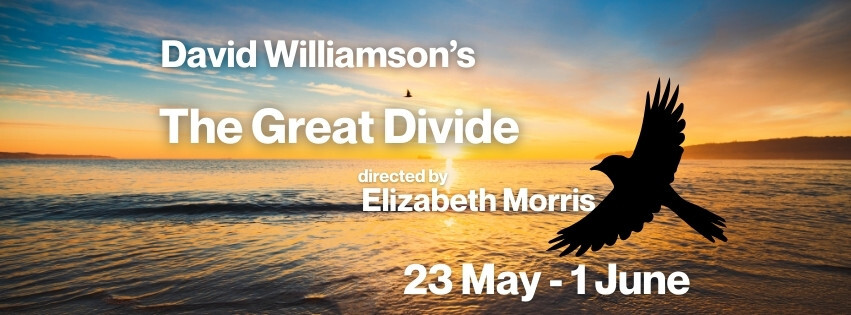
David Williamson’s The Great Divide

The Great Divide

The Great Divide Rating

Click if you liked this article

3

Villanova Players’ opening night of The Great Divide seemed to go off without a hitch. The Ron Hurley Theatre is a great venue for live theatre, with lots of parking, comfy seats, and great acoustics. Trust Google Maps; it may feel like it is leading you astray, but it will get you there. 

With great little bars and restaurants in the area, I tried “The Old Seven” before the show as it was so close to the venue and had delicious food.

With the constraints in BCC spaces, director Elizabeth Morris planned a simple but functional set. The crew helped set the mood with lighting and kept pace with the very fast scene changes.

The play deals with the politics of developer vs local and people’s perspective of what something is really worth to them. Topics are very current – lack of rentals because of Airbnb’s; the modernisation of amenities that drives up costs, which attracts wealthy people able to pay more, further widening the divide between mogul and battler.

The play is dialogue-heavy with innuendos and references the older audience members related to. Although touted as a comedy, it is slightly reminiscent in style of another Australian classic, “Black Rock.” It is layered with deceit, manipulation, vulnerability, and naivety but delivered with comedic relief.

Alex, the politician standing for mayor, was played by Carissa. She gave the character an interesting voice that suited Alex as unlikeable and cold. As a developer and investor she is only out for herself although tries to justify it with manipulation and giving false hope.

Jane Binstead and Jade Davis played a mother and daughter combo that the audience recognised. Jade, as the daughter, Rachel was sullen and pouty while taking onboard the unfolding events. Jane’s character Penny was a solo mum who ran for mayor to try and protect her way of life.

Nathan Seng, the newspaperman, reminded you of someone who lived in a small town, surfed, and wanted to only print the truth.  Ken Dutt played the interviewer, dressed in the standard black pants and white shirt, making brief appearances. Troy Bullock, the councillor, helped the play to feel like you were back in the 80s with his dress and mannerisms.  Victoria McCrystal’s character ‘Grace” was reminiscent of Kirsten Vangsness. Everyone could be clearly heard.

The cast moved through the very fast scene changes in fast black outs and their enthusiasm for the play was enjoyed by the audience with chuckles and comments in appropriate places.

Kudos to the director, cast, and crew for putting on an enjoyable community theatre production. It is always worth checking out the local theatre scene. Throw in a trip to one of the great bars and eateries around the suburbs, and you have a fabulous, affordable night out.

To book tickets to The Great Divide, please visit https://www.villanovaplayers.com/.

Spread the word on your favourite platform!

Subscribe to What's The Show

Reviews, show news and what is on, straight to your inbox.