In today’s world, where the terms ‘unpredictability’ and ‘uncertainty’ have become part of our everyday vocabulary, is it no wonder that we, as a society, are craving more and more control over our lives? To feel safe, repetitive routines and rituals are formed. Activities and nutrition fuel our bodies and minds. Social connections satisfy our need for feeling valued and accepted.
And yet, beyond our scope, there are greater forces that exist in our world that we have no control over. Circumstances of good vs evil; of hate and suffering; of larger-than-life power plays beyond our human understanding. So we look for strong leadership (of countries, corporations or institutions) to restore peace and harmony. To fix and put right. To give us hope. To make us feel safe once more.
But, as humans, are we naive to think that peace is the answer to eradicating evil? Or does evil exist as part of our nature, if all hope is lost?
In director Steven Mitchell Wright’s reimagining of Nigel Williams’ adaptation of Lord Of The Flies, we examine how the science of evil can slowly creep into the human psyche, and seek to dismantle order and destroy others in its wake.
From the moment I enter the theatre, award-winning director Steven Mitchell Wright transports me in a moment of childhood innocence, where a deeply-slanted white stage faces in towards the audience, exemplifying a pure boys-being-boys existence: (played by adolescents and non-gender actors). Boys playing joyful sport together, free as flies, even in an uncertain world.
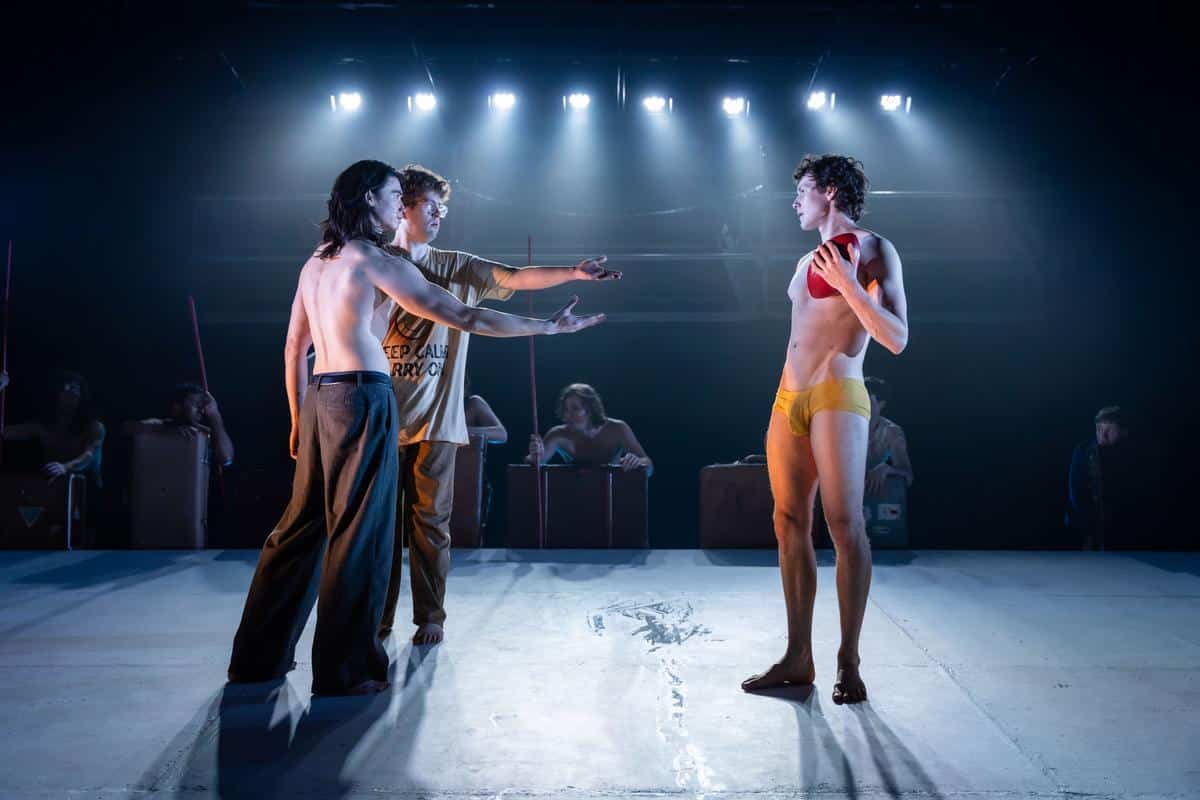
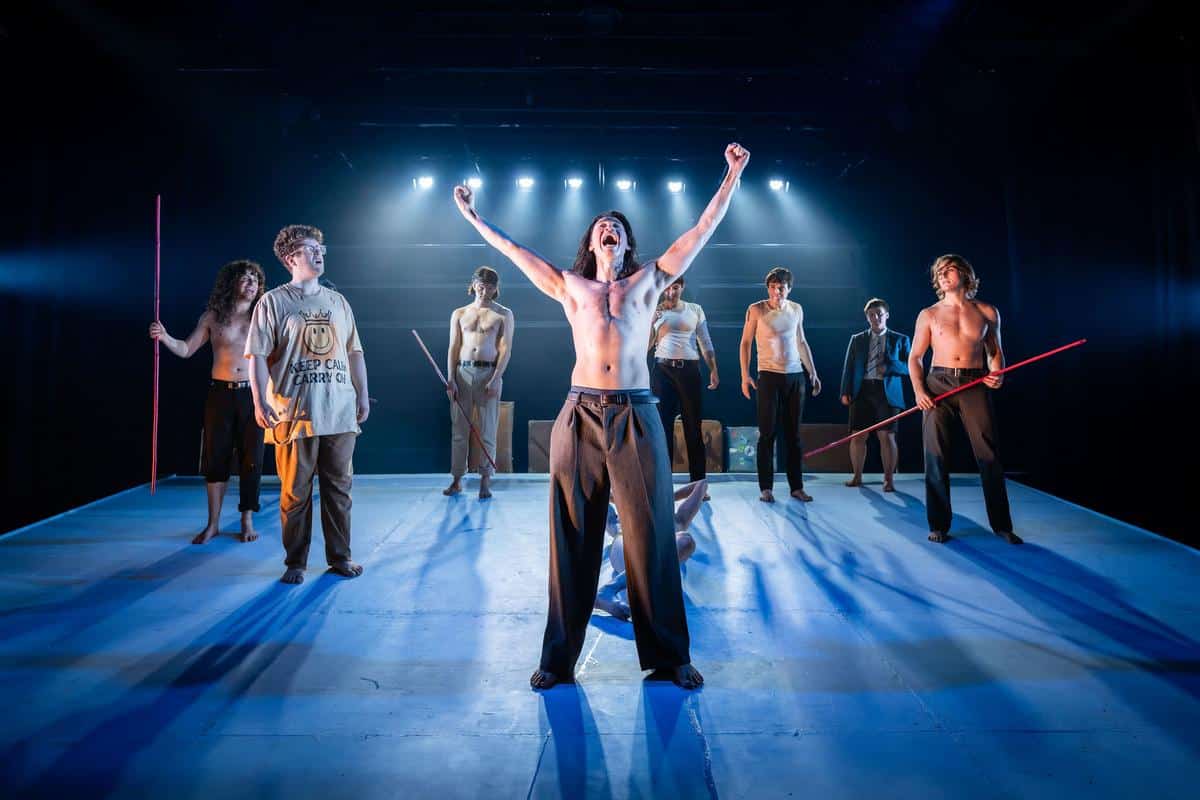
When these boys are put on a plane out of England to escape an atomic war, crash-landing on a remote island, we are witness to a different kind of battle – the survival-of-the-fittest. We are transported to a land where the forces of good are distorted slowly into evil – from innocent boys basking in adventure to descending into tribal warfare. Asking us: if evil is rooted in our nature – or borne from ego-driven madness?
For in this no-holds-barred classically brilliant production, Wright looks at every line in the script and explores the timing of its statements for a new generation. Much like looking into a mirror, he begs us to ponder: Have rules become cloudier? Has leadership lost even more of its meaning? Has the ball of ‘authority’ become so weak and so disposable, that it can be thrown around willy-nilly, like an Aussie rules football, when it comes to our modern survival? Or does it come complete with sharpened spears and a winning-at-all-costs mindset?
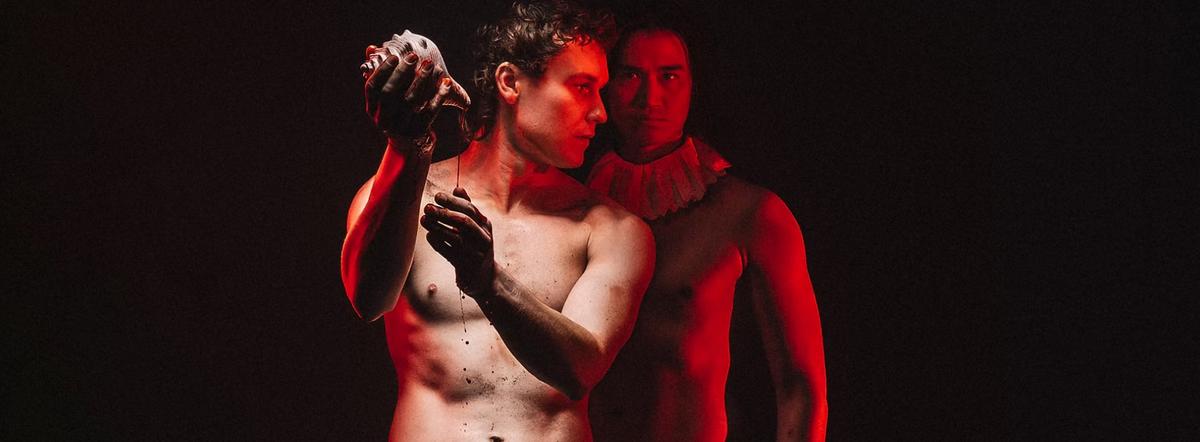
Brilliantly played, staged and choreographed, Steven Mitchell Wright’s immersive staging also places modern technology at the forefront of his production to amplify the madness of evil. Actors carry a selfie stick with an iPhone camera projected onto the stage to amplify the terror of savagery. A dance mob forms to symbolise freedom with undertones of carnal desires and the birth of wild savagery. Animalistic chants and wild physical movements intensify the killer instinct of a hunter seeking its prey. Boys in fight-or-flight mode constantly on guard – losing their train of thought in a world without routine, becoming animal-like in nature. The effects of red lights depicting madness, effectively created by lighting designer Ben Hughes and alerting sounds of nature infiltrating our minds, such as tropical thunder and rain pouring down, were effectively created by sound designer Jack Burmeister – inviting us into the fearful world existing even within nature itself.
The cast of this show were no less than exceptional. Angus Leighton as Ralph exemplified the exact leading man energy and machismo required to play a budding showman, a leader in looks, and in bark; with no bite. Yet, watching his character’s ego-crushing demise was both heartbreaking and riveting.
Sean Yuen Halley as Jack commanded the stage immediately with his intense energy of unapologetic arrogance and ferocity, seeking to seize control of everything in his world, yet losing control of himself in the process. Jack’s descent into madness was depicted so methodically and so seamlessly, launching into what appeared to be a devil-like possession that was flawlessly executed.
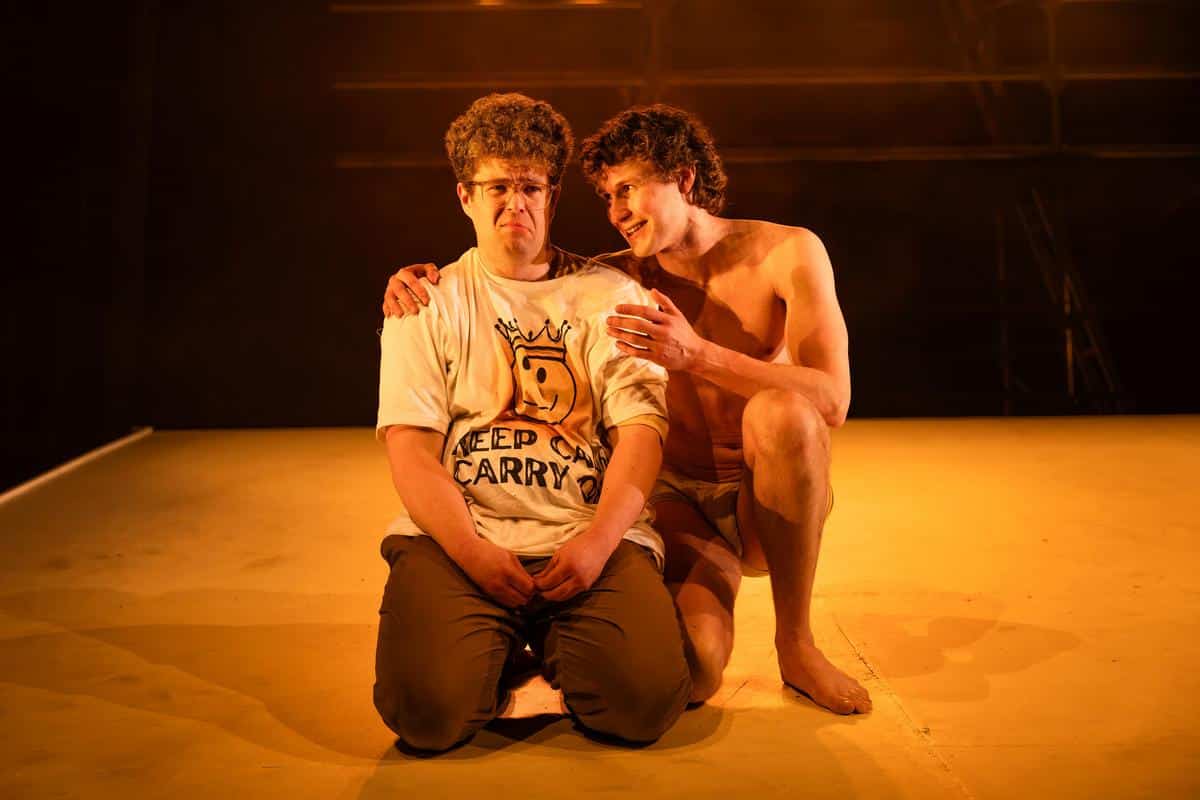
But in the role of Piggy, my most highest of accolades goes to Oliver Cowen. Wearing his heart on his sleeve, Cowen brought the audience to tears with his angelic presence, beyond the obvious childhood taunts and physiological judgements: to symbolise the moral compass within us all. Cleverly balancing the show out with the hope – that there is good in people. For this alone, I congratulate Cowan as not only embodying the backbone of this production, but the heart and conscience of this show as well.
All in all, this production of ‘Lord Of The Flies’ is a must-see. It is an exceptional production for the 2026 season at Theatreworks that should not be missed.
To book tickets to Lord Of The Flies, please visit https://www.theatreworks.org.au/2026/lord-of-the-flies.
Photographer: Image 1: Oliver Cowen and Angus Leighton Image 2: Sean Yuen Halley, Oliver Cowen, and Angus Leighton Image 3: Blaise Tindale, Oliver Cowen, Charlie Veitch, Sean Yuen Halley, Oliver Gorringe, Declan Magee, Darcy Crawford, William Bastow