The Sydney Opera House honours our First Nations by fostering a shared sense of belonging for all Australians, and we acknowledge the Gadigal, traditional custodians of Tubowgule, the land on which the Opera House stands.
The Choir of Man opens at the Sydney Opera House this summer. The international smash hit returns to Australia after sold-out US and European tours and direct from a four-year West End run that welcomed more than 280,000 people across a thousand performances.
Set in an on-stage pub, an ensemble of nine multitalented instrumentalists combine foot-stomping singalongs and rollicking entertainment in this uplifting and celebratory production. Featuring classic rock, pub anthems and pop hits from artists such as Queen, Adele, Guns & Roses, Paul Simon, Avicii and Sia, this riotous night out is the greatest trip to “the local” you’ll ever have.
Cast highlights: Mark Loveday (Barman), Ifan Gwilym-Jones (Maestro), Cal T King (Beast), Conor Mellor (Joker), George Knapper (Handyman), Paul McArthur (Poet), Kristian Morse (The Hard Man), Tyler Orphe-Baker (Bore), Tristan Whincup (Romantic). Resident Director and Swing Norton James, with Alex Mallalieu and Bradley Walwyn as Swings.
Creator and Director Nic Doodson: “The Choir of Man is about individuality, generosity, humour and the joy of making music together. It’s a celebration of connection and belonging, brought to life by extraordinary voices and a soundtrack you already know and love.”
Sydney Opera House Head of Contemporary Performance Harry Prouse: “Brimming with joy, The Choir of Man is an incredible success story… It’s pure entertainment – equal parts pub night and live gig, all in an ode to friendship.”
KEY INFORMATION
WHAT: The Choir of Man
WHEN: From 11 December 2026
WHERE: Studio, Sydney Opera House
PRICES: From $69.90 + $8.95 booking fee
INSIDERS PRE SALE: 9am, Tuesday 11 August
WHAT’S ON: 9am, Wednesday 12 August
GENERAL PUBLIC ON SALE: 9am, Friday 14 August
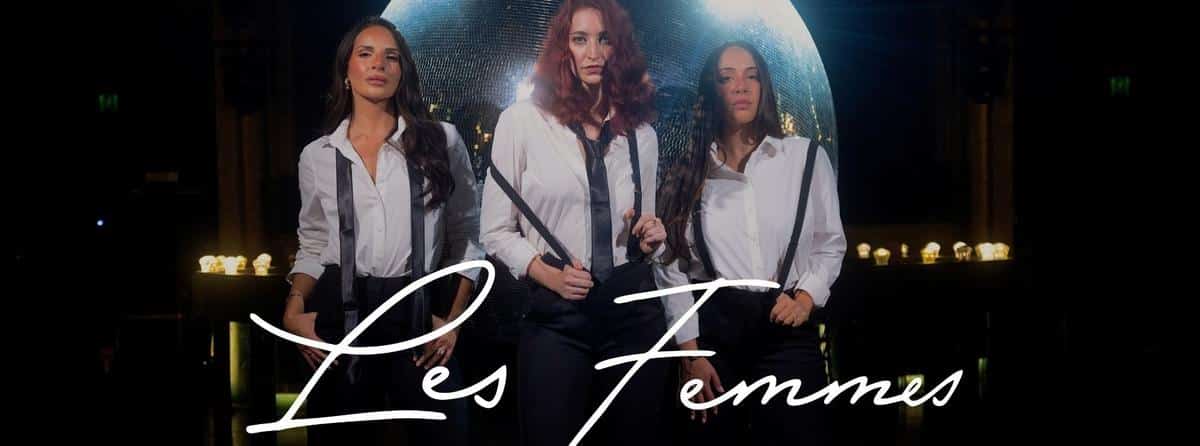
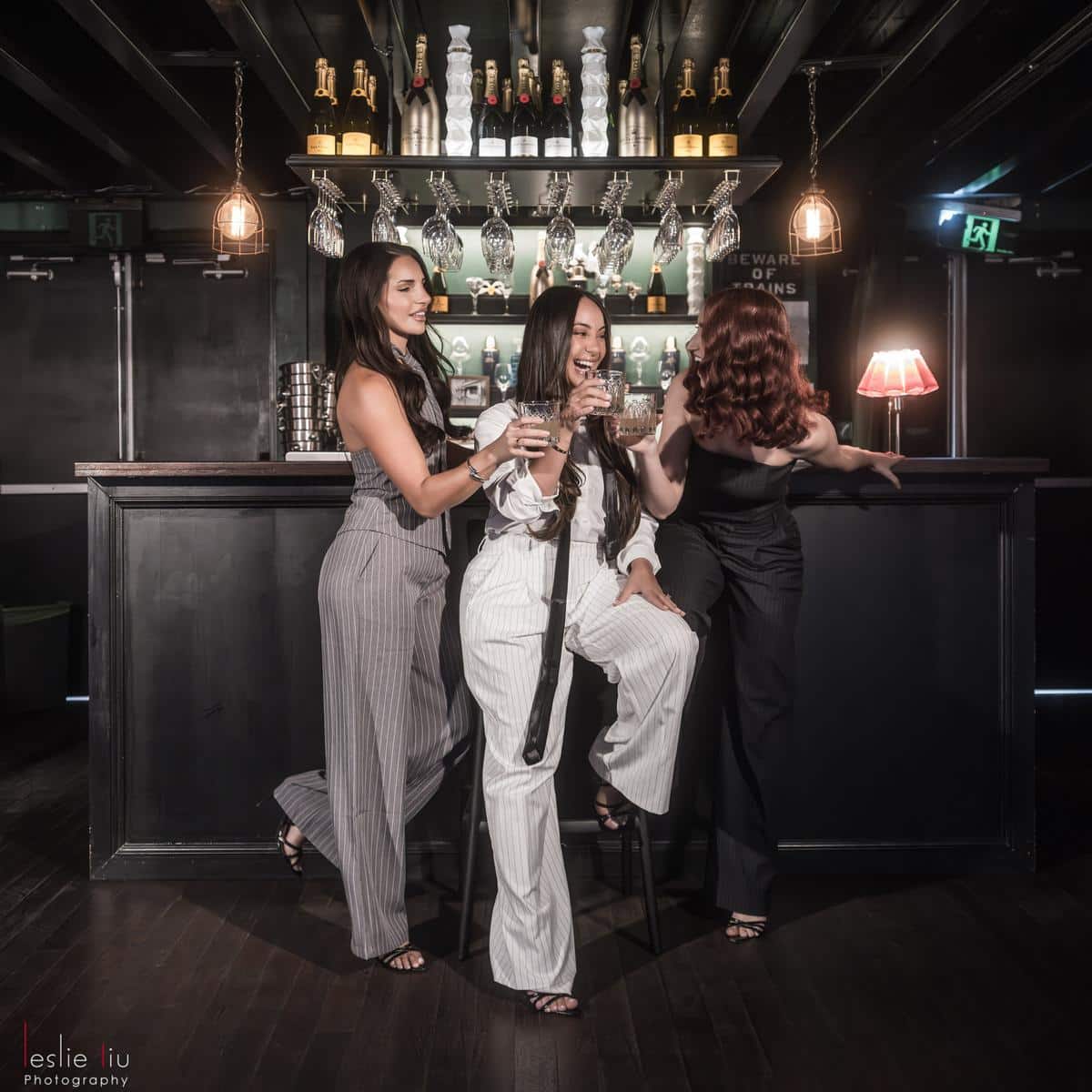
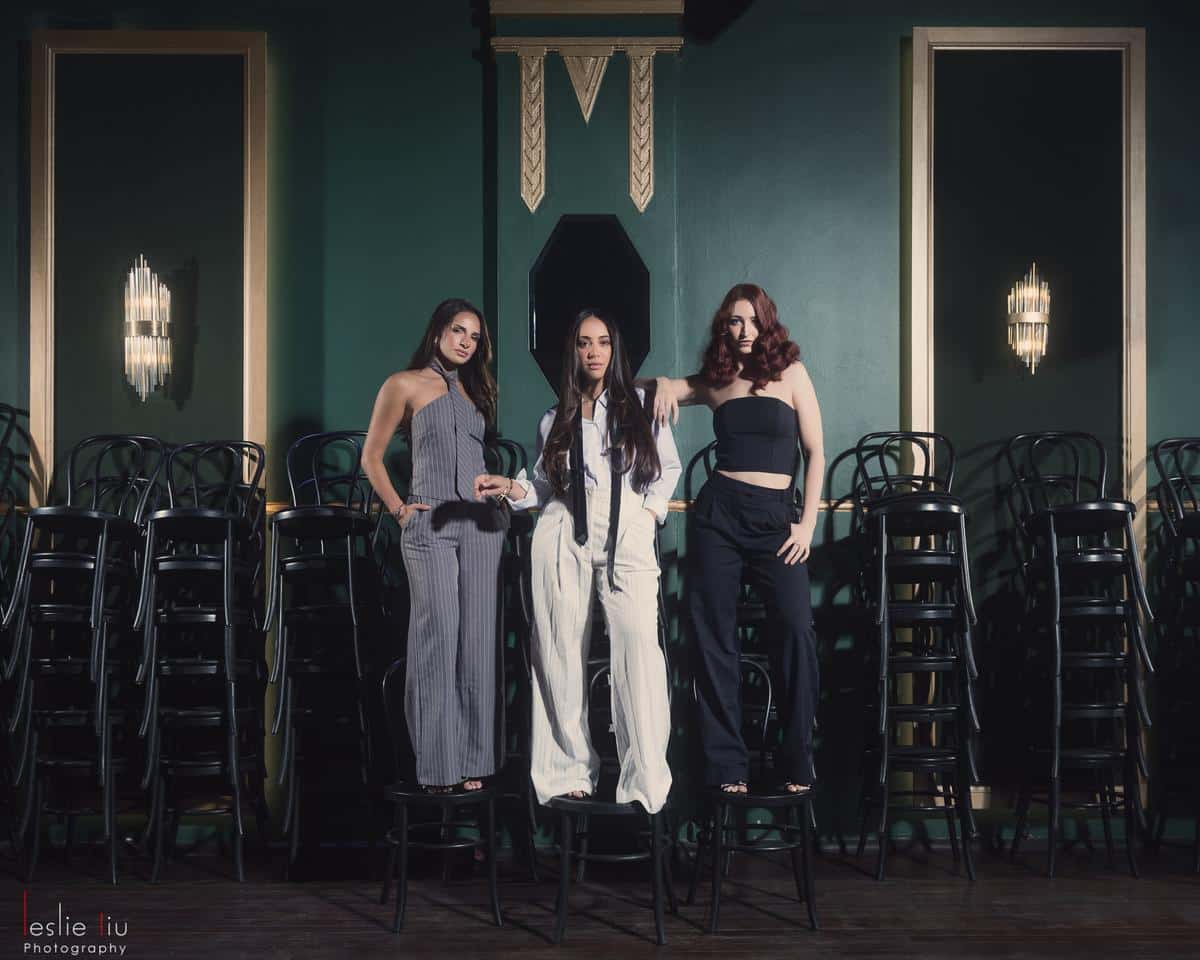
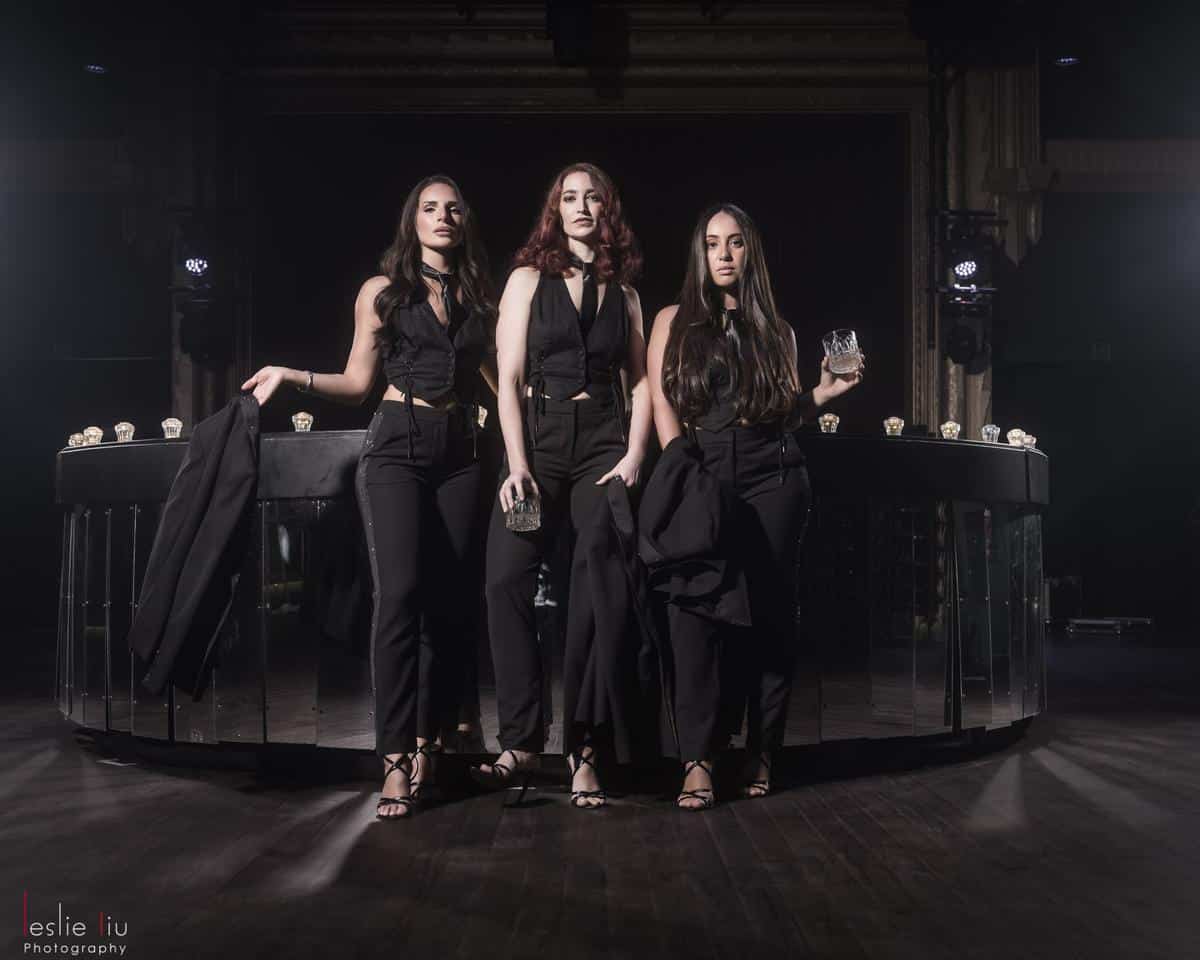
Les Femmes’ tagline says it all – “Iconic Male Songs – Powerhouse Female Voices”. Indeed, it is their powerful voices and so much more that made their performance at The Grand Electric truly electrifying. The rich soulful voices of the Les Femmes trio are accompanied by the rhythmic twist of hips and sharply succinct dance choreography.
Emma Mylott, Tia Gigliotti and Jacinta Gulisano opened with a strong rendition of Sinatra’s That’s Life, which had the audience immediately cheering. With almost a full house for Sunday’s gig, The Grand Electric was the perfect home for a cabaret style performance. The space inside was not too large, and the stage jutting out with a small runway brought the singers closer to the audience at different times.
Les Femmes continued with iconic songs from the past bearing a Romantic theme. Singing the famous line “You’re just too good to be true”, they sang Frankie Valli’s Can’t Take My Eyes Off You with heart and heavenly harmony. They continued with a medley of beautiful songs such as How Deep is Your Love, When a Man Loves a Woman and Feeling Good (“It’s a new dawn, it’s a new day, it’s a new life for me, oooh, and I’m feeling good” – you know you want to sing along!) These songs highlighted their rich and sensual voices singing in harmony. The high notes were delivered powerfully and sustained with apparent effortless skill but which must have taken countless hours of rehearsal.
There was a touching dedication to Les Femmes’ fathers acknowledging the musical influence on them growing up, with Elton John’s Your Song, The Temptations’ My Girl and Cat Stevens’ Wild World being sung. For this part of the show, the women sat on stools and reminisced, and Jacinta’s dedication of Piano Man to her Grandfather was very sweet. One of my favourite songs was featured during this set, Toto’s Africa. Encouraging audience participation, we sang along and even did a ‘Mexican Wave’ from one side of the theatre to the other and back.
The next segment were songs dedicated to ‘The Players/ The Charmers’ and the mood became funkier, featuring a medley of songs such as My Pony, Justin Timberlake’s Señorita, Stevie Wonder’s Part Time Lover, Everybody (Backstreet’s Back) James Brown’s Get Up, I Feel Like a Sex Machine. The room’s energy changed with the theme and I found myself marvelling at these ladies’ talent from switching from swing and R & B’s soulful songs, to the more modern and funkier songs. The audience witnessed the change and were vocally showing their support, clapping and dancing in their seats.
Les Femmes combined their themes with audience participation. The three singers held a “fun quiz”, asking some male audience members questions to see which category of ‘Good Guy or Charmer’ they fit into. Fortunately they were good sports about this. The women were great hosts, and in-between singing they infused humour throughout their show at the right moments.
After a short interval, Les Femmes returned to the stage and performed their next set, dedicating this part to ‘The Good Guys’ and kicking it off with a fantastic version of Black Box’s Fantasy. I was very happy to hear this one, because my first ever CD was Black Box’s Dreamland! Of course, Barry White’s Can’t Get Enough of Your Love Babe, Bee Gee’s Night Fever and Staying Alive were part of the medley for this theme.
By now, it was astounding hearing how versatile Gulisano, Mylott and Gigliotti’s voice ranges were. There was a mix of songs spanning decades, and the spin they put on these well known and loved songs was impressive.
When one performer took the lead for part of one song, the other two performers supported them with angelic harmony. The three singers had their opportunities to shine and one such highlight was during James Brown’s It’s a Man’s Man’s Man’s World, and listening to their reaction of cheering and whistling, the audience thought so too.
To end their 2 hour show, the choice of Australian well known songs had everyone standing, dancing and singing. The medley included Daddy Cool’s Eagle Rock, INXS’s Never Tear Me Apart, Darryl Braithwaite’s The Horses, John Farnham’s You’re the Voice and one of my absolute favourite songs, Dragon’s April Sun in Cuba.
At this point, I found myself wondering if there was anything these three singers couldn’t do. They had showcased every genre of music, performed countless iconic male songs spanning decades, and danced with incredible energy and passion. Their performances were an everlasting love letter from them, to the beauty of music. Everyone would have left the theatre singing different songs. Les Femmes is not to be missed!
Duration: 120 minutes Location: The Grand Electric, 199 Cleveland St Sydney Tickets: www.bit.ly/3UlHCq4
The chemistry between Nicolas Altstaedt and Thomas Dunford was evident on an empty stage on Saturday night. The audience was ready for Altstaedt’s known technical style combined with Dunford’s virtuosity and for a conversation between a cello and a lute. We were immediately transported back to the Renaissance age with Marin Marais. Somewhere in Spain, Portugal or France, silk full skirts were rustling as courtiers palms met in a measured dance in an opulent room of gold and blue. The dexterous fingers of Dunford played a bell-like melody which was answered by Altstaedt’s honeyed tones as the notes lingered in the air.
La Leclair changed the tempo as a fiery melange of fast rhythms left a crackle of passion reflecting the composer’s known volatile nature. Then the audience was left alone with Dunford’s arrangement of Bach’s Cello Suite no 1 in G major with a display of the classic intricate technical perfection demanded by a maestro.
A return to the court of Versailles with more Marais’ Fete Champêtres offering a graceful dance and then a passionate Spanish piece allowing both musicians to move through the intricate ornamentation with speed and panache. Glimpses of a palace garden party came to mind with musicians playing delicately.
After the interval, Altstaedt sat down for Bach’s Cello Suite No 5 in C Minor, a piece written especially for the cello allowing the instrument to really sing. Sombre notes and a melancholy mood were combined with nimble playing from Altstaedt. For music aficionados, research the analysis of each movement and the techniques required, for the audience, it was a time for reflection and thought.
We returned quickly to pared down harmonies with Pärt’s Spiegel Im Spiegel, followed by Duparc’s Cello Sonata in A Minor. We returned to Marais’ courtly world with Le Voix Humaines imitating the inflexions of the human voice with a sombre elegance with cello and lute weaving between tones.
Marais’ Grand Ballet was all Baroque elegance testing each instrument and musician with showy ornamentation, bold gestures and complex bowing techniques required. It is a theatrical piece designed to be grand and majestic and it was.
The finale of Le Tourbillon was in the title, a whirlwind of virtuosity with a conversation moving to a debate between the cello and lute, ending in a flourish.
The audience was treated to a post-conversation with both Altstaedt and Dunford but the music said as much and was all that was needed.
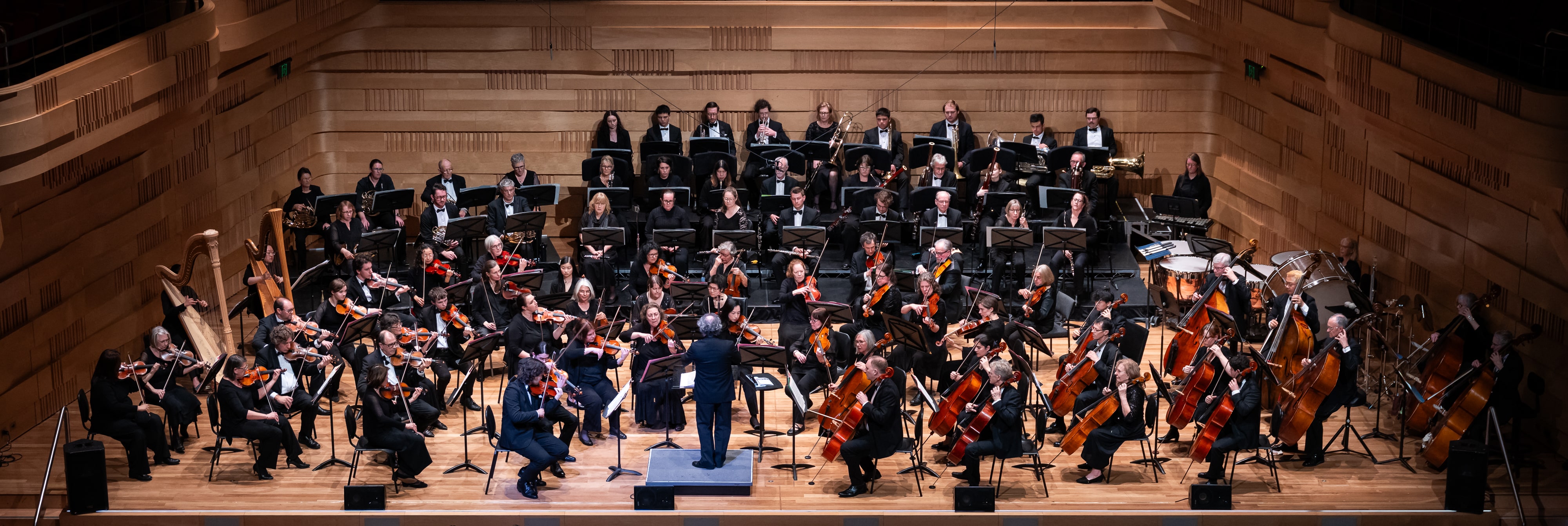
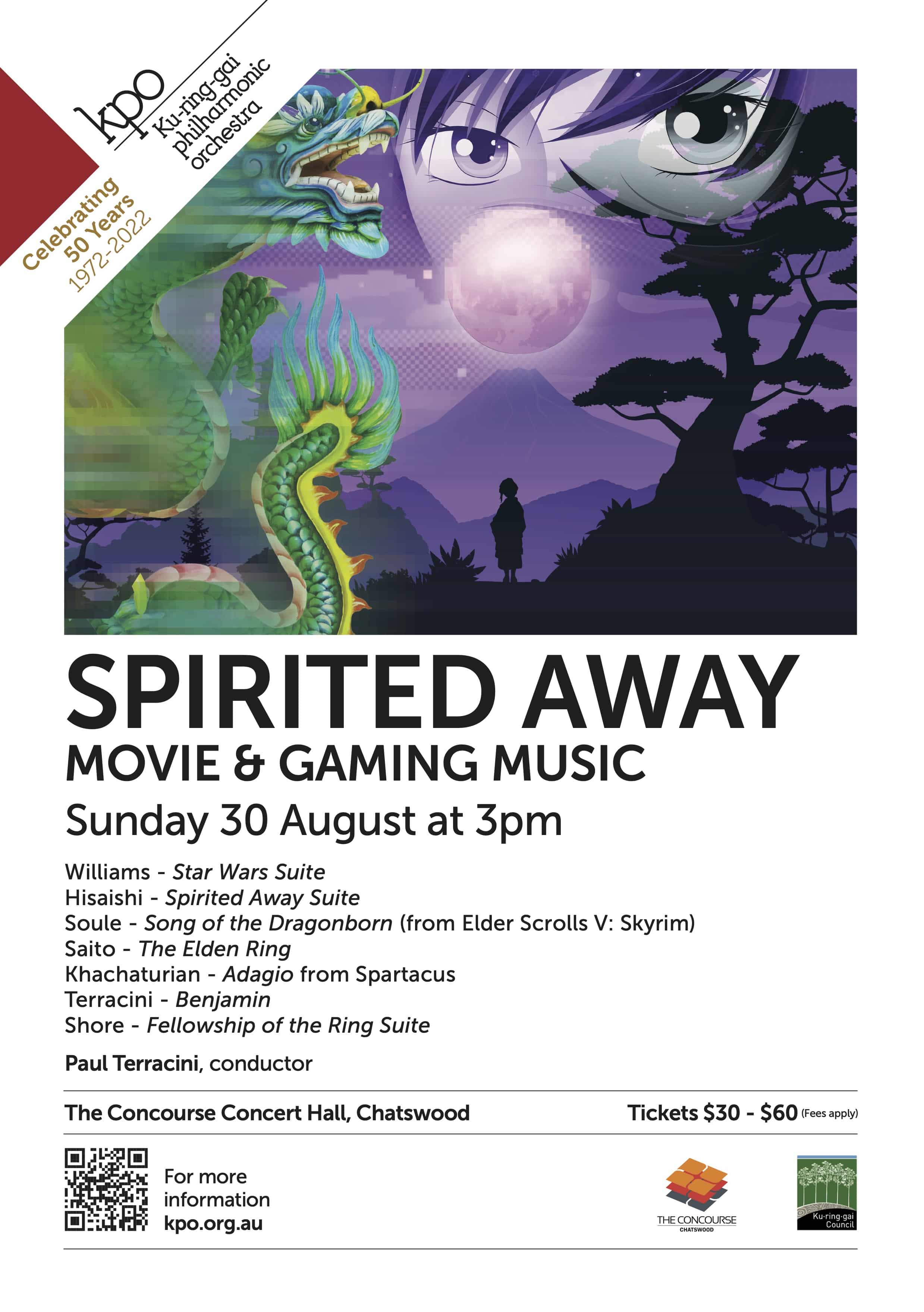
The highly anticipated “Spirited Away” concert by Ku-ring-gai Philharmonic Orchestra brings the fun and excitement from the big and small screen to the concert stage this month.
The concert’s title comes from Spirited Away, the cult-classic animated film from 2001, directed by Hayao Miyazaki and produced by Studio Ghibli with exquisite music scored by Joe Hisaishi. The movie was a landmark in animated cinema and told of a 10-yr old girl, Chihiro, who stumbled into a mystical spirit world. It is the 25th Anniversary for this and the iconic score The Fellowship of the Ring – just two of many powerful and evocative pieces the KPO presents in the popular-themed annual concert.
Spirited Away was the first hand-drawn, non-English language film to win the Academy Award for Best Animated Feature. It has been hailed by many critics as one of the greatest animated films ever made. Its composer, Joe Hisaishi, has had a working relationship with the film’s director, Hayao Miyazaki, similar to the collaboration between John Williams and Steven Spielberg. Hisaishi and Miyazaki first worked together in 1983 and since then they have produced many of the most beloved animé films such as Laputa: Castle in the Sky, Princess Mononoke, Kiki’s Delivery Service, Spirited Away, and Howl’s Moving Castle. Several of Hisaishi’s animé scores have achieved over 100 million streams on Spotify, making him one of the most commercially successful film composers in history. Hisaishi’s music has been described as magic, emotional and diverse; blending minimalist piano, a grand orchestral sound and traditional Japanese elements. It moves smoothly from gentle and sad to bright and scary. Many will be familiar with the song of The Dragon Boy (on Netflix).
The Fellowship of the Ring, the first film in the Lord of the Rings trilogy, won four Academy Awards, including Best Original Score at the 74th Academy Awards in 2002. Canadian composer, Howard Shore, scored all three Lord of the Rings films and continued his collaboration with director, Peter Jackson, in The Hobbit. Howard Shore has vast experience in a multitude of musical genres including jazz, rock, and pop and was the original music director on the iconic Saturday Night Live television program. His highly evocative music for the Lord of the Rings trilogy has made him one of the most influential composers for film.
Epic, atmospheric soundscapes from Nishiki Tsukasa Saitoh come next from the 2022 action video game The Elden Ring (main theme), weaving orchestral grandeur with haunting melodies. Star Wars Suite by John Williams adds intergalactic thrills. Multiple generations know the iconic opening credits “In a Galaxy far, far away” from the original 1977 movie by George Lucas, which went on to become a series of nine. Aram Khachaturian’s ‘Adagio from Spartacus’ was originally scored for the ballet Spartacus and later adapted for the TV series ‘The Onedin Line’. The music evokes classic sailing vessels and the grandeur of maritime adventure.
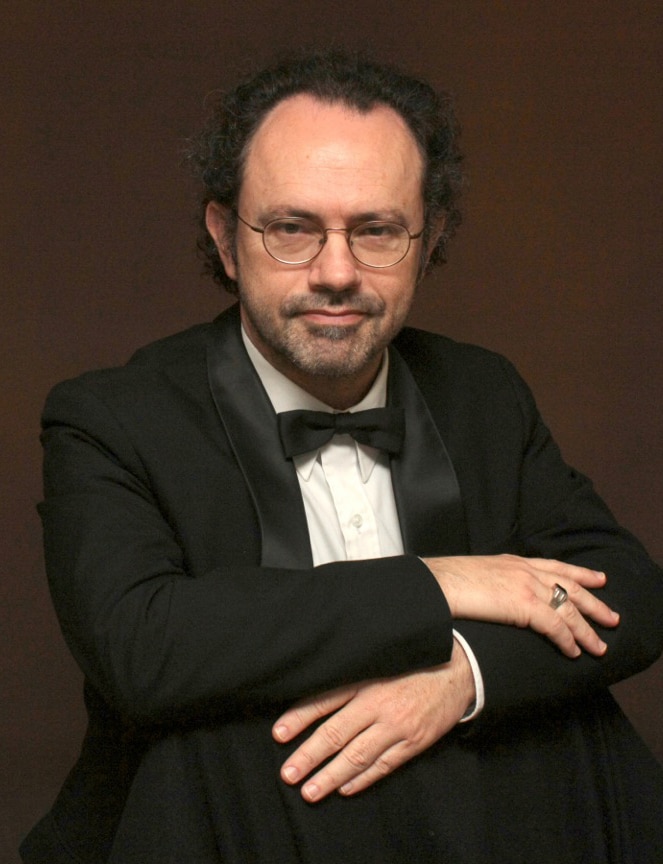
Jeremy Soule’s ‘Song of the Dragon Born’, blending classical and Nordic influences, is the iconic theme released in 2011 for the game Elder Scrolls V: Skyrim. Finally, KPO’s own Artistic Director Paul Terracini features, with his score for ‘Benjamin’ from the 1997 film Hymns of the Forefathers, which then became a popular TV series.
Don’t miss this spectacular musical event, Sunday 30 August from 3pm at the Concourse!
Tickets: Standard $60 | Concession $45 | Student/Child $30 | Family (4 tickets, max 2 adults) $150 Bookings and information: www.kpo.org.au
Spread the word on your favourite platform!
Subscribe to What's The Show
Reviews, show news and what is on, straight to your inbox.