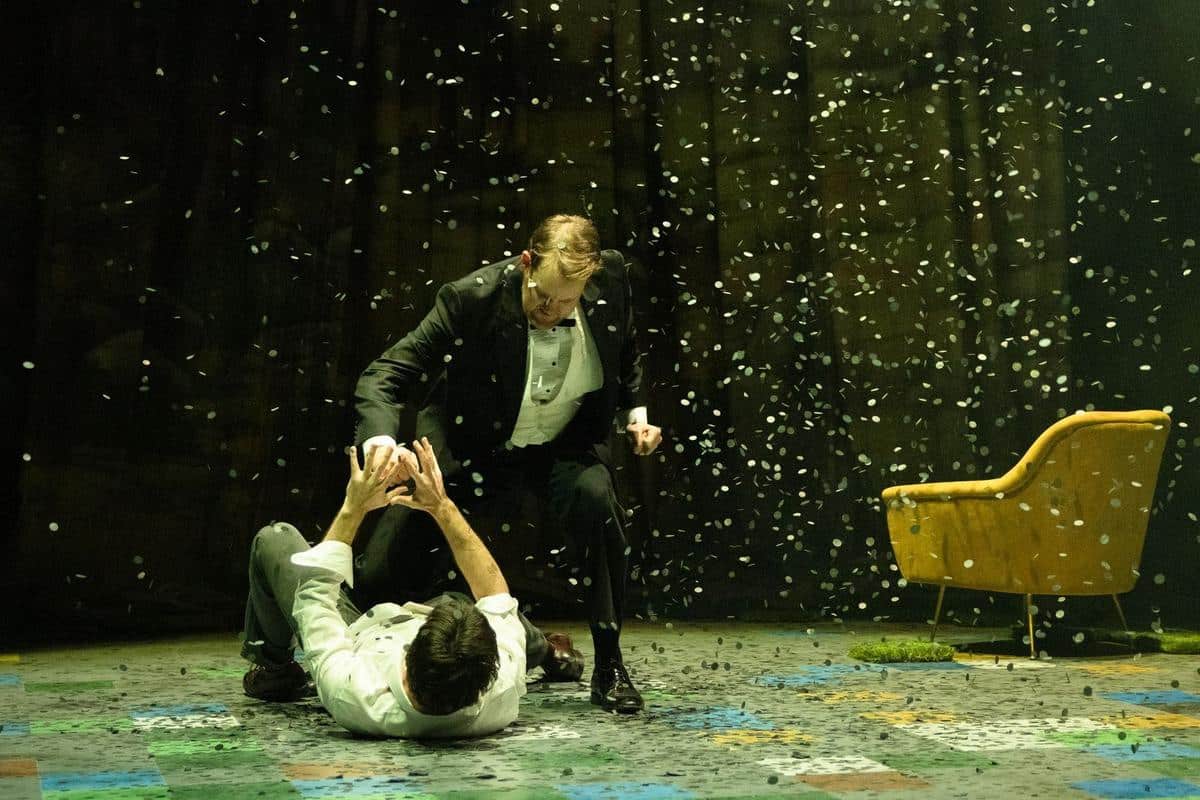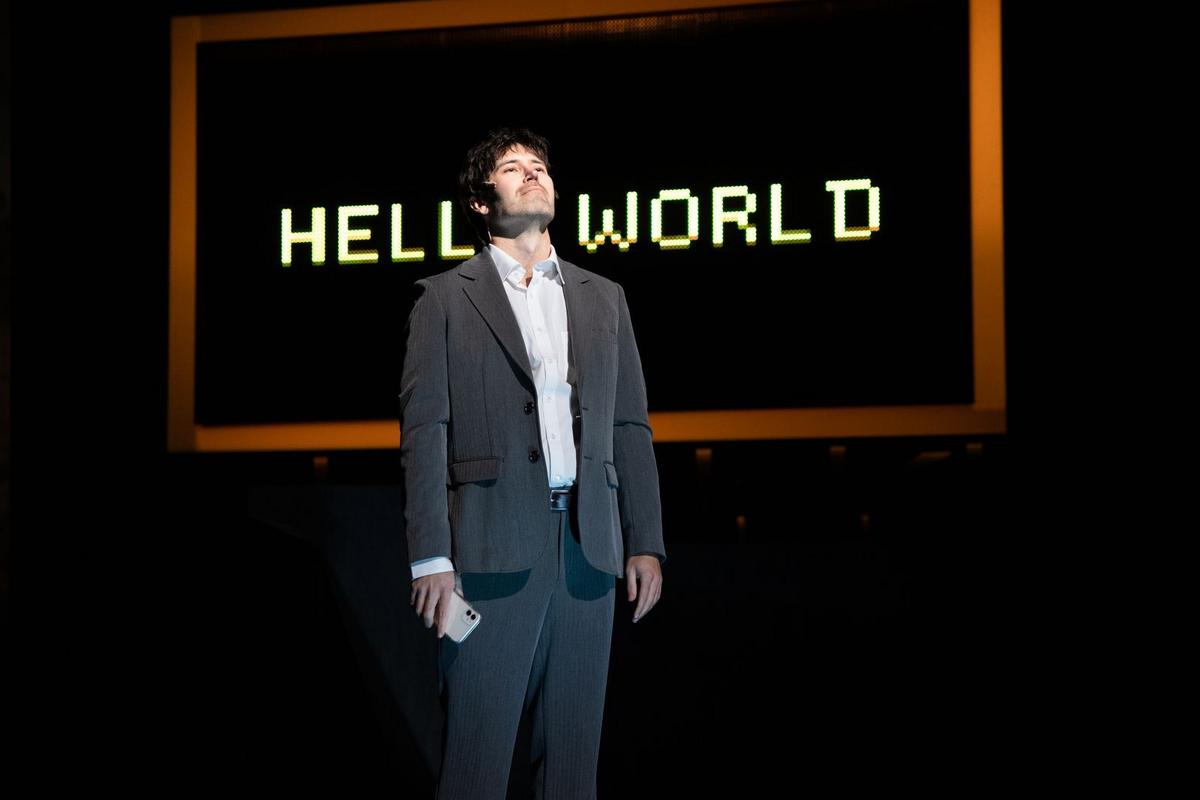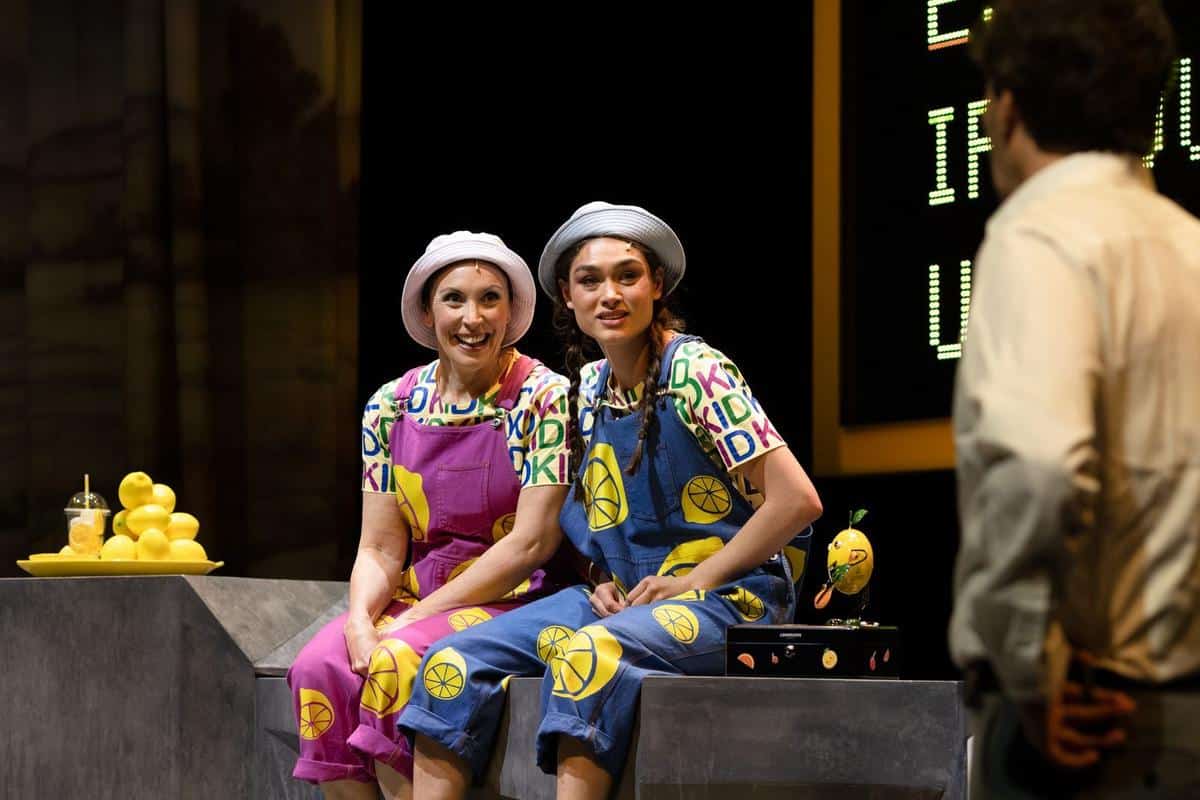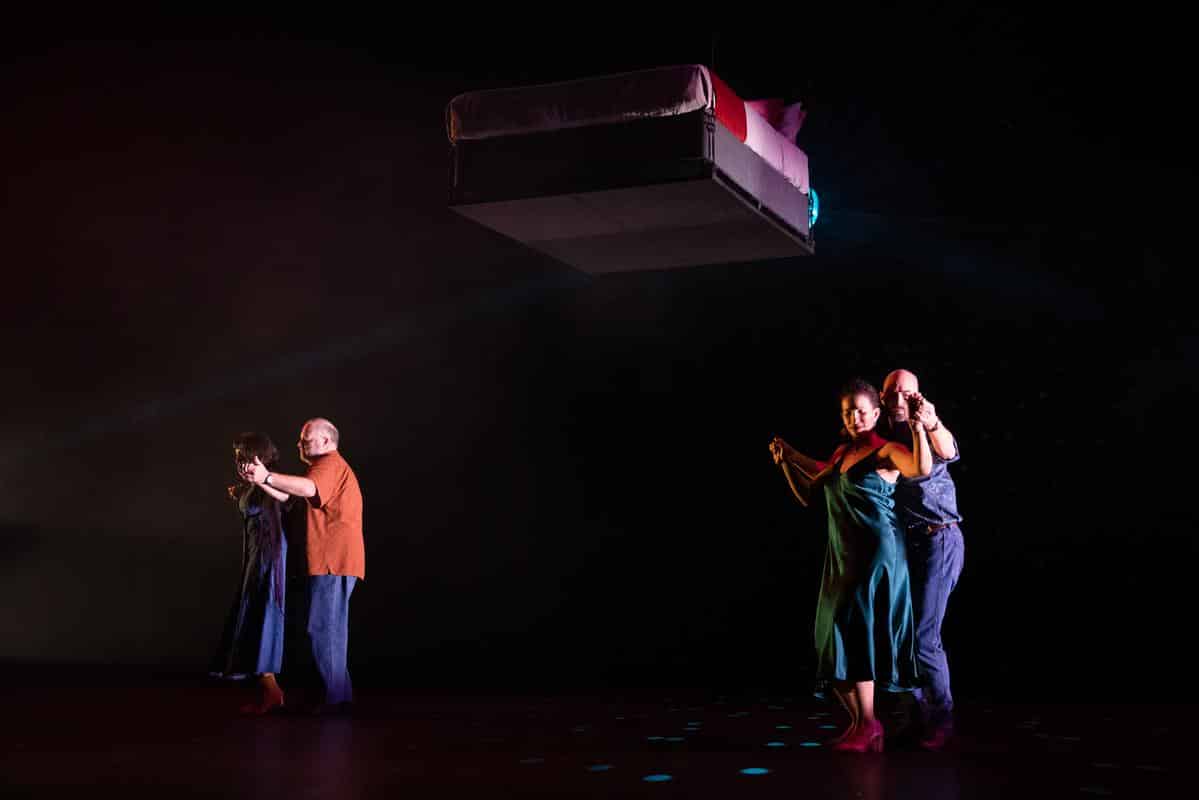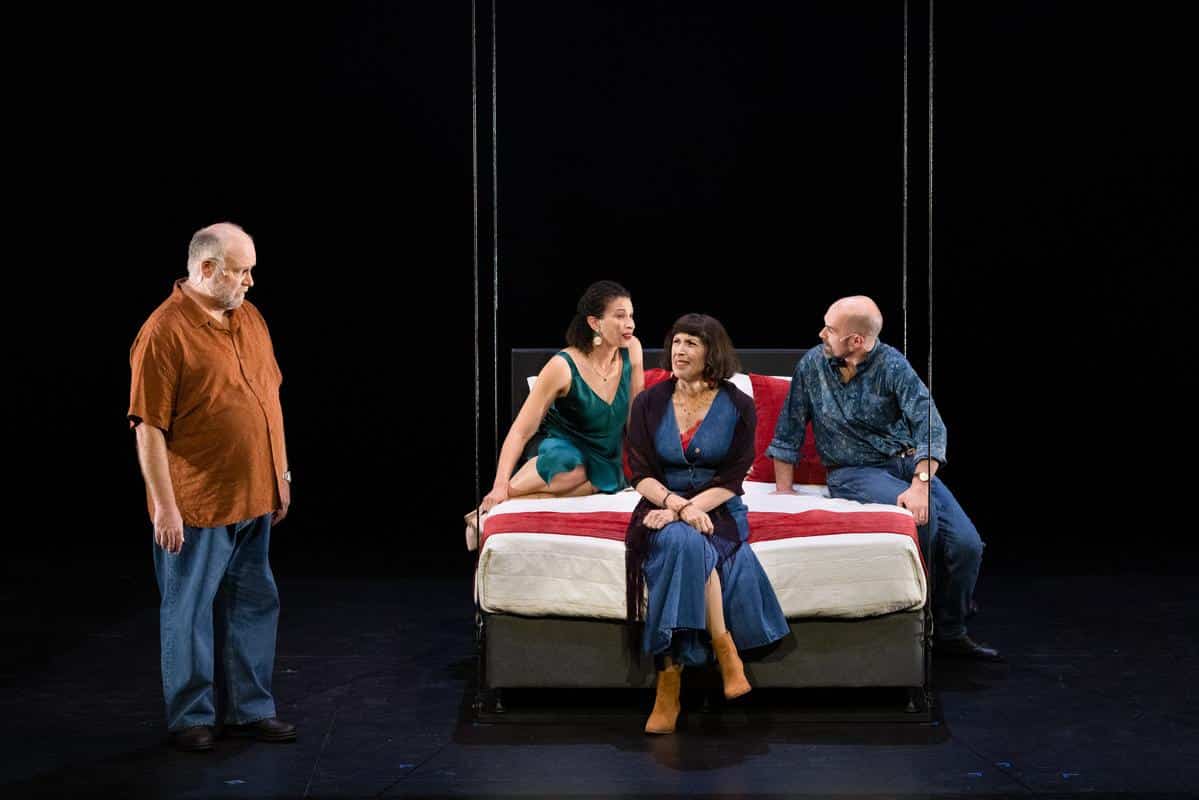
Andrea Gibbs’ Carol is pitched as following 60-year-old Carol as she fights to keep the Christmas spirit alive. While that’s certainly part of it, this five-actor show (with oh-so-many characters) delivers a timely and poignant social commentary on the reality faced by so many older women in Australia today. Even as Carol’s world unravels and is turned upside down, she continues to shoulder the mental load—something that resonated with many women in the audience.
The play’s themes of hope, resilience, and a woman’s ability to pivot shine through. Gibbs has been called a visionary playwright, and it’s clear this work was written by a woman. No matter what life throws at Carol, not once does she turn to a man and ask, “What’ll we do now?” She simply gets on with making the best of a bad lot.
The cast is exceptional. Sally-Anne Upton embodies the title role with heart and honesty, and the remaining ensemble (and backstage crew) switch roles with astonishing ease. At one point, Isaac Diamond morphs from therapist to son right before our eyes—I must have blinked, because the transformation was total but somehow I missed it actually happen.
The show itself is delightfully hard to categorise. Woven through its heart-wrenching, resilience-filled narrative is the most Aussie humour, including the antics of Santa—aka Sack Daddy—who opens the show with some enthusiastic audience participation (I’ve never been more relieved not to be in the first few rows). There’s plenty of laughter, and a healthy serve of colourful Aussie descriptors that rightly earn the production its explicit-language warning. Musical Director and Composer Jackson Harper Griggs sets the tone beautifully with original compositions; the music is a genuine highlight.
I can’t go past the set design. Bruce McKinven has outdone himself as set and costume designer, crafting a series of spectacular visuals. Walking into the Heath Ledger Theatre felt like stepping straight into the Australian landscape—each painted curtain backdrop richer and more evocative than the last.
Carol sits perfectly in that sweet spot between light and dark, humour and heartbreak. Congratulations to everyone involved.
Shows: For more information, visit the Black Swan website https://blackswantheatre.com.au/season-2025/carol. The season runs until 14 December and includes accessible sessions—audio description with tactile tour, Auslan-interpreted performances, and captioned sessions.
Last night I had the honour of watching celebrated and local playwright Andrew Bovell’s Speaking In Tongues at the State Theatre Centre for Black Swan Theatre Company. Directed by local theatre actor and director Humphrey Bower, this well known play (which some of you might also remember as the screen play under the name Lantana) was very successful back in the 90’s early 2000’s. I was interested to see if the play would resonate today and how audiences would respond.
This psychological thriller tells of 9 middle aged characters and how their lives interweave and clash – keeping you on the edge of your seat, guessing what is coming next. It explores the themes of betrayal, growing apart, emptiness and relationships as a middle age couple. With an audience demographic of those who were mostly middle age in the 90’s – I think Black Swan have chosen well for their audience and with the knowing laughs that were rolling, it was clearly resonated.
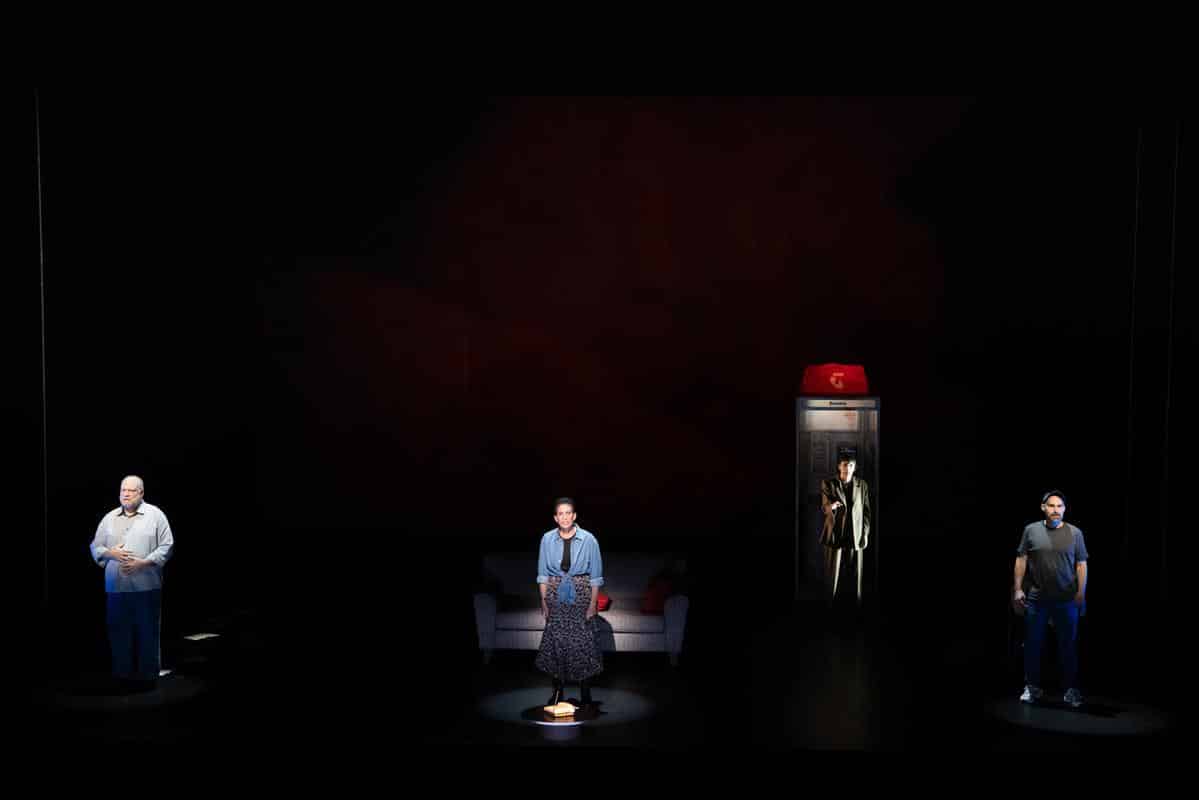
The set itself was stark and somewhat noir – a little like the play itself. I would have liked to see some more innovation with the set and costuming but also understand that maybe this play, originally mounted at Sydney’s intimate Griffin Theatre in 1998 is much better suited to a studio or small stage performance. It sometimes felt like the actors were lost on the vast stage, with minimal set and I wondered if a more complex set design could have helped with this. What I did love from the set design though, was the iconic Telstra phone box which immediately took you back to the 90’s and what it was like to live through that era – a vast difference to the technology today.
The cast of four who are all WA actors, were a superb ensemble and the stand out performance should go to Matt Edgerton for his seamless shape shifting of his 3 characters in which he was able to delineate so well. They all felt so distinct, real and I especially loved his portrayal of the character of Nick in which he uncovered great depth. Catherine Moore was suitably cast and although she seemed to have a slip up on a line – she handled it like a true professional with the help of Edgerton. Alexandria Steffensen delivered an incredibly naturalistic and nuanced performance and I loved the confidence she chose to give her characters – it was refreshing to see a confident middle age woman portrayed on stage!
Lastly Luke Hewitt who is a stalwart of professional theatre in WA, delivered a solid performance which was undoubtably likeable, relatable and personable – probably why he keeps getting cast again and again. I did feel that some of the cast were mismatched at times and I felt a lack of connection between the characters. Some may say this is the point of the play – how well do you really know someone despite spending your life with them? I would argue though, that lifelong partners undoubtably know each other inside out and have deep connection and knowing despite the fact that they make not want to acknowledge or display that.
Ultimately what is brilliant about this play and why it is an Australian classic is that it gets you thinking about life, relationship and what it all means. Its not purely entertainment (although it delivers on this too) but a vehicle for reflection, change and critical thinking.
I highly recommend jumping on this show before it closes as it’s rare that you get to see such a prolific and talented writer like Bovell, paired with such a brilliant cast. I am very grateful to Black Swan that they make WA writers and Australian stories a priority! Speaking In Tongues closes September 14th.
Prima facie—a Latin phrase meaning “at first sight” or “based on first impression”—is used in civil and criminal law to denote that a legal claim has sufficient evidence to proceed to trial upon initial examination.
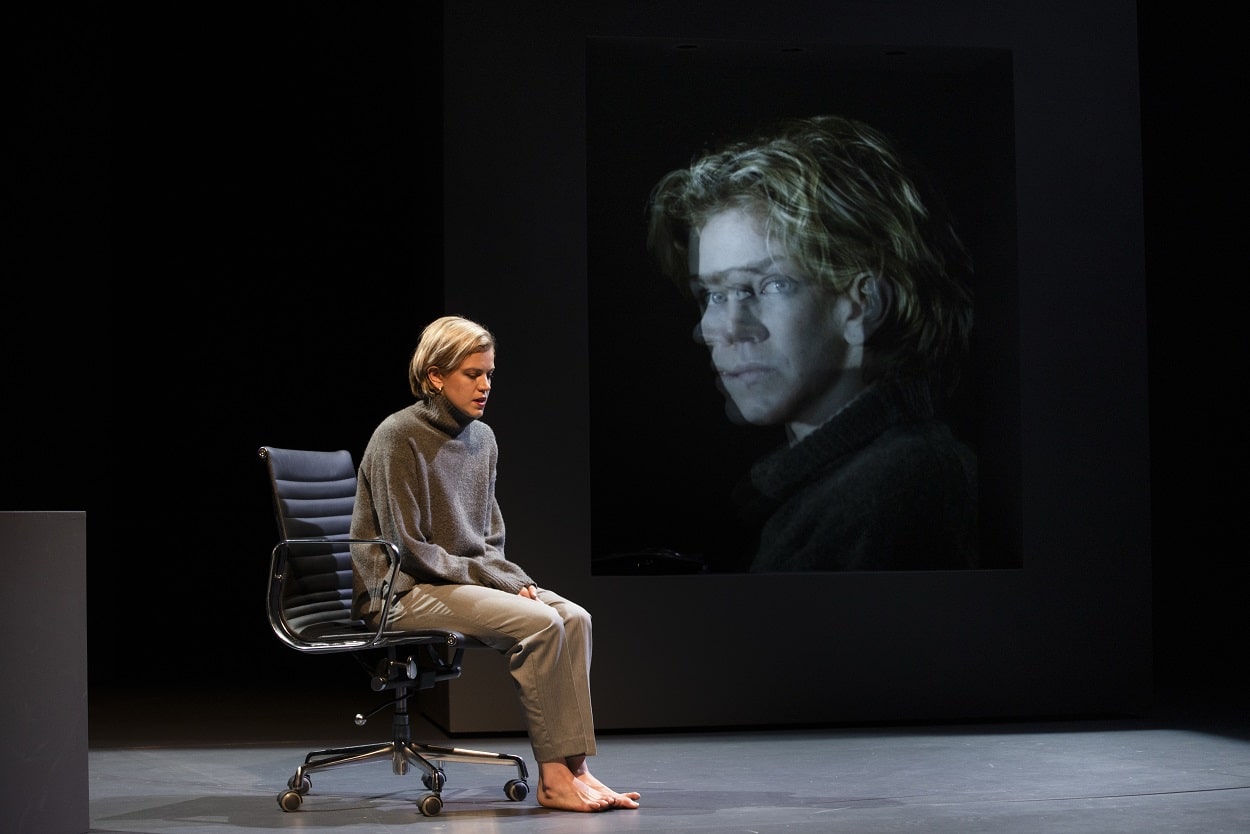
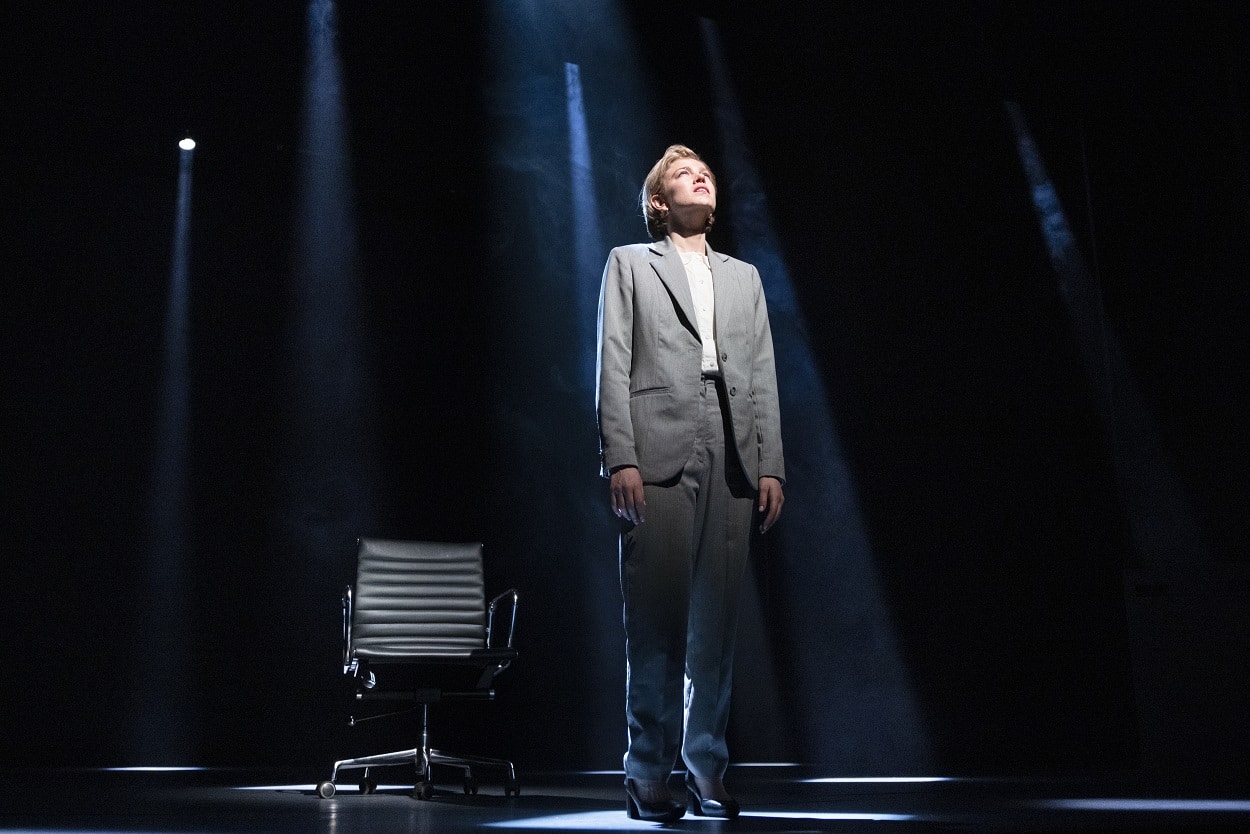
Prima Facie opens with defence barrister Tessa Ensler (played by Sophia Forrest) confidently sauntering onto the stage, ready to tackle her latest court case. Tessa is in her element, prepared to interrogate and break down her witness, determined to continue a several-month winning streak. The script voices Tessa’s inner thoughts, providing a blow-by-blow account of her strategies and tactics. We learn that her impressive win streak includes several sexual assault cases.
The dialogue in this one-woman show utilizes Tessa’s internal monologue throughout, allowing us to follow her journey intimately. Through Tessa’s thoughts, we meet the significant people in her life and experience the play’s events. Sound effects skillfully enhance the emotional depth of the opening scene, conveying an additional current to Tessa’s thoughts and underlying emotions, allowing the audience to connect with her immediately.
As the play progresses, Tessa’s seemingly upward journey is disrupted by an event that leaves her questioning everything she knows. Her previously slick demeanour gives way to confusion and vulnerability, depicting the emotional turmoil of seeking justice and needing to be believed. The play explores the toll on her personal and professional life as she grapples with shattered illusions and seeks justice. Has she been unfair in her past treatment of victims in court interrogations?
What will the aftermath of this event mean for her? Will she be believed? Will justice be served? Will the perpetrator walk free? Will her voice be heard?
Congratulations must go to the production team for compiling a finely-tuned show. The set, costumes, sound, and transitions blend together seamlessly. The large stage is cleverly utilized, with versatile wooden boxes transforming into various props for each scene. The backdrop shifts smoothly, with a revolving stage component used cleverly in scene transitions, depicting locations from courtrooms to nightclubs. Visual media elements add tension at critical moments, offering visual insights into Tessa’s inner journey and effectively depicting time shifts in the play’s action.
Director: Kate Campion
Set Designer: Bruce McKinven
Set Realizer: Andy Cross
Costume Designer: Lynn Ferguson
Lighting Designer: Peter Young
Composer & Sound Designer: Melanie Robinson
Audio Visual Designer: Jessica Russell
Sophia Forrest’s outstanding performance anchors this intense one-woman show. Forrest adeptly portrays multiple roles, guiding the audience through Tessa’s transformation from a confident lawyer to a victim seeking redemption. Through the internal monologue, she effectively embodies the slick lawyer, interrogator, interrogatee, victim, daughter, sister, judge, and judged.
Enough credit cannot be given to Sophia Forrest for the remarkable effort in tackling the immense content of the role with skill and finesse. One can only imagine(shudder at) the mountains of preparation required to portray this role so successfully. A shoutout to understudy Holly Easterbrook, who must also have undertaken a similar journey in terms of effort and preparation.
The play’s heavy themes are thought-provoking and resonate deeply. You won’t necessarily leave the theatre with a light heart, but you will leave with plenty to think about, having witnessed a first-class production.
Prima Facie runs at the Heath Ledger Theatre from July 1 to July 21. Tickets range from $30.00 to $139.00.
The show lasts one hour and forty minutes without an interval. Content warnings include strong themes of sexual assault, coarse language, and the use of haze and smoke effects.
Barracking For The Umpire, presented by the Black Swan State Theatre Company, will strike a chord with every AFL fan, player, and parent. In this quintessentially Australian family drama, we’re drawn into the lives of the Williams family, posing the poignant question: what sacrifices are we prepared to make for the love of the game?
Doug Williams, celebrated as Donnybrook’s greatest footballer, is the embodiment of resilience—tough and steadfast. His loyal wife, Delveen, has stood by him through countless challenges, witnessing each impact of the game on him. As the local club prepares to present Doug with a lifetime achievement award, their children return home to celebrate. Yet, as the festivities unfold, the once reliable hands of this legendary player ominously begin to falter.
On entering the theatre, the stage transports us to Donnybrook, specifically the Williams’ family living room steeped in 1980s decor—a decade that marked the peak of Doug’s illustrious football career. The space is authentically adorned with a well-stocked bar, doorways that hint at a bustling household, and walls lined with family photos that speak volumes of shared memories. A coffee table, cozy blankets draped over a well-worn couch, and a back-wall display case cum bookshelf contribute to the room’s lived-in feel, wrapping the audience in the comforting embrace of a family home.
The production superbly uses lighting(Lucy Brikinshaw) and video effects(Michael Carmody) to facilitate smooth transitions from the family living room to the football locker room—a sacred space residing solely in Doug’s memories. As the spotlight dims on these ephemeral glimpses into the past, the stage’s ambient sounds and lighting subtly recede, reorienting the audience to the present moment where Doug, though momentarily disoriented, is prompted back into the present by a worried family member.
The cast expertly brings the characters to life, making them authentic and believable.
Ben (played by Ian Wilkes), a Noongar man, is a current-day AFL footballer dealing with all the pressures that his high profile brings and harbouring a deep secret that he never wishes to become public. Ben, away from the pressure of AFL footy, is a relaxed and laid-back character who wants to play footy and toys with the idea of revealing his secret to the family. Some family members wonder why he is single, although hints of a relationship occur. Some of his stage exits and entrances show a worried Ben trying to find out about the health of a recently concussed teammate.
Mena (played by Ebony McGuire) is a journalist who wants to make her mark in the world but chafes in the shadows of her father and brother Ben’s football careers. She is interested in telling a story to make her way up the journalistic ladder, but possibly at the expense of her brother’s wishes. One scene, in particular, highlights the dog with a bone journalist in her as she interrogates her brother about the need for a particular story to be told.
Charaine (played by Jo Morris) is the stabilising influence amongst the three siblings. However, her own life is going through a rocky patch with her recent breakup with her boyfriend. Her calm demeanour quickly changes whenever her ex-boyfriend enters the scene, as her Mother has mortifyingly invited him to visit after a family dinner. This leads to some comedic hijinks that work well to balance out the drama of the relationship.
Tom (played by Michale Abercromby) is an MC and Charaine’s recent ex-boyfriend who worships Doug and Ben, vicariously living through their football deeds, making the men somewhat uncomfortable. His devotion to the family footballers creates friction in his relationship with Charaine, which he strives to repair. Tom also brings some lighthearted comedic moments at awkward moments that relieve the tension of the family dramas at play.
Doug (played by Steve Le Marquand) skillfully plays the family patriarch, but he unfortunately experiences increasingly recurring episodes from his declining health. A famed local footballer in his day, he is highly respected by the family and community alike. When surrounded by his family, he is quick to exchange friendly barbs and banter as well as anyone else, but when left alone, he becomes lost in his surroundings.
The Coach (played by Joel Jackson) also doubles as Eckhart, an AFL football player and Ben’s teammate. These two open the play with an energetic start, as the opening tune of Up There Cazaly fades to the background, being in the locker rooms post-game and bantering about life and their just completed match. Joel spends most of the play existing as the personification of the Coach, who only exists in the recesses of Doug’s fading memory. His entrance onto the stage signifies moments where Doug loses his grip on current-day reality and relives some of the traumatic moments of his football career.
Football fans will delight in numerous lines delivered by the inspirational coach, no doubt causing them to reflect on their football careers no matter how humble. Football afficionadoes will recognise many famous football quotes that have gone into folklore, including John Kennedy Senior’s immortal lines: “Do Something. Don’t think. Don’t hope. Do.”
Costumes designed by Sara Chirichilli have been selected with great care and attention. The Coach’s costume channels Tom Hafey’s iconic style, complete with a snug Adidas T-shirt and classic short shorts, perfectly capturing the aura of 1980s football. In the opening scene, the footballers Eckhart and Ben sport authentic football guernseys that set the stage for the action. The rest of the cast’s wardrobe is thoughtfully chosen to reflect a casual, comfortable attire that one might find in any relaxed family setting. This naturalistic approach complements the home’s 1980s vibe, seamlessly integrating the characters with their environment.
Andrea Gibbs’ debut play is a beautifully crafted story that feels quintessentially Australian. With its rich themes and relatable characters, ‘Barracking for the Umpire’ is set to become a favourite among theatres across Australia for many years to come.
Director Clare Watson has selected a winning team with this cast and crew, who have all kicked winning goals here. Together, their efforts successfully showcase what is destined to be a classic Australian play. I rate this play five stars out of Five, and I highly recommend you see it while you have the chance. Don’t think—do see this show.
Barracking For The Umpire is playing at the Subiaco Arts Centre from 23rd April to 5th May. After that, the cast and crew will take this play on tour across Western Australia to the following locations and dates:-
Port Hedland – 11th May Broome – 18th May Karratha – 23rd & 24th May Geraldton – 29th May Mandurah – 1st June Margaret River – 15th June Albany – 6th & 7th June Esperance – 12th June