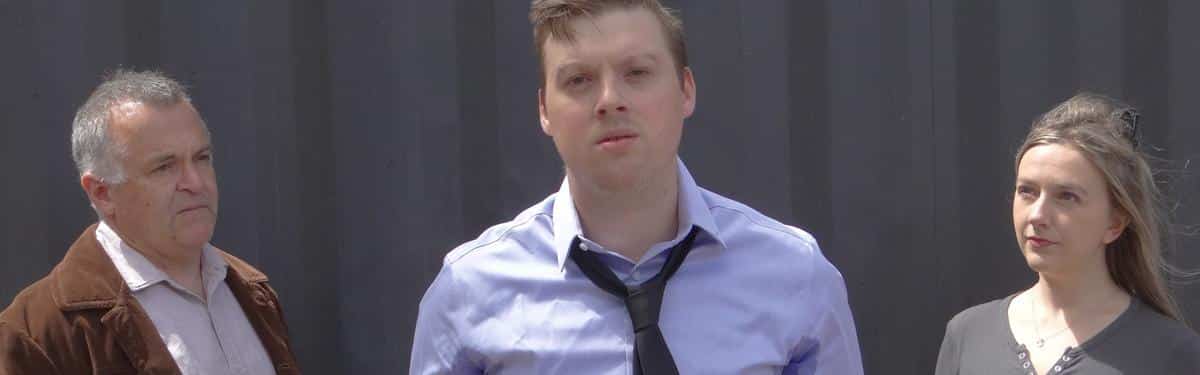
(Note: This is a review of a play presented as the second half of a double billing. Melbourne Writers’ Theatre is showing Metropolis Monologues across two instalments, and this play is performed after each series of monologues. I will review the monologues separately.)
My experiences with Melbourne Writer’s Theatre’s (MWT) Metropolis Monologue series were very positive. The diversity of style and subject matter, married with some great performances and direction, showed how fresh and fun Melbourne’s independent theatre scene can be. As mentioned, five of the ten monologues are presented on each night, followed by the play that won MWT’s 2026 Amethyst Award. Unfortunately, this second show, Who I’m Doing This For, wasn’t on the same level as the monologues for me.
The play, written by Peter Farrar, follows Simon (Lochi Laffin-Vines), a man suffering under the weight of grief. He has recently lost his father (Tony Adams) – an abusive, drug-addicted ex-veteran – after caring for both him and his sickly mother. Shortly after the play begins, we see the toll his depression takes on him; he loses his job, is increasingly unable to connect to his girlfriend Claudia (Emily Farrell) and slips into a nihilism that will drive him to desperate and horrific actions.
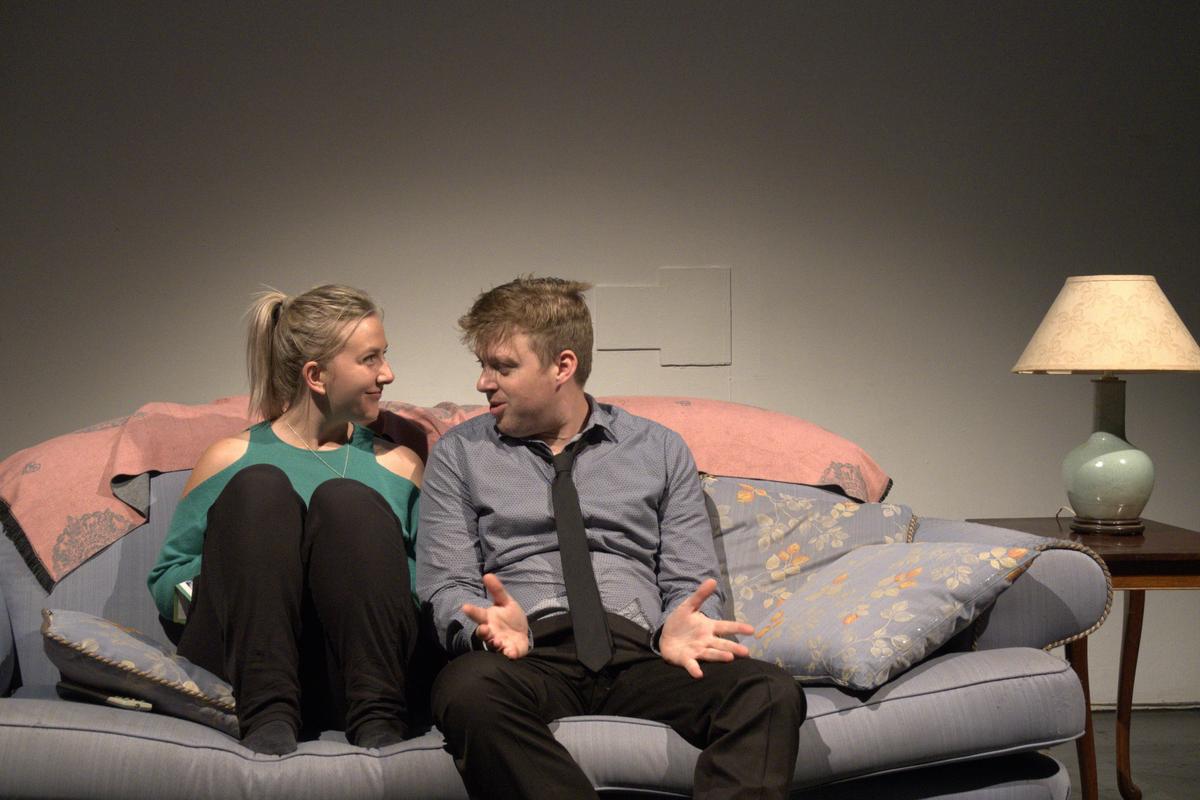
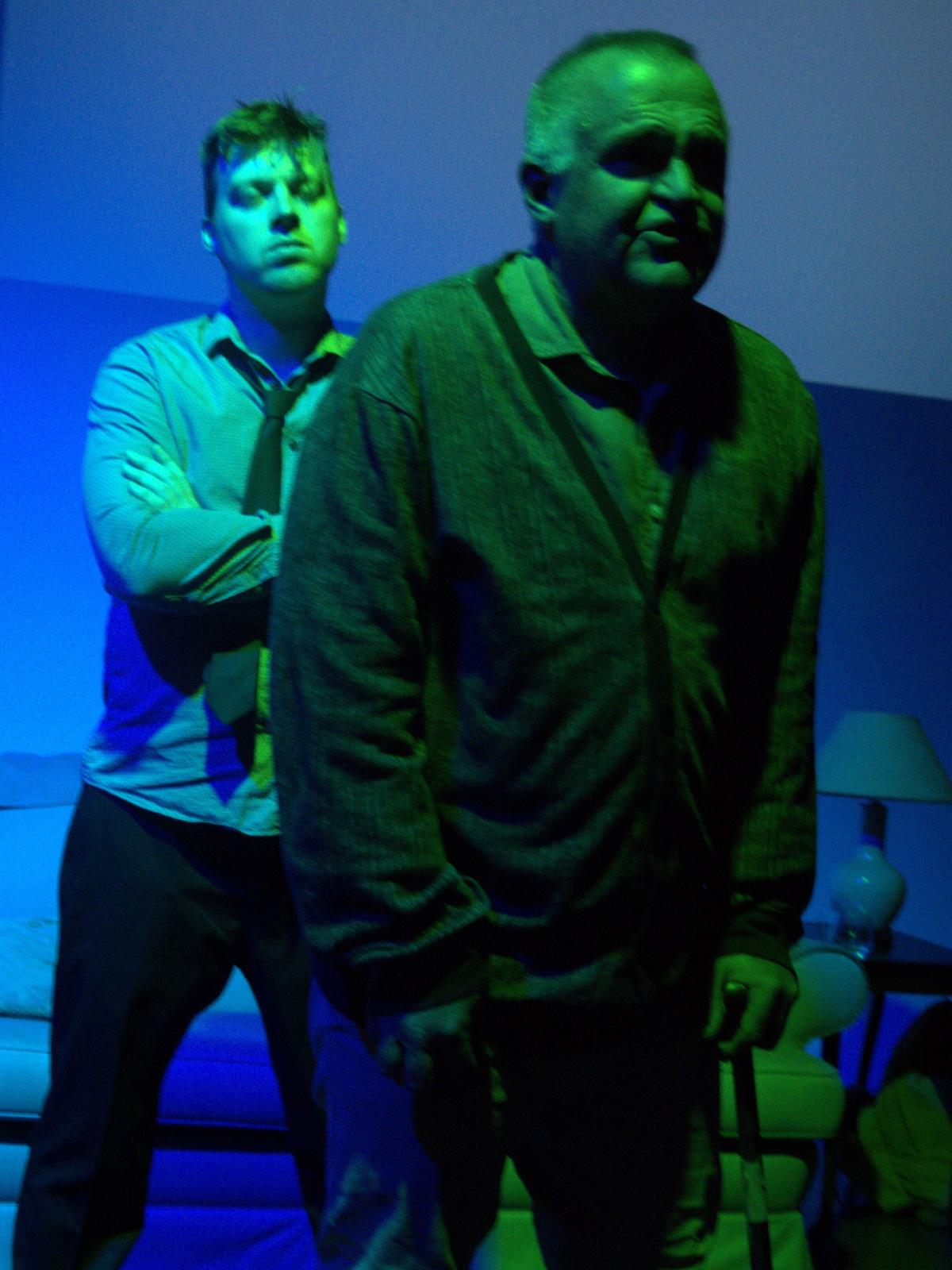
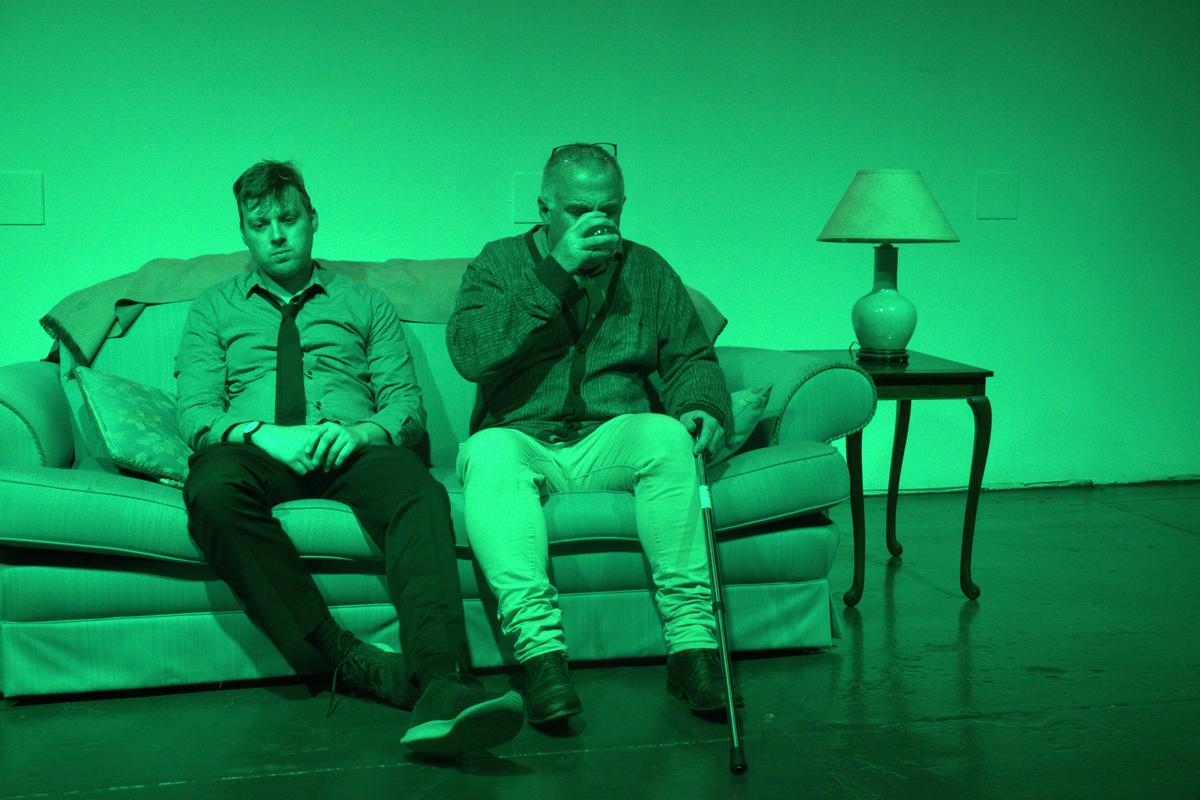
The cast are strong performers, and their chemistry is mostly enjoyable to watch. The couple’s playful moments are endearing, the father-son relationship whiplashes thrillingly between awkwardness and mutual rage, and some of the most chilling moments come when the father is simply standing in the background, watching Simon unravel. The lighting is cleverly changed to enhance the mood of certain scenes, and the writing is at its best in the character interactions, such as the snarky quips between Simon and Claudia and the naked narcissism of the father’s abuse tactics. The play is laudably ambitious and asks provocative questions about whether the roots of trauma are personal, familial or systemic.
However, to me, the story and script did not live up to the themes it was trying to tackle. While the dynamic between Simon and his father was strong, Claudia as a character felt like a vessel for Simon to vent to or at, and she seemed much too accepting of Simon’s unreasonableness throughout. This underdevelopment also applies to the radicalization Simon undergoes; plenty of people struggle with trauma and mental illness and don’t make the decision that Simon does, and it’s unclear what external force pushed him down the specific path he takes. Outside influence is an essential component of political radicalization, and its absence makes his anti-capitalist soliloquies feel out of place. The extensive monologuing also states the play’s themes so blatantly that it robs what should be a crazy, thrilling climax of any tension. Too many moments reminded me of the old writers’ aphorism: show, don’t tell.
Who I’m Doing This For has many interesting questions within it about generational trauma, mental illness and personal responsibility. Steven T. Boltz’s direction clearly brought out the best in the actors and team involved, and I think that the play could be very strong in a future revival. But as is, it didn’t have nearly as much polish as the monologues that preceded it, and I would definitely recommend those over this play in its current form.
To book tickets to Who I’m Doing This For, please visit https://melbournewriterstheatre.org.au/.
Photographer: Mina Shafer