The Butler Did It!
Or did he?
The Covington family are expecting their long-time friend and famous mystery novelist, Edwina Corry, over for dinner. What they didn’t expect was their neighbour and the local priest inviting themselves over … and becoming mixed up in a classic whodunnit. With a full house, everyone is a suspect, and everyone knows the classic trope – the butler always does it.
The mystery unfolds in the lush living room of the Covington’s mansion; the beautifully crafted and well-considered set provides ample room for the characters to dramatically point fingers at one another without stabbing (too many) backs. Even the exits through the doorways leading offstage have their own backdrop, which is a wonderful and thoughtful addition from the designer. The set has been well-considered, with no space left unused, and the fireplace the only space that is covered by furniture (but that’s not a drawback since anyone who stands near it during the investigation is certainly tall enough to be seen).
With lighting that plays with the space of the set and timing of the investigation it is consistent, doesn’t overwhelm the stage or performers, and is perfectly apt for the mood of the play. The only comment would be that seeing more of the red spotlight would’ve been a welcome addition to the dialogue.
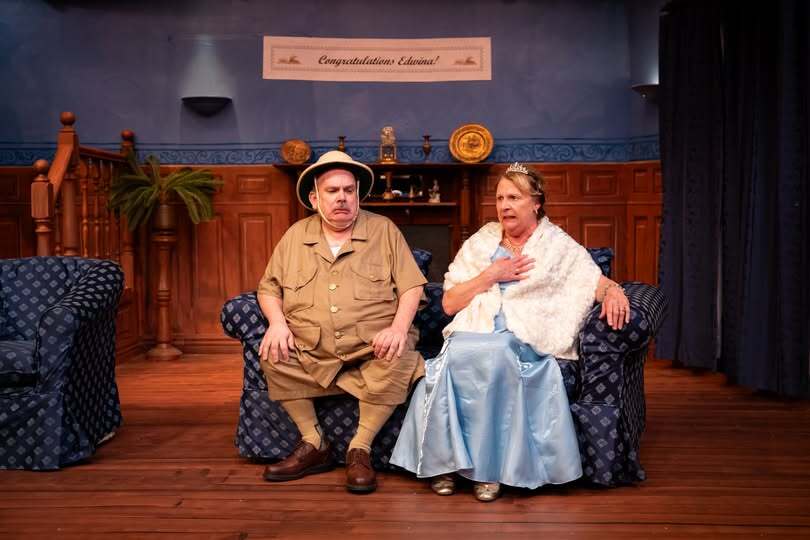

As the curtain rises, and through the opening scene, a rain track plays in the background; this masks some of the performers’ lines until the rain subsides. Beyond this scene, the performers’ voices are clear, projecting their lines through the audience brilliantly, and interacting with one another very naturally. Accents are a tricky thing to maintain, and the cast showcases their skills – there are some inconsistencies, but a whole lot of work and obvious passion. The music expertly blends with the rest of the scenes, and adds to a fun layer of emphasis at key moments in the investigation.
Director Brian Godfrey and the production team show their clear passion for the theatre with every detail, from the chandelier on the set ceiling to each character’s aptly-chosen shoes; joy seeps from every pore of this production, even from Gram – the surprise performer who is sure to add some amusement to every scene she is in.
With well-timed Dad jokes, amusing miscommunication moments, a cast that clearly gets along on and off the stage, The Butler Did It! is a fun whodunnit which may not have such a predictable ending as the title suggests … bring along your deerstalker hat, watch and listen closely for clues, and see if you can figure out who the killer is!
To book tickets to The Butler Did It!, please visit https://teatreeplayers.com/production/the-butler-did-it/.