I had the pleasure of seeing this play at a matinee performance with an almost full audience of mostly seniors.
The writer (Declan Furber Gillick) states that "This is a play about an aboriginal man doing the wrong thing." He purposefully doesn't tell us which of the two aboriginal men, Jacky or Keith, he refers to, leaving us to make our own choice (if that's the right word).
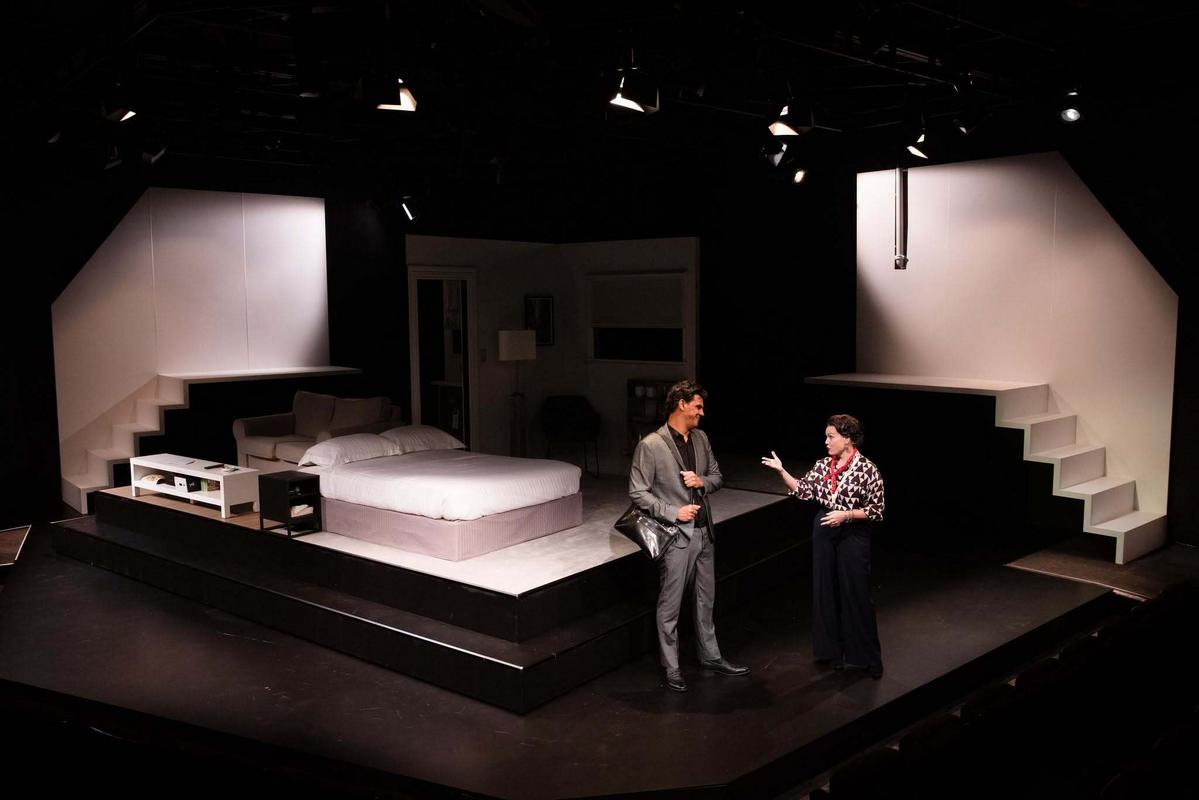
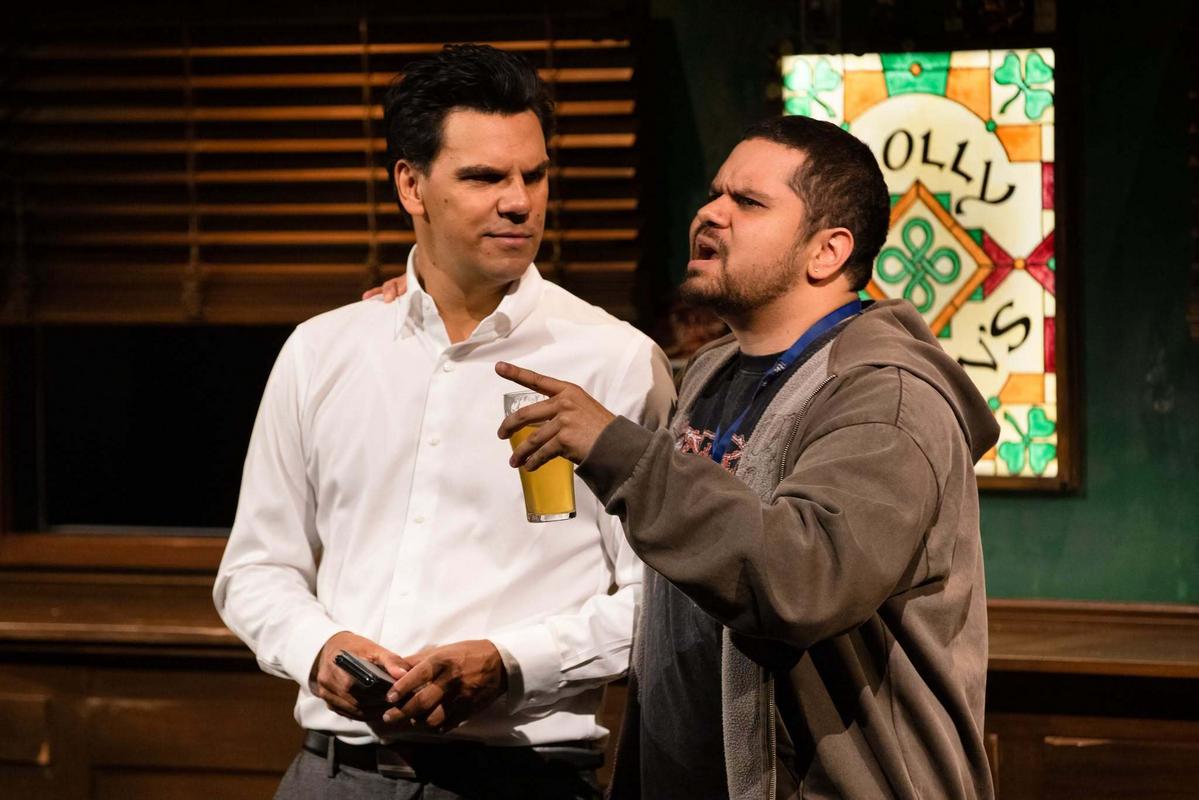
The first thing seen is a well thought out and realistic stage which rotated to show three locations, a living room, a bar and an apartment room. The rotation changes throughout where seamless, carrying us from location to location with ease.
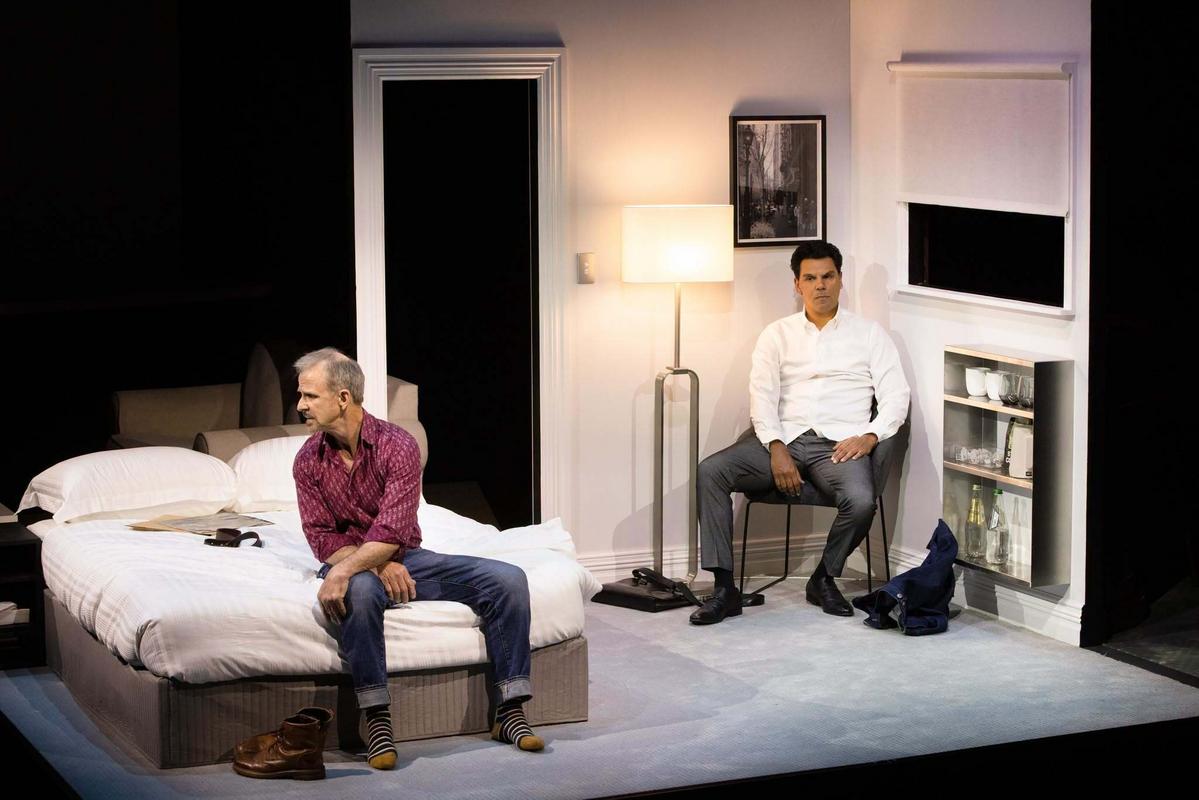
The story is set in an inner city suburb and follows Jacky (Ian (Moopa) Wilkes), a young aboriginal man who has done well for himself since moving to the city and starting a business. His younger brother Keith (Rueben Mongoo), a troubled young man, arrives from "the Mish" to crash on Jacky's couch. We find out that Keith is a bit of a sponger, unwilling to pull his weight around the apartment, leaving a mess everywhere. He has told Jacky that he will get his apprenticeship at the country town baker transferred so that he can continue it in the city. He does nothing and Jacky is frustrated at his laziness. Eventually Keith reveals that he was fired and has been lying about it - he was fired and lost the apprenticeship.
We meet Linda (Amy Mathews) and find out that she is big supporter of Jacky. She runs an indigenous community program and is holding an event to raise money for it. Jacky provides cultural dance performances and Linda helps he and Keith to find work.
We find out about Jacky's steady income as a "rent boy" and meet one of his clients Glenn (Steve Turner) who has a specific fetish which Jacky indulges.
When the fund-raising event that Linda has arranged loses it's main attraction, a local aboriginal family elder, she asks Jacky to lie and pretend to be a member of that family and speak on their behalf. Initially refusing he does eventually agree to the request.
The relationship between Jacky and Glenn comes to a surprising head when Glenn asks Jacky to play a submissive role with language that offends him, and us the audience.
The thinly veiled racism of both Glenn and Linda are eventually seen and Keith shows disgust with Jacky's decisions.
The performances of all four actors is highly believable and authentic, with each skilful performance adding to the tensions and story in such a way as to keep the audience entertained and intrigued as to what comes next.
Although at times my partner and I felt uncomfortable with the action on stage, we found the play enjoyable and entertaining, which from other audience member reactions seemed to be a unanimous feeling.
The co-directors (Kate Champion - Black Swan Theatre, and Maitland Schnaars - Yirra Yaakin) must be congratulated on their excellent casting and vision for the play. The assembled crew did a brilliant job to bring a seamless flow to a well written story.
Finally, the question of which of the two aboriginal men did “the wrong thing"; from this reviewers’ POV it remains unclear, perhaps it was neither, and it’s up to any audience members’ choice.
The Almighty Sometimes asks a question that sits uneasily at the heart of family life: when does care become control?
Written by Kendall Feaver and presented by Black Swan State Theatre Company, the play enters the complicated emotional terrain between mental health, medication, autonomy and parental love. At its centre is Anna, an 18-year-old beginning to ask who she might be beyond the prescriptions and diagnoses that have shaped much of her life. For her mother Renee, that search for independence is inseparable from fear, memory and the instinct to protect.
It is a powerful premise, and one the production handles with intelligence and sensitivity. The Almighty Sometimes is not a simple argument for one side over another. Anna’s desire for agency is deeply understandable. Renee’s fear is also deeply human. The play’s strength lies in its refusal to make either woman easy to judge.
Director Emily McLean gives the story space to breathe. The production allows the audience to sit inside the tension rather than being pushed toward an obvious conclusion. This is not merely a play about mental illness, nor merely a mother-daughter drama. It is about the difficult place where love, risk, responsibility and control overlap.
‘Ana Ika brings urgency and volatility to Anna, capturing the restlessness of a young woman desperate to define herself on her own terms. It is a demanding role, full of emotional turns, humour, anger and vulnerability.
Alison van Reeken is excellent as Renee, presenting a mother whose love has been shaped by years of vigilance. There is no easy sentimentality in the performance. Renee’s care is practical, anxious, frightened and forceful; the performance makes clear how easily love can become tangled with fear.
Amy Mathews brings authority and composure to Vivienne, while Harry Gilchrist is very effective as Oliver. His performance adds warmth, humour and emotional contrast, giving the production some of its most natural and engaging moments.
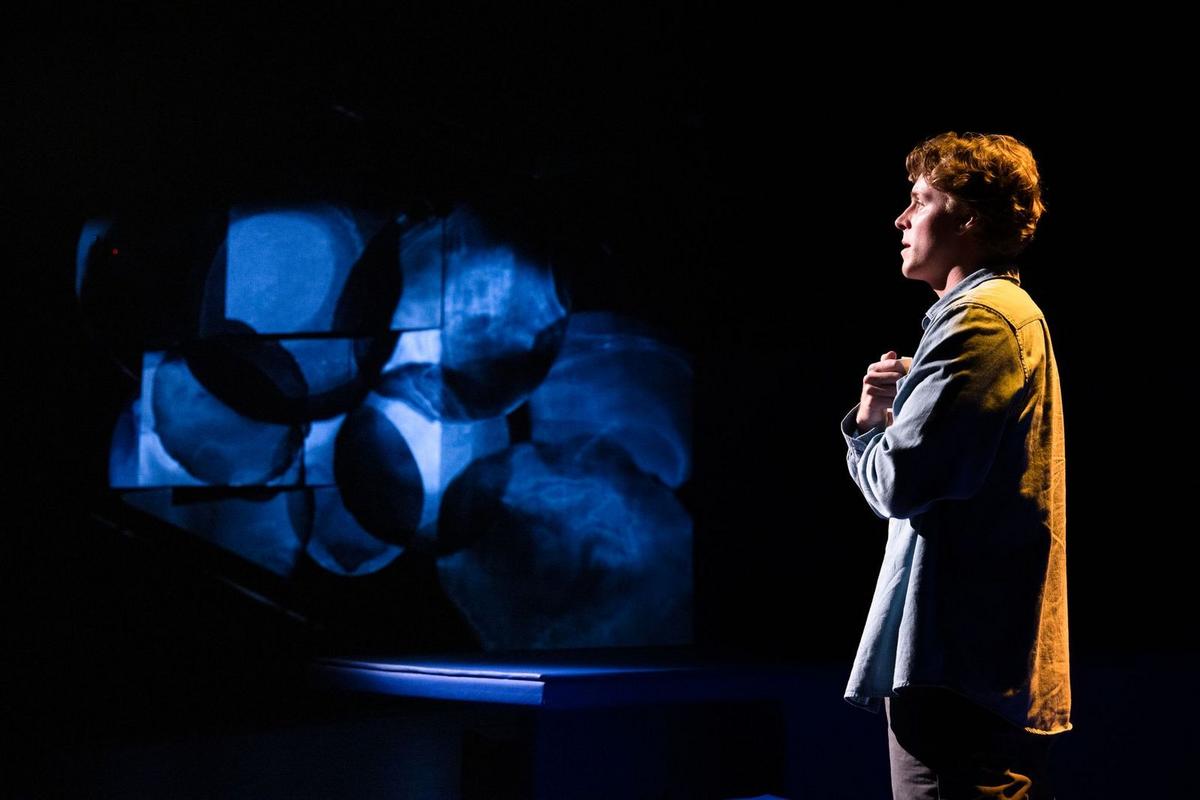
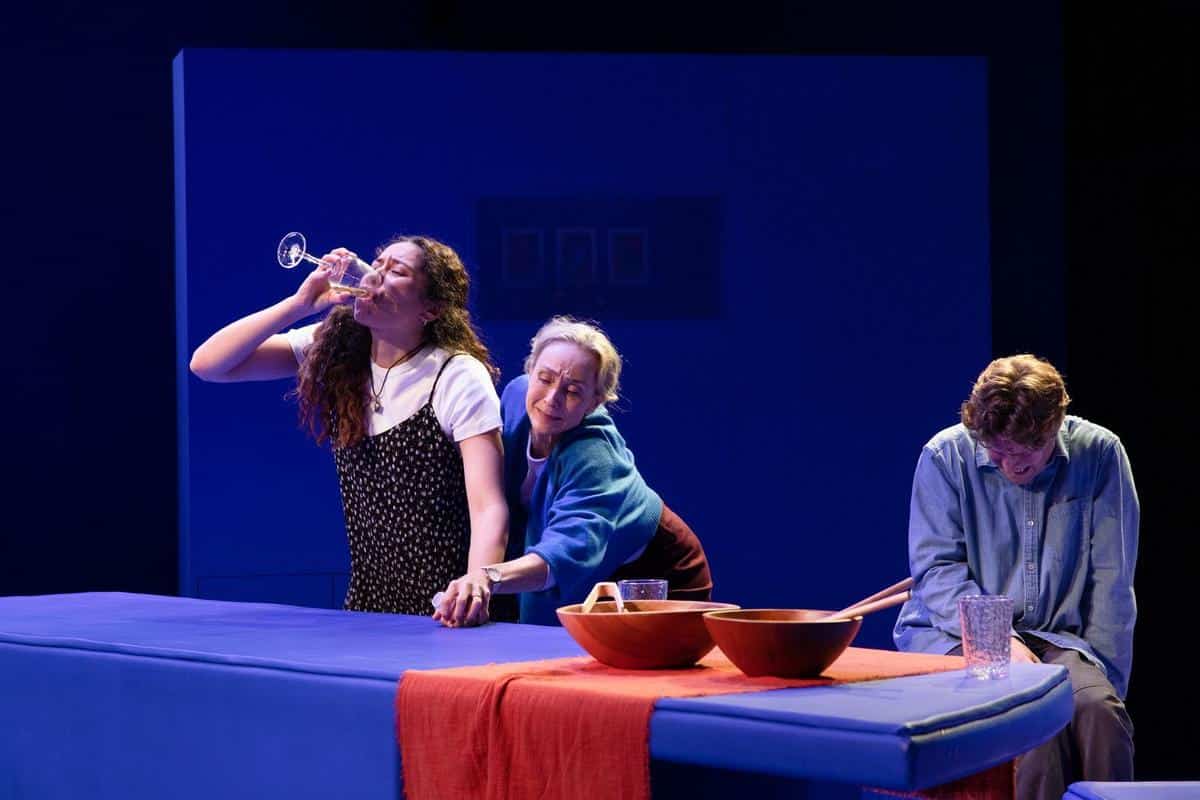
The creative elements give the production a distinct visual identity. Fiona Bruce’s set and costume design makes strong use of a cool, blue-toned world; a choice the program links to ideas of protection, intensity and emotional excess. Karen Cook’s lighting supports the production’s movement between domestic realism and more heightened emotional moments.
The Almighty Sometimes is not light entertainment, but it is compelling theatre. It asks difficult questions without flattening them into easy answers. How much risk should a person be allowed to take in pursuit of independence? How far can love go before it becomes possession? What happens when the person you are trying to protect also needs freedom from you? These are not comfortable questions, but the play explores them with intelligence and sensitivity, providing much food for thought and is carried by a strong ensemble.
The Almighty Sometimes is a mature and absorbing production from Black Swan State Theatre Company; a thoughtful drama that leaves you pondering the difficult questions it asks about love, risk, responsibility and control.
Barracking For The Umpire, presented by the Black Swan State Theatre Company, will strike a chord with every AFL fan, player, and parent. In this quintessentially Australian family drama, we're drawn into the lives of the Williams family, posing the poignant question: what sacrifices are we prepared to make for the love of the game?
Doug Williams, celebrated as Donnybrook’s greatest footballer, is the embodiment of resilience—tough and steadfast. His loyal wife, Delveen, has stood by him through countless challenges, witnessing each impact of the game on him. As the local club prepares to present Doug with a lifetime achievement award, their children return home to celebrate. Yet, as the festivities unfold, the once reliable hands of this legendary player ominously begin to falter.
On entering the theatre, the stage transports us to Donnybrook, specifically the Williams' family living room steeped in 1980s decor—a decade that marked the peak of Doug's illustrious football career. The space is authentically adorned with a well-stocked bar, doorways that hint at a bustling household, and walls lined with family photos that speak volumes of shared memories. A coffee table, cozy blankets draped over a well-worn couch, and a back-wall display case cum bookshelf contribute to the room's lived-in feel, wrapping the audience in the comforting embrace of a family home.
The production superbly uses lighting(Lucy Brikinshaw) and video effects(Michael Carmody) to facilitate smooth transitions from the family living room to the football locker room—a sacred space residing solely in Doug's memories. As the spotlight dims on these ephemeral glimpses into the past, the stage's ambient sounds and lighting subtly recede, reorienting the audience to the present moment where Doug, though momentarily disoriented, is prompted back into the present by a worried family member.
The cast expertly brings the characters to life, making them authentic and believable.
Ben (played by Ian Wilkes), a Noongar man, is a current-day AFL footballer dealing with all the pressures that his high profile brings and harbouring a deep secret that he never wishes to become public. Ben, away from the pressure of AFL footy, is a relaxed and laid-back character who wants to play footy and toys with the idea of revealing his secret to the family. Some family members wonder why he is single, although hints of a relationship occur. Some of his stage exits and entrances show a worried Ben trying to find out about the health of a recently concussed teammate.
Mena (played by Ebony McGuire) is a journalist who wants to make her mark in the world but chafes in the shadows of her father and brother Ben's football careers. She is interested in telling a story to make her way up the journalistic ladder, but possibly at the expense of her brother's wishes. One scene, in particular, highlights the dog with a bone journalist in her as she interrogates her brother about the need for a particular story to be told.
Charaine (played by Jo Morris) is the stabilising influence amongst the three siblings. However, her own life is going through a rocky patch with her recent breakup with her boyfriend. Her calm demeanour quickly changes whenever her ex-boyfriend enters the scene, as her Mother has mortifyingly invited him to visit after a family dinner. This leads to some comedic hijinks that work well to balance out the drama of the relationship.
Tom (played by Michale Abercromby) is an MC and Charaine's recent ex-boyfriend who worships Doug and Ben, vicariously living through their football deeds, making the men somewhat uncomfortable. His devotion to the family footballers creates friction in his relationship with Charaine, which he strives to repair. Tom also brings some lighthearted comedic moments at awkward moments that relieve the tension of the family dramas at play.
Doug (played by Steve Le Marquand) skillfully plays the family patriarch, but he unfortunately experiences increasingly recurring episodes from his declining health. A famed local footballer in his day, he is highly respected by the family and community alike. When surrounded by his family, he is quick to exchange friendly barbs and banter as well as anyone else, but when left alone, he becomes lost in his surroundings.
The Coach (played by Joel Jackson) also doubles as Eckhart, an AFL football player and Ben's teammate. These two open the play with an energetic start, as the opening tune of Up There Cazaly fades to the background, being in the locker rooms post-game and bantering about life and their just completed match. Joel spends most of the play existing as the personification of the Coach, who only exists in the recesses of Doug's fading memory. His entrance onto the stage signifies moments where Doug loses his grip on current-day reality and relives some of the traumatic moments of his football career.
Football fans will delight in numerous lines delivered by the inspirational coach, no doubt causing them to reflect on their football careers no matter how humble. Football afficionadoes will recognise many famous football quotes that have gone into folklore, including John Kennedy Senior's immortal lines: "Do Something. Don't think. Don't hope. Do."
Costumes designed by Sara Chirichilli have been selected with great care and attention. The Coach's costume channels Tom Hafey's iconic style, complete with a snug Adidas T-shirt and classic short shorts, perfectly capturing the aura of 1980s football. In the opening scene, the footballers Eckhart and Ben sport authentic football guernseys that set the stage for the action. The rest of the cast's wardrobe is thoughtfully chosen to reflect a casual, comfortable attire that one might find in any relaxed family setting. This naturalistic approach complements the home's 1980s vibe, seamlessly integrating the characters with their environment.
Andrea Gibbs' debut play is a beautifully crafted story that feels quintessentially Australian. With its rich themes and relatable characters, 'Barracking for the Umpire' is set to become a favourite among theatres across Australia for many years to come.
Director Clare Watson has selected a winning team with this cast and crew, who have all kicked winning goals here. Together, their efforts successfully showcase what is destined to be a classic Australian play. I rate this play five stars out of Five, and I highly recommend you see it while you have the chance. Don't think—do see this show.
Barracking For The Umpire is playing at the Subiaco Arts Centre from 23rd April to 5th May. After that, the cast and crew will take this play on tour across Western Australia to the following locations and dates:-
Port Hedland - 11th May Broome - 18th May Karratha - 23rd & 24th May Geraldton - 29th May Mandurah - 1st June Margaret River - 15th June Albany - 6th & 7th June Esperance - 12th June
Spread the word on your favourite platform!
Spread the word on your favourite platform!
Subscribe to What's The Show
Reviews, show news and what is on, straight to your inbox.