The Sum of Us

The Sum of Us

The Sum of Us Rating

★★★★★

Click if you liked this article

2

There’s nothing quite like the love a father has for his son. Even when said son is a bit “cheerful”. Harry loves his son, Jeff, more than anything, and his support for his son’s gay lifestyle is as wholesome as anyone could hope for. We are introduced to the father and son duo living – mostly – in harmony with one another as they each navigate their own love lives.

John Rosen puts on an outstanding performance as the charismatic Harry. An outrageous flirt, but first and foremost father to Jeff, he is the embodiment of a typical Australian father, who simply wants his only son to be happy and fulfilled in life. John fills the stage with his presence, balancing the heavy topics with easy one-liners to keep the audience on the precipice between emotionally misty eyed and cackling with laughter. Harry is everything any queer child could want in a parent – supportive, caring, and a touch too overbearing when it comes to the potentially transmittable diseases.

Harry’s son, Jeff, captures the audience’s attention as soon as he strides onto the stage. Matthew Chant treats us to an exemplary performance at not only showing Jeff’s confidence, but his insecurities, his desires, and his love for love. Jeff is a typical Aussie tradie – a little rough around the edges but a sweet, soft toffee at heart. Matthew carries Jeff through the emotional turmoil of a young man seeking love, and shows the audience exactly what he thinks of his dad’s habit of overstepping with a terrific use of facial expressions and body language.

To add to the turmoil of the father and son, Julie Quick is carried into the audience’s attention with her bright personality and her melodramatic moments. While her moments on the stage are short-lived, she reacts with and to John as though they have been working together for years. Their characters’ flame burns as brightly as their disagreement, and poor Harry is put into a terrible position between his love interest and his son.

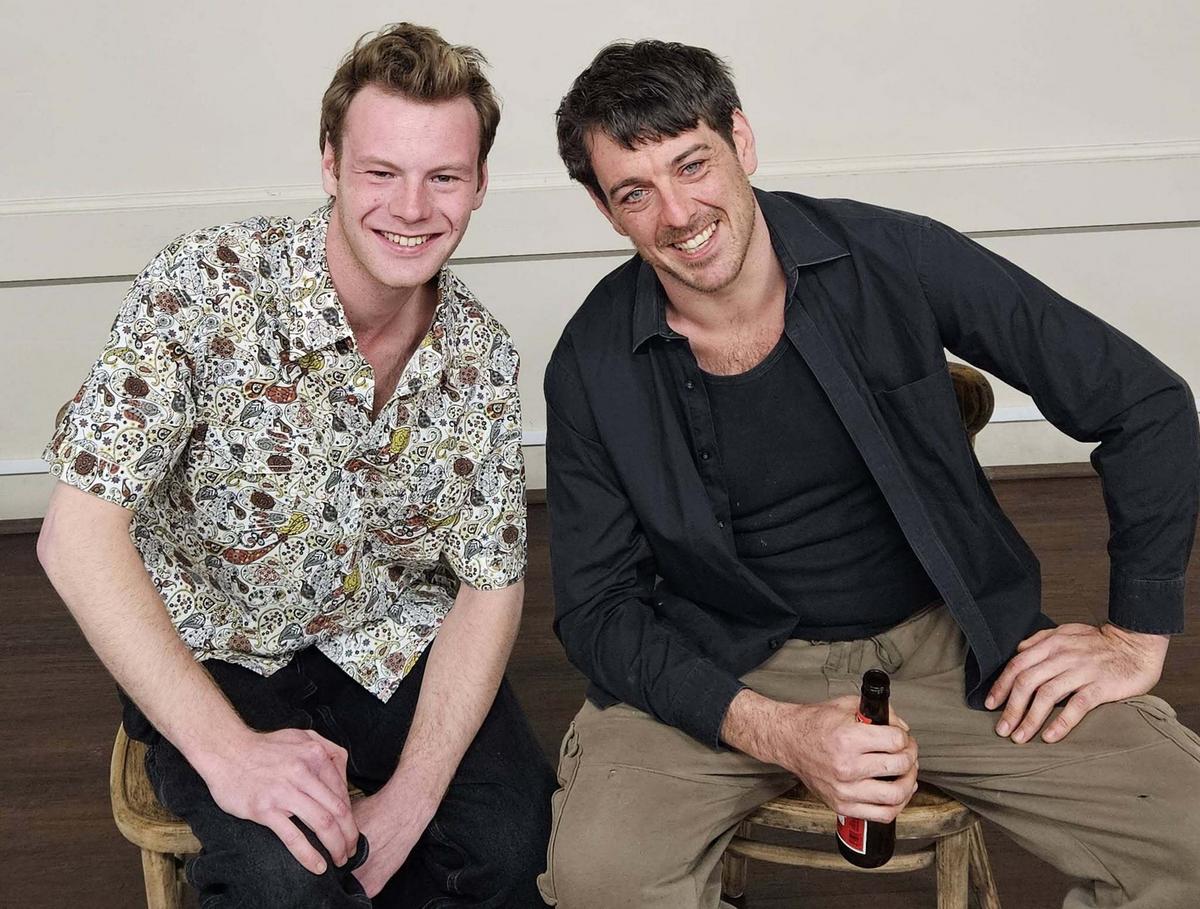
 

Not nearly as bad as Greg, Jeff’s love interest. Much like Julie, we don’t see him on stage much, but he quietly and shyly inserts himself into Jeff – and consequently, Harry’s – lives and hearts. Be prepared for Christopher Cordeaux to tear yours out as Greg slowly reveals his home life situation to Jeff.

With a simple set of a typical Australian home living room, the scenery doesn’t change rapidly, but the small changes – and one set change – that are undertaken are performed smoothly, and paired with a fun soundtrack for the audience to listen along to. The set immediately felt like home; cosy, inviting, and lived-in. Not worn or lacking any decorations, as one might expect with two men living together, but warm and happy. Keep your eyes open whenever cast move off set through the “front door” or into the hallway, for even those spaces have been considered and well dressed.

The lighting was well-timed and provided a natural, warm feeling for the space. This can be said for the soundtrack too, both of which did a fantastic job of providing the required ambience for the space without being noticed in any negative way.

Filled to the brim with second-hand “my dad is so embarrassing” scenes, plenty of laughing out loud, and beautiful, wholesome scenes, “The Sum of Us” is fun, emotional, and a beautiful story worth the watch for every straight and queer person alike.

“The Sum of Us” has a two-hour runtime with a 20 minute interval.

Trigger Warnings: mentions of homophobia, discussions of sexual intercourse, swearing, drinking onstage

To book tickets to The Sum of Us, please visit https://www.galleon.org.au/html/theSumOfUs.html.
Spread the word on your favourite platform!

The Thunderbolt

The Thunderbolt

The Thunderbolt Rating

★★★★★

Click if you liked this article

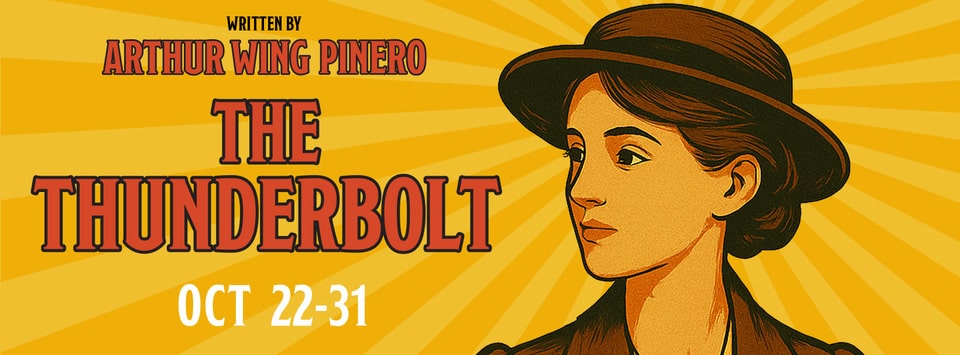
Red Phoenix Theatre and Goodwood Theatre & Studios present the South Australian premiere of ‘The Thunderbolt’, written by Arthur Wing Pinero.

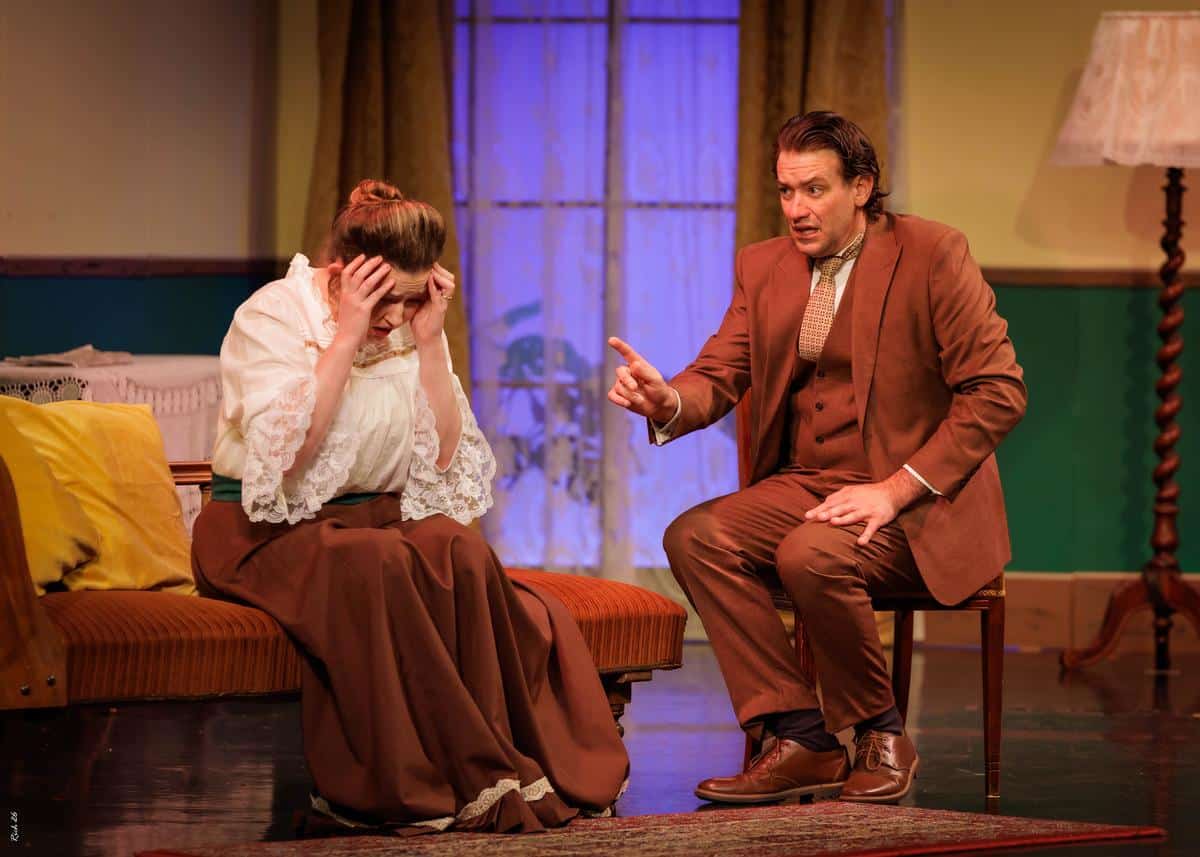
Not strictly a feminist story, ‘The Thunderbolt’ does have feminist themes. Set in 1908, society was seeing an emergence of the “new woman” – women who were striking out to achieve their own education, money, and life beyond the societal expectations of being a wife. Helen is the heroine, setting the example of such a woman at the time.

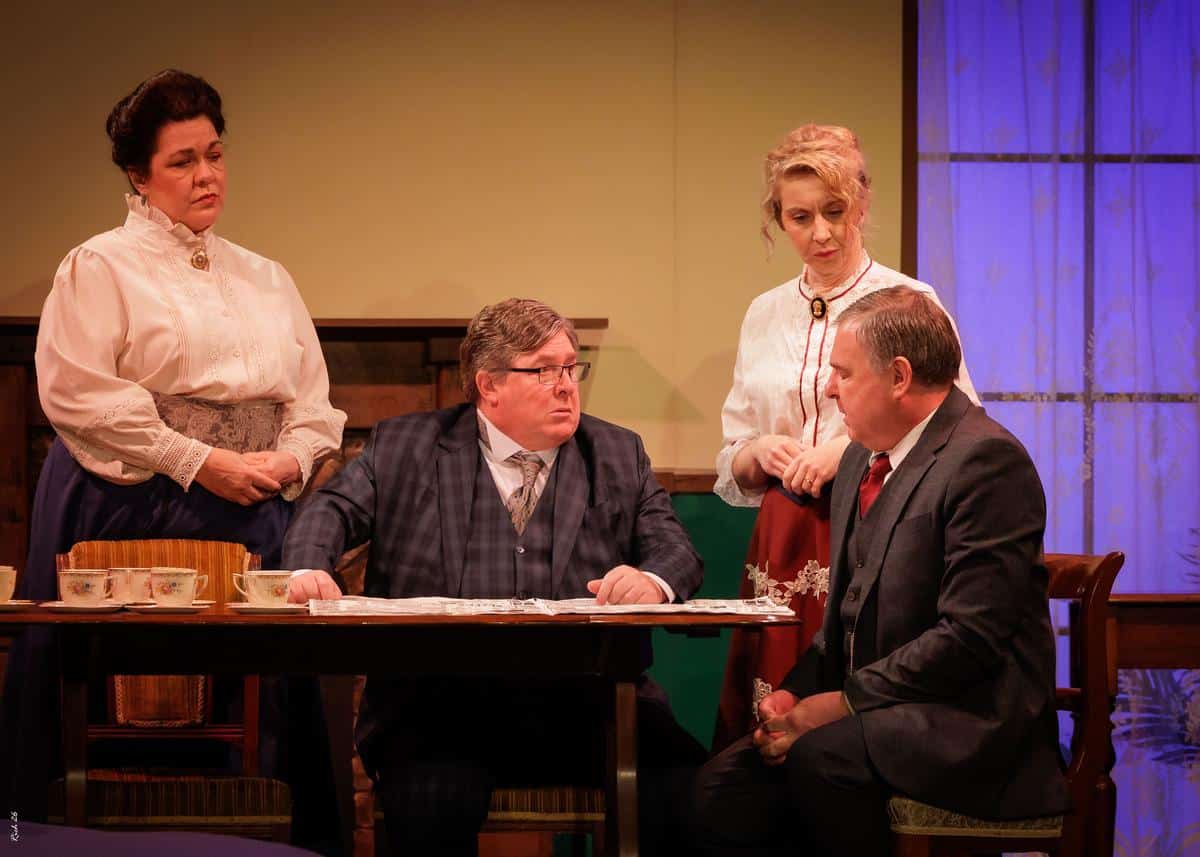
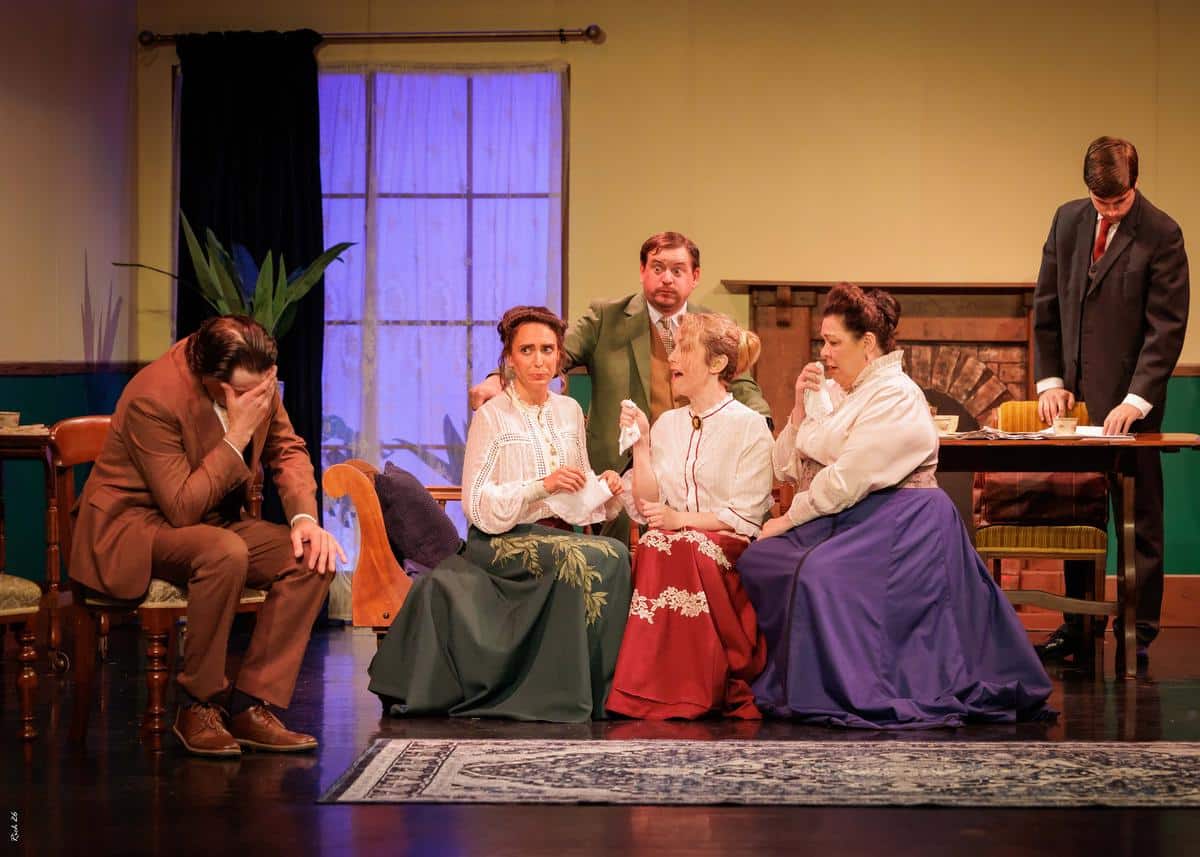
Helen is an illegitimate child getting her education and becoming an independent woman. Her world is turned upside down when she finds out her loving father, Edward, has passed away – and his will is nowhere to be found. Elisha Johnson brings the calm but intelligent Helen to life with her steadfast and consistent performance, playing the loving daughter with care as Helen navigates Edward’s family. The family which has not had the chance to get to know Helen before now. When we are introduced to the family, they have already begun planning how to divide Edward’s extensive properties and funds amongst themselves … without including Helen.

Michael Eustice, Steve Marvanek, and Joshua Coldwell are completely engaging with their roles of Edward’s two younger brothers and his brother-in-law, respectively. Commanding the room from their opening lines, hilarious with their reactions, every delivery felt natural and perfectly executed.


Annie Matsouliadis, Katie Packer, and Anne Doherty play dutiful wives, supporting their husbands and their ideas, and perfectly encapsulating the mean girl essence towards those not in their inner circle. Their humour, reactions, and mutterings add depth and a level of realism to each scene they grace.

Malcolm Walton and Jai Pearce bring some calm to the family, offering legal advice as they try to do the right thing by Edward. Their performances are steady and charming, as are Akira Hockley Miric and Tim Williams with their roles, which they portray with grace.

Jessica Corrie and Leighton Vog have the immense job of portraying stress, anxiety, and desperation – all of which they pull off with their fantastic physical and vocal skill sets. Their performances, both separately and together, will tug at your heartstrings.

Away from the actors, the stage lighting was simple but clearly well considered, with well-timed drops between scenes. The set design was elegant, and each set change was blocked out within an inch of its life, with backstage assistants and actors working and weaving together seamlessly. There were no sound issues, aside from the occasional quietly delivered line, which was infrequent and subtly adjusted with the actors following line.

The costumes were artful, well-fitted for each individual actor, and reminiscent of the fashion of the time. This author was pleasantly surprised to see the costumes for the married couples on the stage had matching colour schemes – a simple but visually striking way for the audience to keep track of the relationships with minimal effort.

‘The Thunderbolt’ is as relevant and witty today as it was in 1908. It runs for two hours with a 20 minute interval.

To book tickets to The Thunderbolt, please visit https://www.redphoenixtheatre.com/season/.

Spread the word on your favourite platform!

Breaking The Code

Breaking The Code

Breaking The Code Rating

★★★★★

Click if you liked this article

8

“Rules are only important in cricket, and the scholarly editing of ancient texts.”

St. Jude’s players present “Breaking the Code”, a performance with excitable monologues, an engaging Alan Turing, and mathematical equations and theories. Add in a sprinkling of the still unanswered question of the use of artificial intelligence having human emotions, and you have a performance that spans decades. The focus of the story is not on solving the enigma for the World War II effort, but on Turing’s life before and after, offering glimpses of his home life, his love interests, and his struggles.

Brant Eustice shines as Alan Turing, with an expressive face, presence and passion on stage that brought Turing to life in the most positive, and almost reverent way. Jamie Black and Peter Davies are imposing in their roles of law enforcement, driven by the law and encouraging Turing to do what is right by it. David Lockwood is amusing and engaging as Dillwyn Knox – his humour and delivery both well-timed and enjoyable. Rhonda Grill and Tianna Cooper are both elegant and loving as Mrs Turing and Pat Green, respectively, bringing the women in Turing’s inner circle to life in a considered and respectful manner. Sebastian Hollingsworth and Nicholas Koulioubus bring their own variations of explosive passion to both the stage and Turing’s life – along with fun, impeccable wardrobes. Together, this cast is a perfectly balanced equation.


The stage is simple, but every inch has been meticulously set up, blocked out, and lit up in the most flattering and effective way to tell each chapter of the story … because each scene in “Breaking the Code” is a change of year and location, playing out like chapters. If you are not intimately familiar with the story of Alan Turing, I highly recommend picking up a program so you can follow along with the time jumps with more ease. You will have no problems knowing which location the scene is set at, with the visual aids on the back wall paired with the well-thought-out set layouts. Together with the simple lighting and minimalistic music which work seamlessly to set the tone, St. Jude’s players present a vibrant retelling of Alan Turing’s story.

For anyone worried they wouldn’t be able to follow along with the mathematics, there is nothing to worry about, because Turing does all the equations, and explains anything that is story-related on stage.

“Breaking the Code” is interesting, funny, and thought-provoking, even if you have already found yourself questioning artificial intelligence and human relations. You may even find yourself asking the same question as Turing did: Was God a mathematician?

To book tickets to Breaking The Code, please visit https://stjudesplayers.asn.au/.

Photographer: Tim Stoeckel

Spread the word on your favourite platform!

Pomona

Pomona

Pomona Rating

★★★★★

Click if you liked this article

4

Content Warnings: Coarse language, adult themes, references to sexual assault, and suicide.

Science fiction, Dungeons and Dragons, and a missing sister. Pomona has it all.

With a well-oiled cast who together bring the desolate Blade Runner-esque world to life, the audience is sucked into the mystery of the missing sister.

“Ollie? Like, Oliver? Like, a boy’s name?”

We follow the stories of multiple characters in Manchester; as they manoeuvre through the story the characters watch one another’s performances from the stairs and behind the audience in the cloisters. Are they judging each other? Observing from afar? Making a point of the interconnections between the characters? You decide.

The jagged, raw emotions from each character as they navigate their lives, their connections, and their mistakes is palpable, and flows naturally from the performers. The stress, fear, and love emanate from the stage – no performer holds back, fully immersing themselves and their audience in their character's storyline.


The costumes bring a balanced mix of dreary and science fiction, looking natural on the performers while adding to the worldbuilding of this alternate Manchester. Each costume appeared carefully considered and tailored for the character, while managing to encapsulate the atmosphere of the alternate Manchester and the performance. There are few costume changes, and each of them were smooth, blending into the story seamlessly.

The same can be said for the set design and the set changes – well-chosen pieces that showcase the ambience of Manchester, and seamless changes undertaken by the performers. The set changes were efficient, and elegantly doubled as an opportunity for the performers to drape themselves in their next observation location for the scene. The pieces doubled as a backdrop for the city, never straying far from the stage, and some contained multiple uses, changing from a bed to a desk and back again – a very tasteful use of the pieces at hand without overwhelming the performers or audience.

The audience was enraptured from the first lowering of the lights – LED strip lighting lined the stage and emitted a soft glow of anticipation. With torches being used by the performers as well as the lighting team, there was no shortage of creative use. This extends to the use of sound, as they work hand-in-hand with the lighting team to not only set the scene, but fully immerse the audience.

Pomona jumps forward and back in time to tell the story, with the mystery of the missing sister unfolding as the characters’ connections and personal gripes unfold. Be prepared to walk away with questions, and maybe even a desire to play Dungeons and Dragons.

To book tickets to Pomona, please visit https://www.trybooking.com/events/landing/1476481.

Photographer: Sophie Livingston-Pearce & Alice Smith

Spread the word on your favourite platform!

Subscribe to What's The Show

Reviews, show news and what is on, straight to your inbox.