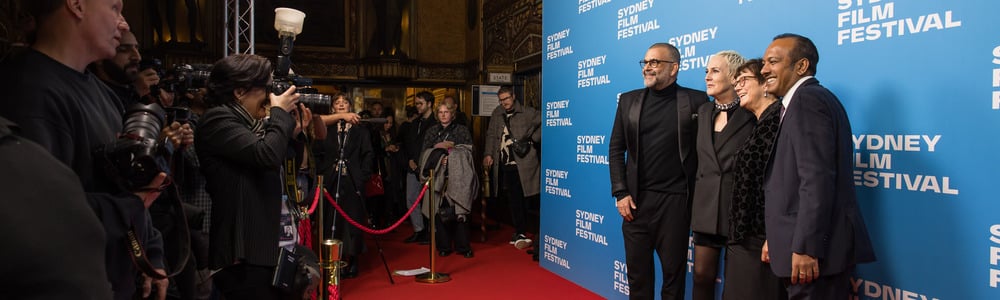
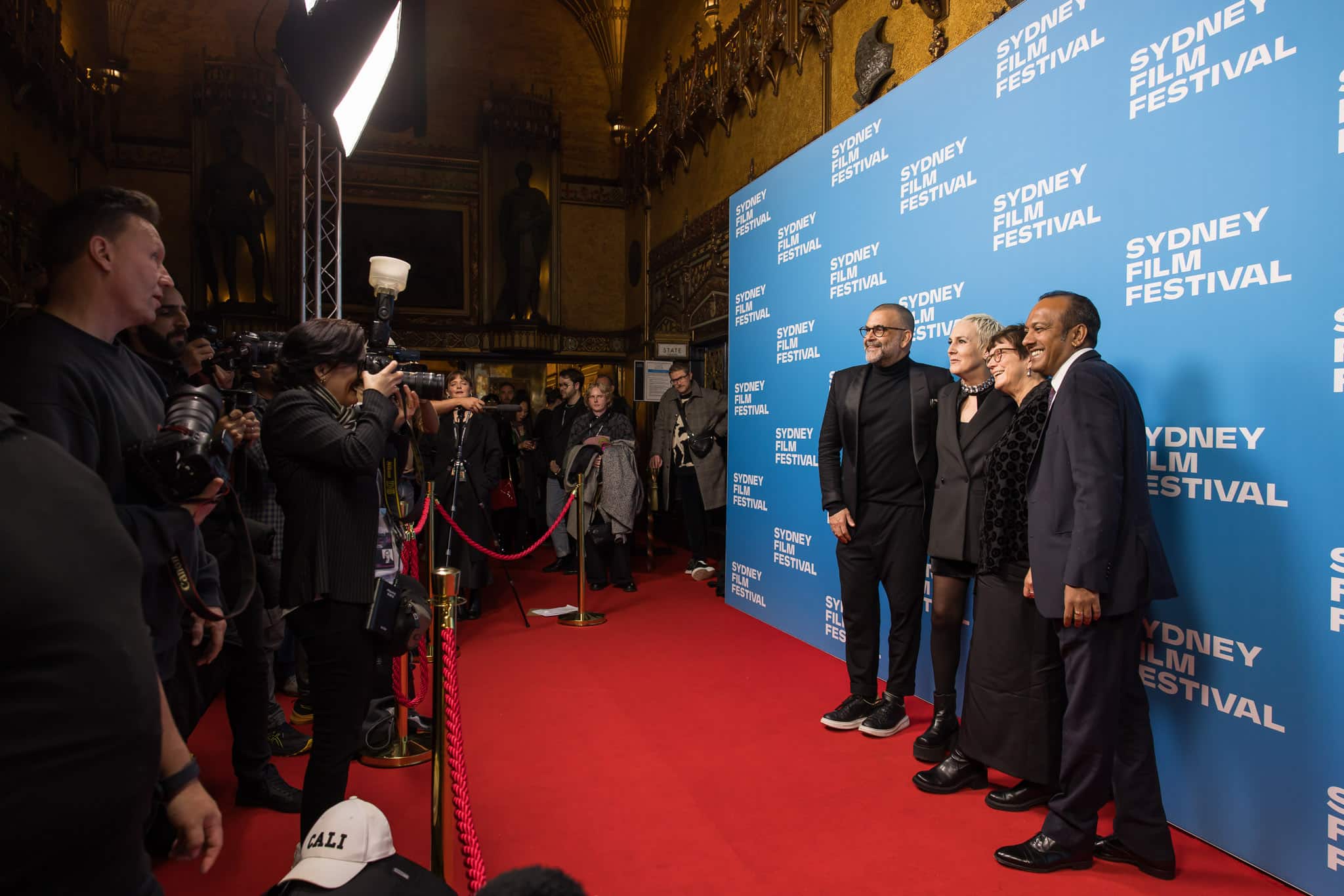
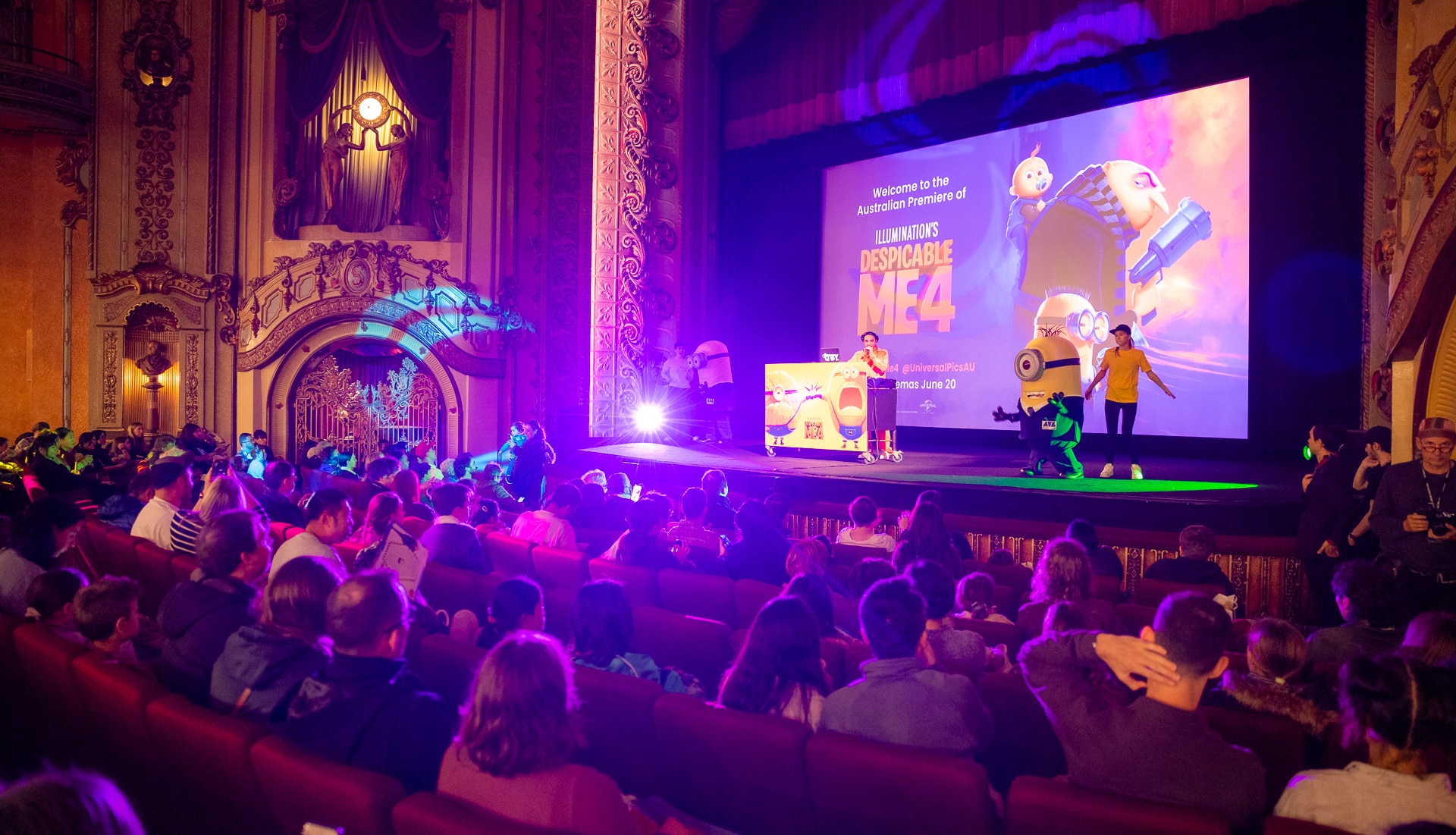
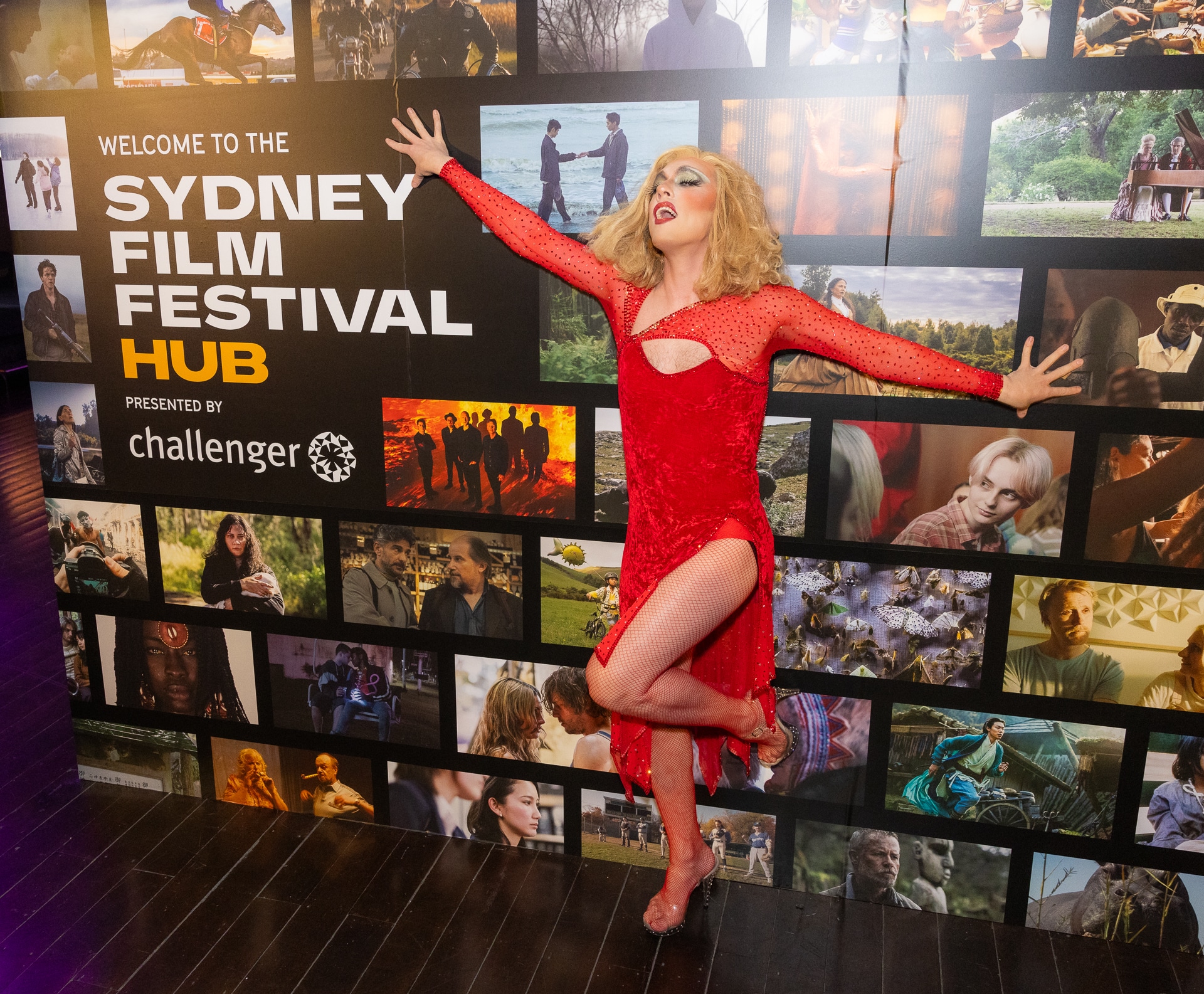
The 73rd Sydney Film Festival (SFF) will take place from Wednesday 3 June to Sunday 14 June 2026. Following a record box-office year in 2025, SFF is bringing another 12 days and nights of premieres featuring the best in global cinema on Sydney’s silver screens. The Festival will bring together world premieres, Australian exclusives and headline red carpet events across Sydney, placing filmmakers and audiences together in the ultimate celebration of cinema.
“As we prepare for the 73rd Sydney Film Festival, we remain committed to championing filmmakers with a distinct voice and a strong point of view,” said Sydney Film Festival’s Festival Director, Nashen Moodley. “Each year we look for work that reflects the urgency and complexity of the times, and that reminds us why cinema matters on the big screen. We look forward to bringing together audiences and filmmakers for Sydney’s largest celebration of film.”
Beyond the screenings, audiences will take part in filmmaker Q&As, industry talks, public programs, themed parties and special events that turn the city into a hub for cinema over the course of the Festival. The first titles for the 73rd Sydney Film Festival will be announced in April 2026, with the full program set to be unveiled on 6 May 2026.
The Festival will be held across Greater Sydney at iconic venues including the State Theatre, Sydney Opera House, Event Cinemas George Street, State Library of NSW, Dendy Cinemas Newtown, The Ritz Randwick, Hayden Orpheum Picture Palace Cremorne, Palace Cinemas Central and Norton Street, the Art Gallery of NSW, Sydney Town Hall, and more, including SFFTV in Martin Place.
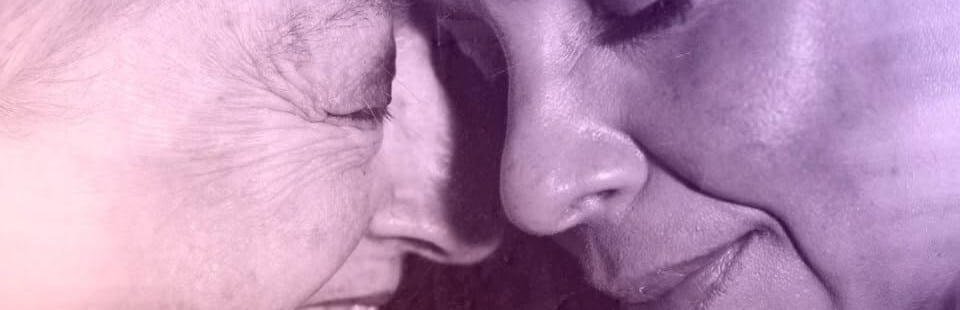
It took until 2013 for gay marriage laws to pass in England. Although it may feel like we’ve made strides towards change, in a lot of ways, queerness had a bright, shining five to seven years in the sun before it began to slide backwards again in modern politics. Es & Flo is a little bit about this – and why marriage is such an essential part of the fight – but it’s also mostly about the complexity of lifelong relationships, and the intimate sense of loss and betrayal we feel when someone we love begins to slip through our fingers.
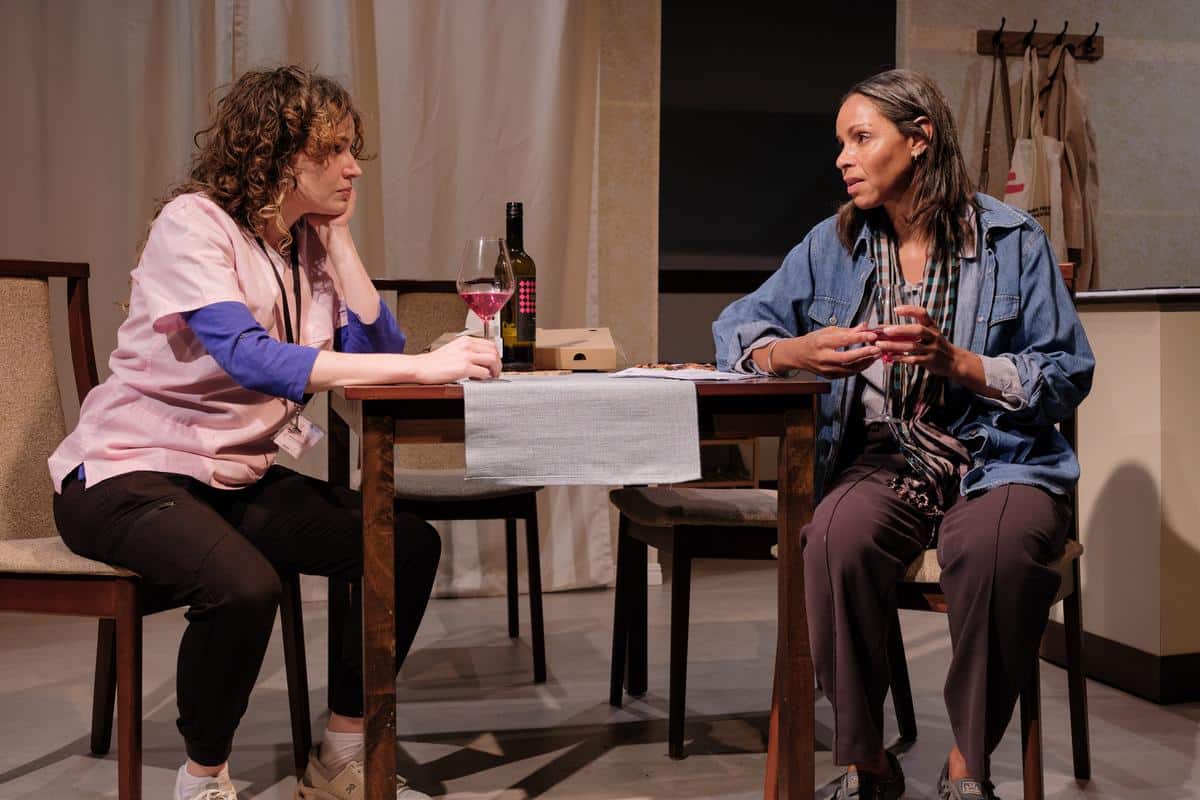
Emma Canalese has set this show in the warm and familiar home it deserves, one yellowed by years of adoration and care. One that the characters on stage are also deeply familiar with. Such, the threat of losing the home and those inside it becomes all the more raw and uncomfortable. As the piece progresses, the sense of belonging we feel in this quiet home becomes more and more disturbed – video and audio of protests and conversations merging in a way that creates a cacophony that we’re both threatened by, and desperately want to understand.
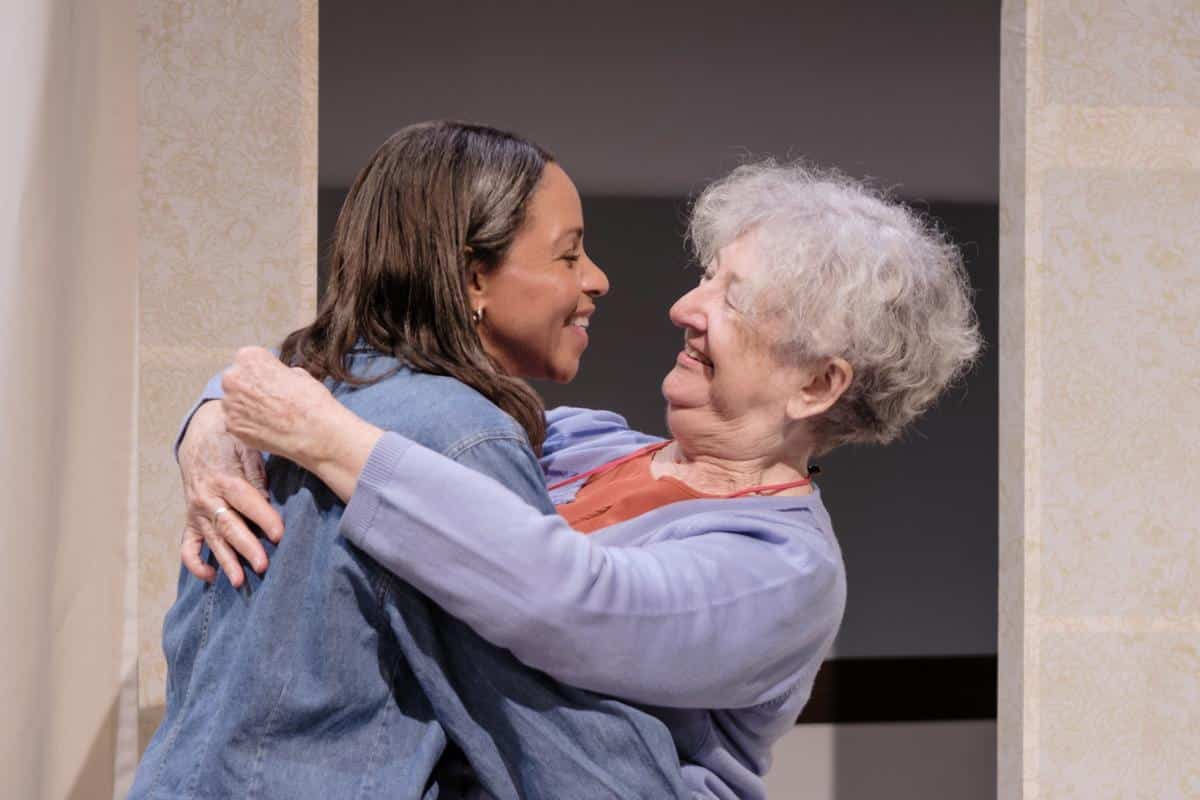
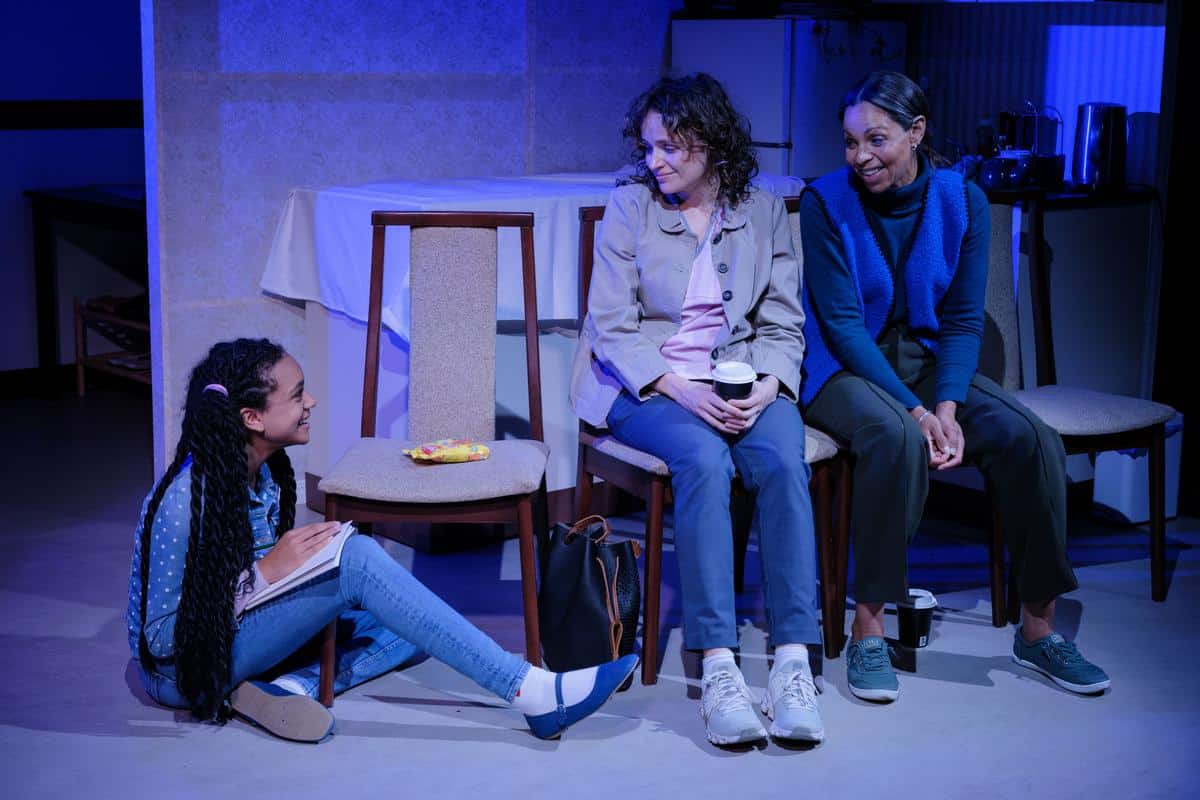
Annie Bryon delivers something that truly hits close to home with Esme. Maybe it’s the unending patience and devotion to the childlike wonder of Kasia, or maybe it’s the disquieting hysteria of an older person’s confusion. Either way, it’s difficult not to think of some of ours in our own lives. Bryon evolved spectacularly in the second half, particularly in the more subtly brutal moments. Fay Du Chateau in return gives us something quieter, smarter, but nevertheless slipping into a panic she can’t understand either, as the stability of her entire world begins to fall apart. Her physicality in gesture, and her willingness to play in the discomfort of the piece makes her performance really something special. Charlotte Salusinszky as Biata is a lovely empathetic,\ but realistic edge, bouncing off of Chateau in a way that humanizes and deepens both of them. Erika Ndibe brings a whimsicality that lifts the piece to its feet in a way it often needs, along with providing the quiet tragedy of not understanding why Es and Flo aren’t allowed to be open in their love for each other. Eloise Snape provides some truly impressive comedic work, and toes the line of insufferable and sympathetic with true finesse.
In a piece centered around relationships, it is only natural that this is where the production shines. All the cast have undeniable chemistry with one another, and their bonding allows the piece to focus the audience into the heartache of the micro of a dementia patient, and the macro of internalised homophobia. There are some brief blips of conviction and blocking, but in a piece as intimate as this one, where it almost feels like we’re voyeuristically spying into someone’s living room, these odd moments smooth over for the most part.
Familiar, and unforgivable, sympathetic, and pathetic; Es & Flo walks the tight-rope of a shame and desperation we as a modern queer collective feel off put attaching ourselves to, whilst demanding that we understand why. As the curtains close, I can say I was reminded all too honestly of the path forwards – especially as those who fought for our freedom begin to age out.
Co-Founders Nathan M Wright and Andrew Bevis (The Addams Family, The Prom) today announced that the hit Broadway musical Tootsie will make its highly anticipated Australian premiere this May at Teatro at the Italian Forum in Sydney. The production further cements the company’s reputation for bringing acclaimed international premieres and blockbuster musicals to Australian audiences. Award-winning director and choreographer Cameron Mitchell (Putting It Together, Sweet Charity) will helm the production, as rehearsals begin this week for The Prom. Tickets for Tootsie are on sale now at www.teatroitalianforum.com.au. Described by The New York Post as “Broadway’s funniest new musical” and praised by Rolling Stone as “musical comedy heaven”, Tootsie is the laugh-out-loud story of a talented but difficult actor who struggles to find work until one show-stopping act of desperation lands him the role of a lifetime.
Director Cameron Mitchell said “Tootsie is the perfect feel-good musical for everyone. It has all the nostalgia of the 1982 Sydney Pollack film starring Dustin Hoffman with a hilarious new book and dazzling score. I am very excited to work with the team at Teatro and bring this brand-new show to Sydney audiences. Tootsie is laugh out loud funny, with a lot of heart and great song and dance numbers. Can’t wait!”
Based on the Oscar winning beloved hit film starring Dustin Hoffman, the Tony Award Winner for Best Book of a Musical, Tootsie also received 11 Tony Award nominations, including Best Musical and Best Original Score. With music and lyrics by Tony Award & Grammy award-winner David Yazbek (The Band’s Visit, Dirty Rotten Scoundrels) and book by Tony Award-winner Robert Horn (13 the Musical, Shucked), Tootsie has had audiences rolling in the aisles.
Fast-paced and outrageously funny, Tootsie plays with identity, ambition and ego, all while keeping the laughs coming.
Tootsie makes its Australian premiere in Sydney at TEATRO from 26 May. www.teatroitalianforum.com.au
TOOTSIE From 26 May Venue: Teatro at the Italian Forum, Norton Street, Leichhardt Performance Times: Wed-Thurs 7pm, Fri-Sat 7.30pm, Sat 2pm, Sun 1pm & 6pm Prices: $75 for previews Tue 24 – Thu 26 March (a handling fee of $6.95 per transaction applies) From $85 for remaining dates (a handling fee of $6.95 per transaction applies) Bookings: www.teatroitalianforum.com.au
Teatro is Sydney’s newest creative hub for the performing arts, located in the heart of Leichhardt at the iconic Italian Forum. With a focus on community engagement, emerging talent, and world-class productions, Teatro aims to be a vibrant gathering place for artists and audiences alike. Under the leadership of Nathan Wright and Andrew Bevis, Teatro will continue to build on the venue’s rich history while ushering in a new era of creativity and cultural exchange. Recent productions include The Addams Family, Santa Claus with rehearsals of the Australian Premiere of The Prom currently underway.
Producer John Frost for Crossroads Live today announced the stellar cast for the Australian Premiere of Broadway’s smash-hit musical WAITRESS, which will light up Her Majesty’s Theatre Melbourne from 1 May, and the Sydney Lyric Theatre from 1 August. Tickets are now on sale at waitressthemusical.com.au.
Leading the cast as Jenna will be Natalie Bassingthwaighte (Chicago, Shirley Valentine), while Gabriyel Thomas (Cats, Sister Act) and Mackenzie Dunn (Grease, Annie) play Becky and Dawn, Jenna’s coworkers at the diner. Charismatic star of stage and screen Rob Mills (& Juliet, Wicked) will play Dr Pomatter, and legendary actor John Waters (The Woman in Black, Play School) will be Joe, the owner of the diner.
One of Australia’s most popular leading ladies of stage and screen, Natalie Bassingthwaighte will play Jenna, an unhappily married waitress in a small US town. Natalie’s music career has seen her achieve acclaim as one of only twenty Australian solo female artists to reach Number One on the ARIA Album Charts with her solo album, 1000 STARS. She has enjoyed international success as front woman of The Rogue Traders, achieving multi-platinum sales across two albums, as well as two APRA nominations, an MTV award win and seven ARIA nominations. Most recently lauded for her performance on stage in the title role of last year’s Australian tour of Shirley Valentine, Natalie has created many memorable characters on stage including Roxie in Chicago, Mary-Jane in Alanis Morissette’s Jagged Little Pill, Sandy in Grease and Florence Vassy in Chess. Her work on television includes the original host of So You Think You Can Dance, judge on The X Factor, and competing alongside her sister Mel on The Amazing Race.
Direct from her acclaimed performance as Grizabella in the national tour of Cats, the role of Becky, the irascible waitress with a wicked sense of humour, will be played by Gabriyel Thomas. Gabriyel’s other credits included Michelle and sometimes the lead role of Deloris Van Cartier in the Australian tour of Sister Act, The Sound of Music, Ragtime and the Australian and US tours of Hairspray.
Most recently seen on stage as Lily St Regis in the Australian tour of Annie, Mackenzie Dunn will be Dawn, the eccentric youngest waitress at the diner. Mackenzie has also played Rizzo in Grease, Penny Pingleton in Hairspray, Squeaky Fromme in Assassins, Francine in Jersey Boys, Evelyn Nesbit in Ragtime, Bubba in Summer of the Seventeenth Doll and understudied and performed the role of Princess Fiona in the Australian tour of Shrek.
Charming stage and screen star Rob Mills will be playing Dr Pomatter, Jenna’s endearing but neurotic gynaecologist. Rob has had celebrated roles in musicals including & Juliet, Wicked, Hairspray, Ghost, Jesus Christ Superstar and Grease, and on screen in Neighbours, Winners and Losers, Dancing With The Stars and the 2025 season of The Amazing Race Australia: Celebrity Edition.
As Joe, the curmudgeonly diner owner who has a soft spot for Jenna, will be stage icon John Waters. With a career spanning over 50 years, John is well known for lead roles in the film Breaker Morant and the television series Rush, All the Rivers Run, Rake and his 20-year run on Play School. His prolific stage work includes Hair, Godspell and Jesus Christ Superstar in the 1970s, through to the musicals The Rocky Horror Show, They’re Playing Our Song opposite Jackie Weaver, The Sound of Music opposite Lisa McCune and most recently the thrilling play The Woman in Black.
“I’m overjoyed to announce this extraordinarily talented cast. They will beautifully bring to life the delightful characters in this original and inspiring production,” said John Frost. “WAITRESS was a massive hit on Broadway where it played for almost four years, and was a huge success in the West End and across the world. WAITRESS has become a ‘must see’ musical, with its memorable music by Sara Bareilles and universal themes of hope and resilience. Get your tickets now to enjoy this life-affirming show.”
Inspired by Adrienne Shelly’s beloved film, and brought to life by a trailblazing female-led creative team, including a book by acclaimed screenwriter Jessie Nelson, an original, uplifting score by Grammy winner Sara Bareilles (Love Song, Brave) and direction by Tony winner Diane Paulus, WAITRESS is the irresistible Broadway hit about resilience, friendship and hope that has captured hearts worldwide.
This heartwarming and empowering musical tells the story of Jenna, a small-town waitress and expert pie maker who longs to escape her rocky marriage and start again. When a baking contest, an unexpected new romance and the support of her fellow waitresses offer her a taste of change, Jenna discovers that the secret ingredient to happiness might be closer than she ever imagined.
“Treat yourself to a slice of 5 Star musical pie” – The Times “Sweet, sassy, passionate & delightful!” – New York Magazine “Simply delightful! A glorious reminder that life is messy and wondrous!” – The Washington Post
WAITRESS made history on Broadway with the four top creative spots in a show being filled by women – Sara Bareilles (music and lyrics), Jessie Nelson (book), Lorin Latarro (choreography) and Diane Paulus (direction). It opened on Broadway in April 2016 at the Brooks Atkinson Theatre, where it ran until January 2020. WAITRESS was originally produced by Barry & Fran Weissler and Norton and Elayne Herrick.
Sweet, sassy and soul-stirring, WAITRESS is “a little slice of heaven” (Entertainment Weekly) and “made from the finest ingredients” (Time Out). It’s a feel-good celebration of second chances, and the magic of a well-made pie.
If only life were as easy as pie…
WAITRESSTHEMUSICAL.COM.AU
MELBOURNE SEASON DETAILS Venue: Her Majesty’s Theatre Season: From 1 May Performance Times: Tue-Thurs at 7pm, Fri-Sat 7:30pm, Wed 1pm, Sat 2pm, Sun 1pm, 3pm or 6pm (performance times vary each week) Prices: From $69.90 (Transaction fees apply) Bookings: waitressthemusical.com.au or phone 13 28 49 Groups 8+ call (03) 9662 9571
SYDNEY SEASON DETAILS Venue: Sydney Lyric Theatre Season: From 1 August Performance Times: Tue-Thurs at 7pm, Fri-Sat 7:30pm, Wed 1pm, Sat 2pm, Sun 1pm, 3pm or 6pm (performance times vary each week) Prices: From $69.90 (Transaction fees apply) Bookings: waitressthemusical.com.au or 136 100 Groups 8+ email groups@ticketmaster.com.au
Spread the word on your favourite platform!
Subscribe to What's The Show
Reviews, show news and what is on, straight to your inbox.